Have you ever wondered how scientists measure tiny quantities of chemicals, observe microorganisms, separate liquid samples or analyse unknown substances? Behind almost every scientific experiment, there is a collection of specialised tools that makes the work possible.
From a simple beaker used for mixing liquids to an advanced spectrophotometer used for chemical analysis, laboratory equipment plays an important role in scientific research, testing, education and industrial applications.
Every laboratory has different requirements. A chemistry laboratory needs glassware, heating devices and analytical instruments, while a biology laboratory depends more on microscopes, incubators and microbiology equipment. Pharmaceutical laboratories may require specialised testing instruments, sterilisation systems and controlled working environments.
Understanding laboratory equipment names and their uses helps students learn scientific concepts, laboratory technicians perform routine procedures and laboratory managers select suitable instruments for their facilities.
In this comprehensive guide, we have organised 100 laboratory equipment items into practical categories. Each item includes a simple explanation of its main function and how it is used in laboratory work.
Whether you are a student, researcher, teacher or laboratory equipment buyer, this list will help you understand the essential tools used in modern science laboratories.
What Is Laboratory Equipment?
Laboratory equipment refers to the tools, instruments, apparatus and supporting devices used to perform scientific experiments, measurements, testing, observations and research activities.
These items help laboratory professionals perform different operations, including measuring liquids, weighing samples, heating substances, mixing solutions, separating materials, observing specimens and analysing chemical or biological properties.
For example, a beaker is used for holding and mixing liquids, a pipette transfers measured quantities, an analytical balance measures mass and a microscope helps examine objects that cannot be clearly seen with the naked eye.
Laboratory equipment is commonly found in:
- Chemistry and physics laboratories.
- Biology and microbiology laboratories.
- Pharmaceutical testing facilities.
- Medical and diagnostic laboratories.
- Biotechnology research centres.
- Food and beverage testing laboratories.
- Educational institutions and universities.
- Industrial quality-control laboratories.
Selecting appropriate laboratory equipment is important because the instrument must match the intended procedure, measurement requirements and working conditions.
What Are the Different Types of Laboratory Equipment?
Laboratory equipment can be classified according to its function and the type of scientific work it supports.
Some instruments are designed for basic laboratory activities, while others perform specialised measurement, testing and analytical operations.
The major categories include:
- Laboratory glassware and liquid-handling equipment.
- Sample handling and supporting apparatus.
- Measuring and weighing instruments.
- Heating and cooling equipment.
- Mixing and sample preparation equipment.
- Filtration, separation and extraction equipment.
- Sterilisation, clean air and laboratory safety equipment.
- Microscopy and histology equipment.
- Microbiology and molecular biology equipment.
- Analytical and scientific testing instruments.
Let's explore the top 100 laboratory equipment names and their uses in detail.
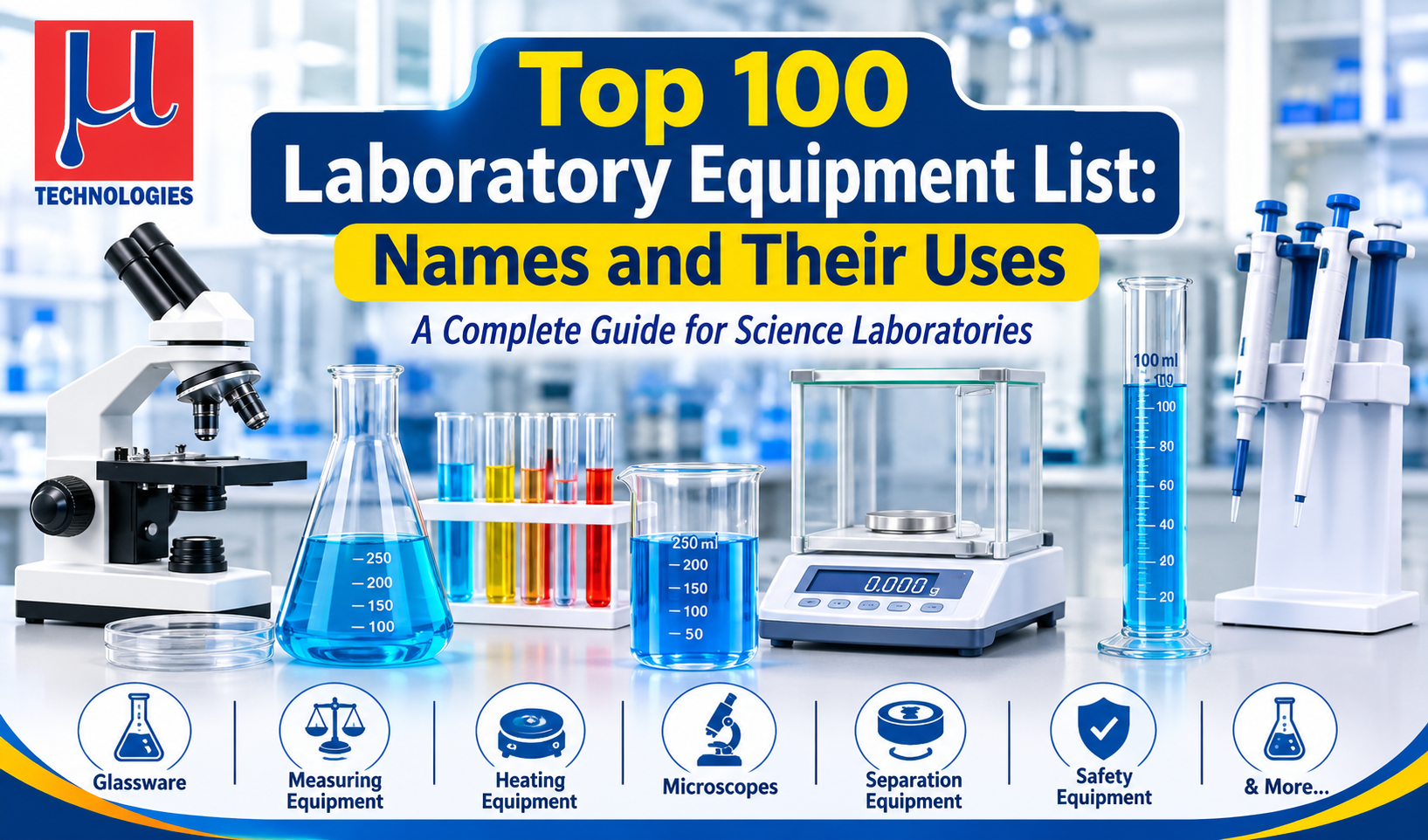
Top 100 Laboratory Equipment List Names and Uses
1. Basic Laboratory Glassware and Liquid-Handling Equipment
Laboratory glassware is one of the most recognisable parts of a science laboratory. It is used for holding, measuring, transferring, mixing, heating and storing liquids.
Glass laboratory equipment is available in different shapes, capacities and accuracy classes according to its intended application.
1. Beaker
A beaker is a cylindrical laboratory glass container with a flat bottom and a small pouring lip. It is commonly used for holding, mixing, heating and transferring liquids. Beakers are available in different capacities and are widely used in chemistry and biology laboratories.
2. Erlenmeyer Flask (Conical Flask)
An Erlenmeyer flask has a flat base, conical body and narrow neck. Its shape makes it useful for mixing liquids by swirling while reducing the risk of splashing. It is commonly used in titration, solution preparation and chemical experiments.
3. Volumetric Flask
A volumetric flask is designed to prepare solutions at a specified volume. It has a bulb-shaped body, narrow neck and calibration mark. It is particularly useful in quantitative chemical analysis and preparing standard laboratory solutions.
4. Test Tube
A test tube is a narrow cylindrical tube with a rounded or flat bottom. It is used to hold, mix, heat or observe small quantities of samples. Test tubes are commonly used in chemistry, microbiology and educational laboratories.
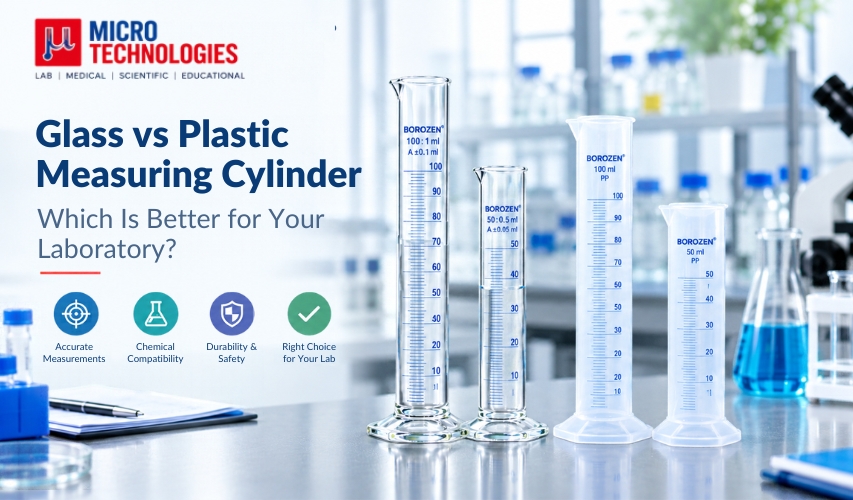
5. Graduated Cylinder
A graduated cylinder is a tall measuring container with volume markings along its side. It is used to measure liquid volumes with greater readability than an ordinary beaker. Its capacity and graduation determine its measurement tolerance.
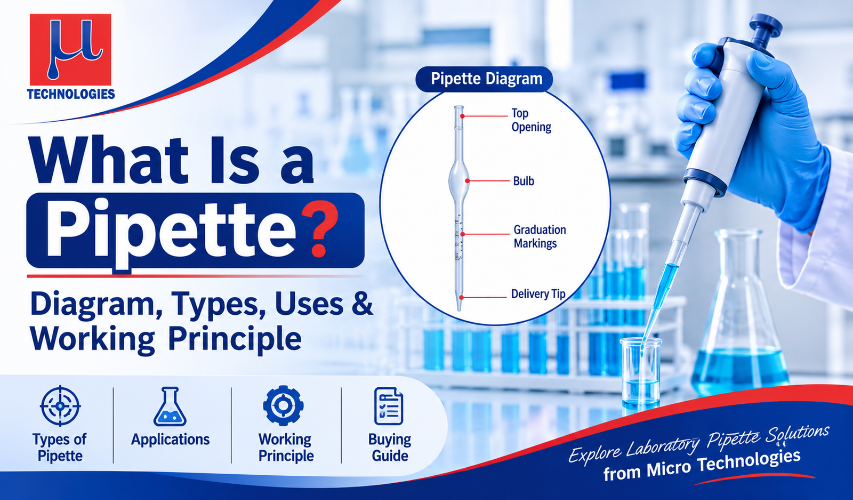
6. Volumetric Pipette
A volumetric pipette is designed to transfer a specified fixed volume of liquid. It usually has a narrow stem and a bulb-shaped central section with a calibration mark. It is commonly used in analytical chemistry and standard solution preparation.
7. Graduated Pipette
A graduated pipette contains multiple measurement markings along its stem, allowing users to measure and transfer different liquid quantities. Mohr and serological pipettes are common examples used in research, chemical analysis and clinical laboratories.
8. Burette
A burette is a long graduated glass tube fitted with a stopcock near its lower end. It is used to dispense accurately measured liquid volumes, particularly during titration experiments where the quantity of a reagent must be recorded.
9. Glass Funnel
A glass funnel has a wide upper opening and a narrow stem. It helps transfer liquids into narrow-necked containers and can also hold filter paper during gravity filtration. It is widely used in chemistry laboratories.
10. Separatory Funnel
A separatory funnel is a laboratory glass apparatus used to separate immiscible liquids that form distinct layers. It generally has a stopcock that allows the lower liquid phase to be released in a controlled manner during liquid-liquid extraction.
2. Laboratory Apparatus and Sample-Handling Equipment
Besides glassware used for measuring and transferring liquids, laboratories also require supporting apparatus for sample preparation, material handling, heating and storage.
11. Watch Glass
A watch glass is a shallow, circular glass dish used for holding small solid samples, evaporating small quantities of liquid or covering beakers. It is commonly found in chemistry and educational laboratories.
12. Reagent Bottle
A reagent bottle is designed to store chemicals, prepared solutions and laboratory reagents. It is available in different materials, colours and capacities. Appropriate labelling and chemical compatibility are important when selecting reagent bottles.
13. Wash Bottle
A wash bottle is a squeezable container with a narrow dispensing nozzle. It is commonly used to dispense distilled or deionised water for rinsing glassware, washing precipitates and cleaning laboratory materials.
14. Petri Dish
A Petri dish is a shallow circular dish, commonly made of glass or disposable plastic, used for culturing microorganisms on suitable growth media. It is widely used in microbiology, biotechnology and biological research laboratories.
15. Glass Stirring Rod
A glass stirring rod is a solid glass rod used to mix solutions, assist liquid transfer and guide liquids while pouring. It is commonly used during basic chemical preparation and laboratory experiments.
16. Spatula and Scoopula
A laboratory spatula or scoopula is used to collect, transfer and handle small quantities of solid chemicals and powders. Spatulas are available in different materials depending on the substance being handled.
17. Mortar and Pestle
A mortar and pestle is a grinding apparatus used to crush, grind and mix solid substances into smaller particles or powder. It is commonly used in chemistry, pharmacy and sample preparation procedures.
18. Crucible
A crucible is a heat-resistant container, commonly made from porcelain or other suitable high-temperature materials. It is used for heating, ashing or processing small quantities of solid materials at elevated temperatures.
19. Evaporating Dish
An evaporating dish is a shallow laboratory vessel designed to remove solvents from solutions through controlled evaporation. It is commonly used when concentrating solutions or recovering solid substances from liquid mixtures.
20. Desiccator
A desiccator is a sealed laboratory container used to protect moisture-sensitive materials from atmospheric humidity. It generally contains a suitable drying agent that helps maintain a low-moisture environment.
3. Measuring and Weighing Laboratory Equipment
Measurement is an essential part of laboratory work. Instruments in this category help determine mass, temperature, acidity, humidity, concentration-related properties and other physical characteristics of samples.
21. Analytical Balance
An analytical balance is a precision weighing instrument designed to measure small masses with high resolution. It usually includes a protective draft shield that reduces interference from air currents during weighing.
22. Top-Loading Balance
A top-loading balance is a laboratory weighing instrument used for measuring the mass of samples, chemicals and materials. It is commonly used for routine preparation and general laboratory weighing operations.
23. Weighing Boat
A weighing boat is a lightweight container used to hold powders, granules and small solid samples while weighing them on a laboratory balance. Disposable weighing boats help simplify sample handling and cleaning.
24. pH Meter
A pH meter is an electronic instrument used to measure the acidity or alkalinity of a liquid solution. It commonly uses a pH-sensitive electrode and is used in water testing, chemical analysis, pharmaceutical laboratories and research.
25. Conductivity Meter
A conductivity meter measures the ability of a liquid to conduct electrical current. The reading helps assess the presence of dissolved ions in a solution and is commonly used in water-quality testing and chemical laboratories.
26. TDS Meter
A Total Dissolved Solids (TDS) meter estimates the concentration of dissolved substances in water, generally using an electrical conductivity measurement and a conversion factor. It is commonly used in water testing and treatment applications.
27. Refractometer
A refractometer measures the refractive index of a liquid or other suitable sample. Depending on the instrument, it can be used to estimate properties such as soluble solid concentration in food, beverages and chemical solutions.
28. Laboratory Thermometer
A laboratory thermometer is used to measure the temperature of liquids, solutions, materials and laboratory environments. Digital and liquid-in-glass versions are available for different temperature ranges and applications.
29. Hygrometer
A hygrometer measures the humidity of the surrounding air. It is useful in laboratories, storage areas and controlled environments where moisture conditions may affect samples, materials or experimental processes.
30. Moisture Analyzer
A moisture analyzer is used to determine the moisture content of a sample. Many models combine a weighing mechanism with a controlled heating system to calculate moisture loss during testing. It is widely used in food, pharmaceutical and industrial laboratories.
4. Heating and Cooling Laboratory Equipment
Many scientific procedures require controlled heating, cooling, drying or temperature maintenance. These laboratory instruments help researchers work with samples under specified thermal conditions.
31. Bunsen Burner
A Bunsen burner is a laboratory heating device that produces an adjustable gas flame. It is commonly used for heating suitable materials and performing certain controlled experimental procedures. Its use requires appropriate fire-safety precautions.
32. Laboratory Hot Plate
A laboratory hot plate is an electrically operated device used to heat beakers, flasks and other compatible laboratory vessels. It provides a heating surface without requiring an open flame.
33. Heating Mantle
A heating mantle is designed to provide controlled heating to compatible round-bottom flasks. Its shaped heating element helps distribute heat around the vessel and is commonly used in chemical synthesis and distillation procedures.
34. Water Bath
A laboratory water bath maintains samples at a controlled temperature using heated water. It is useful for warming solutions, incubation of certain samples and procedures requiring relatively uniform indirect heating.
35. Oil Bath
An oil bath is used to heat laboratory vessels at temperatures that may exceed the suitable operating range of a water bath. The heating oil must be selected according to the required temperature and chemical-safety conditions.
36. Laboratory Drying Oven
A laboratory drying oven uses controlled hot air to remove moisture from suitable samples, glassware and materials. Temperature range and the nature of the material determine its appropriate application.
37. Muffle Furnace
A muffle furnace is a high-temperature heating instrument used for ashing, ignition, thermal treatment and material analysis. It is commonly used in materials testing, chemical analysis and environmental laboratories.
38. Laboratory Incubator
A laboratory incubator maintains controlled environmental conditions, particularly temperature, for growing or maintaining biological cultures and samples. Different incubators support different applications, including microbiology and cell culture.
39. Laboratory Refrigerator
A laboratory refrigerator provides controlled low-temperature storage for suitable reagents, samples and other temperature-sensitive materials. Storage requirements depend on the substance and laboratory procedure.
40. Deep Freezer
A deep freezer is used to preserve suitable biological samples, reagents and other materials at temperatures below those of standard laboratory refrigerators. Models may operate at different low-temperature ranges according to storage requirements.
5. Mixing and Sample Preparation Equipment
Laboratory sample preparation often involves mixing, blending, homogenising or agitating materials before analysis. Equipment in this category supports these procedures.
41. Magnetic Stirrer
A magnetic stirrer uses a rotating magnetic field to move a magnetic stir bar inside a liquid. It is commonly used for mixing solutions in chemistry, pharmaceutical and research laboratories.
42. Magnetic Stirrer Hot Plate
A magnetic stirrer hot plate combines liquid mixing and heating in one instrument. It is useful for preparing solutions that require consistent stirring and controlled temperature at the same time.
43. Vortex Mixer
A vortex mixer rapidly mixes small liquid samples in tubes by generating a circular or swirling motion. It is commonly used in molecular biology, microbiology and analytical sample preparation.
44. Orbital Shaker
An orbital shaker moves laboratory containers in a circular orbital pattern to provide controlled agitation. It is frequently used in cell culture, microbiology, solution mixing and research applications.
45. Reciprocating Shaker
A reciprocating shaker moves its platform back and forth to agitate liquids and samples. It is used for extraction procedures, mixing and other laboratory processes requiring repeated linear movement.
46. Overhead Stirrer
An overhead stirrer uses a motor-driven shaft and mixing element to stir liquids directly within a vessel. It is suitable for larger volumes and certain viscous materials that may be difficult to mix using a magnetic stirrer.
47. Homogenizer
A homogenizer is used to produce a more uniform mixture by reducing particle size or breaking down sample components. It is widely used in biological research, food testing, pharmaceuticals and material preparation.
48. Ultrasonic Cleaner
An ultrasonic cleaner uses high-frequency sound waves in a cleaning liquid to create microscopic cavitation bubbles. Their formation and collapse help remove contaminants from suitable laboratory glassware, instruments and small components.
49. Laboratory Centrifuge
A centrifuge separates components of a mixture by rotating sample containers at controlled speeds. Differences in sedimentation behaviour allow substances such as cells, particles and liquid fractions to be separated.
50. Microcentrifuge
A microcentrifuge is a compact centrifuge designed for processing small-volume samples, commonly held in microcentrifuge tubes. It is widely used in molecular biology, DNA extraction and biochemical laboratory procedures.
6. Filtration, Separation and Extraction Equipment
These instruments are used to separate substances, remove unwanted particles, extract useful compounds and purify materials during laboratory procedures.
51. Vacuum Pump
A vacuum pump removes gas from a closed system to create reduced pressure. It is commonly used in vacuum filtration, rotary evaporation and certain laboratory drying and distillation processes.
52. Büchner Funnel
A Büchner funnel is a filtration apparatus with a perforated plate that supports filter paper. When connected to a suitable vacuum filtration setup, it helps separate solid particles from liquids more efficiently than gravity filtration alone.
53. Filter Paper
Filter paper is a porous material used to separate suspended solid particles from liquids. The appropriate grade depends on particle size, flow rate and the filtration procedure.
54. Membrane Filtration Unit
A membrane filtration unit passes liquid or gas through a selected membrane to retain particles or microorganisms according to the filter's characteristics. It is used in suitable water-testing, microbiological and analytical applications.
55. Rotary Evaporator
A rotary evaporator removes solvents from solutions under reduced pressure. Rotation spreads the liquid into a thin film, supporting evaporation while a condenser collects the recovered solvent.
56. Soxhlet Extractor
A Soxhlet extractor is used to repeatedly extract soluble compounds from solid materials using a suitable solvent. It is commonly used in chemical, food, agricultural and natural-product research.
57. Distillation Apparatus
A distillation apparatus separates liquid components based on differences in volatility. A typical setup includes a distillation flask, heating arrangement, distillation head, condenser and receiving vessel.
58. Laboratory Condenser
A laboratory condenser cools vapour and converts it back into liquid through heat exchange. It is commonly used in distillation and reflux systems.
59. Chromatography Column
A chromatography column is used to separate the components of a mixture as they move through a stationary phase under a suitable mobile phase. It is widely used in chemical purification and research.
60. Laboratory Sieve Shaker
A sieve shaker separates solid particles according to their size using a set of sieves with specified openings. It is commonly used in material testing, pharmaceutical analysis and powder research.
7. Sterilisation, Clean Air and Laboratory Safety Equipment
A laboratory must maintain appropriate safety and contamination-control arrangements. The equipment in this category supports safe working conditions, controlled procedures and emergency response.
61. Autoclave
An autoclave uses saturated steam under pressure to sterilise suitable materials when an appropriate validated cycle is used. It is commonly found in microbiology, healthcare, pharmaceutical and research laboratories.
62. Laboratory Glassware Washer
A laboratory glassware washer is designed to clean compatible laboratory vessels and equipment using controlled washing and rinsing cycles. Its use depends on the glassware, detergent and cleaning requirements.
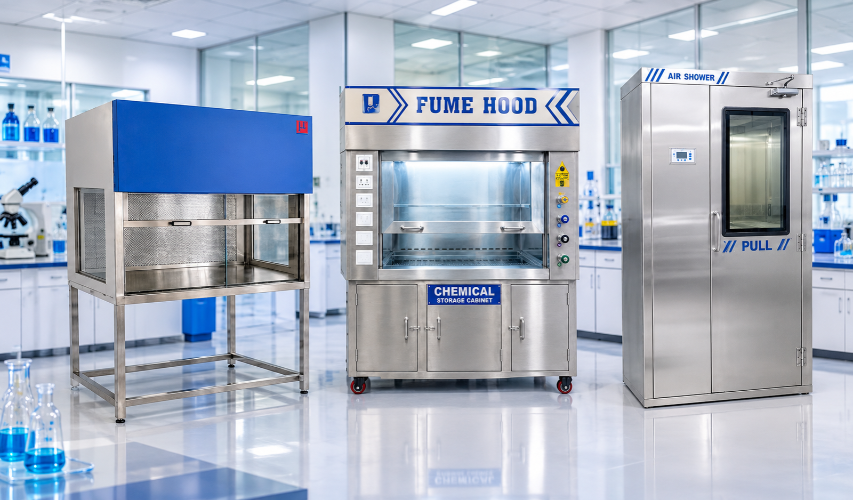
63. Laminar Air Flow Cabinet
A Laminar Air Flow Cabinet provides a clean working area through filtered, unidirectional airflow. It is generally used for suitable work where protection of the product or sample from airborne particulate contamination is required.
It should not be used as a substitute for a biological safety cabinet when working with potentially infectious or hazardous biological materials.
64. Biological Safety Cabinet
A Biological Safety Cabinet is a ventilated enclosure designed to provide protection during work with biological materials. Protection varies by cabinet class and type. A suitable Class II cabinet, for example, can protect the operator, environment and product when correctly installed, certified and operated.
65. Laboratory Fume Hood
A laboratory fume hood is a ventilation device designed to capture and remove hazardous chemical vapours, gases and fumes from the working area. It helps reduce chemical exposure when correctly selected and used.
66. PCR Workstation
A PCR workstation provides a dedicated working area for preparing samples and reagents used in polymerase chain reaction procedures. Its configuration may include filtered airflow and UV features to help manage contamination risks.
67. Pass Box
A pass box is a transfer enclosure used to move materials between controlled areas without repeatedly opening the main room doors. Static and dynamic designs are available for different contamination-control requirements.
68. Air Shower
An air shower uses filtered air jets to dislodge loose particles from personnel and garments before they enter a controlled environment. It is commonly incorporated into pharmaceutical and cleanroom entry arrangements.
69. Emergency Eyewash Station
An eyewash station provides a means of flushing the eyes following certain chemical splashes or other workplace exposures. It should be selected, installed and maintained according to applicable safety requirements.
70. Emergency Safety Shower
An emergency safety shower provides water for rinsing the body after certain chemical spills or exposures. It is an important emergency facility in laboratories that handle hazardous substances.
8. Microscopy and Histology Equipment
Microscopy equipment helps scientists observe structures that cannot be examined clearly with the naked eye. Histology instruments support the preparation and examination of tissue samples.
71. Compound Microscope
A compound microscope uses multiple lenses to magnify small specimens such as cells, microorganisms and tissue structures. It is commonly used in biology, microbiology, pathology and educational laboratories.
72. Stereo Microscope
A stereo microscope provides a three-dimensional view of larger specimens at relatively low magnification. It is useful for examining insects, plant materials, electronic components and small manufactured objects.
73. Inverted Microscope
An inverted microscope has its objective lenses positioned below the specimen stage. It is commonly used to observe cells growing in culture vessels without transferring them to conventional microscope slides.
74. Fluorescence Microscope
A fluorescence microscope uses suitable excitation light and optical filters to visualise fluorescent-labelled samples. It is widely used in cell biology, molecular biology and biomedical research.
75. Digital Microscope
A digital microscope uses an electronic camera and display system to capture and view magnified images. It allows users to document observations, share images and perform suitable digital image analysis.
76. Phase-Contrast Microscope
A phase-contrast microscope converts differences in optical phase into differences in image contrast. It is especially useful for observing transparent, unstained living cells and other specimens.
77. Polarising Microscope
A polarising microscope uses polarised light to examine materials with optical properties such as birefringence. It is used in mineralogy, materials science, geology and other specialised analytical applications.
78. Microtome
A microtome is an instrument used to cut thin sections of tissue or other suitable materials for microscopic examination. It is commonly used in histology and pathology laboratories.
79. Cryostat
A cryostat is a temperature-controlled instrument used to prepare thin sections from frozen tissue samples. It is commonly used in clinical pathology and specialised research laboratories.
80. Slide Warmer
A slide warmer is used to maintain or warm microscope slides at a controlled temperature during selected specimen preparation and staining procedures. It is commonly found in histology laboratories.
9. Microbiology and Molecular Biology Equipment
Microbiology and molecular biology laboratories require specialised tools for handling cultures, counting cells, preparing samples and analysing genetic material.
81. Inoculating Loop
An inoculating loop is a small laboratory tool used to transfer microorganisms between culture media. It is commonly used for streaking agar plates and performing microbiological culture procedures.
82. Inoculating Needle
An inoculating needle is a thin pointed instrument used to transfer microbial cultures, particularly during procedures that require a straight-line inoculation into suitable culture media.
83. Colony Counter
A colony counter helps count visible microbial colonies growing on culture plates. Manual and digital models are available to support microbiological testing and research.
84. Hemocytometer
A hemocytometer is a specialised counting chamber used to manually estimate the concentration of cells in a liquid sample. It is commonly used in cell culture, hematology and biological research.
85. Automated Cell Counter
An automated cell counter uses optical or image-based methods to estimate cell concentration and, depending on the instrument, cell viability. It helps streamline routine cell-counting procedures.
86. CO₂ Incubator
A CO₂ incubator provides controlled temperature, humidity and carbon dioxide conditions for suitable cell culture applications. It is commonly used in mammalian cell biology and biotechnology research.
87. Anaerobic Jar
An anaerobic jar provides an oxygen-reduced environment for growing microorganisms that require low-oxygen or oxygen-free conditions. It is commonly used in microbiology laboratories with suitable gas-generating or gas-control systems.
88. Thermal Cycler
A thermal cycler, also called a PCR machine, automatically changes sample temperatures through programmed cycles. It is used in polymerase chain reaction procedures to amplify selected DNA sequences.
89. Electrophoresis Apparatus
An electrophoresis apparatus separates charged molecules such as DNA, RNA or proteins using an electric field and a suitable supporting medium. It is widely used in molecular biology and biochemical research.
90. Gel Documentation System
A gel documentation system captures and records images of electrophoresis gels. Depending on its configuration, it may include illumination, imaging and software tools for analysing bands and documenting results.
10. Analytical and Scientific Testing Instruments
Analytical instruments help researchers determine the composition, characteristics and behaviour of samples. They are widely used in research, pharmaceuticals, quality control, chemical analysis and industrial testing.
91. UV-Visible Spectrophotometer
A UV-Visible spectrophotometer measures how much ultraviolet or visible light a sample absorbs or transmits at selected wavelengths. It is commonly used for quantitative analysis and concentration measurement through appropriate analytical methods.
92. Colorimeter
A colorimeter measures colour intensity or absorbance within selected wavelength ranges. It is frequently used for routine colorimetric analysis in water testing, education, food laboratories and chemical research.
93. Flame Photometer
A flame photometer measures the emission of light from selected elements introduced into a flame. It is commonly used for analysing certain alkali and alkaline earth metals, such as sodium and potassium, in suitable samples.
94. HPLC System
High-Performance Liquid Chromatography (HPLC) is an analytical system that separates components of a liquid sample as they pass through a column under high pressure. It is widely used in pharmaceutical testing, food analysis and chemical research.
95. Gas Chromatograph
A gas chromatograph separates volatile compounds within a sample using a carrier gas and a chromatography column. It is used in chemical, environmental, petroleum, food and pharmaceutical analysis.
96. FTIR Spectrometer
A Fourier Transform Infrared (FTIR) spectrometer measures how a sample interacts with infrared radiation. The resulting spectrum helps identify chemical bonds and investigate the composition of materials.
97. Polarimeter
A polarimeter measures the rotation of plane-polarised light as it passes through an optically active material. It is used in suitable chemical, pharmaceutical, food and sugar analysis applications.
98. Digital Multimeter
A digital multimeter measures electrical quantities such as voltage, current and resistance. It is commonly used to test laboratory electrical circuits, electronic components and scientific training setups.
99. Oscilloscope
An oscilloscope displays electrical signals as waveforms over time. It helps users examine signal shape, frequency, amplitude and timing in electronics laboratories and engineering research facilities.
100. Function Generator
A function generator produces electrical signals of selected shapes, such as sine, square and triangular waves. It is commonly used for testing electronic circuits and conducting physics and engineering experiments.
What Are the Most Common Laboratory Equipment Items for Students?
Students generally begin their laboratory training with basic equipment that demonstrates important scientific principles.
The following 15 items are commonly encountered in introductory school and college laboratory practicals:
- Beaker: Used for holding and mixing liquids.
- Test Tube: Used for performing small-scale experiments.
- Conical Flask: Used for mixing solutions and conducting titration experiments.
- Measuring Cylinder: Used for measuring liquid volumes.
- Pipette: Used for transferring measured quantities of liquids.
- Burette: Used for dispensing measured liquid volumes during titration.
- Glass Funnel: Used for filtration and transferring liquids.
- Microscope: Used for observing cells, microorganisms and other small specimens.
- Petri Dish: Used for basic microbial culture demonstrations.
- Thermometer: Used for measuring temperature.
- Bunsen Burner: Used for controlled heating during laboratory experiments.
- Stopwatch: Used for measuring time intervals during experiments.
- Spring Balance: Used for measuring force.
- Multimeter: Used for measuring electrical quantities such as voltage, current and resistance.
- Retort Stand: Used for supporting and holding laboratory apparatus during experiments.
Students should receive appropriate instructions before using heating equipment, glassware, electrical devices or other potentially hazardous apparatus.
What Are the Uses of Laboratory Equipment in Different Industries?
Laboratory equipment is important across several industries because each sector depends on testing, measurement, research and quality assurance.
1. Educational Institutions
Schools, colleges and universities use science laboratory equipment to demonstrate scientific principles and conduct practical experiments. Chemistry, physics and biology laboratories require different combinations of instruments.
2. Pharmaceutical Industry
Pharmaceutical laboratories use analytical instruments, weighing systems, heating equipment, filtration devices and controlled-environment systems for testing and research.
3. Healthcare and Diagnostic Laboratories
Diagnostic facilities use microscopes, centrifuges, pipettes, analyzers and other laboratory instruments for sample examination and testing.
4. Biotechnology Industry
Biotechnology laboratories use cell culture equipment, thermal cyclers, electrophoresis systems, biosafety cabinets and advanced research instruments.
5. Food and Beverage Industry
Food testing laboratories use moisture analyzers, pH meters, refractometers, balances and analytical instruments to examine product properties and quality.
6. Chemical and Industrial Testing
Industrial laboratories use balances, spectrometers, chromatographs, viscometers and other measuring equipment to analyse materials and support process quality control.
7. Agriculture and Environmental Research
Agricultural and environmental laboratories use soil testing equipment, pH meters, moisture analyzers, water-testing instruments and microscopes to investigate samples.
How to Choose the Right Laboratory Equipment?
Selecting appropriate laboratory equipment requires understanding the work that needs to be performed. Purchasing an instrument simply because it is commonly used in other laboratories may not meet your actual requirements.
Here are eight important factors to consider before purchasing lab equipment.
1. Identify Your Laboratory Requirements
First, identify the type of laboratory and the activities it will perform. A chemistry laboratory, biology laboratory, pharmaceutical facility and physics laboratory have different equipment requirements.
2. Check Equipment Specifications
Review the operating range, capacity, measurement resolution, construction material and technical specifications before choosing an instrument.
3. Consider Accuracy and Precision
For measurement-related equipment, check the specified accuracy, permissible error, calibration requirements and suitability for the intended application.
4. Evaluate Material and Construction Quality
Choose equipment made from materials compatible with the chemicals, temperature conditions and working environment involved in your procedures.
5. Review Safety Requirements
Consider appropriate guards, ventilation, electrical protection, containment systems and emergency facilities according to the laboratory's risk assessment.
6. Check Maintenance and Calibration
Understand the manufacturer's maintenance recommendations, servicing requirements and availability of calibration or verification services.
7. Consider Laboratory Space
Check equipment dimensions, installation needs, electrical supply, ventilation requirements and the space available for operation and servicing.
8. Select a Reliable Laboratory Equipment Supplier
Review product information, specifications, documentation, warranty terms, technical support and delivery arrangements before finalising a supplier.
A clear purchasing checklist can help institutions avoid unsuitable equipment and plan their laboratory setup more effectively.
Why Is Laboratory Equipment Maintenance Important?
Purchasing laboratory equipment is only the beginning. Proper care and maintenance are necessary to keep instruments in suitable working condition.
Poorly maintained instruments can produce unreliable results, create safety risks and interrupt laboratory operations.
Consider these important practices:
Regular Cleaning: Remove residues and contaminants using procedures suitable for the instrument and material.
Periodic Inspection: Check glassware for cracks, electrical components for damage and moving equipment for signs of wear.
Calibration and Verification: Measuring equipment should be checked according to manufacturer recommendations and the laboratory's quality requirements.
Proper Storage: Store instruments in clean and suitable conditions to prevent damage and contamination.
Operator Training: Personnel should understand operating procedures, equipment limitations and relevant safety precautions.
Maintenance Records: Maintain service history, calibration records and inspection documentation to support laboratory quality management.
The University of Waterloo's laboratory safety guidance highlights the importance of equipment-specific training, proper operation and maintenance. The World Health Organization's Laboratory Biosafety Manual also emphasises selecting and maintaining equipment according to laboratory risk assessments.
Laboratory Equipment Manufacturer and Supplier in India – Micro Technologies
Setting up a laboratory requires more than purchasing individual instruments. Institutions must identify the right combination of glassware, measuring devices, heating systems, analytical instruments and supporting equipment for their specific activities.
Micro Technologies offers a range of laboratory equipment, scientific instruments, laboratory glassware and educational laboratory products for different institutional and professional requirements.
The company's website organises its product range into several categories, making it easier for laboratory buyers to explore equipment according to their requirements.
Explore Laboratory Equipment Categories at Micro Technologies
1. Laboratory Glassware
Explore beakers, burettes, laboratory flasks, pipettes, cylinders, funnels and other glassware used for scientific experiments and liquid handling.
Website: https://www.microlabequipment.com/products/labware/glassware
2. Measuring and Weighing Equipment
Explore laboratory balances and weighing instruments used for measurement, sample preparation and testing.
Website: https://www.microlabequipment.com/products/laboratory-equipment/measuring-weighing
3. Heating and Cooling Equipment
Find laboratory heating devices and temperature-control equipment for scientific and research applications.
Website: https://www.microlabequipment.com/products/laboratory-equipment/heating-and-cooling-equipment
4. Analytical Instruments
Explore scientific instruments for laboratory testing, measurement and analytical applications.
Website: https://www.microlabequipment.com/products/laboratory-equipment/analytical-instruments
5. Sterilisation and Cleaning Equipment
Explore equipment used for laboratory hygiene, sterilisation and cleaning requirements.
Website: https://www.microlabequipment.com/products/laboratory-equipment/sterilization-cleaning
6. Microscopes
Find microscope options for educational, biological and scientific observation applications.
Website: https://www.microlabequipment.com/products/teaching-learning-aids/microscopes
7. Science Laboratory Equipment
Micro Technologies also provides product categories for chemistry, physics and biology teaching laboratories.
Explore the website: https://www.microlabequipment.com/
Why Consider Micro Technologies for Laboratory Equipment?
- Multiple laboratory product categories available through one website.
- Equipment options for educational and scientific applications.
- Product information to help buyers understand available solutions.
- Categories covering glassware, measuring, heating, analytical and sterilisation equipment.
- Support for laboratory equipment enquiries and institutional purchasing requirements.
Looking for Suitable Laboratory Equipment?
Whether you are establishing a new science laboratory, upgrading an existing facility or purchasing instruments for an educational institution, selecting suitable equipment is an important step.
Explore the laboratory product categories from Micro Technologies to identify equipment according to your requirements.
Business Name: Micro Technologies
Website: www.microlabequipment.com
Contact: +91 9416155221
Email: microdirector@gmail.com
Call to Action: Explore laboratory equipment from Micro Technologies and enquire about suitable solutions for your laboratory.
Frequently Asked Questions About Laboratory Equipment
1. What is laboratory equipment?
Laboratory equipment refers to the tools, instruments, apparatus and devices used for scientific experiments, testing, measurement, observation and research. Examples include beakers, microscopes, centrifuges, pipettes and analytical balances.
2. What are the 10 most common laboratory equipment items?
Ten commonly used items are beakers, test tubes, conical flasks, measuring cylinders, pipettes, burettes, microscopes, analytical balances, centrifuges and laboratory incubators. Their selection depends on the type of laboratory.
3. What are the different types of laboratory equipment?
Laboratory equipment can be divided into glassware, measuring and weighing instruments, heating and cooling devices, mixing equipment, filtration and separation systems, sterilisation equipment, microscopy equipment and analytical instruments.
4. What is the difference between laboratory equipment and laboratory instruments?
Laboratory equipment is a broad term covering all tools and devices used in a laboratory. Laboratory instruments usually refer to devices designed for specific measurement, observation or analysis tasks, such as pH meters, balances and spectrophotometers.
5. Which equipment is used in a chemistry laboratory?
Chemistry laboratories commonly use beakers, burettes, pipettes, volumetric flasks, condensers, analytical balances, pH meters, hot plates and distillation apparatus for preparing and analysing chemical samples.
6. Which equipment is used in a biology laboratory?
Biology laboratories commonly use compound microscopes, Petri dishes, test tubes, incubators, centrifuges, slides, coverslips and cell-counting equipment for studying cells, organisms and biological materials.
7. What equipment is used for measuring liquids in a laboratory?
Common liquid-measuring equipment includes graduated cylinders, volumetric flasks, volumetric pipettes, graduated pipettes and burettes. The appropriate choice depends on the required volume and measurement accuracy.
8. Which instrument is used to measure pH?
A pH meter is commonly used to measure the acidity or alkalinity of a liquid. It generally uses a pH-sensitive electrode to obtain a measurement.
9. Which laboratory equipment is used for sterilisation?
An autoclave uses saturated steam under pressure for sterilising suitable materials. Other equipment, such as hot air sterilisation ovens, may be used for compatible materials through validated dry-heat procedures.
10. How do you choose the right laboratory equipment?
Identify the application, required capacity, technical specifications, accuracy, material compatibility, safety requirements, maintenance needs and supplier support before selecting laboratory equipment.
11. What are the basic science laboratory equipment items for students?
Basic science laboratory equipment includes beakers, test tubes, measuring cylinders, pipettes, conical flasks, thermometers, microscopes, funnels, Bunsen burners and laboratory balances.
12. Where can I buy laboratory equipment in India?
Laboratory equipment can be purchased from scientific equipment manufacturers and suppliers. Micro Technologies offers different categories of laboratory glassware, measuring instruments, heating equipment, analytical instruments and educational laboratory products through its website.
Contact Today
Laboratory equipment forms the foundation of scientific experiments, research, measurement and testing. From basic glassware such as beakers and flasks to advanced instruments like spectrophotometers, chromatographs and microscopes, each item performs a particular function in laboratory operations.
Understanding the names, uses and applications of different equipment helps students learn scientific concepts, laboratory professionals improve their workflows and institutions make informed purchasing decisions.
The right equipment depends on the laboratory's purpose, technical requirements, safety conditions and available resources.
For educational institutions, research centres, pharmaceutical facilities and other scientific organisations, Micro Technologies offers a range of laboratory equipment categories to explore.
Choose suitable laboratory equipment, review the specifications and build a laboratory that supports reliable scientific work.