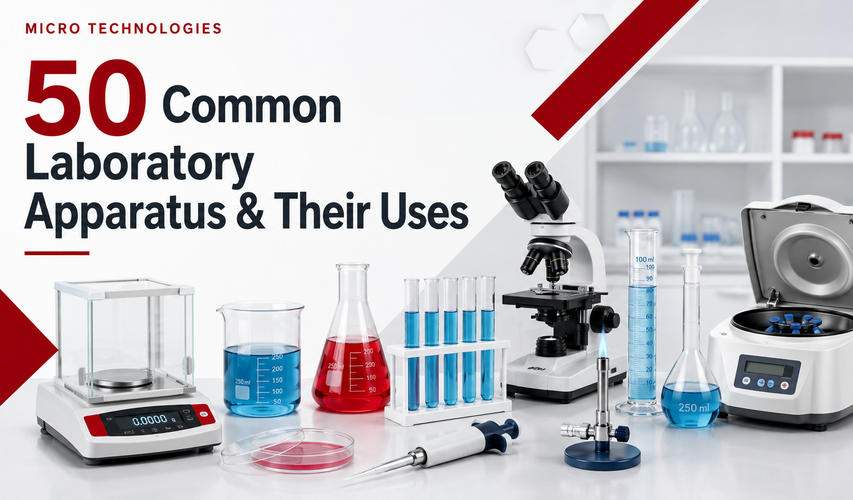
Laboratories depend on specialized tools for measuring, transferring, heating, mixing, separating, and analyzing different substances. Understanding the functions of common laboratory apparatus helps students perform experiments correctly and enables laboratory managers to select suitable equipment for their applications.
The term lab apparatus generally refers to tools such as beakers, test tubes, flasks, funnels, and stands. Laboratory equipment is a broader category that also covers powered instruments such as centrifuges, microscopes, incubators, autoclaves, and analytical balances.
This guide explains 50 common types of lab equipment, their uses, limitations, selection factors, and essential safety considerations. It is useful for schools, colleges, universities, testing facilities, research centers, and industrial laboratories.
What Is Laboratory Apparatus?
Laboratory apparatus includes the vessels, measuring devices, supporting tools, and instruments used to conduct scientific experiments. Different apparatuses may be designed for holding samples, measuring volume or mass, controlling temperature, separating materials, observing specimens, or protecting laboratory personnel.
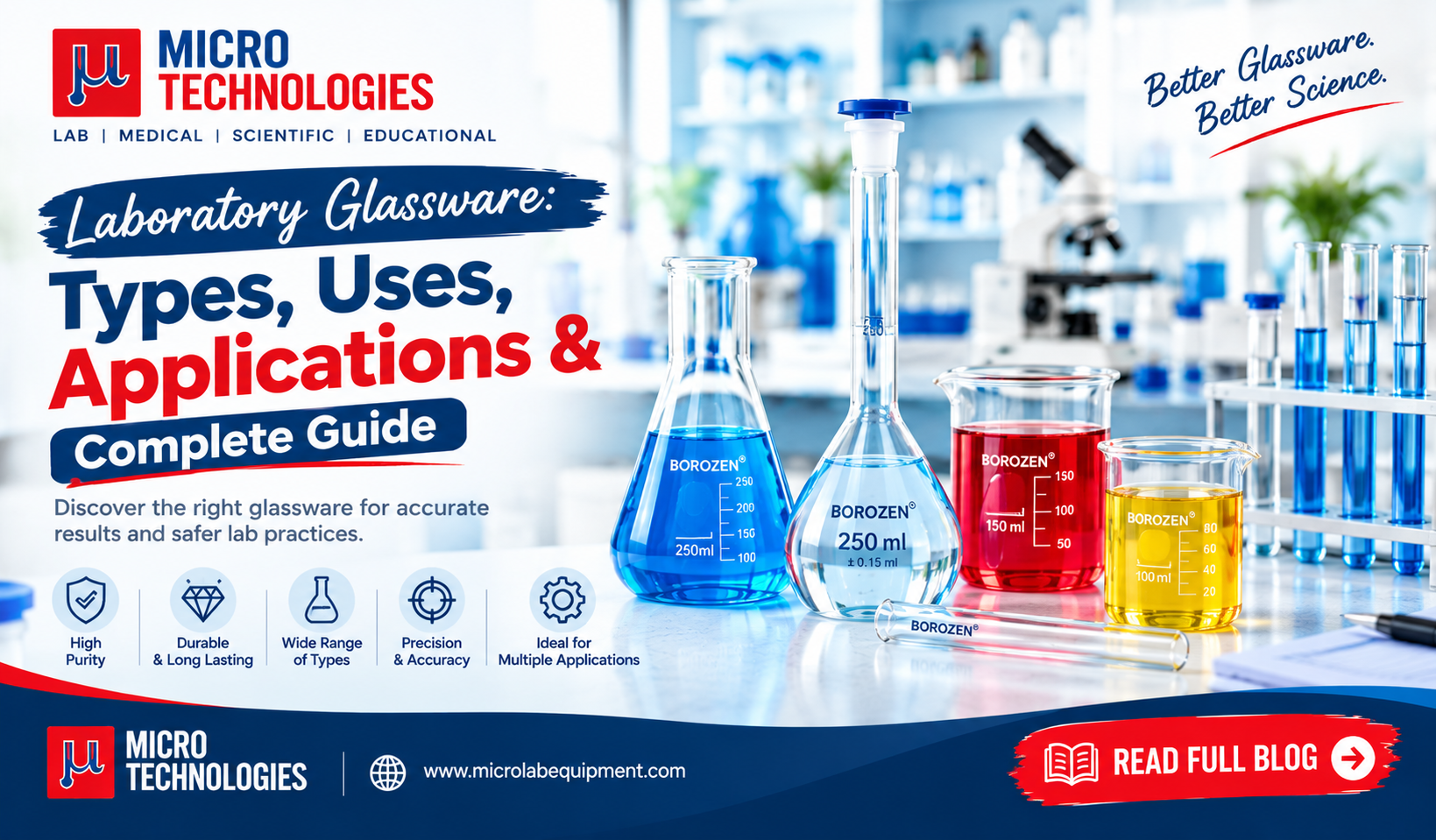
Using the correct apparatus is important because laboratory containers are not equally accurate. Beakers and Erlenmeyer flasks, for example, are suitable for holding and mixing liquids, but their markings should normally be treated as approximate. Calibrated pipettes, burettes, and volumetric flasks are designed for more accurate volumetric work.
50 Common Laboratory Apparatus and Their Primary Uses
Common teaching and research laboratories regularly use glassware, volumetric instruments, clamps, filtration tools, and heating devices from this list. The precise combination of science lab equipment required depends on the curriculum, sample type, experimental method, and associated hazards.
1. Beaker
A beaker is a cylindrical, flat-bottomed container commonly manufactured from laboratory glass or compatible plastic. Its wide opening makes it convenient for adding materials, stirring solutions, and temporarily holding liquids. A pouring spout helps transfer liquids into another vessel. Heat-resistant laboratory beakers can also be used for suitable heating applications.
Although many beakers carry graduation marks, those markings are intended primarily for approximate volume estimation. They should not replace a graduated cylinder, pipette, burette, or volumetric flask when the experimental result depends on accurate volume. Users should select the beaker according to required capacity, chemical compatibility, and heating conditions.
2. Erlenmeyer Flask
An Erlenmeyer flask, also called a conical flask, has a flat base, sloping sides, and a comparatively narrow neck. Its shape allows a liquid to be swirled with less risk of splashing than in a wide beaker. It is frequently used as a reaction vessel and as the receiving flask during titration.
The flask may also be used for mixing, temporary storage, and appropriate heating procedures. Its printed graduations are normally approximate rather than analytical measurements. A volumetric flask or calibrated measuring instrument should therefore be used when a method requires a highly accurate volume.
3. Test Tube
A test tube is a narrow cylindrical vessel with an open top and a rounded or shaped bottom. It is used to hold, mix, or heat relatively small samples and is particularly valuable for preliminary reactions, qualitative analysis, and classroom demonstrations. Test tubes may be made from different types of glass or plastic depending on temperature and chemical requirements.
A test tube should be placed in a compatible rack when it is not being handled. During heating, a suitable holder should be used, and the open end must be directed away from people. The tube material, wall thickness, and capacity must suit the planned reaction because not every tube is designed for direct heating or centrifugation.
4. Graduated Cylinder
A graduated cylinder is a tall, narrow vessel marked with a volume scale. Its geometry makes changes in liquid level easier to observe than in a wide beaker, so it offers better volume measurement for routine laboratory work. The cylinder should be positioned vertically on a stable, level surface and read at the appropriate part of the liquid meniscus.
Graduated cylinders provide moderate accuracy, but they are not necessarily the best option for preparing analytical standard solutions. Capacity, graduation interval, tolerance class, material, and chemical resistance should be reviewed when purchasing them. Calibrated pipettes, burettes, and volumetric flasks are normally selected when the method requires greater volumetric accuracy.
5. Volumetric Flask
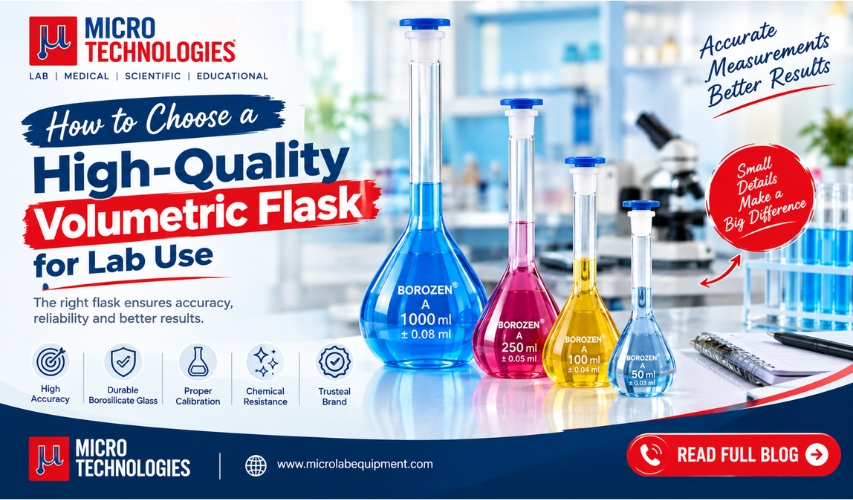
A volumetric flask is calibrated to contain a specified volume at a stated reference temperature. It has a bulb-shaped body, a narrow neck, and a single calibration line. It is widely used to prepare standard solutions and accurate dilutions by dissolving the material and carefully bringing the final liquid level to the calibration mark.
Unlike a graduated cylinder, a volumetric flask is designed around one nominal volume rather than a range of measurements. It should not be treated as ordinary heating glassware. Cleanliness is particularly important because grease or residue can disturb wetting, drainage, and meniscus formation, potentially introducing measurement error.
6. Burette
A burette is a long graduated tube equipped with a stopcock or valve that allows liquid to be delivered in controlled, variable amounts. It is used primarily in titration, where one solution is added gradually until a defined endpoint is reached. The delivered volume is determined from the difference between initial and final readings.
Before use, the burette should be clean, correctly positioned, and free of problematic air bubbles in its delivery path. The scale must be read at eye level using the correct meniscus. A compatible burette clamp and stable stand are essential because inaccurate positioning, leakage, or uncontrolled flow can affect the result.
7. Volumetric Pipette
A volumetric pipette is calibrated to deliver one defined volume of liquid with greater accuracy than ordinary transfer tools. It is used in quantitative analysis, standard-solution preparation, and dilution procedures. The liquid is drawn to the calibration mark using a pipette aid. Then, it is allowed to drain as specified for the pipette.
Users should never pipette by mouth. Correct technique, suitable pipette aids, vertical positioning, and the prescribed drainage time help protect measurement quality. Because volumetric pipettes are commonly marked “to deliver,” their calibration accounts for the liquid film that normally remains inside after controlled drainage.
8. Micropipette
A micropipette is a precision liquid-handling instrument used to aspirate and dispense small volumes, commonly in the microliter range. It is essential in microbiology, molecular biology, clinical testing, and other workflows where small errors may significantly change sample concentration or assay results. Adjustable and fixed-volume models are available.
The selected pipette and tip must cover the intended volume and be compatible with the liquid. Eppendorf advises using the lowest suitable nominal-volume pipette for very small volumes to reduce the size of the internal air cushion. Calibration, leak checks, pre-wetting where appropriate, and consistent operating technique help support repeatable results.
9. Dropper
A laboratory dropper, including the common Pasteur-style dropper, transfers small amounts of liquid one drop at a time. It is helpful when an approximate addition is sufficient, such as adding an indicator, transferring a stain, or adjusting a reaction gradually during a basic demonstration.
A dropper is not a substitute for a calibrated pipette when an exact volume is required because drop size can vary with the liquid, tip geometry, and dispensing angle. Dedicated droppers should be used for different reagents to avoid contamination, and the bulb or dispensing mechanism must be compatible with the chemical being handled.
10. Reagent Bottle
A reagent bottle is used to store chemicals, prepared solutions, or laboratory reagents. Bottles are available in glass and plastic, with narrow or wide openings and different closure systems. Amber bottles are often selected for substances that require protection from light, while transparent containers make visual inspection easier.
The container must be chemically compatible with its contents and labeled according to the laboratory’s chemical-management procedure. The label should identify the material and communicate relevant hazard information. Storage conditions should follow the chemical’s safety data and institutional requirements rather than relying only on the appearance of the bottle.
Glassware, Culture and Sample-Preparation Apparatus
11. Watch Glass
A watch glass is a shallow, concave piece of glass. It is used to hold small samples, evaporate small amounts of liquid, or cover a beaker. When used as a cover, it can help limit splashing or contamination while still allowing observation and, depending on the setup, gas exchange.
A watch glass is not a sealed closure and should not be treated as one. Its thin profile also makes it more vulnerable to thermal shock and breakage than heavier vessels. Users should check it for chips or cracks and confirm that its material is suitable before exposure to heat or reactive chemicals.
12. Petri Dish
A Petri dish is a shallow circular container with a loose-fitting lid. In microbiology it is commonly used to hold solid culture media on which microorganisms may be grown, isolated, or observed under controlled conditions. Petri dishes are available in reusable glass and disposable plastic formats.
The dish itself does not create sterile conditions. Media preparation, sterilization, aseptic handling, incubation parameters, and waste treatment must follow the relevant procedure and biological risk assessment. Petri dishes used with microorganisms should remain appropriately contained and be decontaminated or discarded through an approved process.
13. Evaporating Dish
An evaporating dish is a shallow, heat-resistant vessel used to remove solvent from a solution by evaporation. Its broad surface exposes more liquid to the surrounding environment than a narrow-necked vessel, supporting efficient solvent loss. It is commonly made from porcelain or compatible heat-resistant glass.
Evaporation can concentrate both the desired solute and any impurities present in the sample. Heating conditions should therefore be controlled to prevent excessive boiling, splashing, or decomposition. When a flammable or hazardous solvent is involved, the heating method and ventilation controls must be selected through a proper hazard assessment.
14. Crucible
A crucible is a small heat-resistant container designed for strongly heating solid substances. Porcelain, ceramic, quartz, metal, and other specialized materials may be used depending on temperature, chemical environment, and analytical method. Crucibles support applications such as ignition, ash determination, and high-temperature sample preparation.
The crucible material must not react with the sample or introduce unacceptable contamination. A hot crucible should be handled with suitable tongs and placed on an appropriate heat-resistant surface. After heating, it may be cooled in a desiccator when moisture uptake could affect the measured mass.
15. Laboratory Funnel
A standard laboratory funnel helps transfer liquids or fine solids into containers with narrow openings. When fitted with appropriate filter paper, it can also be used for gravity filtration, allowing liquid to pass while the filter retains selected solid particles.
Funnel stem size, cone angle, material, and capacity should match the vessel and filtration method. The funnel should not form an unintended airtight seal in the receiving container because displaced air requires a safe path to escape. Chemical compatibility must also be checked, particularly when plastic funnels are used with organic solvents.
16. Separatory Funnel
A separatory funnel is a stoppered vessel with a stopcock at its lower end. It is designed to separate liquid layers that do not mix, such as two immiscible phases used in liquid–liquid extraction. After the layers settle, the lower phase can be drained in a controlled manner.
Mixing may produce internal pressure, especially when volatile solvents or gas-forming reactions are involved. The funnel must be supported securely and vented according to the approved procedure while being directed away from people. The stopcock material, capacity, and solvent compatibility should be checked before use.
17. Büchner Funnel
A Büchner funnel is used for vacuum-assisted filtration. It contains a perforated support plate on which filter paper is placed. When connected through suitable glassware and tubing to a vacuum source, the pressure difference draws liquid through the filter while the solid remains on its surface.
The apparatus requires vacuum-compatible receiving glassware; ordinary thin-walled vessels may fail under reduced pressure. The filter paper should properly cover the perforated area and be seated before filtration begins. A trap may also be required to protect the vacuum system from liquid carryover.
18. Filter Paper
Filter paper is a porous laboratory consumable used to separate suspended solids from liquids or gases. During gravity or vacuum filtration, particles larger than the effective retention range remain on or within the paper while the filtrate passes through.
Filter papers differ in diameter, thickness, flow rate, ash content, and particle-retention characteristics. Selection should therefore be based on whether the laboratory needs rapid clarification, collection of a fine precipitate, or quantitative analysis. An unsuitable grade may slow filtration or allow important particles to enter the filtrate. Cytiva filtration guide
19. Glass Stirring Rod
A glass stirring rod is a solid rod used to manually mix solutions, assist dissolution, and guide liquid while pouring. Holding the rod against the pouring edge can help direct the stream into the receiving vessel and reduce uncontrolled flow.
The rod should be used gently because pressing or scraping it forcefully against glassware can damage either item. It must be cleaned between samples to prevent cross-contamination. For long-duration or highly uniform mixing, a magnetic or overhead stirring system may be more appropriate than manual stirring.
20. Mortar and Pestle
A mortar and pestle are used together to crush, grind, and blend solid materials. The mortar forms the bowl, while the pestle applies pressure and friction to reduce particle size. The apparatus is useful for sample preparation, powder mixing, and increasing the surface area of a solid before dissolution or analysis.
Available materials include porcelain, glass, agate, and metal, and each has different resistance to abrasion, impact, and chemical attack. The selected material should not contaminate the sample. The laboratory apparatus must be cleaned thoroughly between samples because retained particles can interfere with subsequent work.
21. Laboratory Spatula
A laboratory spatula is a small hand tool used to transfer, scrape, or manipulate relatively small quantities of solid chemicals. It can help move powder from a reagent container to weighing paper, a balance pan, or another vessel without direct hand contact.
Stainless steel, plastic, and other materials are available, so compatibility with the chemical must be considered. A clean, dry spatula should be used to avoid contaminating the reagent stock. Excess chemical should not normally be returned to its original container unless the laboratory procedure specifically permits it.
22. Scoopula
A spatula is a narrow, curved tool designed for scooping and transferring powdered or granular materials. Its channel-like shape can make it more convenient than a flat spatula when transferring a larger quantity of solid material into a weighing vessel or container with a suitable opening.
The scoopula should be clean, dry, and chemically compatible with the material being handled. Hygroscopic chemicals should not be left exposed during transfer because they can absorb atmospheric moisture. Careful handling is also required to limit airborne dust from fine powders.
23. Forceps
Laboratory forceps are tweezer-like tools used to grip small objects that may be difficult, unsafe, or inappropriate to handle directly. Typical applications include positioning specimens, handling filter material, and moving small components during dissection, microscopy, or sample preparation.
Forceps are available with pointed, blunt, serrated, or specialized tips. Tip design and construction material should suit the object, required precision and cleaning method. Separate or appropriately decontaminated forceps may be necessary when cross-contamination would affect a biological or analytical result.
24. Test-Tube Rack
A test tube rack holds multiple tubes upright in an organized arrangement. It helps prevent tubes from rolling on the work surface and enables samples to be arranged by number, treatment group, or experimental stage. Some racks are also designed for drainage, transport, or specific tube dimensions.
Rack material must suit the laboratory environment. Plastic, coated metal, and stainless-steel racks offer different levels of heat, chemical, and corrosion resistance. The tube diameter and rack opening should be compatible, and racks used for biological work must be capable of undergoing the prescribed cleaning or decontamination process.
25. Test-Tube Holder
A test-tube holder is a handheld clamp used to grip a single tube, particularly during controlled heating or when the tube should not be touched directly. It keeps the user’s hand farther from the vessel and provides better control than holding hot glass manually.
The holder must grip the tube securely without applying enough force to crack it. During heating, the tube should be moved appropriately and its open end kept away from the user and others. A test-tube holder serves a different purpose from a rack, which supports several stationary tubes.
Supporting and Holding Laboratory Apparatus
26. Retort Stand
A retort stand, also called a ring stand, consists of a heavy base and a vertical metal rod. Clamps and rings can be attached at different heights to support burettes, funnels, condensers, flasks, and other laboratory apparatus. It is widely used in titration, filtration, distillation, and heating assemblies.
The stand should be positioned on a stable, level surface, with heavy components kept close to the base wherever possible. Clamps must hold glassware firmly without applying excessive pressure. Before starting an experiment, users should check the setup’s center of gravity and ensure that tubing, heating equipment, and vessels cannot pull it over.
27. Ring Clamp
A ring clamp is a circular metal support that attaches to a retort stand. It can support funnels during filtration, wire gauze during heating, and selected vessels when used with the correct supplementary support. Its height can be adjusted along the stand according to the experimental arrangement.
The ring size, load capacity, and attachment mechanism should match the apparatus being supported. It should not be assumed that the ring alone can safely hold every type of flask. The complete assembly must remain balanced, and the clamp screw should be inspected for wear or loosening before use.
28. Utility Clamp
A utility clamp is an adjustable device used to secure test tubes, flasks, condensers, and other laboratory components to a retort stand. Many models use two or three coated jaws that can be tightened around the apparatus. This allows equipment to be positioned at a required height and angle.
The clamp should contact a strong part of the apparatus and be tightened only enough to prevent movement. Excessive pressure can crack glassware, while a loose clamp may allow the apparatus to slip. Heat-resistant clamp sleeves should be selected when the clamp will be positioned near a burner or another heat source.
29. Tripod Stand
A laboratory tripod is a three-legged support used to hold a vessel above a burner or another heating source. Wire gauze or a suitable supporting surface is usually positioned over the tripod before placing a beaker or flask on it.
A tripod must stand firmly on a heat-resistant surface and should be large enough to support the selected vessel. Open-flame heating introduces ignition and burn hazards, so a hot plate or another flameless method may be more suitable when flammable materials are present.
30. Wire Gauze
Wire gauze is a metal mesh placed on a ring clamp or tripod to support glassware during heating. It creates a flatter surface for the vessel and helps distribute the heat from the burner across a wider portion of its base.
The gauze must be appropriate for the expected temperature, load, and laboratory procedure. Damaged, heavily corroded, or distorted gauze should not be used. It remains hot after the flame has been removed, so users should allow sufficient cooling time or handle it with suitable tools.
31. Laboratory Tongs
Laboratory tongs are gripping tools used to handle hot crucibles, beakers, and other heated items. Different jaw shapes are designed for different vessels; crucible tongs, for example, are shaped to grip a crucible more securely than ordinary general-purpose tongs.
The correct tong type must be selected for the vessel’s shape and weight. Before lifting, users should confirm that the grip is secure and that the destination surface can tolerate heat. Chemistry LibreTexts specifically identifies crucible tongs as tools for transferring hot crucibles and other heated objects.
Heating and Temperature-Control Equipment
32. Bunsen Burner
A Bunsen burner is a laboratory gas burner that produces a single adjustable flame. It is traditionally used for heating, combustion demonstrations, and certain sterilization procedures. Air entering through adjustable openings mixes with the fuel and influences the appearance and character of the flame.
A Bunsen burner creates an open-flame hazard and must not be used near flammable vapors or incompatible materials. Gas tubing, connections, and the surrounding work area should be inspected before ignition.
33. Laboratory Hot Plate
A laboratory hot plate uses electrical energy to heat vessels without a gas flame. It is used for heating solutions, supporting digestion or evaporation procedures, and maintaining a selected temperature range. Combination units may incorporate a magnetic stirrer for simultaneous heating and mixing.
The vessel must be compatible with the plate surface and expected temperature. Users should remember that the plate may remain dangerously hot after it has been switched off. Flammable or volatile materials require a suitable risk assessment, ventilation, and an appropriately rated heating system because ordinary electrical equipment can present an ignition risk.
34. Magnetic Stirrer
A magnetic stirrer rotates a small magnetic stir bar placed inside a liquid-filled vessel. The rotating magnetic field under the plate moves the bar and creates steady mixing without manual stirring. Many models combine stirring and heating functions.
The stir bar should be appropriately sized for the vessel and liquid volume. If it repeatedly strikes the vessel wall or loses synchronization, the stirring speed may be too high or the bar unsuitable. Viscous liquids or large volumes may require an overhead stirrer rather than a small magnetic system.
35. Heating Mantle
A heating mantle is an electrical heater shaped to surround part of a round-bottom flask. It distributes heat around the curved flask surface and is frequently used in organic chemistry, reflux, and distillation systems where direct flame would be inappropriate.
Mantle size must match the flask because poor contact may produce inefficient or uneven heating. The glassware must be supported independently with suitable clamps; the mantle should not be relied upon as the main structural support. Temperature control, electrical condition, and compatibility with volatile materials should be reviewed before operation. Chemistry
36. Water Bath
A laboratory water bath provides gentle, indirect heating by surrounding sample containers with temperature-controlled water. It is commonly used when samples need more uniform heating than direct flame can provide. Water baths are found in chemistry, biology, clinical, and microbiological laboratories.
A water bath’s temperature range, capacity, uniformity, and stability should match the method. Water level and cleanliness require regular attention, and electrical components must be protected from spills. Samples that could contaminate the bath should be properly closed or secondarily contained according to the laboratory procedure.
37. Hot-Air Oven
A laboratory hot-air oven provides controlled dry heating inside an insulated chamber. Depending on its design and validated application, it may be used for drying glassware, removing moisture from samples or conducting temperature-exposure procedures.
Temperature range, chamber size, circulation type, uniformity, controller accuracy, and recovery time are important purchasing factors. Materials placed inside must be compatible with the selected temperature and dry-heat conditions. An oven should not be used for volatile or flammable substances unless it is specifically designed and approved for that purpose.
38. Muffle Furnace
A muffle furnace is an enclosed high-temperature heating unit used for procedures such as ashing, ignition, and thermal treatment of materials. Its insulated chamber separates samples from direct contact with fuel-combustion products in electrically heated models.
Maximum temperature, chamber dimensions, temperature uniformity, controller design, and refractory construction should be evaluated before purchase. Suitable crucibles, tongs, thermal protection, and ventilation may be required. Samples must be assessed for the possibility of releasing corrosive, toxic, or flammable vapors during heating.
39. Laboratory Refrigerator
A laboratory refrigerator provides controlled cold storage for compatible reagents, samples, and reference materials. Unlike general domestic storage, laboratory refrigerators may offer temperature monitoring, specialized shelving, alarms, and configurations intended for particular scientific applications.
Storage temperature and permissible materials must be defined by the sample or reagent instructions. A standard refrigerator must not be used for flammable materials unless the appliance is specifically designed for that hazard. Temperature records, alarm checks, cleaning, and inventory control help protect stored materials and reveal deviations.
40. Desiccator
A desiccator is a sealed container used to protect moisture-sensitive samples or to cool heated items in a dry environment. A desiccant placed in its lower section removes or limits moisture within the enclosed space, while a perforated platform supports the sample above it.
The sealing surfaces should be kept clean and maintained according to the desiccator design. Hot items must only be introduced if the apparatus and procedure allow it. Vacuum desiccators require additional inspection because damaged or unsuitable glassware may fail under pressure differences.
Separation and Analytical Laboratory Equipment
41. Condenser
A laboratory condenser cools vapor and converts it back into liquid. It is used in distillation, reflux, and related procedures. Many designs contain an inner vapor pathway surrounded by a jacket through which cooling water or another coolant circulates.
Cooling water is generally connected so that the jacket fills effectively, while secure tubing helps prevent leaks or disconnection. The condenser must be clamped without excessive stress on glass joints. Its length, internal design, and coolant capacity should suit the vapor load and boiling characteristics of the procedure.
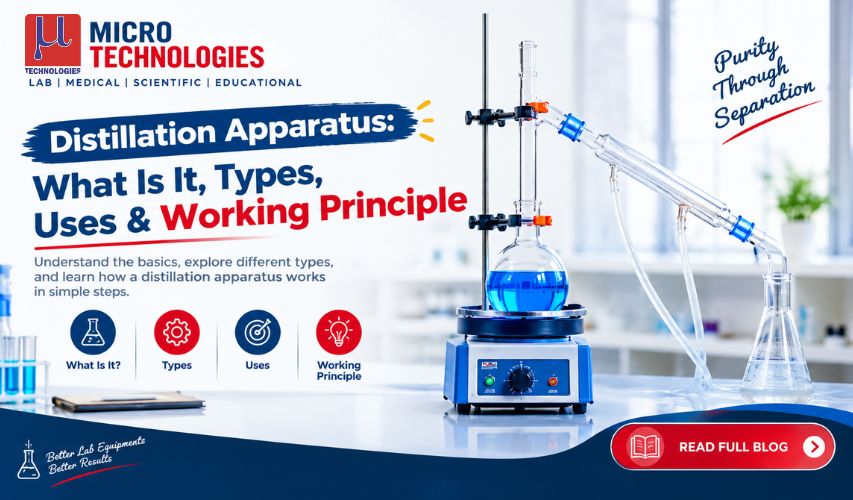
42. Distillation Apparatus
A distillation apparatus separates or purifies materials by controlled vaporization followed by condensation. A basic arrangement can include a boiling flask, heat source, distillation head, thermometer, condenser, and receiving vessel. Separation depends on the substances’ volatility and the selected operating conditions.
Every joint should be supported without creating a completely sealed system that could develop dangerous pressure. The heat source must be compatible with the liquid, particularly when flammable solvents are involved. Fractional, simple, steam, and vacuum distillation require different components and should not be treated as interchangeable setups.
43. Laboratory Thermometer
A laboratory thermometer measures the temperature of samples, heating baths, reactions, or storage environments. Common options include liquid-in-glass, digital-probe, resistance-based, and thermocouple instruments. The correct design depends on temperature range, response time, required accuracy, and chemical environment.
The sensor’s measurement range should never be exceeded. Calibration or verification against a traceable reference may be required when temperature directly influences the validity of a test. Glass thermometers should be checked for separation or damage, while digital models require probe, battery, and display inspection. NIST temperature calibration services,
44. Analytical Balance
An analytical balance measures mass with higher resolution than an ordinary top-pan balance. It commonly incorporates a draft shield because air movement, vibration, temperature changes, and handling can influence small mass readings. It is used in solution preparation, formulation, quantitative analysis, and calibration-related work.
The balance should be installed on a stable surface away from drafts and excessive vibration. Users should verify leveling, allow a suitable warm-up, and use clean weighing containers. Calibration and routine performance checks should reflect the required measurement quality and the manufacturer’s instructions.
45. pH Meter
A pH meter is an electrochemical instrument used to determine the acidity or alkalinity of a solution through its response to hydrogen-ion activity. A typical system includes a measuring electrode, reference system, temperature input or compensation feature, and an electronic meter.
Reliable results depend on appropriate calibration with suitable buffer solutions, correct electrode storage, rinsing, and temperature awareness. The electrode must be compatible with the sample because highly viscous, low-ionic-strength, or chemically aggressive materials may need specialized designs. The WHO maintenance manual identifies pH meters as standard laboratory instruments requiring systematic care.
46. Microscope
A microscope produces a magnified view of specimens that cannot be examined adequately with unaided vision. A compound light microscope commonly combines illumination, objectives, and an eyepiece to observe cells, tissues, microorganisms, and small material structures.
Total magnification is commonly calculated by multiplying objective magnification by eyepiece magnification. However, higher magnification does not automatically produce additional detail; useful resolution also depends strongly on numerical aperture and the optical system. Buyers should evaluate objective quality, illumination, focusing mechanism, stage design, and intended specimen type.
47. Centrifuge
A centrifuge rotates samples to generate centrifugal effects that assist the separation of components. It is used for concentrating cells or particles, separating precipitates, and preparing biological or chemical samples. Performance depends on the rotor, rotational speed, radius, sample characteristics, and operating time.
Opposing tubes must be balanced according to the manufacturer’s instructions, and the rotor and containers should be inspected for damage. The lid must remain closed until rotation stops. When infectious materials may generate aerosols, sealed rotors or safety cups and appropriate containment procedures may be necessary.
48. Autoclave
An autoclave uses saturated steam under pressure to achieve moist-heat sterilization of compatible materials. It may be used for glassware, instruments, media, or laboratory waste when the selected cycle has been validated for that load.
Sterilization effectiveness depends on factors such as steam contact, temperature, exposure time, load arrangement, and the nature of the material. Users must account for burn, pressure, and hot-liquid hazards. Sealed containers and incompatible chemicals must not be processed. Cycle performance should be monitored using the laboratory’s validated procedure.
49. Laboratory Incubator
A laboratory incubator maintains a controlled internal environment for samples, cultures, or tests requiring stable conditions. Depending on the model, it may regulate temperature alone or also control carbon dioxide, humidity, shaking, and other parameters.
The incubator should be selected according to temperature range, uniformity, chamber capacity, recovery performance, and application. Overloading can interfere with air circulation and temperature distribution. Routine cleaning, independent temperature verification, and proper monitoring help detect deviations before they compromise an experiment.
50. Chemical Fume Hood
A chemical fume hood is a local exhaust ventilation enclosure designed to reduce a worker’s exposure to hazardous fumes, vapors, gases, or dust produced during laboratory operations. Air is drawn through the front opening and moved through an exhaust or approved filtration system, depending on the hood design.
A fume hood is not the same as a biological safety cabinet. Selection depends on the hazard being controlled. The sash position, airflow indication, and placement of equipment inside the hood affect containment. A hood should not be treated as general chemical storage because unnecessary objects can obstruct airflow and reduce working space.
How to Select the Right Laboratory Equipment
1. Define the Intended Application
Start with the experiment, sample, and required result. A school demonstration may need robust general-purpose science lab equipment, while quantitative research may require calibrated volumetric ware, controlled-temperature instruments, and documented performance. WHO guidance emphasizes that equipment selection, procurement, commissioning, operation, and maintenance should be considered as connected stages.
2. Determine the Required Accuracy
Do not select measuring apparatus solely by capacity. Beakers are appropriate for rough volume handling, graduated cylinders offer better routine measurement, and pipettes, burettes, or volumetric flasks are used when the method requires greater accuracy. The required tolerance should be based on the testing procedure rather than purchasing the most precise instrument for every task.
3. Check Material Compatibility
Glass, porcelain, stainless steel, and laboratory plastics behave differently when exposed to chemicals, heat, impact, and pressure. A suitable material must tolerate the sample and cleaning process without deforming, reacting, or adding unacceptable contamination. Manufacturer instructions and the chemical’s safety data should be reviewed before use.
4. Review Capacity and Working Range
The nominal capacity of equipment should match normal sample volume without persistent underloading or overloading. Centrifuges require compatible rotor and tube combinations; balances require suitable capacity and readability; heating equipment requires an appropriate temperature range; and pipettes perform best when selected for the intended volume.
5. Consider Safety and Facility Requirements
Installation requirements may include electrical supply, gas connections, ventilation, drainage, water, clearance, or reinforced bench space. A fume hood, autoclave, or high-temperature furnace cannot be selected safely from capacity and price alone. The facility must be able to install, operate, and maintain it according to the applicable instructions and risk assessment.
6. Evaluate Maintenance and Calibration Support
Laboratories should consider spare parts, service access, operating manuals, training, and calibration requirements before purchase. Equipment records can include installation details, service history, calibration results, and performance checks. Preventive maintenance reduces avoidable downtime and helps identify gradual performance deterioration.
Common Laboratory Equipment Maintenance Checklist
- Inspect glassware for cracks, chips, and damaged joints before use.
- Clean apparatus using a method compatible with both the contamination and construction material.
- Keep volumetric glassware free from grease or residue that can distort the meniscus or affect drainage.
- Verify balances, pipettes, thermometers, and pH meters according to the laboratory’s quality requirements.
- Examine centrifuge rotors, buckets, and seals for corrosion or physical damage.
- Check heating equipment, power cables, and controllers before operation.
- Monitor refrigerators and incubators using an appropriate temperature-recording process.
- Keep maintenance, repair, verification, and calibration records.
- Follow manufacturer instructions for service intervals and replacement parts.
- Remove defective equipment from service until it has been assessed and released for use.
These practices align with the WHO's equipment-maintenance approach and NIST guidance on cleanliness and calibration of volumetric standards. Specific intervals should be determined by the equipment manufacturer, frequency of use, risk, and laboratory quality system.
Laboratory Equipment for Schools, Colleges and Research Centres
School laboratories generally require durable, easy-to-use apparatus that supports curriculum-based experiments. Common items include beakers, flasks, test tubes, measuring cylinders, stands, basic balances, burners or hot plates, and microscopes. The precise list should follow the subjects taught, student numbers, available facilities, and approved safety procedures.
College and university laboratories may require more accurate volumetric ware, analytical balances, pH meters, centrifuges, incubators, spectrophotometers, and specialized teaching instruments. Research and industrial facilities usually select equipment according to validated methods, sample throughput, accuracy, traceability, containment, and regulatory requirements.
Micro Technologies: Laboratory Equipment Manufacturer and Supplier
Micro Technologies supplies lab equipment, laboratory glassware, medical equipment, teaching aids, and electronic trainer kits for educational, research, and industrial applications. Its listed laboratory categories include measuring and weighing equipment, heating equipment, mixing and stirring systems, analytical instruments, and sterilization and cleaning equipment.
Institutions planning a new laboratory or replacing existing laboratory equipment can contact Micro Technologies with an application-based requirement rather than requesting products only by name. A useful enquiry should specify the laboratory type, intended experiments, required quantity, capacity or operating range, available utilities, preferred material, and applicable documentation.
This approach helps distinguish between products that may appear similar but serve different purposes. For example, do not buy a beaker for precise measurements. A standard refrigerator may not be safe for flammable materials. Do not use a chemical fume hood instead of a biological safety cabinet.
Frequently Asked Questions
What are the most common laboratory apparatus?
Some of the most common laboratory apparatus are beakers, test tubes, Erlenmeyer flasks, graduated cylinders, pipettes, burettes, volumetric flasks, funnels, stirring rods, spatulas, retort stands, and thermometers. Powered instruments such as balances, hot plates, microscopes, and centrifuges are also common, depending on the laboratory’s purpose.
What is the difference between a beaker and a graduated cylinder?
A beaker is primarily convenient for holding, mixing, heating, and roughly estimating liquid volume. A graduated cylinder has a narrower form and calibrated scale, making it more suitable for routine volume measurement. For high-accuracy work, a suitable pipette, burette, or volumetric flask may be required.
Which apparatus is used to prepare an accurate solution?
A volumetric flask is commonly used to prepare a solution to one defined final volume. An analytical balance may be used to measure the required solute, while a pipette or burette may be used for accurate liquid delivery in subsequent steps. The required procedure depends on the analytical method.
Which laboratory apparatus is used for titration?
A standard titration setup usually includes a burette held vertically by a clamp and stand, a receiving flask, and an appropriate method for identifying the endpoint. The burette delivers precisely measured, variable volumes of titrant.
Which equipment is used to separate laboratory samples?
The correct equipment depends on the type of mixture. Filter paper and funnels separate selected solids from fluids; a separatory funnel separates immiscible liquid layers; a centrifuge separates components under rotational force; and distillation separates materials through vaporization and condensation.
What is the difference between a fume hood and a biosafety cabinet?
A chemical fume hood is intended primarily to control exposure to hazardous chemical vapors, gases, fumes, or dust. A biological safety cabinet is designed for biological containment and, depending on its class and configuration, may also protect the work material. The two devices should not be treated as interchangeable.
Which science lab equipment is essential for a school?
A school’s requirements depend on the curriculum and the students’ level. Common equipment can include test tubes, racks, beakers, flasks, measuring cylinders, funnels, balances, thermometers, microscopes, stands, and controlled heating devices. Required PPE and safety facilities must be selected through the school’s hazard assessment and applicable rules.
Why is laboratory equipment calibration important?
Calibration establishes the relationship between an instrument’s indication and an accepted reference under defined conditions. It helps laboratories understand measurement performance and determine whether equipment is suitable for its intended work. NIST publishes gravimetric procedures for calibrating volumetric standards such as “to contain” and “to deliver” measuring vessels.
How should laboratory apparatus be stored?
Clean, dry apparatus should be stored in a way that protects it from contamination, corrosion, impact, and unauthorized use. Volumetric glassware should be protected from damage, sensitive instruments should follow manufacturer storage requirements, and chemicals must be stored according to compatibility and hazard information.
Where can institutions purchase laboratory equipment?
Schools, colleges, research centers, and industrial laboratories can obtain application-specific products from a qualified laboratory equipment manufacturer or supplier. Micro Technologies offers laboratory glassware, measuring and weighing devices, heating systems, mixing instruments, analytical equipment, and sterilization products through its official catalog. Buyers should confirm specifications, compatibility, documentation, and after-sales requirements before ordering.
Conclusion
The correct laboratory apparatus improves experimental control, measurement quality, workflow, and safety. However, no item should be selected only because it appears on a standard equipment list. Its capacity, construction material, accuracy, operating range, compatibility, installation requirements, and maintenance needs must match the intended method.
Basic tools like beakers, test tubes, and funnels support routine handling.
Advanced laboratory equipment like balances, microscopes, centrifuges, incubators, and autoclaves enables controlled measurement and observation.
It also supports separation and sterilization. Understanding these differences helps schools, colleges, and laboratories build a more practical and reliable working environment.