
Kinematic Model – Hooke’s Coupling
Product Specification Sheet
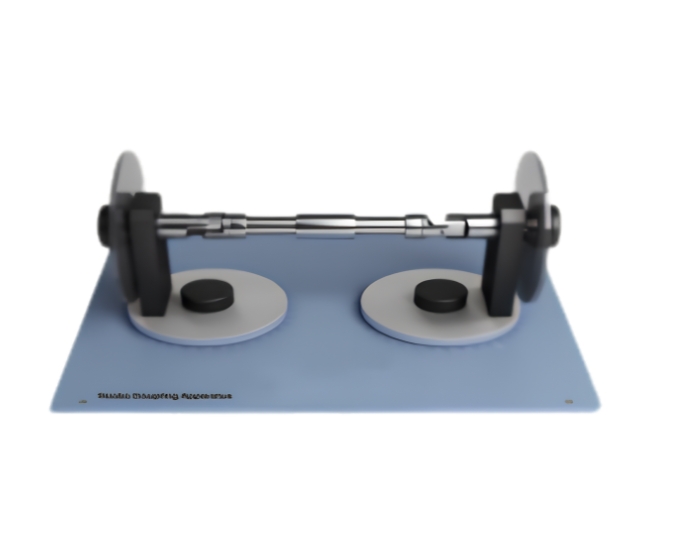
Kinematic Model – Hooke’s Coupling
Model Number: MTDE-205
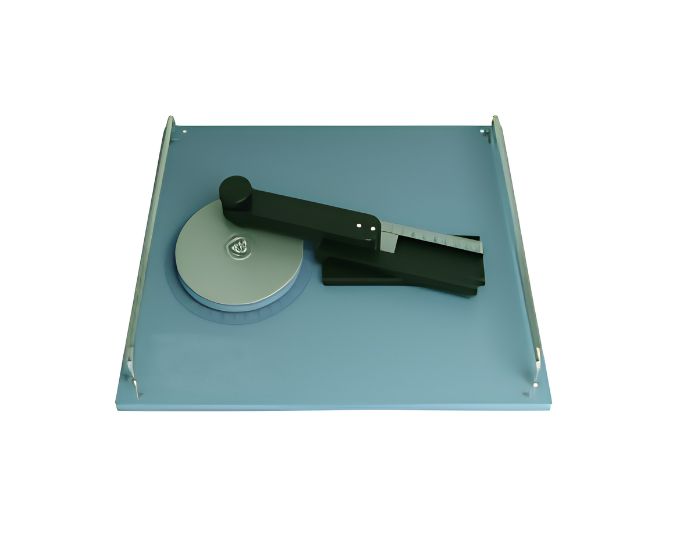
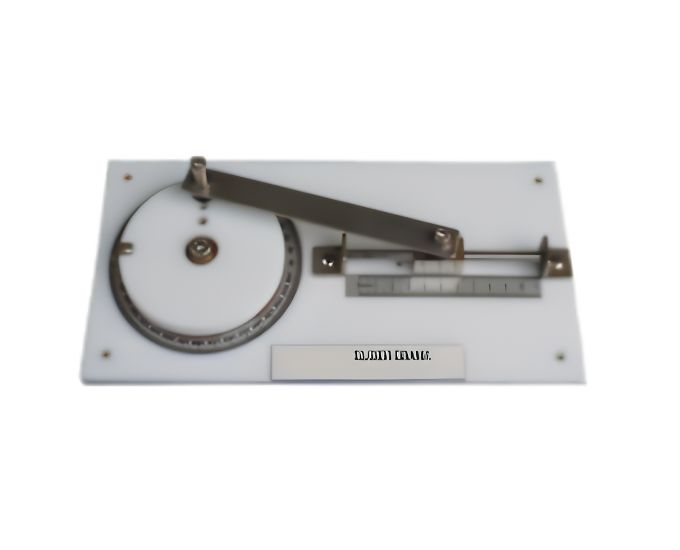
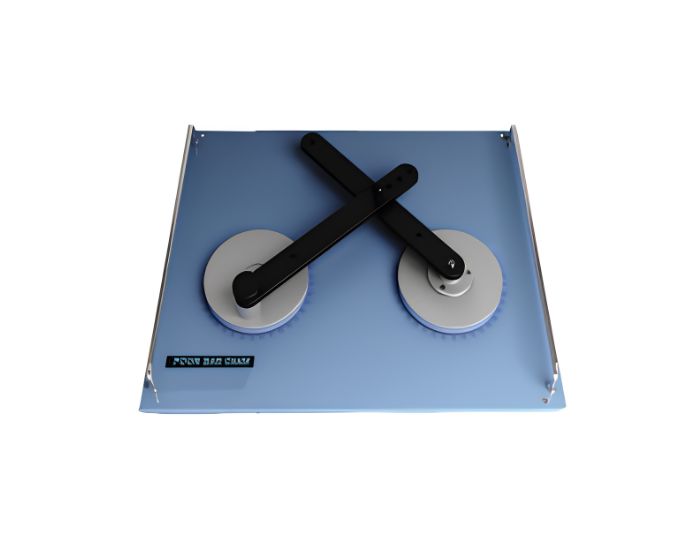
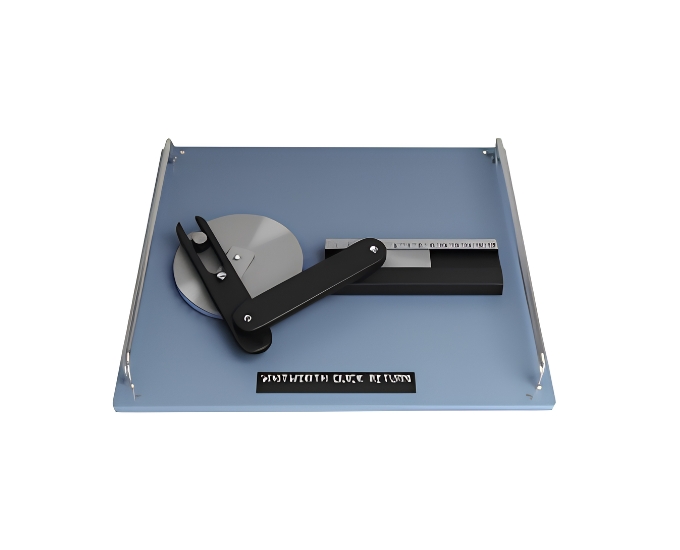
The Kinematic Model – Hooke’s Coupling is an educational mechanical engineering model designed to demonstrate the non-uniform transmission characteristics of a universal joint. It enables students to investigate gimbal error and study how the arrangement and deflection angle of universal joints influence angular motion transmission between connected shafts.
Product Specification
The Kinematic Model – Hooke’s Coupling is a laboratory teaching apparatus developed for practical investigation of the kinematic behaviour of a Hooke’s joint, also commonly known as a universal joint.
A universal joint is a mechanical coupling used to transmit rotary motion between two shafts whose axes are positioned at an angle to each other.
The model provides a clear physical representation of the coupling arrangement, allowing students to directly observe the relationship between the input shaft, universal joint and output shaft.
One of the primary objectives of the apparatus is to demonstrate the non-uniform transmission of a universal joint when the input and output shafts operate at an angular displacement.
When the input shaft rotates at uniform angular velocity and the shafts are inclined relative to each other, the instantaneous angular velocity of the output shaft varies during each revolution. The model allows this characteristic behaviour to be investigated practically.
The apparatus can also be used to determine and study gimbal error, which represents the angular difference associated with the input and output positions during universal-joint operation.
Students can investigate how changing the deflection angle between the shafts affects motion transmission and gimbal error.
The model also helps demonstrate the relationship between shaft alignment and the degree of non-uniformity in the transmitted rotary motion.
By taking angular readings at different positions, students can compare the input and output shaft angles and analyze the transmission characteristics of the coupling.
The apparatus provides practical understanding of concepts including universal joints, shaft angular displacement, non-uniform rotary transmission, angular velocity variation, gimbal error and shaft alignment.
The Hooke’s Coupling Kinematic Model provides a useful bridge between theoretical universal-joint equations and the actual mechanical behaviour of an articulated shaft coupling.
Micro Technologies supplies Hooke’s Coupling Kinematic Models and Theory of Machines laboratory equipment for engineering colleges, universities, polytechnic institutes, ITIs and technical training centres.
Features
- Educational Hooke’s coupling model
- Universal joint demonstration arrangement
- Demonstrates rotary motion between inclined shafts
- Non-uniform transmission demonstration
- Suitable for gimbal error investigation
- Adjustable shaft deflection arrangement
- Input and output angular position studies
- Demonstrates effect of shaft angle on transmission
- Clear visualization of universal joint movement
- Suitable for angular displacement studies
- Manual operation for convenient experimentation
- Graduated angular reference arrangement
- Compact tabletop configuration
- Rigid supporting base
- Suitable for repeated laboratory demonstrations
Benefits
- Provides practical understanding of Hooke’s coupling
- Demonstrates universal-joint motion clearly
- Shows non-uniform angular transmission
- Enables experimental study of gimbal error
- Demonstrates the effect of shaft deflection angle
- Helps students compare input and output shaft positions
- Provides hands-on understanding of angular motion transmission
- Connects universal-joint theory with actual mechanism behaviour
- Suitable for kinematics and Theory of Machines experiments
Product Specifications
| Specification | Details |
|---|---|
| Product Name | Kinematic Model – Hooke’s Coupling |
| Product Type | Educational Kinematic Model |
| Mechanism | Hooke’s Coupling / Universal Joint |
| Input Motion | Rotary |
| Output Motion | Rotary |
| Transmission | Non-Uniform at Shaft Inclination |
| Shaft Arrangement | Angular / Deflected |
| Deflection Angle Study | Supported |
| Gimbal Error Study | Supported |
| Input Angle Study | Supported |
| Output Angle Study | Supported |
| Motion Observation | Visual |
| Operation | Manual |
| Mounting | Tabletop Base |
| Application | Theory of Machines / Kinematics Laboratory |
Experiments Performed
- Representation of non-uniform transmission of a universal joint
- Study of Hooke’s coupling
- Study of universal joint motion
- Determination of gimbal error
- Investigation of input and output angular positions
- Study of shaft deflection angle
- Investigation of the effect of deflection angle on gimbal error
- Study of angular motion transmission
- Comparison of input and output shaft rotation
- Study of non-uniform output motion
- Investigation of universal-joint transmission characteristics
- Study of shaft alignment effects
- Observation of coupling movement through a complete revolution
- Practical demonstration of Hooke’s joint kinematics
Applications
- Theory of Machines Laboratories
- Kinematics of Machines Laboratories
- Dynamics of Machines Laboratories
- Mechanical Engineering Laboratories
- Automobile Engineering Laboratories
- Machine Design Laboratories
- Mechanism Demonstration Laboratories
- Engineering Colleges
- Universities
- Polytechnic Institutes
- ITIs
- Vocational Training Institutes
- Technical Training Centres
FAQs
What is the Hooke’s Coupling Kinematic Model used for?
The model is used to study universal-joint motion, non-uniform transmission, gimbal error and the effect of shaft deflection angle on motion transmission.
What is Hooke’s coupling?
Hooke’s coupling, also known as a universal joint, is a mechanical coupling used to transmit rotary motion between shafts positioned at an angle to each other.
Does a universal joint provide uniform motion transmission?
When the connected shafts operate at an angle, a single universal joint generally produces non-uniform instantaneous angular velocity at the output even when the input rotates uniformly.
What is gimbal error?
Gimbal error is the angular difference between corresponding input and output shaft positions caused by the geometry of a universal joint operating at an angle.
Can gimbal error be determined using this model?
Yes. The model is designed to enable experimental determination and investigation of gimbal error.
Can the shaft deflection angle be studied?
Yes. The arrangement allows the influence of shaft deflection angle on universal-joint transmission behaviour to be investigated.
How does deflection angle affect gimbal error?
Changing the angle between the input and output shafts changes the kinematic relationship between their angular positions and therefore affects the magnitude of gimbal error.
Can input and output shaft positions be compared?
Yes. Angular references allow students to compare the corresponding input and output positions during operation.
Where are universal joints commonly used?
Universal joints are widely associated with mechanical drive systems where rotary motion must be transmitted between shafts that are not perfectly aligned.
Does the model require electrical power?
No. The basic kinematic model is manually operated for straightforward laboratory demonstration.
Is it suitable for Theory of Machines laboratories?
Yes. It is suitable for Theory of Machines, Kinematics of Machines, Dynamics of Machines, automobile engineering and mechanical engineering laboratories.
Why Choose Our Products
- Practical Hooke’s coupling demonstration
- Universal-joint kinematic studies
- Non-uniform transmission analysis
- Gimbal error determination
- Shaft deflection angle investigation
- Input and output angular comparison
- Clear mechanism visualization
- Student-friendly manual operation
- Compact tabletop construction
- Suitable for engineering education
- Customized configurations available
- Institutional and bulk supply support
Call to Action
Looking for a Kinematic Model – Hooke’s Coupling for your mechanical engineering laboratory? Micro Technologies supplies kinematic models, Theory of Machines equipment, Dynamics of Machines apparatus and mechanical engineering laboratory equipment for universities, engineering colleges, polytechnic institutes, ITIs and technical training centres. Contact us for technical specifications, customized configurations, institutional orders, bulk supply, distributor inquiries, government tenders or a competitive quotation.