
Kinematic Model – Four Joint Link Mechanism
Product Specification Sheet
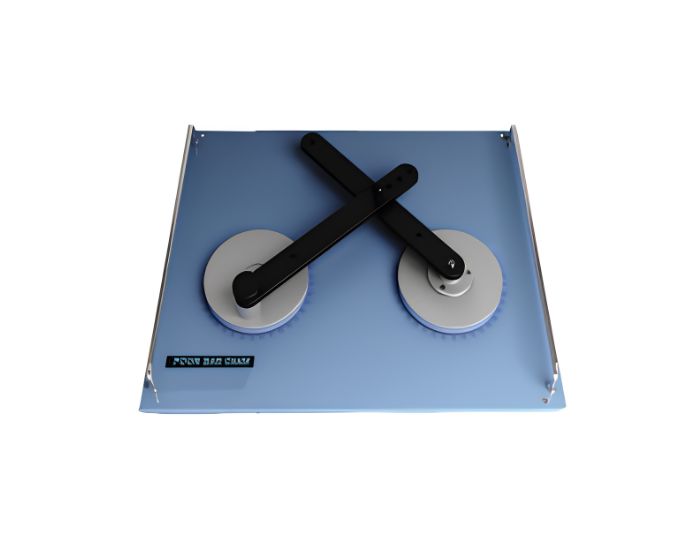
Kinematic Model – Four Joint Link Mechanism
Model Number: MTDE-203
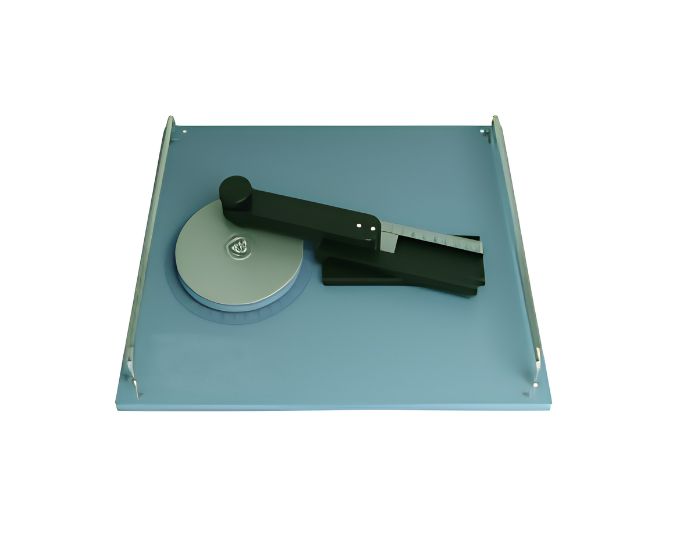
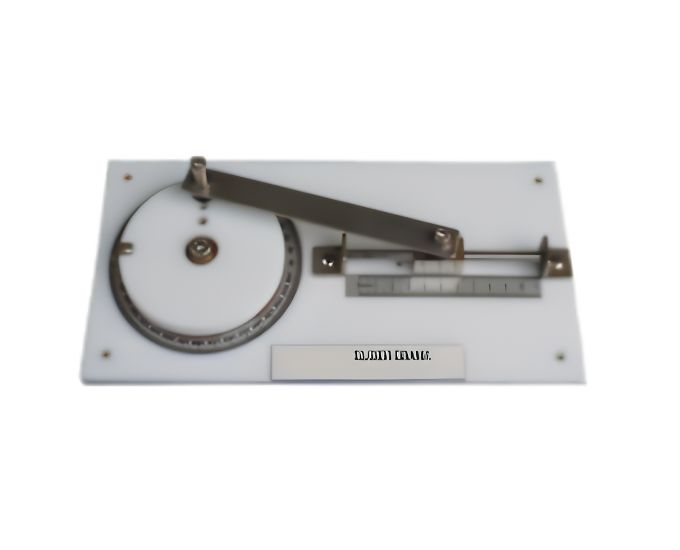
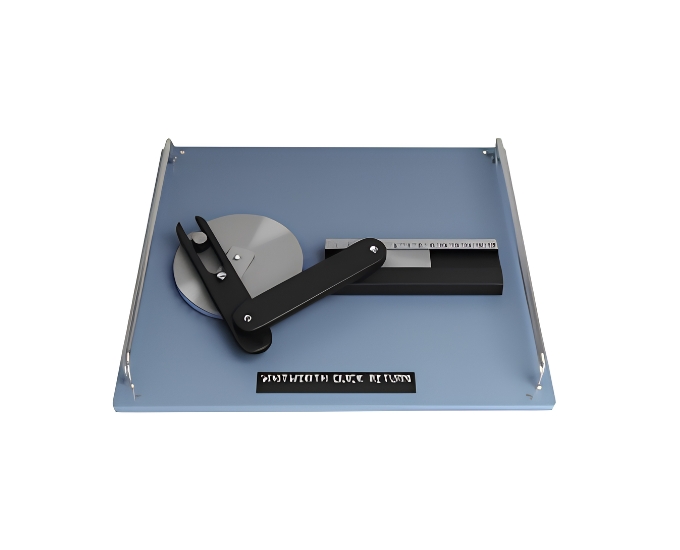
The Kinematic Model – Four Joint Link Mechanism is an educational mechanical engineering model designed for investigating the mechanical and kinematic relationships of a four-joint linkage. It enables students to study crank-rocker, double-rocker and double-crank mechanisms and experimentally verify the Grashof condition by varying crank radius, oscillation radius and coupling-link length.
Product Specification
The Kinematic Model – Four Joint Link Mechanism is an educational laboratory model developed for practical investigation of the mechanical relationships and motion characteristics of a four-joint or four-bar linkage.
Four-bar linkages are among the most fundamental mechanisms studied in kinematics and Theory of Machines. They consist of interconnected links joined by revolute joints to produce controlled rotary or oscillating motion.
The model provides a clear physical representation of the linkage, allowing students to observe how the dimensions and arrangement of individual links determine the resulting motion of the mechanism.
One of the primary objectives of the apparatus is the investigation of mechanical relationships in a four-joint link. Students can observe the movement of the links through different angular positions and analyze their relative motion.
The model is suitable for demonstrating the principle of the crank-rocker mechanism. In this configuration, one link can rotate while another connected link performs an oscillating or rocking motion.
It can also be used to investigate a double-rocker mechanism, in which the relevant links oscillate rather than completing continuous rotations.
Another important configuration is the double-crank mechanism, which demonstrates a four-bar arrangement where appropriate links can perform complete rotary motion.
These different configurations help students understand how changes in link dimensions and geometry can alter the overall behaviour of a four-bar mechanism.
A major experimental application of the model is the verification of the Grashof condition. The Grashof criterion is used to determine the possible rotational behaviour of links in a four-bar mechanism based on their relative lengths.
The model allows the relationship to be investigated by varying parameters such as the crank radius, oscillation radius and coupling-link length.
Students can compare different dimensional combinations and observe whether the resulting mechanism behaves as a crank-rocker, double-rocker or double-crank arrangement.
The apparatus therefore provides practical understanding of kinematic links, revolute joints, link-length relationships, crank motion, rocker motion, coupling-link movement and Grashof's condition.
Its compact tabletop construction makes the model suitable for classroom demonstrations as well as practical experiments in mechanical engineering laboratories.
Micro Technologies supplies Four Joint Link Kinematic Models, Theory of Machines equipment and Dynamics of Machines laboratory apparatus for engineering colleges, universities, polytechnic institutes, ITIs and technical training centres.
Features
- Educational four-joint linkage model
- Demonstrates four-bar mechanism principles
- Suitable for crank-rocker mechanism studies
- Suitable for double-rocker mechanism studies
- Suitable for double-crank mechanism studies
- Enables verification of Grashof condition
- Variable crank-radius arrangement
- Variable oscillation-radius arrangement
- Variable coupling-link length
- Clear visualization of link movement
- Demonstrates relative motion between links
- Manual operation for convenient experimentation
- Compact tabletop configuration
- Rigid supporting base
- Suitable for repeated laboratory demonstrations
Benefits
- Provides practical understanding of four-bar linkages
- Demonstrates multiple mechanisms using one educational model
- Helps students understand crank and rocker motion
- Enables experimental verification of Grashof's condition
- Demonstrates the effect of changing link dimensions
- Provides clear visualization of relative link movement
- Helps identify different kinematic configurations
- Connects theoretical mechanism diagrams with physical movement
- Suitable for hands-on kinematics experiments
- Useful for Theory of Machines laboratory courses
Product Specifications
| Specification | Details |
|---|---|
| Product Name | Kinematic Model – Four Joint Link Mechanism |
| Product Type | Educational Kinematic Model |
| Mechanism Type | Four-Joint / Four-Bar Linkage |
| Crank-Rocker Study | Supported |
| Double-Rocker Study | Supported |
| Double-Crank Study | Supported |
| Grashof Condition | Verification Supported |
| Crank Radius | Variable |
| Oscillation Radius | Variable |
| Coupling-Link Length | Variable |
| Motion Study | Rotary & Oscillating |
| Operation | Manual |
| Mounting | Tabletop Base |
| Primary Study | Four-Bar Mechanism Kinematics |
| Application | Theory of Machines / Kinematics Laboratory |
Experiments Performed
- Investigation of mechanical relationships in a four-joint link
- Study of four-bar linkage mechanism
- Study of crank-rocker mechanism
- Study of double-rocker mechanism
- Study of double-crank mechanism
- Verification of Grashof condition
- Investigation of the effect of crank radius
- Investigation of oscillation radius
- Study of coupling-link length
- Observation of relative movement between links
- Study of rotary and oscillating motion
- Investigation of different four-bar mechanism configurations
- Study of link-length relationships
- Comparison of crank-rocker, double-rocker and double-crank arrangements
- Practical demonstration of four-bar linkage kinematics
Applications
- Theory of Machines Laboratories
- Kinematics of Machines Laboratories
- Dynamics of Machines Laboratories
- Mechanical Engineering Laboratories
- Mechanism & Machine Theory Laboratories
- Engineering Mechanics Laboratories
- Automobile Engineering Laboratories
- Engineering Colleges
- Universities
- Polytechnic Institutes
- ITIs
- Vocational Training Institutes
- Technical Training Centres
- Educational Demonstration Laboratories
FAQs
What is the Four Joint Link Kinematic Model used for?
The model is used to investigate the mechanical and kinematic relationships of four-joint linkages and demonstrate different four-bar mechanism configurations.
What is a four-joint link mechanism?
It is a mechanism consisting of interconnected links joined through revolute joints to produce controlled rotary or oscillating movement.
Can a crank-rocker mechanism be studied?
Yes. The model can be configured to demonstrate the principle and motion of a crank-rocker mechanism.
Can a double-rocker mechanism be demonstrated?
Yes. The apparatus supports investigation of a double-rocker arrangement in which the relevant links perform oscillating motion.
Can a double-crank mechanism be studied?
Yes. The model can demonstrate the operating principle of a double-crank mechanism under suitable link-length conditions.
What is the Grashof condition?
The Grashof condition is a relationship between the lengths of the links in a four-bar mechanism that helps determine whether one or more links can perform complete rotation.
Can the Grashof condition be verified experimentally?
Yes. The apparatus is designed to verify the Grashof condition by changing parameters such as crank radius, oscillation radius and coupling-link length.
Can the link dimensions be varied?
Yes. The experimental arrangement enables relevant linkage dimensions to be varied for studying different mechanism configurations.
Does the apparatus require electrical power?
No. The basic kinematic model is manually operated for straightforward observation and experimentation.
Is it suitable for Theory of Machines laboratories?
Yes. It is suitable for Theory of Machines, Kinematics of Machines, Dynamics of Machines and mechanical engineering laboratories.
Why Choose Our Products
- Practical four-bar linkage demonstration
- Crank-rocker mechanism study
- Double-rocker mechanism study
- Double-crank mechanism study
- Grashof condition verification
- Variable linkage parameters
- Clear motion visualization
- Student-friendly manual operation
- Compact tabletop construction
- Suitable for engineering laboratory education
- Customized configurations available
- Institutional and bulk supply support
Call to Action
Looking for a Kinematic Model – Four Joint Link Mechanism for your mechanical engineering laboratory? Micro Technologies supplies kinematic models, Theory of Machines equipment, Dynamics of Machines apparatus and mechanical engineering laboratory equipment for universities, engineering colleges, polytechnic institutes, ITIs and technical training centres. Contact us for technical specifications, customized configurations, institutional orders, bulk supply, distributor inquiries, government tenders or a competitive quotation.