
Kinematic Model – Gear Drive
Product Specification Sheet
Kinematic Model – Gear Drive
Model Number: MTDE-207
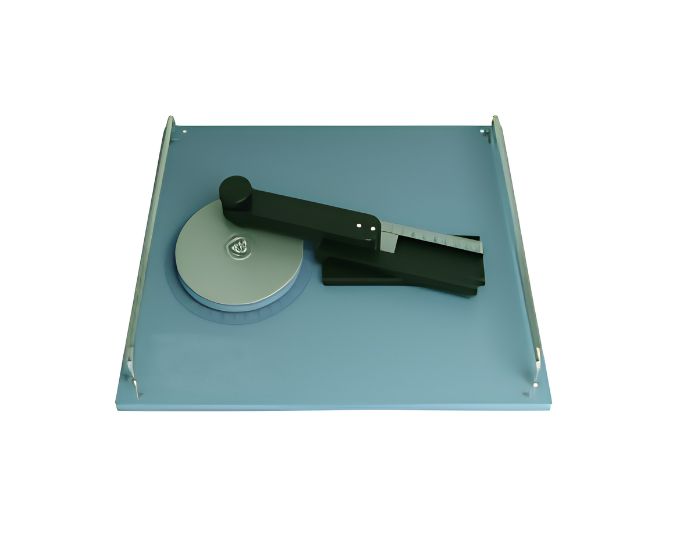
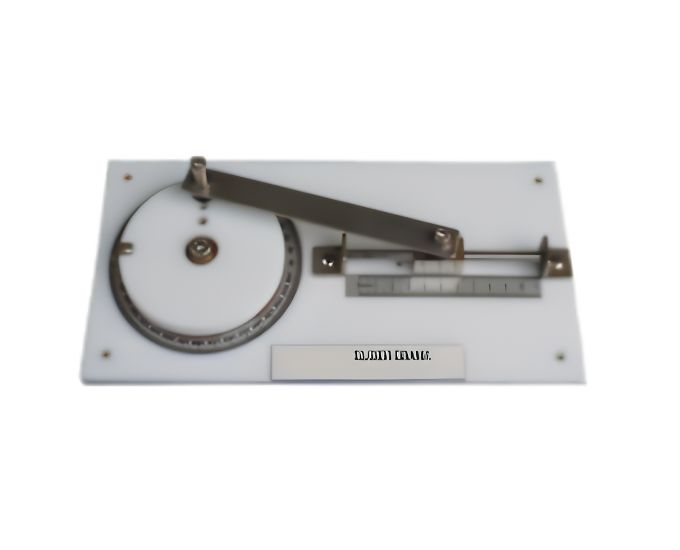
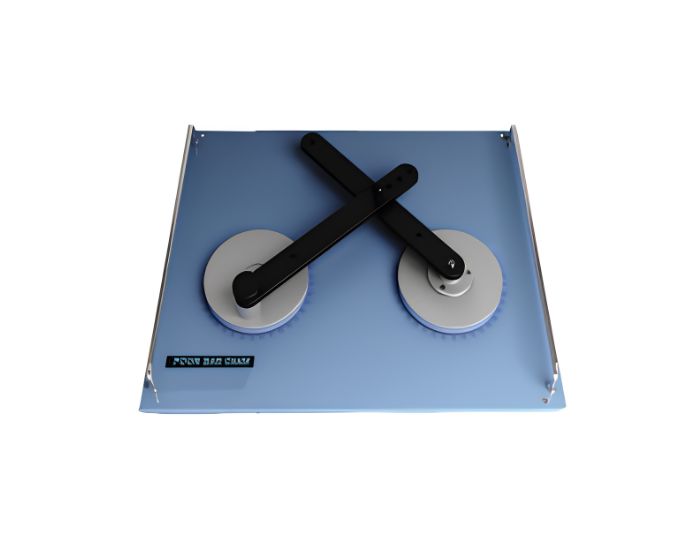
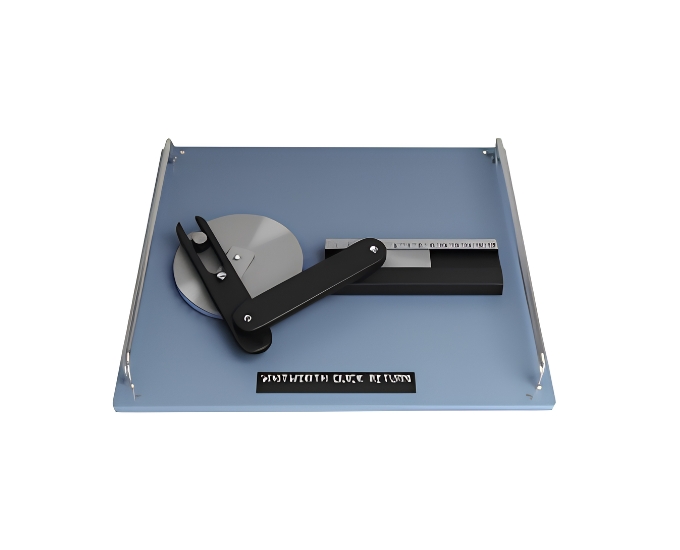
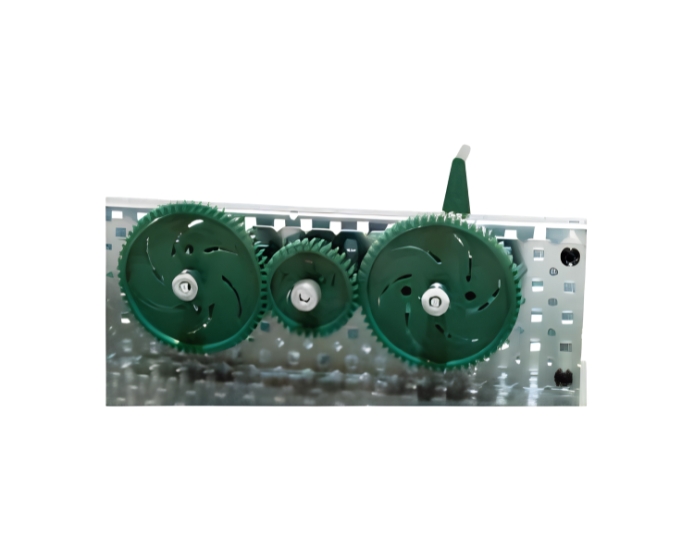
The Kinematic Model – Gear Drive is an educational mechanical engineering model designed for practical investigation of single-stage and multistage spur gear systems, planetary gears, and transmission ratios. The model enables students to observe gear engagement, rotational direction, relative speeds, and motion transmission through different gear arrangements.
Product Specification
The Kinematic Model – Gear Drive is an educational laboratory apparatus developed for practical demonstration and investigation of fundamental gear-drive principles.
Gear drives are widely used mechanical transmission systems that transfer rotary motion and torque between shafts through meshing gear teeth. Understanding gear arrangements and their transmission characteristics is an important part of kinematics and Theory of Machines.
The model provides a clearly visible gear arrangement mounted on a rigid educational panel, enabling students to observe the interaction and relative movement of gears during operation.
One of the main applications of the apparatus is the investigation of single-stage spur gear transmission. Students can observe how rotary motion is transmitted directly from a driving gear to a driven gear.
The model also supports investigation of multistage spur gear systems. Multiple gears can be studied together to understand how rotational motion passes through successive stages of a gear train.
Students can observe the effect of different gear arrangements on the direction and speed of rotation. Meshing external gears rotate in opposite directions, while additional stages alter the final direction depending on the gear-train configuration.
Another important application is the investigation of planetary gear systems. Planetary gearing introduces students to more complex arrangements involving relative motion between interconnected gears.
The apparatus enables students to determine the transmission ratio by comparing the gear geometry or rotational movement of the driving and driven members.
Experiments can be performed to understand how gear size and number of teeth influence angular velocity and overall transmission characteristics.
The model provides practical understanding of important concepts such as driver and driven gears, spur gears, gear trains, intermediate gears, planetary gearing, rotational direction, speed ratio, and transmission ratio.
Its open construction provides clear visualization of gear engagement, making it suitable for classroom demonstrations as well as practical mechanical engineering laboratory exercises.
Micro Technologies supplies Gear Drive Kinematic Models and other Theory of Machines laboratory equipment for engineering colleges, universities, polytechnic institutes, ITIs, and technical training centres.
Features
- Educational gear-drive demonstration model
- Single-stage spur gear investigation
- Multistage spur gear investigation
- Planetary gear study
- Visible gear engagement
- Suitable for transmission-ratio determination
- Demonstrates direction of gear rotation
- Suitable for speed-ratio studies
- Demonstrates driver and driven gear relationships
- Clear visualization of gear-train operation
- Manual operation for easy experimentation
- Suitable for different gear arrangements
- Rigid supporting panel
- Compact laboratory configuration
- Suitable for repeated educational use
Benefits
- Provides practical understanding of gear-drive systems
- Demonstrates single-stage and multistage gear transmission
- Enables study of planetary gearing
- Helps students determine transmission ratios
- Demonstrates changes in rotational direction
- Helps explain speed relationships between meshing gears
- Provides clear visualization of gear engagement
- Connects theoretical gear calculations with actual movement
- Suitable for hands-on kinematics experiments
- Useful for mechanical and automobile engineering education
Product Specifications
| Specification | Details |
|---|---|
| Product Name | Kinematic Model – Gear Drive |
| Product Type | Educational Kinematic Model |
| Primary Mechanism | Gear Drive |
| Spur Gear Study | Supported |
| Single-Stage Gear Study | Supported |
| Multistage Gear Study | Supported |
| Planetary Gear Study | Supported |
| Transmission Ratio | Determination Supported |
| Speed Ratio Study | Supported |
| Rotational Direction Study | Supported |
| Gear Engagement | Visible |
| Input Motion | Rotary |
| Output Motion | Rotary |
| Operation | Manual |
| Application | Theory of Machines / Kinematics Laboratory |
Experiments Performed
- Investigation of single-stage spur gears
- Investigation of multistage spur gears
- Investigation of planetary gears
- Study of basic gear-drive operation
- Study of gear engagement
- Identification of driving and driven gears
- Determination of transmission ratio
- Determination of gear speed ratio
- Study of input and output rotational speeds
- Study of rotational direction of meshing gears
- Investigation of multistage gear transmission
- Study of intermediate gear effects
- Comparison of different gear arrangements
- Study of gear-train kinematics
- Practical demonstration of rotary motion transmission
Applications
- Theory of Machines Laboratories
- Kinematics of Machines Laboratories
- Dynamics of Machines Laboratories
- Mechanical Engineering Laboratories
- Automobile Engineering Laboratories
- Machine Design Laboratories
- Mechanical Transmission Laboratories
- Mechatronics Laboratories
- Engineering Colleges
- Universities
- Polytechnic Institutes
- ITIs
- Vocational Training Institutes
- Technical Training Centres
FAQs
What is the Gear Drive Kinematic Model used for?
The model is used to study single-stage and multistage spur gears, planetary gear arrangements, rotational motion, and transmission ratios.
Can single-stage spur gears be studied?
Yes. The model enables students to investigate direct motion transmission between meshing spur gears.
Can multistage gear trains be investigated?
Yes. Multistage gear arrangements can be studied to understand how motion and speed are transmitted through successive gear stages.
Can planetary gears be studied?
Yes. The apparatus is designed to support investigation of planetary gear principles and their kinematic behaviour.
Can the transmission ratio be determined?
Yes. Determination of the transmission ratio is one of the primary experiments performed with the model.
What determines the gear transmission ratio?
For a simple pair of meshing gears, the transmission relationship depends primarily on the relative number of teeth of the driving and driven gears.
Can the direction of gear rotation be studied?
Yes. The model clearly demonstrates changes in rotational direction between meshing gears and through multistage arrangements.
Can speed ratios be studied?
Yes. Input and output rotations can be compared to investigate the speed ratio of different gear arrangements.
Does the model require electrical power?
No. The basic educational model can be manually operated for straightforward observation and experimentation.
Is it suitable for Theory of Machines laboratories?
Yes. It is suitable for Theory of Machines, Kinematics of Machines, Dynamics of Machines, Mechanical Engineering, and Automobile Engineering laboratories.
Why Choose Our Products
- Single-stage spur gear experiments
- Multistage gear-train studies
- Planetary gear investigation
- Transmission-ratio determination
- Speed and rotational-direction analysis
- Clear gear engagement visualization
- Practical kinematics demonstration
- Student-friendly manual operation
- Durable educational construction
- Suitable for engineering laboratory use
- Customized configurations available
- Institutional and bulk supply support
Call to Action
Looking for a Kinematic Model – Gear Drive for your mechanical engineering laboratory? Micro Technologies supplies gear-drive models, kinematic models, Theory of Machines equipment, and Dynamics of Machines laboratory apparatus for universities, engineering colleges, polytechnic institutes, ITIs, and technical training centres. Contact us for technical specifications, customized configurations, institutional orders, bulk supply, distributor inquiries, government tenders, or a competitive quotation.