
Kinematic Model – Flywheel
Product Specification Sheet
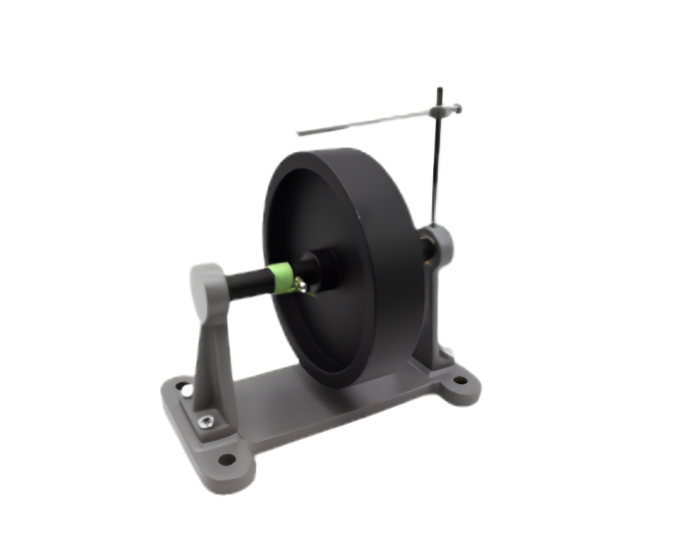
Kinematic Model – Flywheel
Model Number: MTDE-207
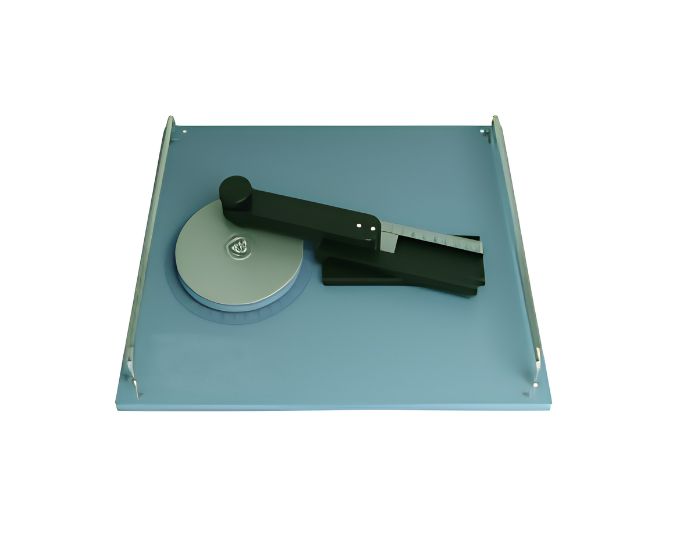
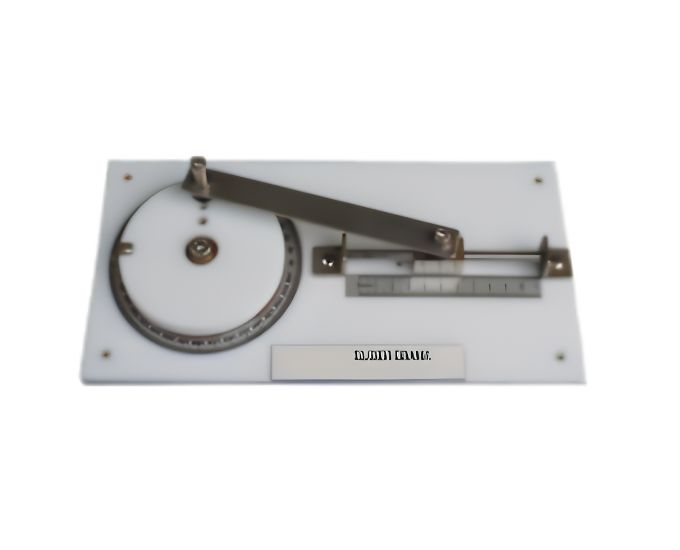
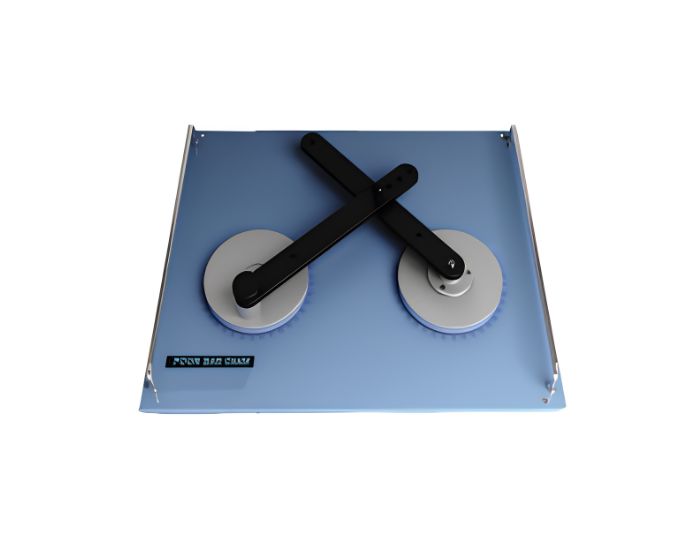
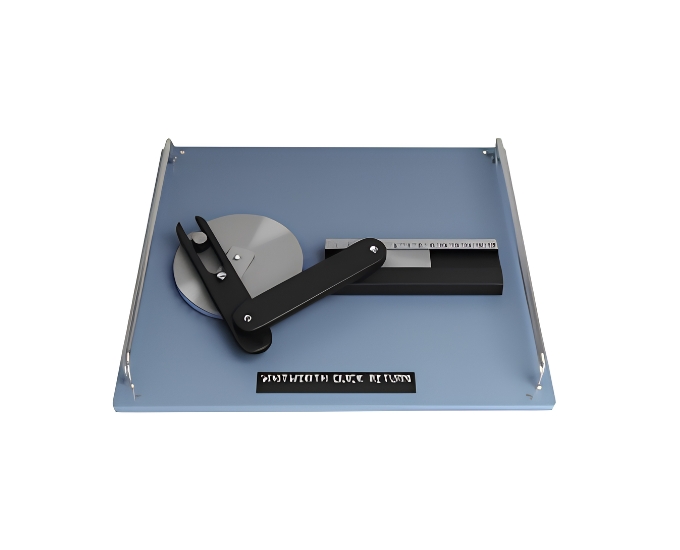
The Kinematic Model – Flywheel is an educational mechanical engineering apparatus designed for the experimental determination of the mass moment of inertia of a flywheel and practical study of the fundamental laws of rotational motion. The model allows students to investigate angular motion, stored rotational energy, acceleration, deceleration, and the dynamic behaviour of a rotating mass.
Product Specification
The Kinematic Model – Flywheel is a laboratory teaching apparatus developed for practical investigation of rotational dynamics and experimental determination of the mass moment of inertia of a flywheel.
A flywheel is a rotating mechanical component designed to store kinetic energy in rotational form. Its resistance to changes in rotational speed depends on its mass moment of inertia.
The apparatus consists of a flywheel mounted on a horizontal shaft supported by a rigid bearing arrangement. A suitable cord and loading arrangement enables controlled rotation of the flywheel during experiments.
One of the principal applications of the apparatus is the experimental determination of mass moment of inertia.
During an experiment, a known load can be allowed to descend while rotating the flywheel through the cord arrangement. Measurements obtained during acceleration and subsequent free rotation can be used to analyze the dynamic behaviour of the system.
The model enables students to understand the relationship between torque, angular acceleration, rotational inertia, and angular motion.
It also provides a practical demonstration of the fundamental law of rotational dynamics, where the angular acceleration of a rotating body is related to the applied torque and its moment of inertia.
Students can observe how the flywheel continues rotating after the driving load has completed its movement. This demonstrates the ability of a flywheel to store rotational kinetic energy.
The gradual reduction in speed also enables discussion of frictional resistance and energy losses within a rotating mechanical system.
The apparatus provides practical understanding of concepts such as mass moment of inertia, angular velocity, angular acceleration, torque, rotational kinetic energy, friction, and rotational dynamics.
Its compact and clearly visible arrangement makes it suitable for classroom demonstrations and student laboratory experiments.
Micro Technologies supplies Flywheel Kinematic Models, Theory of Machines equipment, and Dynamics of Machines laboratory apparatus for engineering colleges, universities, polytechnic institutes, ITIs, and technical training centres.
Features
- Educational flywheel demonstration apparatus
- Experimental determination of mass moment of inertia
- Demonstrates fundamental laws of rotational motion
- Heavy rotating flywheel arrangement
- Horizontal shaft mounting
- Rigid bearing supports
- Suitable cord and loading arrangement
- Demonstrates angular acceleration
- Suitable for rotational velocity studies
- Demonstrates rotational kinetic energy
- Enables study of frictional effects
- Clear visualization of rotational motion
- Manual laboratory operation
- Rigid supporting frame
- Suitable for repeated student experiments
Benefits
- Provides practical understanding of flywheel dynamics
- Enables experimental determination of moment of inertia
- Demonstrates fundamental rotational-motion principles
- Helps students understand torque and angular acceleration
- Demonstrates rotational kinetic energy storage
- Enables observation of acceleration and deceleration
- Provides practical understanding of frictional losses
- Connects theoretical rotational dynamics with experiments
- Suitable for Theory and Dynamics of Machines laboratories
Product Specifications
| Specification | Details |
|---|---|
| Product Name | Kinematic Model – Flywheel |
| Product Type | Educational Kinematic / Dynamic Model |
| Mechanism | Flywheel |
| Primary Study | Rotational Motion |
| Main Experiment | Mass Moment of Inertia |
| Flywheel Mounting | Horizontal Shaft |
| Shaft Support | Bearing Arrangement |
| Loading Arrangement | Cord & Load |
| Torque Study | Supported |
| Angular Motion Study | Supported |
| Angular Acceleration Study | Supported |
| Rotational Energy Study | Supported |
| Frictional Effect Study | Supported |
| Operation | Manual / Experimental |
| Application | Theory & Dynamics of Machines Laboratory |
Experiments Performed
- Experimental determination of mass moment of inertia
- Study of flywheel rotational motion
- Verification of fundamental laws of rotational movement
- Study of torque and angular acceleration
- Study of angular velocity
- Observation of flywheel acceleration
- Observation of flywheel deceleration
- Study of rotational kinetic energy
- Investigation of energy stored in a rotating flywheel
- Study of frictional resistance
- Investigation of energy losses during rotation
- Study of rotating mass behaviour
- Practical investigation of rotational dynamics
Applications
- Theory of Machines Laboratories
- Dynamics of Machines Laboratories
- Kinematics of Machines Laboratories
- Mechanical Engineering Laboratories
- Engineering Mechanics Laboratories
- Applied Mechanics Laboratories
- Automobile Engineering Laboratories
- Engineering Colleges
- Universities
- Polytechnic Institutes
- ITIs
- Vocational Training Institutes
- Technical Training Centres
FAQs
What is the Flywheel Kinematic Model used for?
The model is primarily used for experimental determination of the mass moment of inertia of a flywheel and for studying fundamental principles of rotational motion.
What is the mass moment of inertia?
Mass moment of inertia represents the resistance of a body to changes in its rotational motion about a specified axis.
Can moment of inertia be determined experimentally?
Yes. Experimental observations of the flywheel and loading arrangement can be used to determine its mass moment of inertia.
What principle can be studied using the apparatus?
The apparatus enables practical study of the fundamental law of rotational dynamics and the relationship between torque, moment of inertia, and angular acceleration.
Can rotational kinetic energy be studied?
Yes. The flywheel demonstrates the storage of kinetic energy in a rotating mass.
Can angular acceleration be investigated?
Yes. The behaviour of the flywheel under an applied load can be used to study angular acceleration.
Can frictional effects be studied?
Yes. The reduction in flywheel speed during free rotation provides a practical basis for investigating frictional resistance and associated energy losses.
Why does a flywheel continue rotating after the driving force is removed?
The rotating flywheel possesses kinetic energy and rotational inertia, allowing it to continue rotating until friction and other resistive forces dissipate its stored energy.
Does the apparatus require electrical power?
The basic apparatus can be operated mechanically using its loading and cord arrangement and therefore does not require electrical power for the standard experiment.
Is it suitable for Dynamics of Machines laboratories?
Yes. It is particularly suitable for Dynamics of Machines, Theory of Machines, Engineering Mechanics, and mechanical engineering laboratories.
Why Choose Our Products
- Experimental moment-of-inertia determination
- Rotational dynamics demonstration
- Torque and angular acceleration studies
- Rotational kinetic energy investigation
- Frictional-loss studies
- Clear flywheel motion visualization
- Student-friendly experimental arrangement
- Rigid laboratory construction
- Suitable for engineering education
- Customized configurations available
- Institutional and bulk supply support
Call to Action
Looking for a Kinematic Model – Flywheel for your mechanical engineering laboratory? Micro Technologies supplies flywheel apparatus, kinematic models, Theory of Machines equipment, Dynamics of Machines apparatus, and mechanical engineering laboratory equipment for universities, engineering colleges, polytechnic institutes, ITIs, and technical training centres. Contact us for technical specifications, customized configurations, institutional orders, bulk supply, distributor inquiries, government tenders, or a competitive quotation.