
Kinematic Model – Ackermann Steering Mechanism
Product Specification Sheet
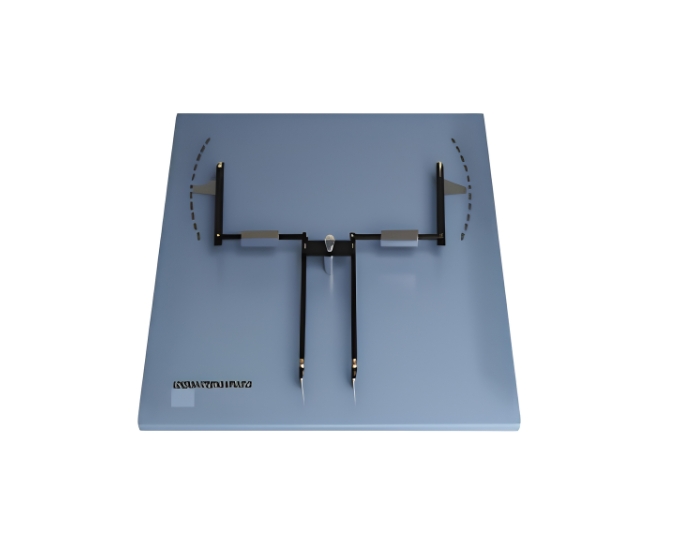
Kinematic Model – Ackermann Steering Mechanism
Model Number: MTDE-206
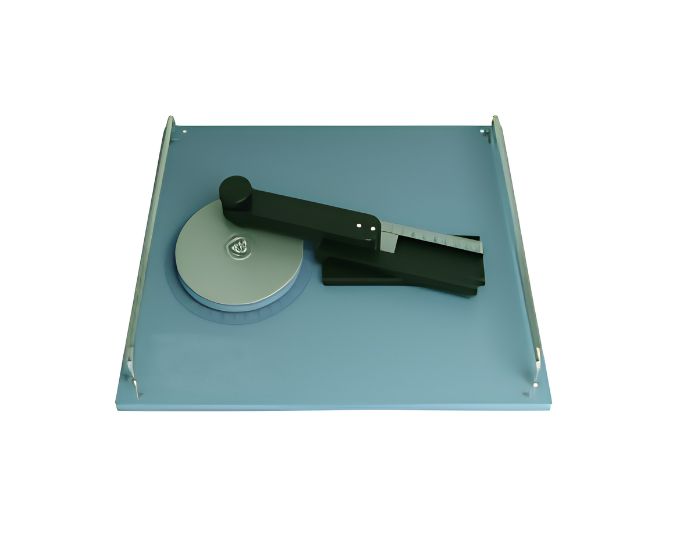
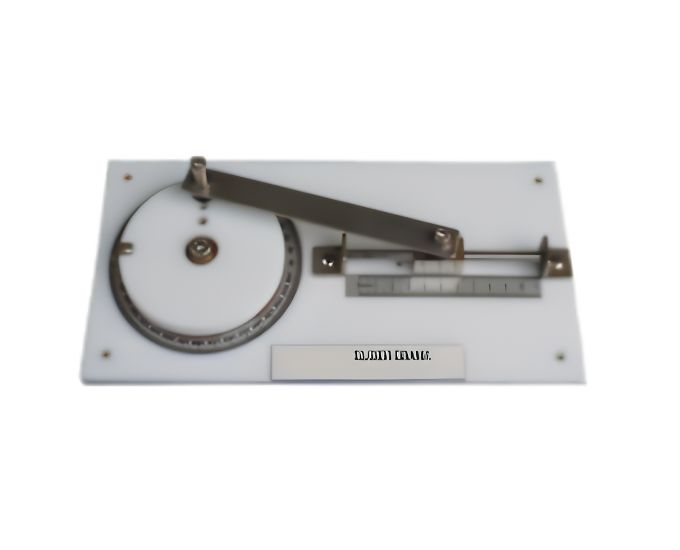
The Kinematic Model – Ackermann Steering Mechanism is an educational mechanical engineering model designed for practical study and verification of Ackermann’s steering principle. The apparatus enables students to investigate steering geometry, calculate the wheelbase, determine the lead angle, and evaluate steering error at different steering positions.
Product Specification
The Kinematic Model – Ackermann Steering Mechanism is an educational laboratory apparatus developed for demonstrating the geometry and kinematic relationships involved in Ackermann steering.
Ackermann steering geometry is an important concept in automobile and mechanical engineering. During a vehicle turn, the inner and outer wheels must follow paths of different radii. Therefore, the steering arrangement must provide different steering angles to the two wheels for correct turning geometry.
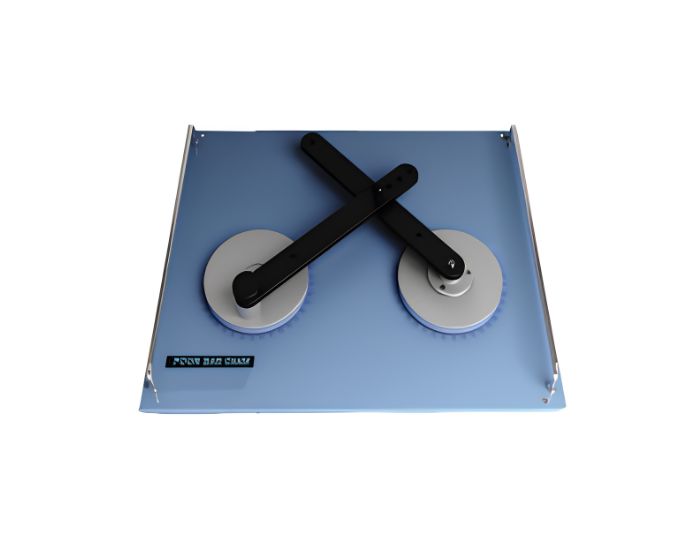
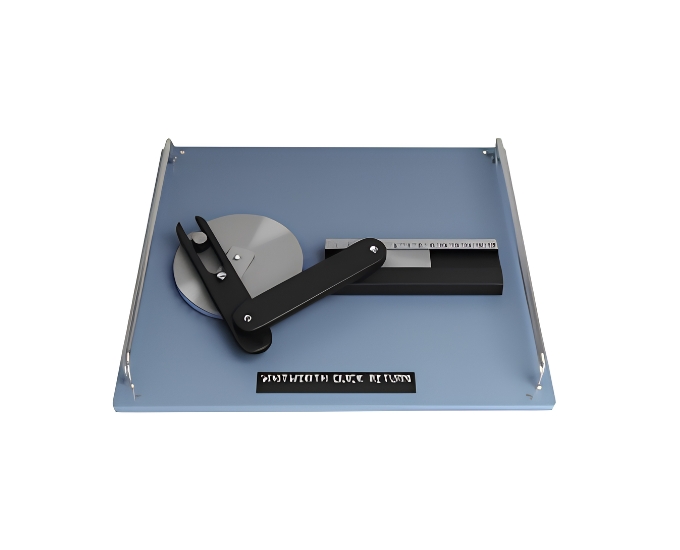
The model provides a clear physical representation of the steering linkage, wheel arms, connecting members, and angular measuring arrangements, allowing students to observe the relationship between inner and outer steering angles.
One of the primary applications of the apparatus is the verification of Ackermann’s steering principle. Students can change the steering position and compare the angular displacement of the two steering arms.
The model can also be used to calculate the wheelbase using the geometric relationships associated with the steering mechanism.
Another important experiment is the determination of the lead angle. Students can observe the linkage geometry and investigate how steering-arm orientation influences the steering characteristics.
The apparatus also enables the determination of steering error. Experimental steering-angle measurements can be compared with the theoretically required values to evaluate deviation from ideal steering conditions.
Graduated angular scales provided with the model allow the steering angles to be observed conveniently at different positions.
By taking a series of readings, students can investigate the relationship between the inner-wheel angle and outer-wheel angle and analyze the behaviour of the steering linkage throughout its operating range.
The model helps students understand important concepts including steering geometry, turning radius, wheelbase, steering angles, lead angle, steering error, and correct rolling condition during vehicle turning.
Its manually operated tabletop arrangement makes it suitable for classroom demonstrations and practical experiments without requiring a powered setup.
The Ackermann Steering Mechanism Kinematic Model provides a practical connection between theoretical steering geometry and the operation of steering linkages used in automobile systems.
Micro Technologies supplies Ackermann Steering Kinematic Models and other Theory of Machines and Automobile Engineering laboratory equipment for engineering colleges, universities, polytechnic institutes, ITIs, and technical training centres.
Features
- Educational Ackermann steering mechanism model
- Demonstrates Ackermann steering principle
- Suitable for steering geometry studies
- Inner and outer steering angle observation
- Graduated angular measuring scales
- Suitable for wheelbase calculation
- Lead-angle determination
- Steering-error determination
- Clear visualization of steering linkage movement
- Demonstrates differential steering angles
- Manual operation for convenient experiments
- Suitable for different steering positions
- Compact tabletop configuration
- Rigid supporting base
- Suitable for repeated laboratory use
Benefits
- Provides practical understanding of Ackermann steering
- Helps verify theoretical steering principles
- Demonstrates inner and outer wheel-angle relationships
- Enables calculation of wheelbase
- Helps determine lead angle
- Enables experimental determination of steering error
- Provides clear visualization of steering linkage geometry
- Helps students understand vehicle turning behaviour
- Connects theoretical kinematics with automobile applications
- Suitable for hands-on mechanical engineering experiments
Product Specifications
| Specification | Details |
|---|---|
| Product Name | Kinematic Model – Ackermann Steering Mechanism |
| Product Type | Educational Kinematic Model |
| Mechanism | Ackermann Steering |
| Primary Study | Steering Geometry |
| Steering Principle Verification | Supported |
| Inner Steering Angle Study | Supported |
| Outer Steering Angle Study | Supported |
| Wheelbase Calculation | Supported |
| Lead Angle Determination | Supported |
| Steering Error Determination | Supported |
| Angular Measurement | Graduated Scale |
| Operation | Manual |
| Mounting | Tabletop Base |
| Application | Theory of Machines / Automobile Engineering Laboratory |
| Suitable For | Engineering Colleges, Polytechnics & Technical Institutes |
Experiments Performed
- Verification of Ackermann’s steering principle
- Study of Ackermann steering geometry
- Calculation of wheelbase
- Determination of lead angle
- Determination of steering error
- Measurement of inner steering angle
- Measurement of outer steering angle
- Comparison of inner and outer wheel angles
- Study of steering linkage movement
- Investigation of steering geometry at different positions
- Study of theoretical and experimental steering angles
- Analysis of steering error at different angular positions
- Demonstration of vehicle turning geometry
- Study of correct steering condition
- Practical study of automobile steering kinematics
Applications
- Theory of Machines Laboratories
- Kinematics of Machines Laboratories
- Automobile Engineering Laboratories
- Mechanical Engineering Laboratories
- Automotive Engineering Laboratories
- Vehicle Dynamics Laboratories
- Mechanism & Machine Theory Laboratories
- Engineering Colleges
- Universities
- Polytechnic Institutes
- ITIs
- Vocational Training Institutes
- Automobile Training Centres
- Technical Training Institutes
FAQs
What is the Ackermann Steering Kinematic Model used for?
The model is used to verify Ackermann’s steering principle and study steering geometry, wheelbase, lead angle, inner and outer steering angles, and steering error.
What is Ackermann steering principle?
Ackermann steering principle provides a geometric relationship between the steering angles of the inner and outer wheels so that the wheels can follow appropriate turning paths with reduced lateral slipping.
Why do the inner and outer wheels turn at different angles?
During a turn, the inner wheel travels along a smaller-radius path than the outer wheel. Therefore, the inner wheel generally requires a greater steering angle than the outer wheel.
Can Ackermann’s steering principle be verified experimentally?
Yes. The model allows steering-angle readings to be taken and compared with the geometric relationships of ideal Ackermann steering.
Can wheelbase be calculated using the model?
Yes. Wheelbase calculation is one of the experimental studies that can be performed using the steering geometry of the apparatus.
Can the lead angle be determined?
Yes. The apparatus can be used to determine and study the lead angle associated with the steering linkage geometry.
Can steering error be determined?
Yes. Experimental steering angles can be compared with theoretical values to determine steering error.
Can inner and outer steering angles be measured?
Yes. Graduated angular scales allow students to observe the corresponding steering angles at different linkage positions.
Does the model require electrical power?
No. The basic model is manually operated and is suitable for direct laboratory demonstration.
Is it suitable for Automobile Engineering laboratories?
Yes. It is particularly suitable for Automobile Engineering, Mechanical Engineering, Theory of Machines, and Kinematics of Machines laboratories.
Why Choose Our Products
- Practical Ackermann steering demonstration
- Steering principle verification
- Inner and outer wheel-angle studies
- Wheelbase calculation
- Lead-angle determination
- Steering-error analysis
- Clear steering geometry visualization
- Student-friendly manual operation
- Compact tabletop design
- Suitable for automobile engineering education
- Customized configurations available
- Institutional and bulk supply support
Call to Action
Looking for an Ackermann Steering Mechanism Kinematic Model for your engineering laboratory? Micro Technologies supplies kinematic models, steering mechanism trainers, Theory of Machines equipment, and Automobile Engineering laboratory apparatus for universities, engineering colleges, polytechnic institutes, ITIs, and technical training centres. Contact us for technical specifications, customized configurations, institutional orders, bulk supply, distributor inquiries, government tenders, or a competitive quotation.