
A dependable chemistry lab equipment manufacturer in India should offer ISO-certified quality standards, a wide product range covering measuring, heating, and titration equipment, consistent build quality, and reliable after-sales support. Micro Technologies, an ISO 9001:2015 certified manufacturer based in India, supplies chemistry lab equipment to educational institutions, research centers, and industrial labs domestically, while also exporting to markets including the USA, UK, UAE, Saudi Arabia, African nations, Nepal, and Bangladesh.
Why the Right Manufacturer Actually Matters
Nobody sets up a chemistry lab expecting to redo it in two years. But that's exactly what happens when equipment comes from a manufacturer with inconsistent quality control.
A cracked burette mid-titration isn't just annoying—it's a safety hazard and a wasted sample. A Bunsen burner with an uneven flame throws off every heating step downstream. And when a supplier disappears after the sale, good luck finding a replacement part that actually fits.
This is precisely why the search for a trustworthy chemistry lab equipment manufacturer in India deserves more attention than most buyers give it. The equipment is only as reliable as the company standing behind it.
The Core Categories of Chemistry Lab Equipment
Before comparing manufacturers, it helps to know exactly what a well-stocked chemistry lab actually needs. Here's the honest breakdown.
1. Measuring and Weighing Equipment
Precision starts here. An analytical balance—sometimes called a chemical balance, and historically built as a double-pan design—measures mass with the accuracy every quantitative experiment depends on. Alongside it, analytical weight boxes and spare weight sets keep calibration consistent over years of use.
2. Heating and Distillation Equipment
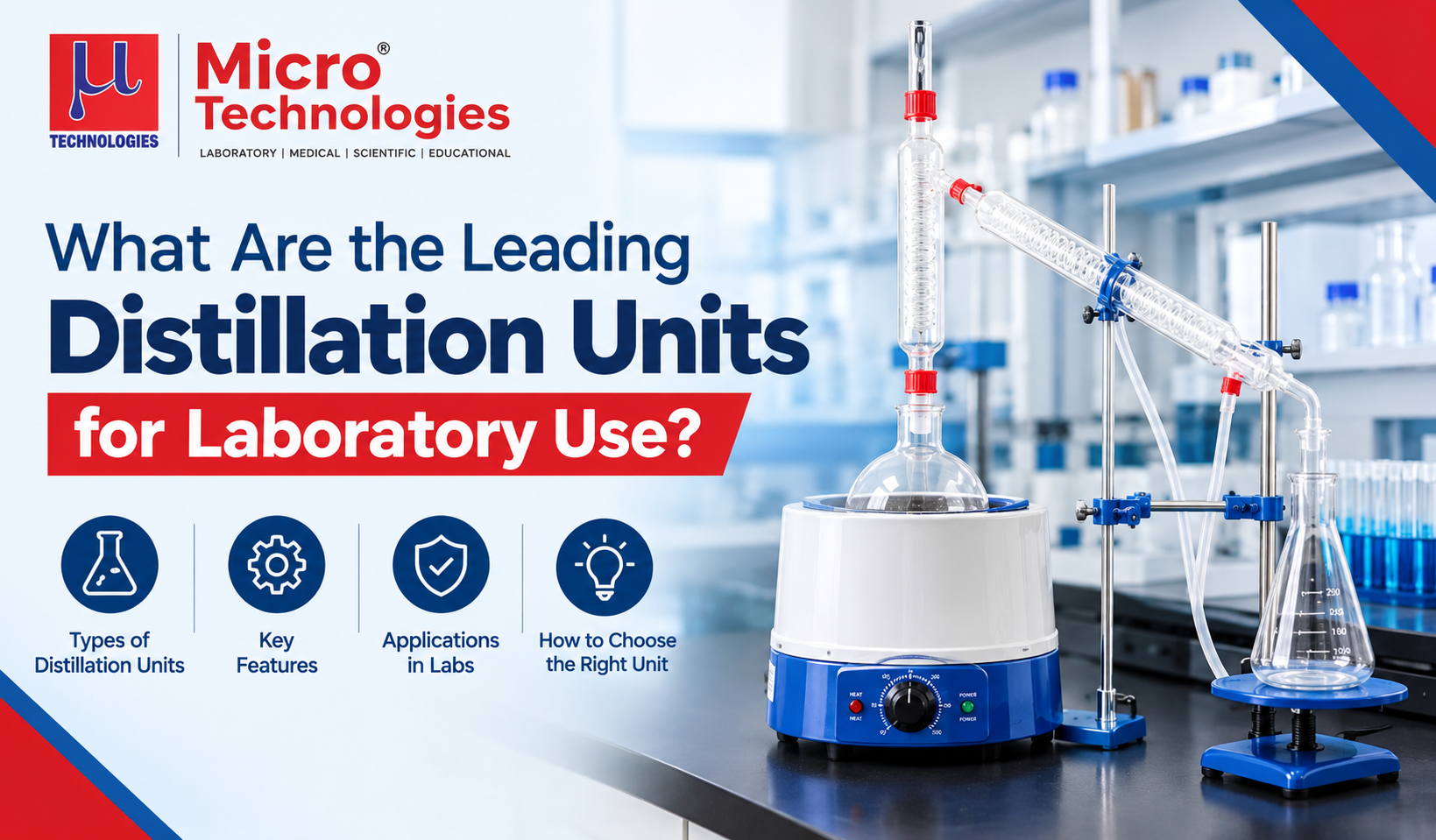
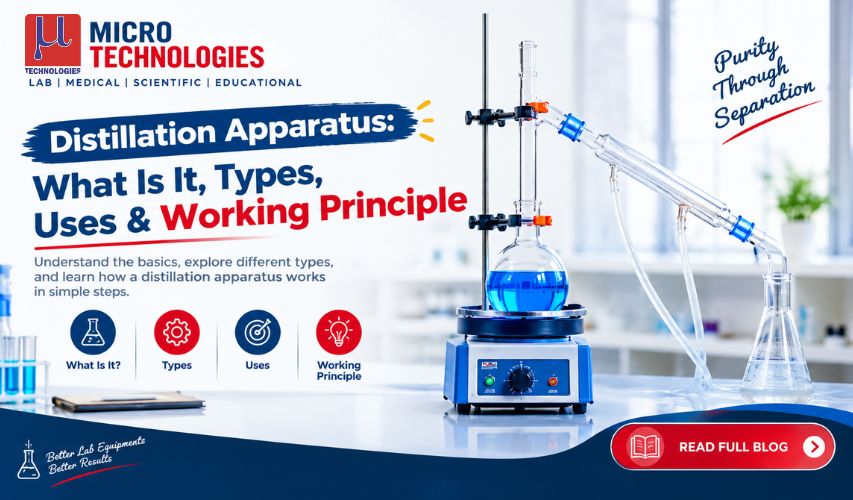
This category covers some of the most specialized instruments in the lab. A Soxhlet extraction unit continuously extracts compounds from solid samples using a repeating cycle of solvent evaporation and condensation—a workhorse in organic and food chemistry. A Kjeldahl distillation apparatus is standard for nitrogen and protein content analysis, while a general-purpose distillation unit, available in single and double configurations, handles everyday solvent purification and separation tasks.
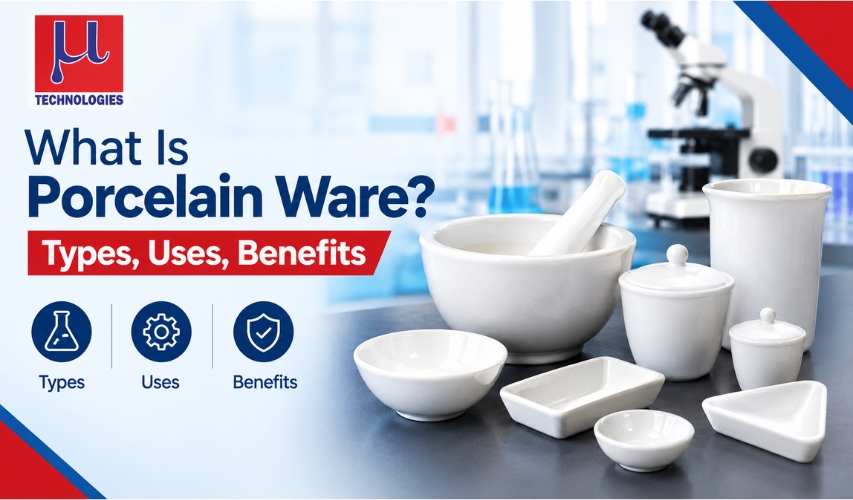
Heat-tolerant containers matter here too—crucibles, made from either silica or porcelain (china), withstand extreme temperatures during ignition and gravimetric analysis, where a sample is heated to a constant weight.
3. Titration and Volumetric Equipment
No chemistry lab equipment list is complete without the tools built for precise liquid handling. Burettes, held steady by a proper burette stand with clamp, remain the standard for delivering variable, controlled volumes during titrations. A Karl Fischer titrator takes this further, specifically measuring trace water content in a sample—a niche but genuinely important instrument in pharmaceutical and industrial quality control.
4. Sample Storage and Prep Equipment
A desiccator protects moisture-sensitive samples from ambient humidity using a drying agent inside a sealed chamber—essential before any precise weighing step. Capillary tubes for melting point determination and China dishes for evaporation and controlled heating round out the everyday prep essentials.
5. Support Structures and Basic Apparatus
It's easy to overlook the unglamorous hardware, but nothing in a chemistry lab stays upright without it. Clamps and boss heads, four-finger clamps, and general-purpose Fisher clamps hold glassware securely to a stand during heating, titration, or extended reactions. A sturdy laboratory jack lets you raise or lower apparatus smoothly mid-experiment—a small tool that saves a lot of frustration.
6. Specialized Testing Instruments
Beyond the basics, chemistry labs—particularly in industrial and quality-control settings—often need niche testing equipment. A refractometer measures the refractive index of liquids for purity and concentration checks. Abel's flash point apparatus (close cup) determines the flash point of flammable liquids, a safety-critical measurement in fuel and chemical testing. A redwood viscometer measures fluid viscosity, commonly used in oil and petroleum testing labs.
7. Open-Flame and Basic Heating Tools
And of course, the classic Bunsen burner remains a fixture on nearly every bench, alongside supporting tools like blow pipes, clay pipe triangles, and beaker tongs for safely handling hot glassware.
What to Look for in a Reliable Manufacturer
With the product categories out of the way, here's what actually separates a dependable supplier from a risky one.
- Certification – Look for ISO-certified manufacturing, which signals a documented, consistent quality management process rather than ad-hoc production.
- Range and consolidation – A manufacturer covering measuring, heating, titration, and support equipment under one roof saves you from juggling multiple vendors and mismatched delivery timelines.
- Material quality—Borosilicate glass for heat-resistant glassware, corrosion-resistant metal for clamps and stands, and properly calibrated instruments for measuring equipment are non-negotiable basics.
- Export experience – A manufacturer with genuine international shipping experience is generally better equipped to handle documentation, packaging, and logistics for larger or overseas institutional orders.
- After-sales support—Spare parts, replacement glassware, and calibration guidance matter more once your lab is actually running than they do during the initial purchase.
- Customization – Institutions with specific curriculum requirements or non-standard lab layouts benefit from a manufacturer willing to adjust product specifications rather than offering a rigid, one-size-fits-all catalog.
Why Micro Technologies Stands Out as a Chemistry Lab Equipment Manufacturer in India
Micro Technologies, based in India, has built its reputation specifically around the categories covered in this guide. As an ISO 9001:2015 certified company, it supplies chemistry, physics, and biology lab equipment to schools, colleges, research institutions, and hospitals across India, while also exporting to the USA, UK, UAE, Saudi Arabia, African nations, Nepal, Bangladesh, and other Southeast Asian markets.
A few specific reasons this chemistry lab equipment manufacturer in India shows up repeatedly on institutional shortlists:
- Genuinely broad catalog—from basic glassware and burette stands to specialized instruments like the Soxhlet extraction unit, Kjeldahl distillation apparatus, and Karl Fischer titrator, reducing the need to source equipment from multiple suppliers.
- Precision-manufactured support hardware—clamps like the Fisher Clamp and four-finger clamp are built with corrosion-resistant materials and consistent dimensional finishing, which matters more than it sounds like during years of repeated lab use.
- Institutional focus—the company's product positioning is built specifically around schools, colleges, pharmaceutical facilities, research centers, and industrial testing labs, rather than treating lab equipment as a generic commodity.
- Global export track record—regular shipments to multiple continents suggest the operational experience needed to handle bulk institutional orders reliably, not just occasional one-off sales.
- One-roof convenience—because the company's catalog spans laboratory equipment, medical equipment, and teaching aids, institutions setting up multi-department labs (chemistry alongside physics or biology, for instance) can consolidate procurement instead of managing separate vendor relationships.
For a school, college, or industrial buyer comparing options, that combination of certification, catalog depth, and export experience is exactly what tends to separate a dependable supplier from one that looks fine on a product page but falls short after the sale.
How to Evaluate and Choose a Supplier: A Practical Checklist
Here's a straightforward process that works whether you're outfitting a single classroom or a full research wing.
- List your actual requirements first. Match equipment to your curriculum or research scope before browsing catalogs—buying first and figuring out the fit later almost always leads to gaps or overspending.
- Request detailed product specifications. Material, tolerance class (for volumetric glassware), capacity, and calibration standards should all be clearly stated, not vague.
- Ask about certification. ISO 9001 certification is a reasonable baseline expectation for any serious manufacturer, domestic or export-focused.
- Compare catalog breadth. A supplier covering multiple categories—glassware, heating equipment, titration tools, and support hardware—genuinely simplifies long-term procurement and maintenance.
- Check export and logistics experience if you're buying from outside India, since shipping delays and customs issues are the most common friction points in international lab equipment orders.
- Clarify after-sales terms before finalizing, including warranty coverage, spare parts availability, and calibration support for precision instruments.
Domestic Supply vs. Export: Does It Change What You Get?
Buyers sometimes assume export-grade equipment and domestic-market equipment from the same manufacturer must be different tiers of quality. In practice, that's rarely how it works for a manufacturer operating under a single ISO-certified quality system.
The same production line, the same material specifications, and the same quality checks typically apply whether a batch of burettes ships to a college in Uttar Pradesh or a training institute in Nairobi. What actually changes between domestic and export orders is logistics—packaging standards suited to longer transit times, documentation for customs clearance, and sometimes voltage or fitting adjustments for electrically powered lab equipment. Understanding this distinction helps buyers avoid an unnecessary assumption: that "export quality" and "local supply" are somehow two different products, when for a properly certified manufacturer, they usually aren't.
Matching Equipment to the Right Kind of Lab
Not every chemistry lab needs the same equipment mix, and a good manufacturer's catalog should reflect that range rather than pushing a single standard package on every buyer.
School laboratories generally need the fundamentals—Bunsen burners, basic glassware, burette stands, and simple heating apparatus—built to withstand repeated use by students still learning proper handling technique. Durability and safety margins matter more here than laboratory-grade precision.
College and university labs typically need a step up in precision: calibrated analytical balances, Class A volumetric glassware, and instruments like refractometers or basic distillation units that support both teaching demonstrations and undergraduate research projects.
Industrial and pharmaceutical testing labs need the most specialized end of the catalog—Karl Fischer titrators for moisture analysis, Abel's flash point apparatus for regulatory safety testing, and Soxhlet extraction units for compound isolation, often purchased alongside strict documentation and calibration certificates for audit purposes.
A manufacturer capable of serving all three tiers — schools, colleges, and industrial labs — from a single catalog genuinely simplifies life for distributors and multi-site institutions that need consistency across different types of facilities.
Common Mistakes Buyers Make When Choosing a Supplier
A few recurring mistakes show up again and again in institutional procurement, and they're worth calling out directly.
Buying on price alone. As covered earlier, the cheapest quote rarely accounts for replacement costs, calibration drift, or the hidden cost of downtime when equipment fails mid-semester or mid-project.
Ignoring tolerance classes. Volumetric glassware—flasks, pipettes, burettes—comes in Class A and Class B tolerance grades. Buying Class B equipment for regulated or research-grade work, simply because it's cheaper, can quietly undermine the accuracy of an entire experiment or quality-control process.
Overlooking spare parts availability. A discounted bulk order looks great until a glass stopcock cracks two years later and the original supplier no longer stocks a matching replacement.
Assuming all "ISO certified" claims mean the same thing. ISO 9001 specifically certifies a quality management system, not individual product performance—it's still a meaningful signal of consistency, but it's worth understanding what the certification actually covers.
Avoiding these four mistakes alone puts most institutional buyers ahead of a large share of the market.
A Word on Price vs. Long-Term Value
It's tempting to sort a supplier list by price and stop there. Resist that urge.
A cheaper burette that seizes up after six months of use costs more in the long run than a slightly pricier one that lasts a decade. The same logic applies across nearly every category on this list—glassware, clamps, distillation units, and analytical balances included.
The smarter question isn't "what's the cheapest option," but "what's the total cost of ownership, including replacements, downtime, and support, over the next five years." A well-established manufacturer with a track record of institutional supply tends to win that comparison more often than not.
Conclusion
Choosing a chemistry lab equipment manufacturer in India isn't just about ticking off a product list—it's about picking a partner your lab will depend on for years of consistent, safe, and accurate work. From analytical balances and Soxhlet extraction units to burette stands and Bunsen burners, every piece of equipment on a chemistry bench eventually traces back to the manufacturer's own quality standards.
Micro Technologies, with its ISO 9001:2015 certification, broad catalog spanning chemistry, physics, and biology lab equipment, and established export record across multiple continents, offers exactly the kind of institutional-grade reliability that makes a real difference once the equipment actually gets used—not just when it's sitting in the box.
Frequently Asked Questions
What should I look for in a chemistry lab equipment manufacturer in India?
Look for ISO certification, a broad product catalog covering measuring, heating, and titration equipment, consistent build quality, export experience if buying internationally, and reliable after-sales support.
What equipment does a typical chemistry lab need?
A typical chemistry lab needs measuring and weighing equipment, heating and distillation apparatus, titration and volumetric tools, sample storage equipment like desiccators, support hardware such as clamps and stands, and specialized testing instruments depending on the field.
Is Micro Technologies a certified, established chemistry equipment supplier?
Yes, Micro Technologies is an ISO 9001:2015 certified manufacturer supplying chemistry, physics, and biology lab equipment to institutions across India and internationally.
Does Micro Technologies export chemistry lab equipment outside India?
Yes, Micro Technologies exports its lab equipment to markets including the USA, UK, UAE, Saudi Arabia, African nations, Nepal, Bangladesh, and other Southeast Asian regions.
Why is a Soxhlet extraction unit important in a chemistry lab?
A Soxhlet extraction unit continuously extracts compounds from solid samples using repeated solvent evaporation and condensation cycles, making it a standard tool in organic and food chemistry analysis.
Why is tolerance class important when buying volumetric glassware from a manufacturer?
Tolerance class (Class A or Class B) determines how accurately a flask, pipette, or burette measures volume—Class A suits regulated or research work, while Class B is generally fine for teaching and general-purpose use.