
Separating and Throttling Calorimeter Apparatus
Product Specification Sheet
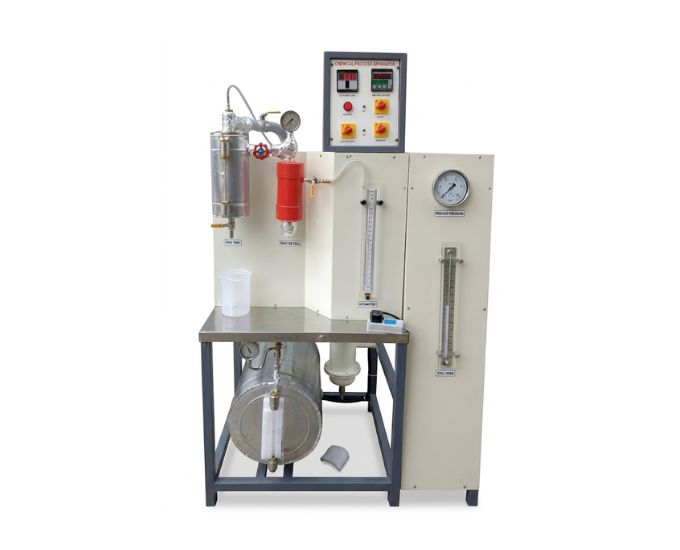
Separating and Throttling Calorimeter Apparatus
Model Number: MTBA-206
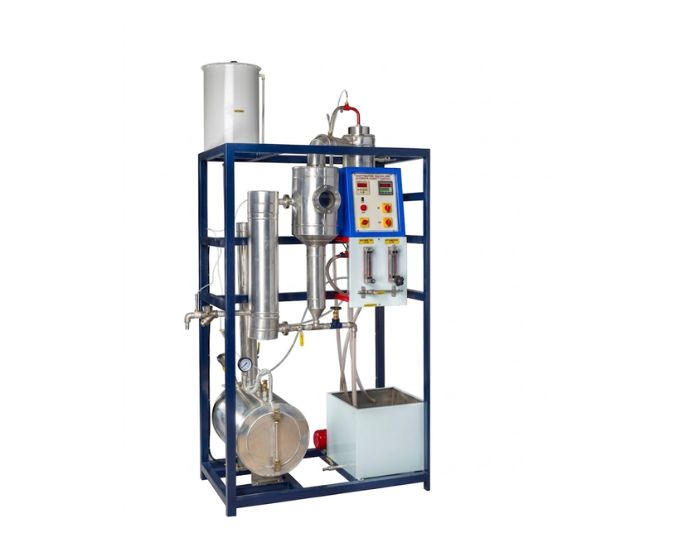
The Separating and Throttling Calorimeter Apparatus from Micro Technologies is a thermodynamics laboratory system designed for determining the dryness fraction or quality of wet steam. It combines mechanical separation of entrained moisture with a throttling process, enabling more effective analysis of wet steam than either method alone under suitable operating conditions. The apparatus provides practical study of steam properties, moisture separation, throttling, pressure and temperature measurements, and thermodynamic energy relationships.
Product Specification
The Separating and Throttling Calorimeter Apparatus is designed for the experimental determination of the dryness fraction of steam, an important parameter in steam engineering and thermodynamics.
Steam produced in practical systems may contain suspended water droplets and therefore may not always be completely dry saturated steam. The proportion of dry steam present in a wet steam mixture is represented by its dryness fraction.
The apparatus combines two measurement principles: separation and throttling.
In the separating section, wet steam is subjected to changes in direction and flow conditions that help physically separate entrained water droplets from the steam. The separated water is collected and measured.
The partially dried steam then passes through a throttling device, where its pressure is reduced significantly. Under suitable inlet conditions, the steam becomes superheated after throttling. Pressure and temperature measurements after throttling can then be used with steam-property data to evaluate the steam condition.
By combining measurements from both sections, students can determine the dryness fraction of the original wet steam sample.
The equipment from Micro Technologies provides an integrated laboratory arrangement consisting of steam piping, separating chamber, throttling section, pressure measurement, temperature measurement, condensate collection, flow control, and instrumentation.
Objective
The principal objective of the experiment is:
To determine the dryness fraction of steam using a combined separating and throttling calorimeter.
The apparatus also provides practical understanding of:
- Wet steam
- Dry saturated steam
- Superheated steam
- Steam quality
- Moisture separation
- Throttling process
- Steam enthalpy
- Pressure-temperature relationships
Scope of Learning
Students can use the apparatus to study:
- Dryness fraction of steam
- Steam quality
- Wet steam properties
- Moisture content in steam
- Separating calorimeter principle
- Throttling calorimeter principle
- Combined calorimeter operation
- Isenthalpic throttling
- Steam pressure measurement
- Steam temperature measurement
- Superheated steam condition
- Steam-table calculations
- Mass balance
- Thermodynamic energy relationships
What is Dryness Fraction?
Dryness fraction indicates the proportion of dry saturated steam present in a wet steam mixture.
It can be expressed as:
x = Mass of Dry Steam / Total Mass of Wet Steam
or:
x = mg / (mg + mf)
Where:
- x = Dryness fraction
- mg = Mass of dry saturated vapour
- mf = Mass of liquid water
A dryness fraction approaching 1.0 indicates steam containing very little suspended liquid water.
Working Principle
The combined apparatus operates in two main stages.
1. Separation Stage
Wet steam enters the separating calorimeter.
The internal flow arrangement causes changes in velocity and direction. Heavier water droplets have greater inertia than the steam and are separated from the vapour stream.
The separated moisture collects at the bottom of the separating section and can be drained into a measuring container.
The remaining steam then flows toward the throttling calorimeter.
2. Throttling Stage
The partially dried steam passes through a restriction where its pressure drops.
For an ideal throttling process:
h₁ = h₂
Where:
- h₁ = Specific enthalpy before throttling
- h₂ = Specific enthalpy after throttling
Thus, throttling is treated approximately as an isenthalpic process.
If the steam becomes superheated after throttling, its downstream pressure and temperature can be measured and used to determine the inlet steam quality.
Separating Calorimeter
The separating calorimeter physically removes a portion of the suspended water from wet steam.
Its operation is particularly useful when the incoming steam contains too much moisture for a throttling calorimeter alone to produce a clearly superheated outlet condition.
The separating stage helps:
- Remove entrained water
- Improve steam quality before throttling
- Measure separated condensate
- Extend the practical measurement range
- Improve understanding of mechanical moisture separation
Throttling Calorimeter
The throttling calorimeter determines steam quality using the thermodynamic behaviour of steam during pressure reduction.
Steam passes through a restriction, producing a substantial decrease in pressure.
Because enthalpy remains approximately constant during ideal throttling, downstream pressure and temperature measurements can be related to the upstream condition.
For wet steam before throttling:
h₁ = hf + xhfg
After throttling, if the steam is superheated:
h₂ = hg + Cp(Tsup − Tsat)
Since:
h₁ = h₂
the dryness fraction can be evaluated from the measured conditions and appropriate steam-property data.
Combined Calorimeter Method
Using separation and throttling together provides a practical method for evaluating relatively wet steam.
The overall experiment involves measuring:
- Water separated in the separating calorimeter
- Steam passing through the throttling section
- Downstream pressure
- Downstream temperature
- Condensed steam quantity where applicable
These measurements can then be combined to determine the dryness fraction of the original steam sample.
Main Components
- Separating calorimeter
- Throttling calorimeter
- Steam inlet arrangement
- Throttling valve / restriction
- Pressure gauge
- Pressure measuring arrangement
- Temperature sensors
- Digital temperature indicators
- Steam control valves
- Condensate separator
- Condensate collection arrangement
- Measuring vessel
- Interconnecting steam piping
- Drain arrangement
- Instrumentation panel
- Electrical controls
- Supporting frame
Key Features
- Combined separating and throttling method
- Determines dryness fraction of steam
- Practical steam-quality measurement
- Moisture separation arrangement
- Throttling process demonstration
- Pressure measurement
- Temperature measurement
- Condensate collection facility
- Steam-flow control
- Integrated instrumentation
- Thermodynamic calculations using steam tables
- Clear experimental arrangement
- Robust floor-standing construction
- Suitable for repeated laboratory experiments
- Designed for thermodynamics education
- Custom configurations available
Technical Specifications
| Parameter | Details |
|---|---|
| Product Name | Separating and Throttling Calorimeter Apparatus |
| Product Type | Steam / Thermodynamics Laboratory Apparatus |
| Primary Measurement | Dryness Fraction of Steam |
| Steam Condition | Wet Steam |
| First Stage | Separating Calorimeter |
| Second Stage | Throttling Calorimeter |
| Separation Principle | Mechanical Moisture Separation |
| Throttling Principle | Approximately Constant Enthalpy |
| Pressure Measurement | Provided |
| Temperature Measurement | Provided |
| Condensate Collection | Provided |
| Steam Control | Valve Arrangement |
| Instrumentation | Integrated |
| Installation | Floor Standing |
| Application | Thermodynamics / Thermal Engineering Laboratory |
| Customization | Available |
Exact pressure range, temperature range, steam-flow capacity, vessel dimensions, instrumentation, and connection requirements can be configured according to laboratory specifications.
Experiments / Studies
- To determine the dryness fraction of steam
- To determine steam quality
- To study wet steam characteristics
- To study the separating calorimeter
- To study the throttling calorimeter
- To investigate combined calorimeter operation
- To demonstrate moisture separation
- To study throttling as an approximately isenthalpic process
- To measure steam pressure and temperature
- To study superheated steam after throttling
- To calculate steam enthalpy using steam tables
- To perform mass balance calculations
- To determine moisture content in steam
Experimental Measurements
Depending on the laboratory configuration, students can record:
- Steam inlet conditions
- Pressure before or after throttling
- Temperature after throttling
- Quantity of separated water
- Quantity of condensed steam
- Experiment duration
- Steam mass flow
- Relevant ambient conditions
These observations can be used to determine steam dryness fraction and evaluate experimental performance.
Educational Benefits
- Provides practical steam-quality measurement
- Demonstrates dryness fraction experimentally
- Combines mechanical separation with thermodynamic analysis
- Demonstrates throttling behaviour
- Reinforces the concept of constant enthalpy
- Provides experience with steam tables
- Develops pressure and temperature measurement skills
- Demonstrates wet, saturated, and superheated steam conditions
- Supports thermodynamic mass and energy calculations
- Connects theoretical steam properties with practical measurements
- Suitable for laboratory examinations
- Useful for engineering demonstrations and project work
Applications
- Thermodynamics Laboratories
- Thermal Engineering Laboratories
- Mechanical Engineering Laboratories
- Steam Engineering Laboratories
- Power Engineering Laboratories
- Energy Engineering Laboratories
- Engineering Colleges
- Universities
- Polytechnic Institutes
- Technical Training Institutes
- Research Laboratories
- Engineering Training Centers
Industrial Relevance
Understanding steam dryness fraction is important because excessive moisture can adversely affect the performance of steam systems and equipment.
Steam-quality knowledge is relevant to:
- Boilers
- Steam turbines
- Steam distribution systems
- Process heating systems
- Heat exchangers
- Steam engines
- Thermal power systems
- Industrial steam plants
Optional Accessories
- Steam Generator / Boiler
- Digital Pressure Indicator
- Digital Temperature Indicator
- Additional Temperature Sensors
- Digital Pressure Sensor
- Condensate Measuring Vessel
- Steam Collection Arrangement
- Data Acquisition System
- Computer Interface
- Data Logging System
- Calibration Accessories
- Experimental Manual
Customization Options
The Separating and Throttling Calorimeter Apparatus can be customized with:
- Different steam pressure ranges
- Different steam capacities
- Digital pressure measurement
- Additional temperature sensors
- Digital instrumentation
- Modified condensate collection
- Data acquisition system
- Computerized data logging
- Customized steam connections
- Customized instrumentation panel
- Research-oriented configurations
SKU System
MT-FHT-206
FAQs
What is the Separating and Throttling Calorimeter Apparatus used for?
The apparatus is primarily used to determine the dryness fraction or quality of wet steam.
Why are separating and throttling calorimeters combined?
A separating calorimeter removes a portion of entrained liquid water before the steam enters the throttling calorimeter. This makes the combined method suitable for steam that may be too wet for reliable analysis using throttling alone.
What is the dryness fraction of steam?
Dryness fraction is the ratio of the mass of dry saturated steam to the total mass of the wet steam mixture.
What is the principle of a separating calorimeter?
It mechanically separates suspended water droplets from steam by utilizing differences in inertia and changes in steam-flow direction.
What is the principle of a throttling calorimeter?
It is based on the fact that an ideal throttling process occurs at approximately constant enthalpy.
Why should steam become superheated after throttling?
A measurable superheated outlet condition allows downstream pressure and temperature to be used with steam-property data to calculate the upstream steam condition.
What measurements are required?
Typical measurements include steam pressure, temperature after throttling, separated water quantity, and the amount of steam or condensate passing through the system.
Can steam tables be used with this experiment?
Yes. Steam tables are commonly used to obtain enthalpy and saturation-property values required for dryness-fraction calculations.
Where is this apparatus commonly used?
It is suitable for thermodynamics, thermal engineering, mechanical engineering, steam engineering, power engineering, and energy engineering laboratories.
Can the apparatus be customized?
Yes. Micro Technologies can customize the pressure range, steam capacity, temperature measurement, instrumentation, condensate collection, and data acquisition according to laboratory requirements.
Why Choose Our Products
- Combined separating and throttling arrangement
- Practical steam dryness-fraction determination
- Steam quality and moisture-content studies
- Pressure and temperature measurement
- Clear demonstration of throttling principles
- Integrated condensate collection
- Robust laboratory construction
- Suitable for thermodynamics curricula
- Customized configurations available
- Institutional and laboratory project supply
- OEM requirements supported
- Technical and after-sales assistance
Call to Action
Improve practical thermodynamics training with the Separating and Throttling Calorimeter Apparatus from Micro Technologies. Contact us for technical specifications, customized laboratory configurations, institutional quotations, engineering lab projects, OEM requirements, tenders, distributor inquiries, and bulk orders.