
Evaporation Process Apparatus
Product Specification Sheet
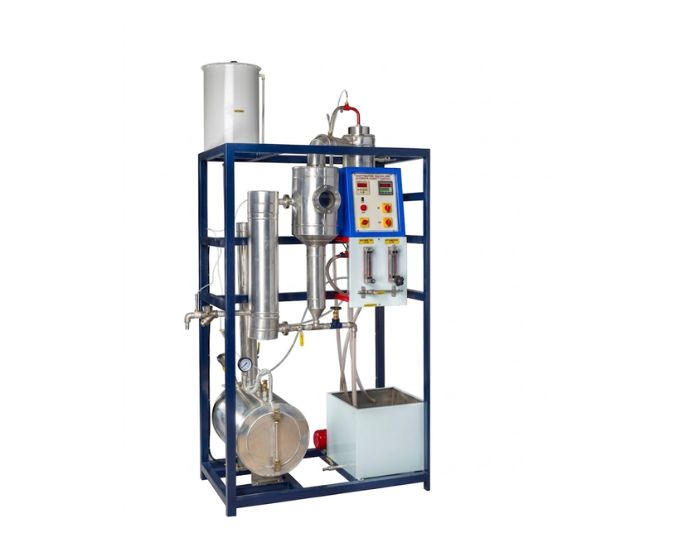
Evaporation Process Apparatus
Model Number: MTBA-202
Evaporation Process Apparatus, Laboratory Evaporator Apparatus, Evaporation Process Trainer, Evaporator Laboratory Equipment, Solution Concentration Apparatus, Single Effect Evaporator, Evaporation Experiment Apparatus, Material and Heat Balance Apparatus, Evaporator Capacity Apparatus, Overall Heat Transfer Coefficient Apparatus, Chemical Engineering Lab Equipment
Product Specification
The Evaporation Process Apparatus is a laboratory experimental setup developed for studying the concentration of liquid solutions by removing a portion of the solvent through evaporation.
Manufactured by Micro Technologies, the apparatus provides students with practical understanding of one of the most important unit operations used in chemical, food, pharmaceutical, process, and related industries.
During the evaporation process, thermal energy is supplied to a dilute solution. A portion of the solvent is converted into vapour, resulting in an increase in the concentration of the remaining liquid.
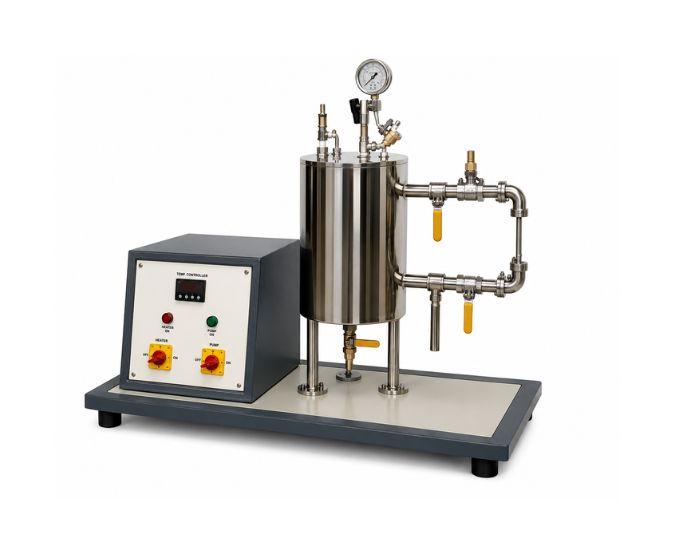
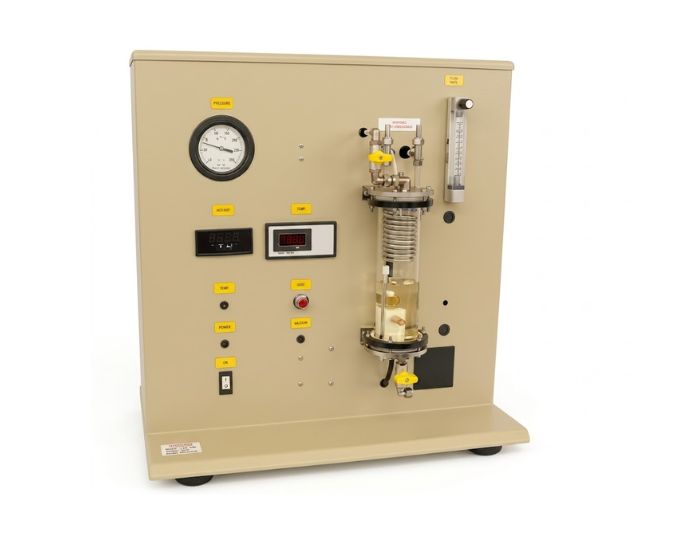
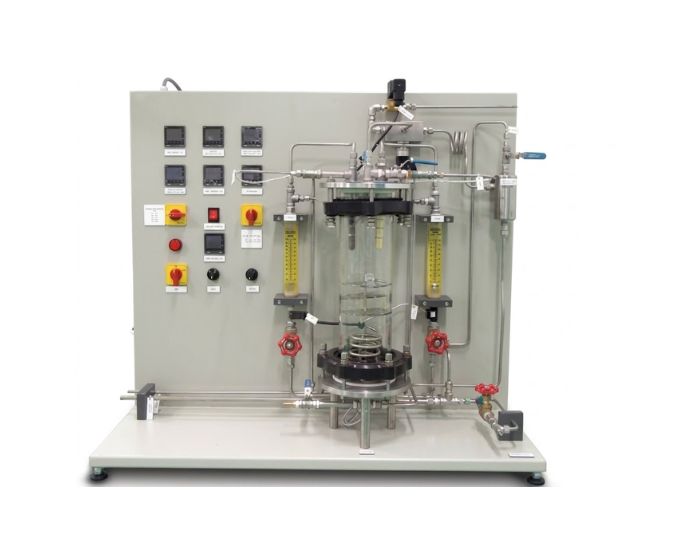
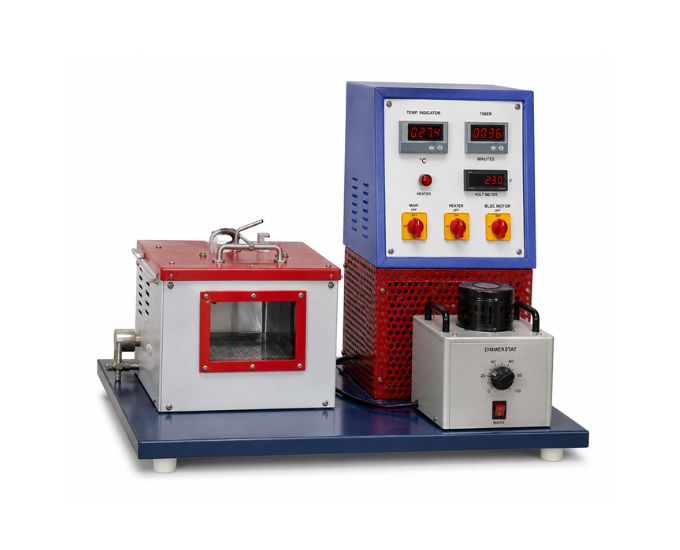
The apparatus incorporates the essential components required to demonstrate this process, including an evaporator section, feed arrangement, heating system, condenser, condensate collection arrangement, flow measurement devices, temperature measurement points, piping, valves, and instrumentation panel.
The feed solution is supplied to the evaporator under controlled conditions. Heat supplied to the system causes solvent evaporation, while the generated vapour is directed toward the condensation section. Cooling water passing through the condenser removes heat from the vapour and converts it back into liquid condensate.
By measuring feed quantity, concentrated product, condensate, temperatures, flow rates, and heating conditions, students can perform a complete material balance and heat balance around the evaporation system.
The equipment also enables experimental determination of evaporator capacity and calculation of the overall heat transfer coefficient, helping students connect theoretical heat and mass transfer relationships with actual process measurements.
Its vertical frame construction provides convenient access to major components while maintaining a compact laboratory footprint.
Scope of Learning
The apparatus is designed for studying:
- Evaporation process
- Concentration of liquid solutions
- Steady-state evaporation
- Material balance
- Heat balance
- Evaporator capacity
- Overall heat transfer coefficient
- Solvent evaporation
- Vapour generation
- Vapour condensation
- Condensate collection
- Feed and product concentration
- Heat and mass transfer
- Process flow measurement
- Thermal energy utilization
- Unit operation principles
Working Principle
A dilute solution is introduced into the evaporator section and heated under controlled conditions.
As thermal energy is transferred to the solution, part of the solvent reaches the evaporation condition and changes from liquid to vapour.
The resulting process produces:
Feed Solution → Concentrated Solution + Vapour
The vapour leaving the evaporator is passed through a condenser, where cooling water removes latent heat and converts the vapour into condensate.
After steady-state operating conditions are established, measurements can be taken to evaluate the material and energy performance of the system.
Material Balance
One of the primary experiments is the preparation of a material balance around the evaporator.
For a simplified evaporation process:
F = P + V
Where:
- F = Feed flow rate
- P = Concentrated product flow rate
- V = Vapour flow rate
For a non-volatile dissolved solid:
F × Xf = P × Xp
Where:
- Xf = Solute concentration in feed
- Xp = Solute concentration in concentrated product
These calculations allow students to determine how effectively the evaporator concentrates the feed solution.
Heat Balance
The apparatus also enables a heat or energy balance to be performed.
Students can analyze the energy supplied to the evaporator and relate it to:
- Sensible heating of the feed
- Evaporation of solvent
- Vapour generation
- Condensation
- Heat losses
- Product temperature
This experiment provides practical understanding of energy requirements in industrial evaporation processes.
Evaporator Capacity
The capacity of an evaporator represents the quantity of solvent evaporated per unit time.
It may be expressed as:
Evaporator Capacity = Mass of Solvent Evaporated / Time
Experimental measurements of condensate or material balance data can be used to determine evaporator capacity.
Overall Heat Transfer Coefficient
The apparatus enables calculation of the overall heat transfer coefficient (U).
A general heat-transfer relationship can be expressed as:
Q = U × A × ΔTₘ
Where:
- Q = Heat-transfer rate
- U = Overall heat transfer coefficient
- A = Effective heat-transfer area
- ΔTₘ = Effective mean temperature difference
Determining U provides practical insight into the effectiveness of heat transfer between the heating medium and process solution.
Main Components
- Evaporator vessel / chamber
- Feed tank
- Feed supply arrangement
- Heating section
- Vapour-liquid separation section
- Condenser
- Cooling water arrangement
- Condensate collection system
- Product collection arrangement
- Flow meters
- Temperature sensors
- Temperature indicators
- Process piping
- Control valves
- Drain valves
- Electrical control panel
- Electrical heater control
- Supporting framework
- Laboratory collection tank
Key Features
- Laboratory-scale evaporation process
- Solution concentration experiment
- Steady-state process operation
- Material balance determination
- Heat balance determination
- Evaporator capacity calculation
- Overall heat transfer coefficient determination
- Vapour generation and condensation study
- Integrated condenser
- Cooling-water flow measurement
- Multiple temperature measurement points
- Flow measurement arrangement
- Process control valves
- Integrated electrical control panel
- Rigid floor-standing structure
- Clear visualization of process flow
- Suitable for repeated laboratory experiments
- Designed for engineering laboratory use
Technical Specifications
| Parameter | Details |
|---|---|
| Product Name | Evaporation Process Apparatus |
| Product Type | Process / Unit Operations Laboratory Apparatus |
| Process | Evaporation |
| Primary Function | Concentration of Solution |
| Operating Study | Steady State |
| Material Balance | Determination Possible |
| Heat Balance | Determination Possible |
| Evaporator Capacity | Determination Possible |
| Overall Heat Transfer Coefficient | Determination Possible |
| Feed Arrangement | Provided |
| Evaporator | Laboratory Scale |
| Vapour Condensation | Condenser Provided |
| Cooling Water | Controlled Supply |
| Flow Measurement | Flow Meters |
| Temperature Measurement | Multiple Points |
| Control | Integrated Panel |
| Installation | Floor Standing |
| Customization | Available |
Exact evaporator capacity, feed tank capacity, heater rating, flowmeter ranges, temperature ranges, construction materials, and electrical specifications can be configured according to laboratory requirements.
Experiments / Studies
- To concentrate a solution by evaporation
- To study the evaporation process at steady state
- To perform a material balance around the evaporator
- To perform a heat balance
- To determine the capacity of the evaporator
- To determine the overall heat transfer coefficient
- To measure feed and product conditions
- To study vapour generation
- To study condensation of generated vapour
- To determine solvent evaporation rate
- To analyze thermal performance
- To study heat and mass transfer during evaporation
- To understand industrial evaporation principles
Process Parameters
Depending on the selected configuration, the following parameters can be monitored or calculated:
- Feed flow rate
- Cooling water flow rate
- Feed temperature
- Evaporator temperature
- Vapour temperature
- Condensate temperature
- Product temperature
- Feed concentration
- Product concentration
- Solvent evaporation rate
- Heat-transfer rate
- Evaporator capacity
- Overall heat transfer coefficient
Educational Benefits
- Demonstrates industrial evaporation on laboratory scale
- Provides practical unit-operations training
- Develops material balance calculation skills
- Develops energy balance calculation skills
- Demonstrates solution concentration
- Provides practical heat-transfer analysis
- Helps students calculate evaporator capacity
- Enables overall heat transfer coefficient calculation
- Demonstrates evaporation and condensation together
- Provides experience with flow and temperature measurements
- Connects process engineering theory with practical operation
- Suitable for individual and group experiments
- Useful for laboratory examinations and project work
Applications
- Chemical Engineering Laboratories
- Process Engineering Laboratories
- Unit Operations Laboratories
- Heat Transfer Laboratories
- Mass Transfer Laboratories
- Food Engineering Laboratories
- Pharmaceutical Engineering Laboratories
- Mechanical Engineering Laboratories
- Engineering Colleges
- Universities
- Polytechnic Institutes
- Technical Training Institutes
- Research Laboratories
- Process Technology Training Centers
Industrial Relevance
Evaporation is widely applied where a solvent must be removed to increase the concentration of a liquid product. Understanding the process is valuable for industries involving:
- Chemical processing
- Pharmaceutical processing
- Food processing
- Dairy processing
- Sugar processing
- Concentrated liquid production
- Wastewater concentration
- Process solution recovery
- Solvent recovery systems
Optional Accessories
- Additional Feed Tank
- Product Collection Vessel
- Condensate Collection Vessel
- Digital Temperature Indicators
- Additional Temperature Sensors
- Digital Flow Measurement
- Pressure Measurement
- Data Acquisition System
- Computer Interface
- Process Data Logging
- Additional Sampling Points
- Experimental Manual
Customization Options
The Evaporation Process Apparatus can be customized with:
- Different evaporator capacities
- Different feed tank capacities
- Different construction materials
- Additional temperature measurement points
- Digital flow meters
- Additional process sensors
- Different heating arrangements
- Data acquisition system
- Computerized process monitoring
- Digital process control
- Customized instrumentation panel
- Research-oriented configurations
SKU System
MT-FHT-202
FAQs
What is the Evaporation Process Apparatus used for?
It is used to study the concentration of a solution by evaporation and experimentally evaluate material balance, heat balance, evaporator capacity, and overall heat transfer coefficient.
What is the main objective of the evaporation experiment?
The main objective is to remove a portion of the solvent from a dilute solution so that the remaining solution becomes more concentrated.
Can a material balance be performed?
Yes. Feed, concentrated product, and evaporated solvent quantities can be evaluated to perform a material balance around the system.
Can a heat balance be calculated?
Yes. Experimental temperature, flow, and heating data can be used to analyze the thermal energy supplied and utilized during evaporation.
What is evaporator capacity?
Evaporator capacity is generally the quantity of solvent evaporated per unit time under specified operating conditions.
Can the overall heat transfer coefficient be determined?
Yes. The apparatus enables experimental determination of the overall heat transfer coefficient using heat-transfer rate, effective area, and temperature difference.
Does the apparatus include a condenser?
Yes. The setup includes a condensation section for converting generated vapour into liquid condensate.
What measurements can be taken?
Depending on configuration, students can measure temperatures, flow rates, feed and product conditions, and other parameters required for process calculations.
Where can this apparatus be used?
It is suitable for chemical engineering, process engineering, unit operations, heat transfer, mass transfer, food engineering, and pharmaceutical engineering laboratories.
Can the system be customized?
Yes. Micro Technologies can customize capacity, construction material, heating system, sensors, flow measurement, instrumentation, and data acquisition according to laboratory requirements.
Why Choose Our Products
- Complete laboratory evaporation process
- Material and heat balance experiments
- Evaporator capacity determination
- Overall heat transfer coefficient calculation
- Integrated evaporation and condensation system
- Multiple process measurements
- Robust floor-standing construction
- Suitable for unit-operations curricula
- Customized configurations available
- Institutional and project supply
- OEM requirements supported
- Technical and after-sales assistance
Call to Action
Equip your process engineering laboratory with the Evaporation Process Apparatus from Micro Technologies for practical study of solution concentration, material and heat balances, evaporator capacity, and heat-transfer performance. Contact us for technical specifications, customized configurations, institutional quotations, engineering laboratory projects, OEM requirements, tenders, and bulk supply