
Boiling Process Apparatus
Product Specification Sheet
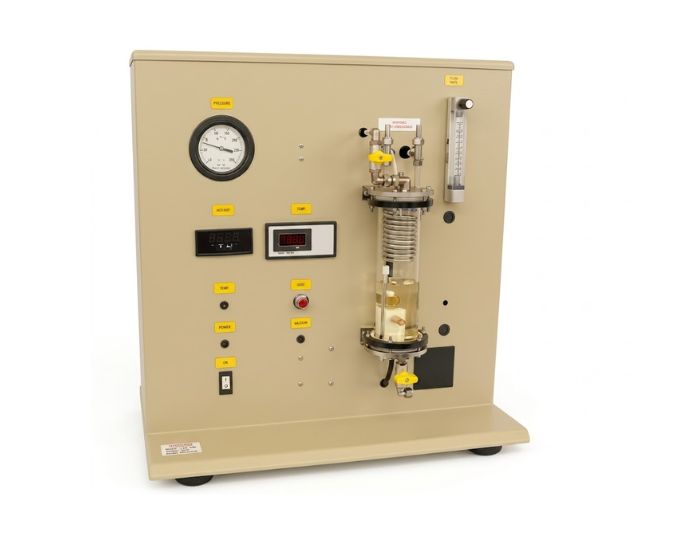
Boiling Process Apparatus
Model Number: MTBA-203
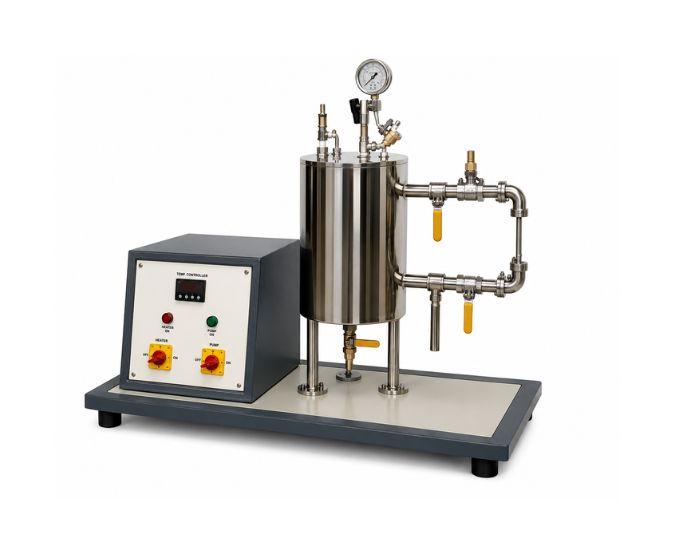
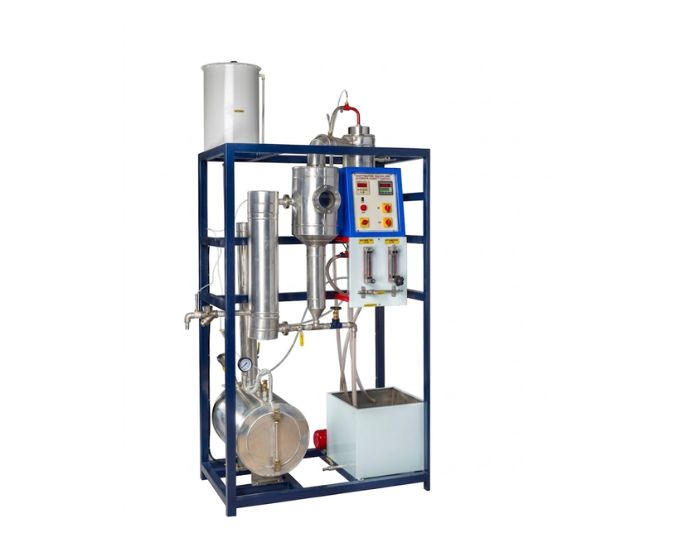
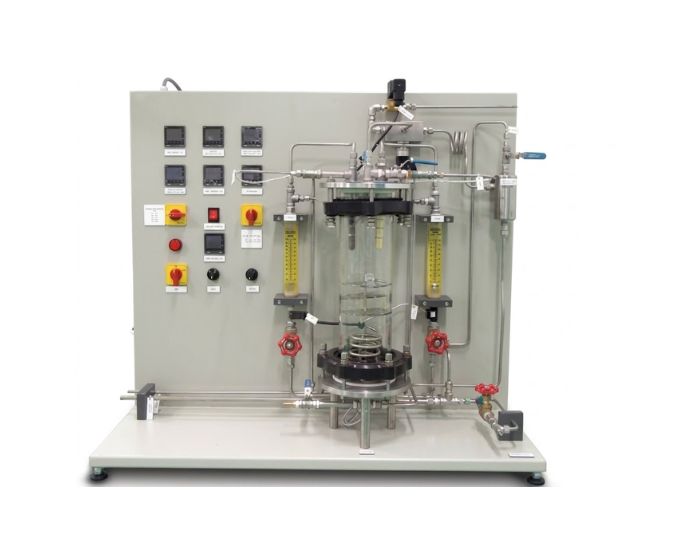
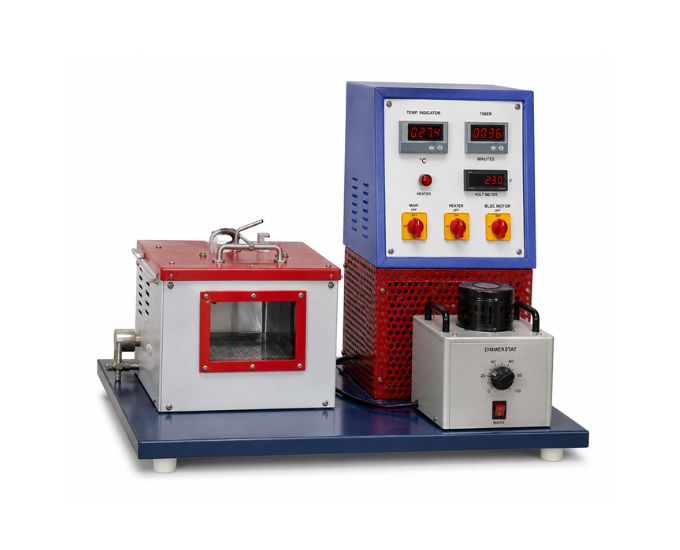
The Boiling Process Apparatus from Micro Technologies is a laboratory experimental system designed to provide visual and quantitative study of the different stages of boiling and evaporation. It enables students to investigate free convection boiling, nucleate boiling, film boiling, heat transfer during boiling, and the effects of temperature and pressure on evaporation. The transparent test section and integrated measurement system provide clear observation of bubble formation and changing boiling regimes.
Product Specification
The Boiling Process Apparatus is a specialized laboratory setup developed for studying the physical phenomena and heat-transfer characteristics associated with boiling and evaporation.
Manufactured by Micro Technologies, the apparatus provides students with an opportunity to visually observe different boiling regimes while simultaneously measuring the thermal and operating parameters associated with the process.
Boiling is a heat-transfer process involving the conversion of a liquid into vapour when sufficient thermal energy is supplied. Depending on surface temperature and operating conditions, the mechanism of heat transfer can change significantly.
The apparatus enables visualization and investigation of the transition from free convection to nucleate boiling and subsequently to film boiling. These regimes demonstrate how bubble formation, vapour generation, and heat-transfer behaviour vary as the temperature difference between the heated surface and liquid changes.
The transparent experimental section provides direct observation of boiling behaviour. Students can see the formation, growth, and release of vapour bubbles and relate these observations to measured temperature and heat-input values.
The apparatus also enables investigation of the effect of temperature and pressure on the evaporation process. Since boiling temperature depends strongly on system pressure, changes in pressure can be related directly to the corresponding boiling behaviour.
An integrated control and instrumentation panel provides temperature, pressure, electrical measurement, heating control, and flow monitoring arrangements required for experimental analysis.
Scope of Learning
The apparatus supports the study of:
- Boiling process
- Evaporation phenomena
- Free convection boiling
- Nucleate boiling
- Film boiling
- Different boiling regimes
- Boiling heat-transfer characteristics
- Vapour bubble formation
- Heat flux
- Heat transfer coefficient
- Boiling curve
- Effect of temperature on evaporation
- Effect of pressure on evaporation
- Liquid-to-vapour phase change
- Thermal behaviour of boiling liquids
Working Principle
The apparatus operates by supplying controlled electrical energy to a heating surface positioned in contact with the test liquid.
As the heating surface temperature rises, the liquid initially receives heat mainly through natural or free convection.
With further increase in surface temperature, vapour bubbles begin to form at nucleation sites on the heated surface. This condition represents nucleate boiling.
At still higher surface temperatures, vapour generation becomes increasingly intense. Under appropriate experimental conditions, a vapour layer can form between the heated surface and liquid, producing the film boiling regime.
By measuring temperature, pressure, and heat input while visually observing the process, students can relate physical boiling phenomena to quantitative heat-transfer characteristics.
Free Convection Boiling
Before vigorous bubble formation begins, heat from the heated surface is transferred to the surrounding liquid mainly through natural circulation.
Density differences caused by temperature variation generate fluid movement.
This stage allows students to investigate:
- Natural convection
- Initial liquid heating
- Temperature gradients
- Heat transfer before significant bubble formation
Nucleate Boiling
During nucleate boiling, vapour bubbles form at discrete nucleation sites on the heated surface.
The bubbles grow, detach, and rise through the liquid. Their movement produces strong fluid mixing and can result in high rates of heat transfer.
Students can visually study:
- Bubble initiation
- Bubble growth
- Bubble detachment
- Increasing vapour generation
- Enhanced heat-transfer rates
- Relationship between surface superheat and boiling intensity
Film Boiling
At sufficiently high surface temperatures, a continuous or semi-continuous vapour layer may develop between the heating surface and the surrounding liquid.
This condition is known as film boiling.
Because vapour generally has lower thermal conductivity than liquid, the vapour layer can significantly alter the heat-transfer mechanism.
The experiment provides practical understanding of the transition between different boiling regimes.
Boiling Curve
Experimental results can be used to understand the characteristic boiling curve, which relates heat flux to the temperature difference between the heating surface and saturated liquid.
Typical regions include:
- Natural or free convection
- Onset of nucleate boiling
- Developed nucleate boiling
- Transition boiling
- Film boiling
The experiment helps students understand why heat-transfer performance changes significantly across these regions.
Heat Transfer Study
The heat supplied electrically to the heating element can be evaluated from electrical measurements.
A general relationship is:
Q = V × I
Where:
- Q = Electrical heat input
- V = Applied voltage
- I = Electrical current
The experimental heat-transfer coefficient may be evaluated using:
h = Q / [A(Tₛ − Tₗ)]
Where:
- h = Heat transfer coefficient
- A = Effective heating area
- Tₛ = Heating surface temperature
- Tₗ = Liquid temperature
Effect of Temperature on Evaporation
Increasing the temperature of a liquid generally increases its vapour pressure and evaporation rate.
The apparatus allows students to observe how increasing heat input changes:
- Liquid temperature
- Surface temperature
- Bubble formation
- Vapour generation
- Boiling regime
- Heat-transfer rate
Effect of Pressure on Evaporation
The boiling temperature of a liquid depends on pressure.
A liquid boils when its vapour pressure reaches the pressure acting on the liquid.
The apparatus enables students to understand how pressure changes can affect:
- Boiling temperature
- Vapour formation
- Evaporation behaviour
- Heat-transfer characteristics
- Phase-change conditions
Main Components
- Transparent boiling test section
- Electrical heating element
- Test liquid chamber
- Temperature sensors
- Temperature indicators
- Pressure gauge
- Pressure measurement arrangement
- Electrical voltmeter
- Electrical ammeter
- Heater power controller
- Flow measurement arrangement
- Control valves
- Electrical switches
- Safety controls
- Integrated instrumentation panel
- Rigid laboratory support structure
Key Features
- Visual demonstration of boiling phenomena
- Transparent experimental section
- Study of free convection boiling
- Study of nucleate boiling
- Study of film boiling
- Boiling curve investigation
- Heat-transfer analysis
- Bubble formation visualization
- Temperature measurement
- Pressure measurement
- Electrical heat-input measurement
- Effect of temperature study
- Effect of pressure study
- Controlled electrical heating
- Integrated instrumentation
- Compact bench-mounted design
- Suitable for repeated laboratory experiments
Technical Specifications
| Parameter | Details |
|---|---|
| Product Name | Boiling Process Apparatus |
| Product Type | Heat Transfer Laboratory Apparatus |
| Process | Boiling / Evaporation |
| Test Section | Transparent |
| Free Convection Study | Yes |
| Nucleate Boiling Study | Yes |
| Film Boiling Study | Yes |
| Boiling Curve Study | Possible |
| Heating | Electrical |
| Temperature Measurement | Provided |
| Pressure Measurement | Provided |
| Electrical Measurement | Provided |
| Heat Transfer Study | Yes |
| Pressure Effect Study | Yes |
| Temperature Effect Study | Yes |
| Instrumentation | Integrated |
| Installation | Bench Mounted |
| Customization | Available |
Exact working fluid, heater rating, operating pressure, temperature range, flowmeter range, test-section dimensions, and electrical specifications can be configured according to laboratory requirements.
Experiments / Studies
- To visualize different forms of evaporation
- To study free convection boiling
- To study nucleate boiling
- To study film boiling
- To investigate different boiling regimes
- To study heat transfer during boiling
- To observe vapour bubble formation
- To investigate the boiling curve
- To determine heat-transfer characteristics
- To study the effect of temperature on evaporation
- To study the effect of pressure on evaporation
- To investigate liquid-vapour phase change
- To relate heat input to boiling behaviour
Educational Benefits
- Provides direct visualization of boiling phenomena
- Demonstrates different boiling regimes
- Helps students understand nucleate boiling
- Demonstrates film boiling behaviour
- Provides practical heat-transfer measurements
- Explains the influence of pressure on boiling
- Demonstrates temperature-dependent evaporation
- Connects theoretical boiling curves with physical observations
- Develops thermal calculation skills
- Provides experience with pressure and temperature measurement
- Suitable for engineering practical examinations
- Useful for undergraduate project and demonstration work
Applications
- Heat Transfer Laboratories
- Thermal Engineering Laboratories
- Mechanical Engineering Laboratories
- Chemical Engineering Laboratories
- Process Engineering Laboratories
- Energy Engineering Laboratories
- Engineering Colleges
- Universities
- Polytechnic Institutes
- Technical Training Institutes
- Research Laboratories
- Engineering R&D Centers
Optional Accessories
- Additional Temperature Sensors
- Digital Pressure Indicator
- Digital Temperature Indicator
- Digital Wattmeter
- Additional Flow Meter
- Data Acquisition System
- Computer Interface
- Data Logging System
- Alternative Compatible Test Fluids
- Calibration Accessories
- Experimental Manual
Customization Options
The Boiling Process Apparatus can be customized with:
- Different compatible working fluids
- Different heater capacities
- Additional temperature sensors
- Digital pressure measurement
- Digital power measurement
- Enhanced flow measurement
- Different test-section configurations
- Data acquisition system
- Computerized data logging
- Customized instrumentation panel
- Research-oriented configurations
SKU System
MT-FHT-203
FAQs
What is the Boiling Process Apparatus used for?
It is designed to visualize and investigate different boiling and evaporation phenomena, including free convection, nucleate boiling, film boiling, and heat transfer during phase change.
Which boiling regimes can be studied?
The apparatus enables study of free convection boiling, nucleate boiling, and film boiling, along with their associated heat-transfer behaviour.
Can the boiling process be observed directly?
Yes. The transparent test section enables visual observation of vapour formation and changes in boiling behaviour.
What is nucleate boiling?
Nucleate boiling is a regime in which vapour bubbles form at specific nucleation sites on the heated surface, grow, and detach into the surrounding liquid.
What is film boiling?
Film boiling occurs when a vapour layer develops between the heated surface and liquid, changing the mechanism and rate of heat transfer.
Can heat-transfer characteristics be evaluated?
Yes. Electrical heat input and temperature measurements can be used to evaluate boiling heat-transfer behaviour.
Can the effect of pressure be studied?
Yes. One of the intended studies is the effect of pressure on the evaporation and boiling process.
Can the effect of temperature be investigated?
Yes. Students can investigate how changing temperature and heat input affect evaporation, bubble formation, and boiling behaviour.
Where can this apparatus be used?
It is suitable for heat transfer, thermal engineering, mechanical engineering, chemical engineering, process engineering, and energy engineering laboratories.
Can the apparatus be customized?
Yes. Micro Technologies can customize the test section, instrumentation, heater arrangement, temperature and pressure measurement, and data acquisition according to laboratory requirements.
Why Choose Our Products
- Visual study of multiple boiling regimes
- Transparent experimental test section
- Free convection, nucleate and film boiling studies
- Temperature and pressure effect analysis
- Practical heat-transfer calculations
- Integrated instrumentation and controls
- Compact laboratory construction
- Suitable for engineering curricula
- Customized configurations available
- Institutional and project supply
- OEM requirements supported
- Technical and after-sales assistance
Call to Action
Equip your heat-transfer laboratory with the Boiling Process Apparatus from Micro Technologies for practical visualization and analysis of free convection, nucleate boiling, film boiling, evaporation, and heat-transfer phenomena. Contact us for technical specifications, customized configurations, institutional quotations, OEM requirements, tenders, and bulk supply.