
Pool Boiling Apparatus
Product Specification Sheet
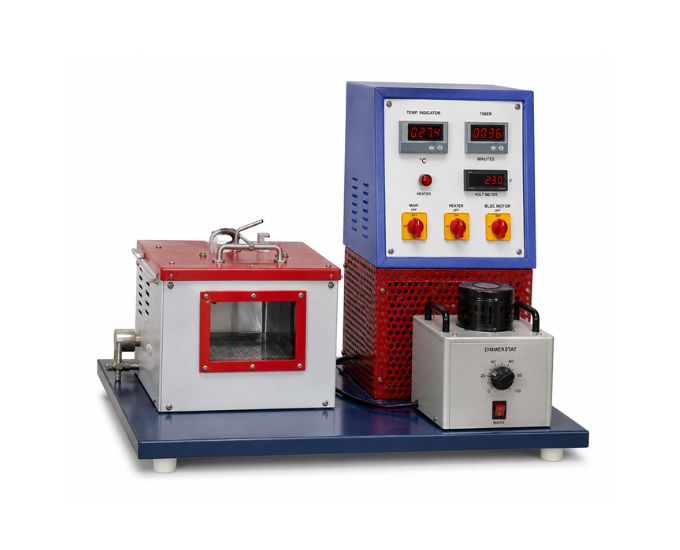
Pool Boiling Apparatus
Model Number: MTBA-205
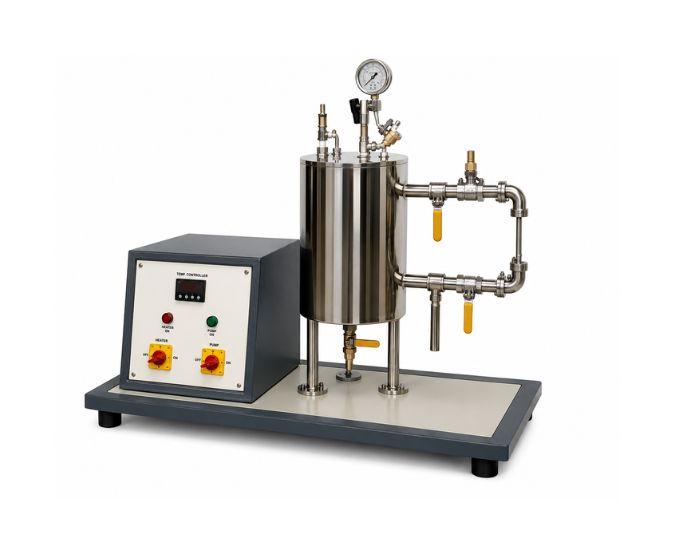
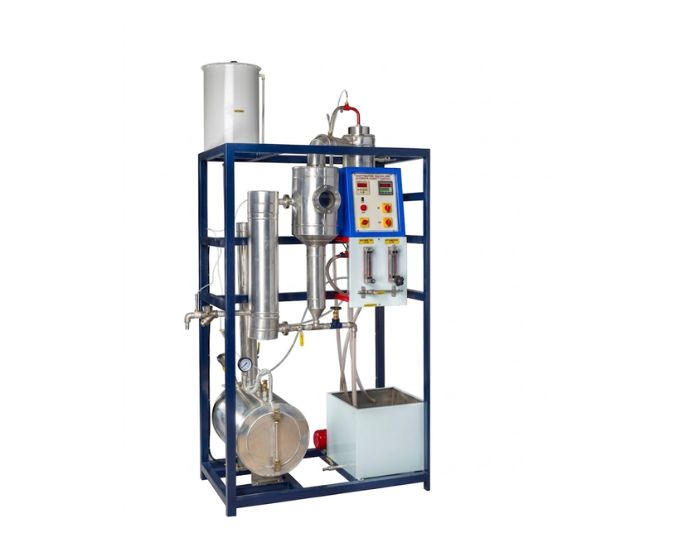
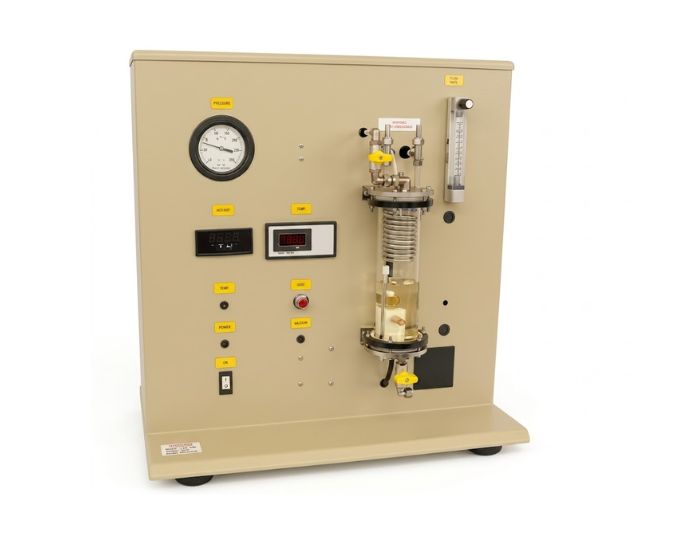
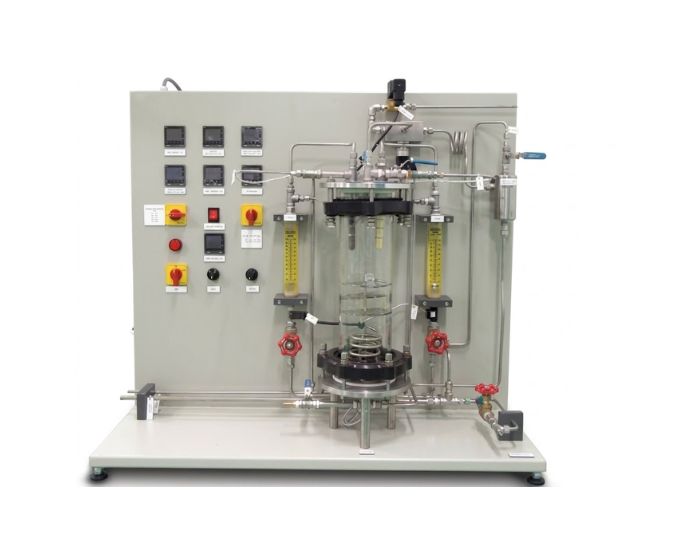
The Pool Boiling Apparatus from Micro Technologies is a laboratory heat-transfer system designed to study pool boiling phenomena up to the critical heat flux point. The apparatus enables students to observe boiling behaviour, analyze different boiling regimes, develop the characteristic boiling curve, and investigate the relationship between heat flux and surface temperature. It provides a practical platform for understanding nucleate boiling, bubble formation, critical heat flux, and thermal behaviour during liquid-to-vapour phase change.
Product Specification
The Pool Boiling Apparatus is a specialized heat-transfer laboratory setup developed for the experimental investigation of pool boiling and critical heat flux phenomena.
Pool boiling occurs when a heated surface is immersed in a relatively stationary body of liquid. As heat is supplied to the surface, the liquid adjacent to it becomes warmer and eventually begins to vaporize. With increasing heat input, the boiling mechanism changes through different regimes, producing significant variations in the heat-transfer rate.
The apparatus from Micro Technologies provides students with a controlled experimental platform for observing these changes and relating them to heat flux and temperature measurements.
A test heating element is positioned within the boiling chamber containing a suitable working liquid. Electrical power supplied to the heater can be controlled and measured. As heat input increases, students can observe the progression from natural convection to bubble formation and developed nucleate boiling.
The experiment can be continued within the safe operating limits of the apparatus to investigate conditions approaching the critical heat flux (CHF) point.
Critical heat flux is an important parameter in boiling heat transfer because it represents a limiting condition where the heat-transfer mechanism can change significantly. Understanding this phenomenon is important in the design and operation of boilers, evaporators, steam generators, thermal systems, and other equipment involving high heat fluxes.
The apparatus incorporates a visible test chamber, heater arrangement, electrical controls, temperature measurement, and instrumentation necessary for experimental data collection.
Scope of Learning
The apparatus enables practical study of:
- Pool boiling phenomenon
- Natural convection region
- Onset of nucleate boiling
- Nucleate boiling
- Bubble formation and growth
- Developed boiling
- Boiling heat transfer
- Boiling curve
- Surface superheat
- Heat flux variation
- Critical heat flux
- Critical heat flux point
- Heat transfer coefficient
- Liquid-to-vapour phase change
- Effect of increasing heater input
- Thermal behaviour of a heated surface
Working Principle
A heating element is immersed in a pool of suitable working liquid.
Electrical energy is supplied to the heater, causing its surface temperature to increase. Initially, heat is transferred to the surrounding liquid primarily by natural convection.
As the surface temperature increases sufficiently above the saturation temperature of the liquid, vapour bubbles begin to form at nucleation sites.
With further increase in heat input, the number and frequency of bubbles increase and the system enters the nucleate boiling region.
By recording heater temperature, liquid temperature, voltage, current, and other relevant measurements at different heat inputs, students can analyze the boiling process and develop a characteristic boiling curve.
Pool Boiling Phenomenon
Pool boiling refers to boiling from a heated surface submerged in a body of liquid where bulk liquid movement is not primarily produced by an external pump.
Fluid motion is generated mainly by:
- Natural convection
- Density differences
- Bubble formation
- Bubble growth
- Bubble detachment
- Vapour movement
This makes pool boiling fundamentally different from forced-flow boiling systems.
Natural Convection Region
At relatively low heat input, the heating surface temperature may remain below that required for significant bubble formation.
Heat is transferred primarily by natural convection.
In this region, students can investigate the relationship between:
- Heater temperature
- Bulk liquid temperature
- Temperature difference
- Heat input
- Natural circulation
Nucleate Boiling
As surface temperature increases, vapour bubbles begin forming at microscopic nucleation sites.
During nucleate boiling:
- Vapour bubbles form on the heater
- Bubbles grow as evaporation continues
- Bubbles detach from the surface
- Fresh liquid contacts the heater
- Fluid mixing increases
- Heat-transfer performance increases significantly
This region provides an important demonstration of efficient phase-change heat transfer.
Critical Heat Flux
The Critical Heat Flux (CHF) represents an important limiting condition in boiling heat transfer.
As heat flux is increased through the nucleate boiling region, a maximum practical heat-transfer condition can be approached. Beyond this region, vapour can increasingly interfere with direct liquid contact at the heating surface.
This can cause the heater surface temperature to rise rapidly.
The apparatus is therefore intended to demonstrate boiling behaviour up to the critical heat flux point under controlled laboratory conditions.
Boiling Curve
Experimental readings can be used to understand or plot the characteristic pool boiling curve.
A typical relationship is expressed between:
Heat Flux (q″) and Surface Superheat (Ts − Tsat)
Where:
- q″ = Heat flux
- Ts = Heating surface temperature
- Tsat = Saturation temperature of the working liquid
The curve helps students identify different boiling regions and understand how heat-transfer behaviour changes with surface temperature.
Heat Flux Determination
Heat flux can be represented as:
q″ = Q / A
Where:
- q″ = Heat flux
- Q = Heat supplied to the test heater
- A = Effective heating surface area
For electrical heating, heat input can be estimated using:
Q = V × I
Where:
- V = Applied voltage
- I = Electrical current
These measurements allow students to relate electrical input directly to boiling heat-transfer behaviour.
Heat Transfer Coefficient
The boiling heat-transfer coefficient may be evaluated using:
h = Q / [A(Ts − Tsat)]
Where:
- h = Heat transfer coefficient
- Q = Heat-transfer rate
- A = Heater surface area
- Ts = Heater surface temperature
- Tsat = Saturation temperature
This provides quantitative understanding of heat-transfer performance during different stages of pool boiling.
Main Components
- Pool boiling test chamber
- Transparent observation section
- Test heating element
- Working liquid reservoir
- Electrical heater supply
- Variable heater control
- Temperature sensors
- Temperature indicators
- Voltage measurement
- Current measurement
- Electrical instrumentation
- Heater protection arrangement
- Control switches
- Integrated control panel
- Cooling / auxiliary arrangement as applicable
- Interconnecting tubing
- Rigid laboratory mounting platform
Key Features
- Designed for pool boiling experiments
- Study up to critical heat flux point
- Visual observation of boiling phenomena
- Transparent test section
- Natural convection study
- Nucleate boiling investigation
- Bubble formation visualization
- Boiling curve analysis
- Heat flux determination
- Surface superheat analysis
- Heat-transfer coefficient calculation
- Controlled electrical heat input
- Temperature measurement
- Electrical parameter measurement
- Integrated instrumentation panel
- Compact bench-mounted construction
- Suitable for repeated engineering experiments
Technical Specifications
| Parameter | Details |
|---|---|
| Product Name | Pool Boiling Apparatus |
| Product Type | Heat Transfer Laboratory Apparatus |
| Process | Pool Boiling |
| Primary Study | Boiling Phenomena |
| Test Section | Visible / Transparent |
| Heating | Electrical |
| Heat Input Control | Variable |
| Natural Convection Study | Yes |
| Nucleate Boiling Study | Yes |
| Critical Heat Flux Study | Yes |
| Boiling Curve Study | Possible |
| Heat Flux Determination | Possible |
| Temperature Measurement | Provided |
| Voltage Measurement | Provided |
| Current Measurement | Provided |
| Heat Transfer Coefficient | Determination Possible |
| Installation | Bench Mounted |
| Application | Heat Transfer / Thermal Engineering Laboratory |
| Customization | Available |
Exact working fluid, heater rating, heating surface dimensions, temperature range, instrumentation, and electrical supply can be configured according to laboratory requirements.
Experiments / Studies
- To study pool boiling phenomena
- To study pool boiling up to the critical heat flux point
- To observe natural convection before boiling
- To investigate onset of nucleate boiling
- To study nucleate boiling
- To observe vapour bubble formation
- To investigate bubble growth and detachment
- To develop the characteristic boiling curve
- To determine heat flux at different operating conditions
- To investigate surface superheat
- To determine boiling heat-transfer coefficient
- To identify the critical heat flux region
- To study liquid-to-vapour phase change
- To analyze the effect of increasing electrical heat input
Educational Benefits
- Provides practical visualization of pool boiling
- Demonstrates nucleate boiling clearly
- Introduces critical heat flux experimentally
- Helps students understand the boiling curve
- Provides practical heat-flux calculations
- Demonstrates surface superheat
- Connects electrical heat input with thermal performance
- Provides practical temperature measurement experience
- Improves understanding of phase-change heat transfer
- Supports theoretical heat-transfer coursework
- Suitable for laboratory examinations
- Useful for engineering projects and demonstrations
Applications
- Heat Transfer Laboratories
- Thermal Engineering Laboratories
- Mechanical Engineering Laboratories
- Chemical Engineering Laboratories
- Energy Engineering Laboratories
- Process Engineering Laboratories
- Engineering Colleges
- Universities
- Polytechnic Institutes
- Technical Training Institutes
- Research Laboratories
- Thermal Engineering R&D Centers
Industrial Relevance
Understanding pool boiling and critical heat flux is useful in the study and design of thermal equipment such as:
- Boilers
- Steam generators
- Evaporators
- Heat exchangers
- Cooling systems
- Process heaters
- Thermal energy systems
- High heat-flux cooling applications
- Power generation equipment
Optional Accessories
- Additional Temperature Sensors
- Digital Temperature Indicator
- Digital Voltmeter
- Digital Ammeter
- Digital Wattmeter
- Additional Test Heater
- Data Acquisition System
- Computer Interface
- Data Logging System
- Compatible Working Fluid Arrangement
- Calibration Accessories
- Experimental Manual
Customization Options
The Pool Boiling Apparatus can be customized with:
- Different heater configurations
- Different compatible working liquids
- Additional temperature measurement points
- Digital power measurement
- Enhanced heater protection
- Different test chamber dimensions
- Data acquisition system
- Computerized data logging
- Customized instrumentation panel
- Research-oriented configurations
SKU System
MT-FHT-205
FAQs
What is the Pool Boiling Apparatus used for?
The apparatus is designed to study pool boiling phenomena and boiling heat-transfer behaviour up to the critical heat flux point.
What is pool boiling?
Pool boiling occurs when a heated surface transfers heat to a relatively stationary liquid surrounding it, with fluid movement primarily resulting from natural convection and vapour bubble activity.
What is nucleate boiling?
Nucleate boiling is a boiling regime where vapour bubbles form at nucleation sites on the heated surface, grow, and detach into the surrounding liquid.
What is critical heat flux?
Critical heat flux is an important limiting condition in boiling where increasing heat input can lead to a major change in the boiling mechanism and a rapid increase in heater surface temperature.
Can the boiling process be observed visually?
Yes. The apparatus incorporates a visible test section that allows students to observe bubble formation and boiling behaviour.
Can a boiling curve be studied?
Yes. Experimental heat-flux and temperature measurements can be used to study the characteristic pool boiling curve.
Can heat flux be calculated?
Yes. Heat flux can be calculated from the measured electrical heat input and effective heating surface area.
Can the heat transfer coefficient be determined?
Yes. Experimental temperature and heat-input data can be used to determine the boiling heat-transfer coefficient.
Where is this apparatus used?
It is suitable for mechanical engineering, thermal engineering, heat transfer, chemical engineering, process engineering, and energy engineering laboratories.
Can the apparatus be customized?
Yes. Micro Technologies can customize the heater, test chamber, instrumentation, temperature measurement, electrical controls, and data acquisition according to laboratory requirements.
Why Choose Our Products
- Dedicated pool boiling experimental system
- Study up to critical heat flux
- Visual observation of boiling
- Nucleate boiling investigation
- Boiling curve analysis
- Heat flux and heat-transfer coefficient calculations
- Integrated electrical instrumentation
- Compact laboratory construction
- Suitable for engineering curricula
- Customized configurations available
- Institutional and OEM supply
- Technical and after-sales assistance
Call to Action
Advance practical heat-transfer learning with the Pool Boiling Apparatus from Micro Technologies. Contact us for customized specifications, institutional laboratory setups, engineering project requirements, technical quotations, OEM supply, government tenders, distributor inquiries, and bulk orders.