
Laboratory Wilfley Table
Product Specification Sheet
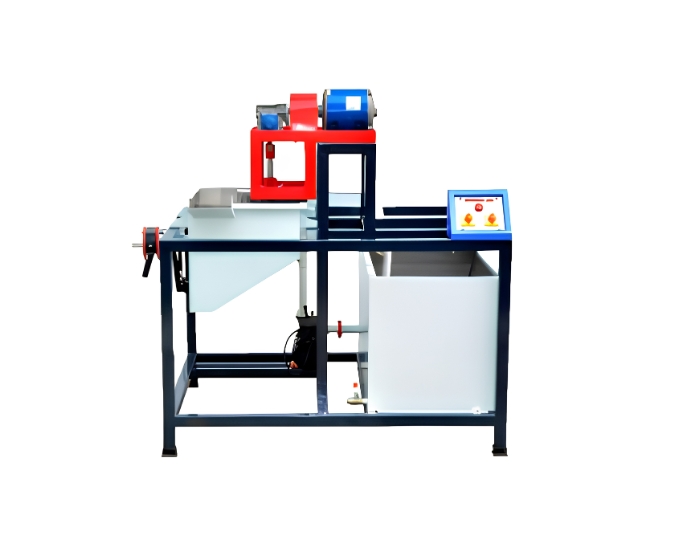
Laboratory Wilfley Table
Model Number: MTMO-120
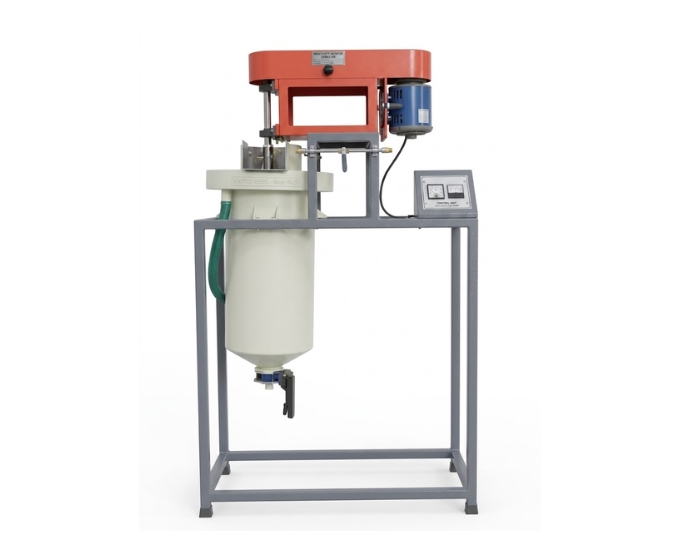
The Laboratory Wilfley Table is a laboratory-scale gravity separation system designed for practical study of mineral concentration and particle separation according to differences in density and particle characteristics. It provides hands-on understanding of shaking-table separation and is suitable for Mechanical Operations, Mineral Processing, Mining and Metallurgical Engineering laboratories.
Product Specification
The Laboratory Wilfley Table, also known as a laboratory shaking table, is an educational mineral-processing system developed for practical investigation of gravity concentration and particle separation.
Gravity separation is an important mineral-processing technique that uses differences in the physical properties of particles, particularly specific gravity or density, to separate valuable minerals from unwanted material.
The Wilfley Table consists primarily of an inclined table or deck subjected to a controlled reciprocating motion.
During operation, a suitable mixture of solid particles and water is introduced onto the table surface.
The combined effects of table motion, water flow, gravity and differences in particle characteristics cause the feed material to separate into different fractions.
Particles with different densities and sizes respond differently to the shaking action and flowing water. This results in characteristic particle paths across the table and allows selected fractions to be collected separately.
The apparatus provides students with practical understanding of gravity concentration, an important beneficiation method used in mineral processing.
Students can observe how heavier mineral particles behave differently from lighter gangue particles under controlled operating conditions.
The system is also useful for investigating the influence of particle size, particle density, water flow, table inclination and reciprocating motion on separation performance.
Feed material and separated fractions can be collected and analyzed to evaluate the effectiveness of the concentration process.
Where the composition of the feed is known, experimental data can also be used to investigate mineral recovery and concentration performance.
The equipment helps students understand important concepts such as specific gravity separation, stratification, particle transport, concentrate, middlings and tailings.
Its laboratory-scale configuration provides practical experience with an industrially relevant mineral-beneficiation technique without requiring full-scale processing equipment.
Micro Technologies supplies Laboratory Wilfley Tables and other Mechanical Operations and Mineral Processing laboratory equipment for engineering colleges, universities, research institutes and technical training centres.
Features
- Laboratory-scale Wilfley shaking table
- Gravity separation experiments
- Mineral concentration studies
- Reciprocating table motion
- Inclined separation deck
- Controlled water-flow arrangement
- Density-based particle separation
- Particle-size effect studies
- Mineral recovery experiments
- Feed and product analysis
- Concentrate collection
- Multiple fraction separation
- Adjustable operating conditions where applicable
- Motor-driven operation
- Robust laboratory frame
Benefits
- Demonstrates gravity separation practically
- Provides hands-on mineral concentration experience
- Demonstrates the influence of particle density
- Shows the effect of particle size on separation
- Enables mineral recovery studies
- Provides feed and product comparison
- Demonstrates shaking-table operation
- Helps students understand ore beneficiation
- Connects mineral-processing theory with practical experiments
- Suitable for Mechanical Operations and Mineral Processing laboratories
Product Specifications
| Specification | Details |
|---|---|
| Product Name | Laboratory Wilfley Table |
| Equipment Type | Gravity Separation Equipment |
| Separation Method | Shaking Table / Gravity Concentration |
| Primary Separation Basis | Density / Specific Gravity |
| Table Motion | Reciprocating |
| Separation Medium | Water |
| Deck Arrangement | Inclined Table |
| Mineral Concentration | Study Supported |
| Particle Classification | Study Supported |
| Mineral Recovery | Study Supported |
| Feed Analysis | Supported |
| Separated Fraction Analysis | Supported |
| Water Flow | Controlled |
| Drive | Electric Motor Driven |
| Application | Mechanical Operations / Mineral Separation |
Experiments Performed
- Study of Wilfley Table operation
- Demonstration of gravity separation
- Separation of mineral mixtures
- Study of mineral concentration
- Investigation of density-based separation
- Study of the effect of particle size
- Study of the effect of particle density
- Investigation of water-flow effects
- Study of table inclination effects where adjustable
- Investigation of reciprocating table motion
- Collection of different separated fractions
- Study of concentrate, middlings and tailings
- Determination of mineral recovery where applicable
- Comparison of feed and separated products
- Evaluation of gravity concentration performance
Applications
- Mineral Processing Laboratories
- Mechanical Operations Laboratories
- Mining Engineering Laboratories
- Metallurgical Engineering Laboratories
- Chemical Engineering Laboratories
- Ore Beneficiation Laboratories
- Particle Technology Laboratories
- Gravity Separation Laboratories
- Engineering Colleges
- Universities
- Polytechnic Institutes
- Technical Training Centres
- Research & Educational Laboratories
FAQs
What is a Laboratory Wilfley Table used for?
A Laboratory Wilfley Table is used to study gravity concentration and separate mineral particles according to differences in density, size and their behaviour under flowing water and reciprocating table motion.
What is another name for a Wilfley Table?
It is commonly referred to as a shaking table or gravity concentration table.
What is the main separation principle of a Wilfley Table?
The table uses differences in particle density and behaviour under gravity, flowing water and reciprocating motion to achieve separation.
What type of separation does the apparatus perform?
It primarily performs gravity-based mineral separation and concentration.
Why is water used on the table?
Water helps transport and stratify particles across the deck, allowing particles with different physical characteristics to follow different paths.
Does particle density affect separation?
Yes. Differences in density or specific gravity are fundamental to the gravity concentration process.
Does particle size influence Wilfley Table performance?
Yes. Particle size influences settling, stratification and transport behaviour and therefore affects separation performance.
Can mineral recovery be studied?
Yes. With a known feed composition and suitable analysis of the separated products, mineral recovery can be evaluated.
What are concentrate, middlings and tailings?
Concentrate is the fraction enriched in the desired mineral, tailings contain more unwanted material, and middlings represent an intermediate fraction.
Where are Wilfley Tables commonly used?
Shaking tables are commonly associated with mineral processing, mining, ore beneficiation and gravity concentration operations.
Is this suitable for Mechanical Operations laboratories?
Yes. It can be categorized under Mechanical Operations Equipment → Separation.
Is it suitable for Mineral Processing laboratories?
Yes. The Laboratory Wilfley Table is particularly suitable for Mineral Processing, Mining and Metallurgical Engineering laboratories.
Why Choose Our Products
- Practical gravity separation experiments
- Mineral concentration studies
- Density-based particle separation
- Shaking-table demonstration
- Mineral recovery experiments
- Feed and product analysis
- Controlled water-flow studies
- Industrially relevant beneficiation process
- Robust laboratory construction
- Suitable for engineering education
- Customized configurations available
- Institutional and bulk supply support
Call to Action
Equip your Mineral Processing or Mechanical Operations Laboratory with a Laboratory Wilfley Table from Micro Technologies. Designed for practical gravity separation and mineral concentration studies, the system provides an effective teaching platform for particle separation and ore beneficiation. Contact us for technical specifications, customized configurations, institutional quotations, bulk requirements or tender supply.