
Laboratory Magnetic Separator
Product Specification Sheet
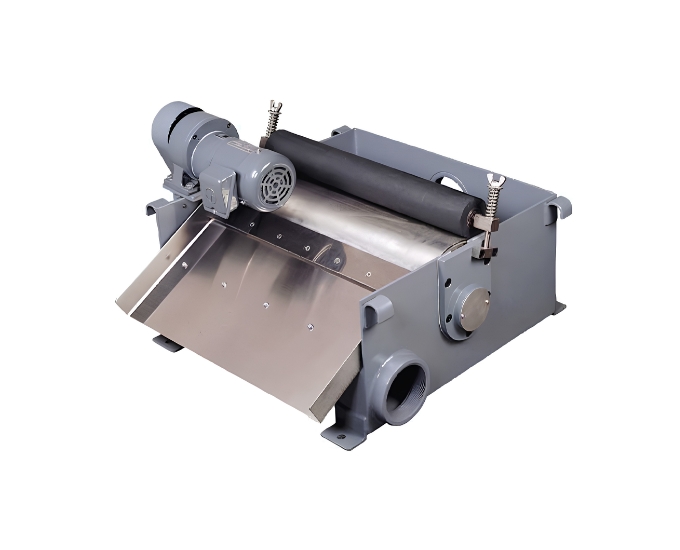
Laboratory Magnetic Separator
Model Number: MTMO-116
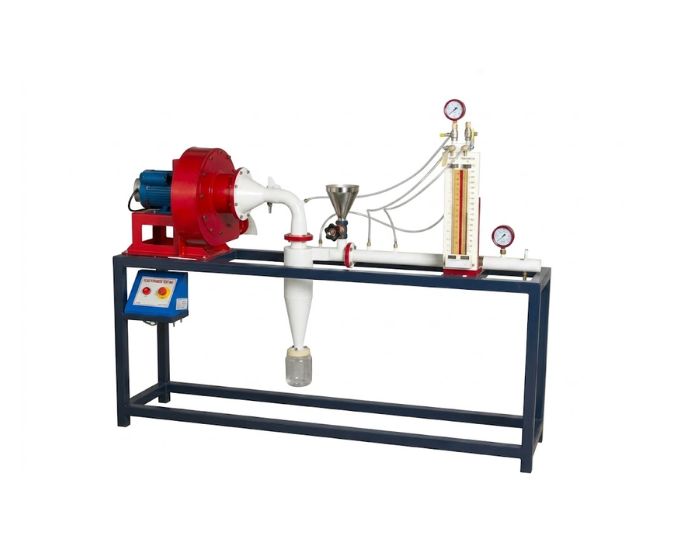
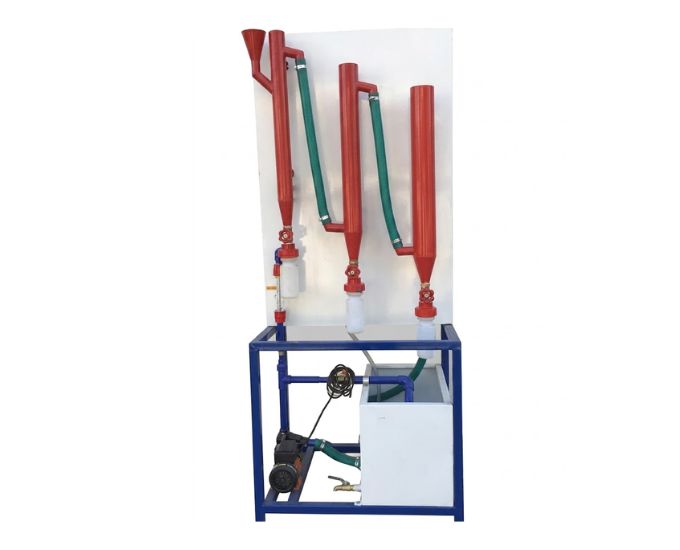
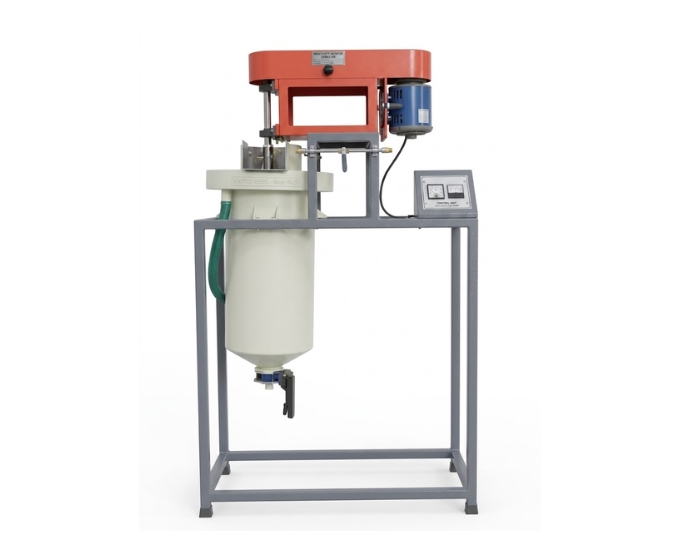
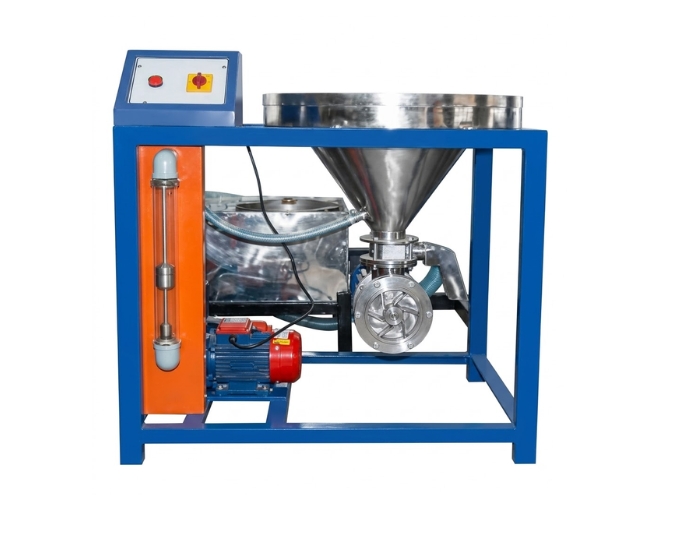
The Laboratory Magnetic Separator is an educational separation system designed for practical study of the principles and operation of magnetic separation. It enables students to investigate the separation of magnetically responsive materials from mixtures and determine the efficiency of the magnetic separation process.
Product Specification
e Laboratory Magnetic Separator is an educational Mechanical Operations apparatus developed for practical investigation of material separation based on differences in magnetic properties.
Magnetic separation is an important physical separation technique used in mineral processing, mining, recycling, material recovery and various industrial processes.
The apparatus enables students to understand how materials having different magnetic responses can be separated from a mixed feed.
When a mixture containing magnetically responsive and non-magnetic particles is exposed to a suitable magnetic field, the magnetic component experiences an attractive force.
This difference in behaviour enables the magnetic fraction to be separated from the remaining material.
The equipment provides a practical demonstration of the principles and operation of a magnetic separator.
Students can observe the movement and separation of particles as they pass through or near the magnetic separation zone.
One of the main experiments performed with the apparatus is the determination of magnetic separator efficiency.
A known feed mixture can be processed through the separator, after which the separated fractions can be collected and analyzed.
The mass and composition of the resulting fractions can be used to evaluate the effectiveness of the separation process.
The apparatus helps students understand important parameters that can influence separation performance, including particle magnetic susceptibility, particle size, feed characteristics, magnetic field strength and material flow conditions.
The system is particularly useful for demonstrating how differences in material properties can be exploited to achieve separation without relying on filtration or fluid-density differences.
Experimental observations can be related to theoretical concepts taught in Mechanical Operations, Mineral Processing and Particle Technology courses.
The equipment provides practical understanding of magnetic attraction, material classification, separation efficiency, feed composition and product recovery.
Micro Technologies supplies Laboratory Magnetic Separators and other Mechanical Operations Equipment for engineering colleges, universities, research laboratories, polytechnic institutes and technical training centres.
Features
- Laboratory-scale magnetic separation
- Magnetic and non-magnetic material separation
- Magnetic separation principle demonstration
- Separator operation studies
- Separation efficiency determination
- Material recovery experiments
- Feed and separated-fraction analysis
- Particle classification studies
- Controlled laboratory operation
- Suitable for different experimental mixtures
- Educational demonstration system
- Compact laboratory configuration
- Robust construction
- Suitable for repeated experiments
- Industrially relevant separation concept
Benefits
- Demonstrates magnetic separation practically
- Provides hands-on understanding of magnetic material behaviour
- Enables determination of separator efficiency
- Demonstrates magnetic and non-magnetic fraction separation
- Helps students understand material recovery
- Enables feed and product comparison
- Introduces magnetic susceptibility concepts
- Provides practical particle-separation experience
- Connects separation theory with laboratory experiments
- Suitable for Mechanical Operations and Mineral Processing laboratories
Product Specifications
| Specification | Details |
|---|---|
| Product Name | Laboratory Magnetic Separator |
| Equipment Type | Laboratory Separation Equipment |
| Separation Method | Magnetic Separation |
| Separation Basis | Magnetic Properties |
| Feed Type | Suitable Solid Particle Mixture |
| Magnetic Fraction | Separation Supported |
| Non-Magnetic Fraction | Separation Supported |
| Separation Efficiency | Determination Supported |
| Material Recovery | Study Supported |
| Feed Analysis | Supported |
| Product Analysis | Supported |
| Particle Classification | Study Supported |
| Operation | Laboratory Scale |
| Application | Mechanical Operations / Separation |
Experiments Performed
- Study of the principles of magnetic separation
- Demonstration of Magnetic Separator operation
- Separation of magnetic and non-magnetic particles
- Study of magnetic material behaviour
- Determination of Magnetic Separator efficiency
- Analysis of feed material
- Collection of separated fractions
- Comparison of feed and separated products
- Investigation of magnetic particle recovery
- Study of separation effectiveness
- Investigation of particle magnetic response
- Study of the influence of feed characteristics
- Practical demonstration of physical separation
- Evaluation of magnetic separation performance
Applications
- Mechanical Operations Laboratories
- Mineral Processing Laboratories
- Mining Engineering Laboratories
- Chemical Engineering Laboratories
- Metallurgical Engineering Laboratories
- Particle Technology Laboratories
- Separation Process Laboratories
- Material Processing Laboratories
- Engineering Colleges
- Universities
- Polytechnic Institutes
- Technical Training Centres
- Research & Educational Laboratories
FAQs
What is a Laboratory Magnetic Separator used for?
It is used to study magnetic separation and separate magnetically responsive particles from non-magnetic materials under laboratory conditions.
What is the basis of magnetic separation?
Magnetic separation is based on differences in the magnetic response of materials when they are exposed to a magnetic field.
Can Magnetic Separator efficiency be determined?
Yes. One of the main experiments is to determine the efficiency of the magnetic separation process using suitable feed and separated-fraction measurements.
What types of materials can be separated?
The apparatus is intended for suitable mixtures containing components with sufficiently different magnetic properties.
Can magnetic and non-magnetic fractions be collected separately?
Yes. The separated fractions can be collected and analyzed to evaluate separation performance.
What factors can affect magnetic separation efficiency?
Factors can include magnetic properties, particle size, feed composition, magnetic field conditions and the way material passes through the separation zone.
Is magnetic separation a physical separation process?
Yes. It separates materials according to differences in their magnetic properties without requiring a chemical reaction.
Can feed and separated products be compared?
Yes. Feed and collected fractions can be evaluated to determine material recovery and separation effectiveness.
Where is magnetic separation commonly used?
It is widely applied in mineral processing, mining, metallurgical processing, recycling and material-recovery operations.
Is this suitable for Mechanical Operations laboratories?
Yes. The Laboratory Magnetic Separator fits directly under Mechanical Operations Equipment → Separation.
Is it suitable for Mineral Processing laboratories?
Yes. Magnetic separation is an important mineral beneficiation technique and is highly relevant to Mineral Processing and Mining Engineering education.
Why Choose Our Products
- Practical magnetic separation experiments
- Magnetic and non-magnetic fraction studies
- Separation efficiency determination
- Material recovery analysis
- Feed and product comparison
- Particle classification experiments
- Industrially relevant separation process
- Compact educational configuration
- Robust laboratory construction
- Suitable for institutional laboratories
- Customized configurations available
- Bulk and tender supply support
Call to Action
Equip your Mechanical Operations or Mineral Processing Laboratory with a Laboratory Magnetic Separator from Micro Technologies for practical study of magnetic separation, material recovery and separation efficiency. Contact us for technical specifications, customized configurations, institutional quotations, bulk requirements or tender supply.