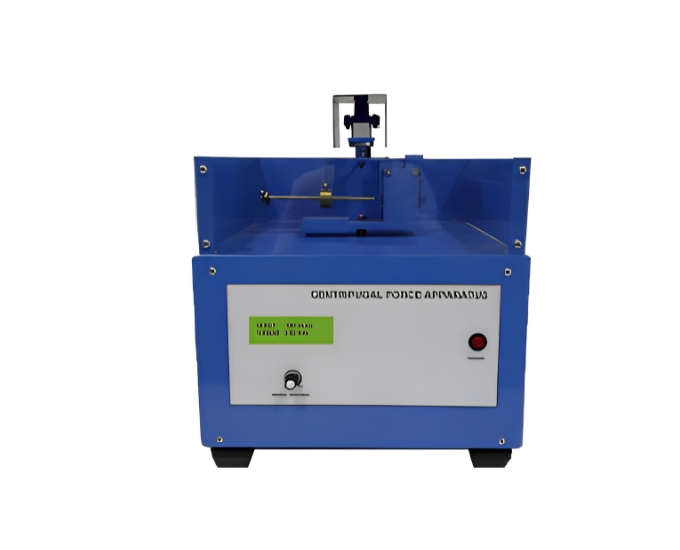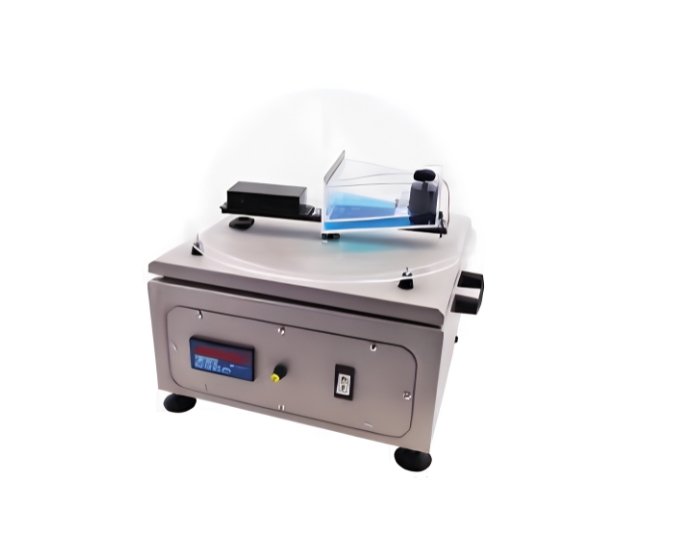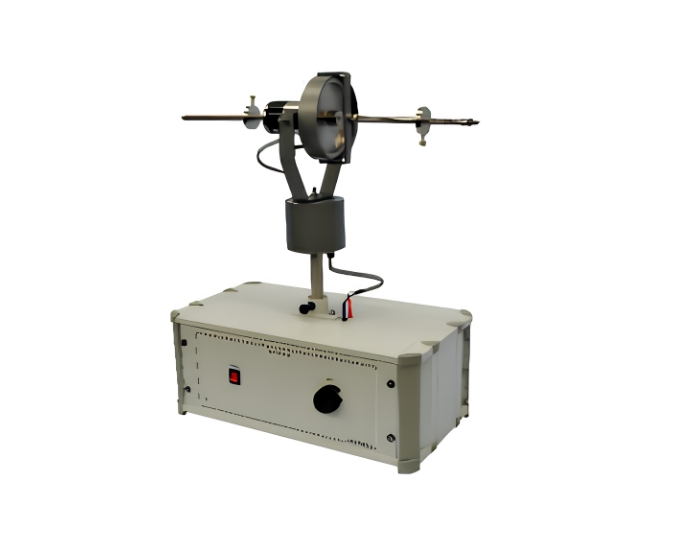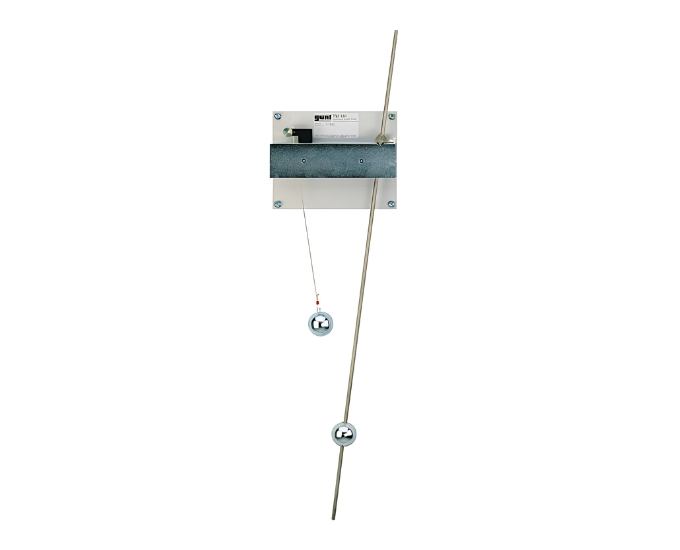

Investigation of Cam Mechanism Apparatus
Product Specification Sheet
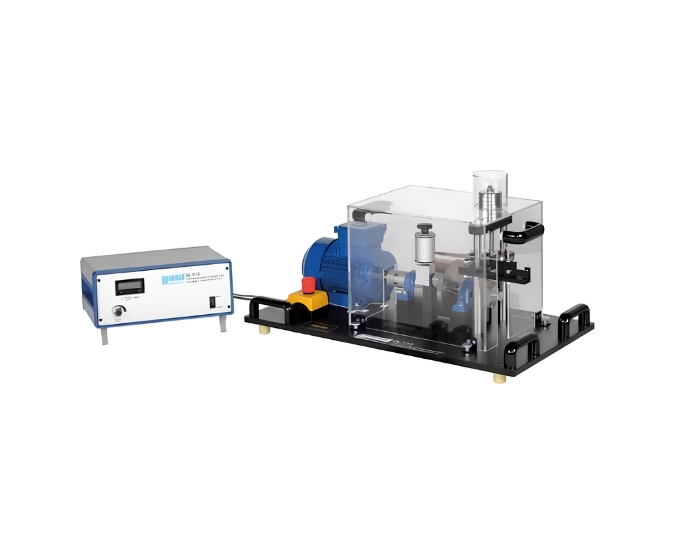
Investigation of Cam Mechanism Apparatus
Model Number: MTDE-406
The Investigation of Cam Mechanism Apparatus is an educational mechanical engineering system designed for the detailed study of cam and follower motion. It enables students to record and analyze follower elevation curves, determine limiting cam speed, investigate the effects of follower mass, return-spring stiffness and preload, and compare the motion produced by different cam profiles with theoretical predictions.
Product Specification
The Investigation of Cam Mechanism Apparatus is a laboratory teaching system developed for practical analysis of the kinematic and dynamic behaviour of cam and follower mechanisms.
Cam mechanisms are widely used to convert rotary motion into a predetermined reciprocating or oscillating motion. Their applications include engines, automated machinery, production equipment, packaging systems and mechanical control mechanisms.
The apparatus provides a practical platform for studying the relationship between cam profile, cam rotation and follower displacement.
One of the main experiments involves recording the elevation curve of the follower. The follower displacement can be investigated as the cam rotates through different angular positions.
The system allows elevation curves to be studied under different follower-contact conditions, including configurations where the engaging member follows the cam profile under controlled loading.
Students can determine the limiting speed of the cam and compare experimental observations with theoretical predictions. This is particularly important for understanding follower behaviour at higher rotational speeds.
As cam speed increases, dynamic effects become more significant. The follower may no longer maintain the intended motion if the operating conditions exceed the capabilities of the follower and return-spring arrangement.
The apparatus enables investigation of the influence of moving mass on the motion of the cam follower or plunger. Different mass conditions can be studied to understand the effect of inertia on follower response.
Another important experiment is the study of the influence of return-spring stiffness. Changes in spring stiffness affect the restoring force acting on the follower and therefore influence its dynamic response.
The effect of spring preload can also be investigated. Adjusting preload changes the initial force acting on the follower and helps demonstrate its influence on follower contact and motion.
Different cam-member shapes or cam profiles can be compared experimentally. This allows students to observe how cam geometry affects follower displacement and the resulting elevation curve.
Experimental elevation curves can subsequently be compared with theoretical elevation curves, providing an effective method of validating theoretical cam-motion analysis.
The apparatus provides practical understanding of cam profiles, follower displacement, rise, return, cam speed, follower inertia, spring stiffness, spring preload and dynamic follower response.
Micro Technologies supplies Cam Mechanism Apparatus and other Theory of Machines and Dynamics of Machines laboratory equipment for engineering colleges, universities, polytechnic institutes and technical training centres.
Features
- Cam and follower experimental system
- Follower elevation-curve investigation
- Different cam-profile studies
- Suitable for cam-speed experiments
- Limiting cam-speed determination
- Follower/plunger motion investigation
- Moving-mass effect studies
- Return-spring stiffness investigation
- Spring-preload adjustment studies
- Comparison of different cam shapes
- Experimental and theoretical elevation-curve comparison
- Suitable for kinematic and dynamic analysis
- Clear visualization of follower movement
- Student-friendly experimental configuration
- Robust laboratory construction
Benefits
- Provides practical understanding of cam mechanisms
- Demonstrates conversion of rotary to reciprocating motion
- Enables detailed follower-motion analysis
- Helps students determine limiting cam speed
- Demonstrates the influence of follower mass
- Enables investigation of spring stiffness
- Demonstrates the effect of spring preload
- Allows different cam profiles to be compared
- Supports experimental and theoretical curve comparison
- Connects cam-design theory with practical mechanical behaviour
Product Specifications
| Specification | Details |
|---|---|
| Product Name | Investigation of Cam Mechanism Apparatus |
| Product Type | Theory & Dynamics of Machines Laboratory Apparatus |
| Mechanism | Cam and Follower |
| Input Motion | Rotary |
| Follower Motion | Reciprocating |
| Elevation Curve Study | Supported |
| Cam Profile Comparison | Supported |
| Limiting Speed Study | Supported |
| Moving Mass Effect | Investigation Supported |
| Return Spring Stiffness | Investigation Supported |
| Spring Preload | Adjustable / Study Supported |
| Follower / Plunger Study | Supported |
| Theoretical Curve Comparison | Supported |
| Dynamic Response Study | Supported |
| Application | Theory & Dynamics of Machines Laboratory |
Experiments Performed
- Investigation of cam and follower mechanisms
- Recording of follower elevation curves
- Study of elevation curves under different engaging conditions
- Study of follower displacement versus cam angle
- Determination of limiting cam speed
- Comparison of limiting speed with theoretical values
- Investigation of the influence of moving mass
- Study of follower/plunger dynamic motion
- Investigation of return-spring stiffness
- Study of the effect of spring preload
- Investigation of follower contact behaviour
- Comparison of elevation curves for different cam shapes
- Comparison of different cam profiles
- Comparison of experimental elevation curves with theory
- Investigation of cam-speed effects on follower response
- Practical study of cam mechanism dynamics
Applications
- Theory of Machines Laboratories
- Dynamics of Machines Laboratories
- Kinematics of Machines Laboratories
- Mechanical Engineering Laboratories
- Machine Design Laboratories
- Mechanical Dynamics Laboratories
- Automobile Engineering Laboratories
- Mechatronics Laboratories
- Engineering Colleges
- Universities
- Polytechnic Institutes
- Technical Training Centres
- Research & Educational Laboratories
FAQs
What is the Investigation of Cam Mechanism Apparatus used for?
The apparatus is used to study cam and follower motion, elevation curves, limiting cam speed, follower mass effects, spring stiffness, spring preload and different cam profiles.
What is a cam mechanism?
A cam mechanism uses a specially shaped rotating or moving member to produce a predetermined motion of a follower.
Can follower elevation curves be studied?
Yes. Follower displacement can be observed at different cam positions to investigate and record elevation curves.
Can the limiting cam speed be determined?
Yes. The apparatus enables experimental determination of limiting cam speed and comparison with theoretical predictions.
Can the influence of follower mass be studied?
Yes. The effect of moving mass on follower or plunger behaviour can be investigated experimentally.
Can return-spring stiffness be investigated?
Yes. Different spring conditions can be studied to determine how return-spring stiffness influences follower motion.
Can spring preload be studied?
Yes. The influence of return-spring preload on follower/plunger behaviour can be investigated.
Can different cam shapes be compared?
Yes. Different suitable cam profiles can be investigated to compare their follower elevation characteristics.
Can experimental curves be compared with theory?
Yes. Experimental follower elevation curves can be compared with theoretical curves for analysis and verification.
Why is limiting cam speed important?
The limiting speed helps identify the operating range within which the follower can maintain the required motion and appropriate contact behaviour with the cam.
Is this suitable for Theory of Machines laboratories?
Yes. The apparatus is suitable for Theory of Machines, Kinematics of Machines, Dynamics of Machines and Mechanical Engineering laboratories.
Why Choose Our Products
- Comprehensive cam and follower experiments
- Elevation-curve investigation
- Limiting cam-speed determination
- Moving-mass effect analysis
- Return-spring stiffness studies
- Spring-preload investigation
- Multiple cam-profile comparison
- Experimental versus theoretical analysis
- Practical mechanism-dynamics education
- Durable laboratory construction
- Customized configurations available
- Institutional and bulk supply support
Call to Action
Looking for an Investigation of Cam Mechanism Apparatus for your engineering laboratory? Micro Technologies supplies cam and follower apparatus, Theory of Machines equipment, Dynamics of Machines systems and mechanical engineering laboratory equipment for universities, engineering colleges, polytechnic institutes and technical training centres. Contact us for technical specifications, customized configurations, institutional orders, bulk supply, distributor inquiries, government tenders or a competitive quotation.