
Rod and Gravity Pendulum Apparatus
Product Specification Sheet
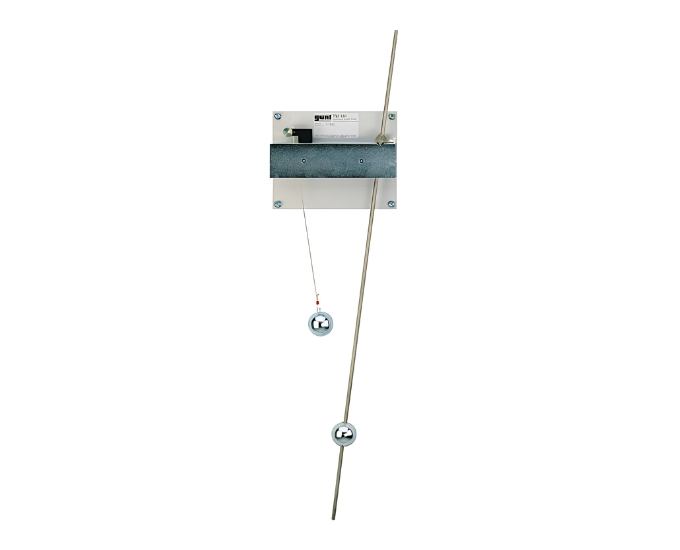
Rod and Gravity Pendulum Apparatus
Model Number: MTDE-401
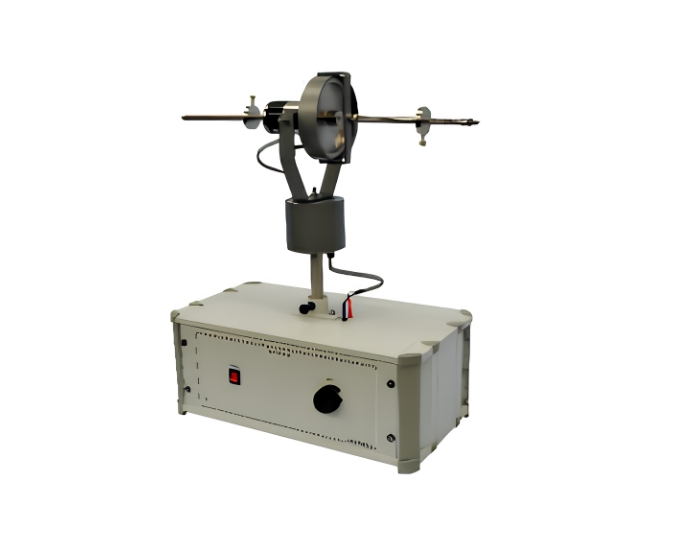
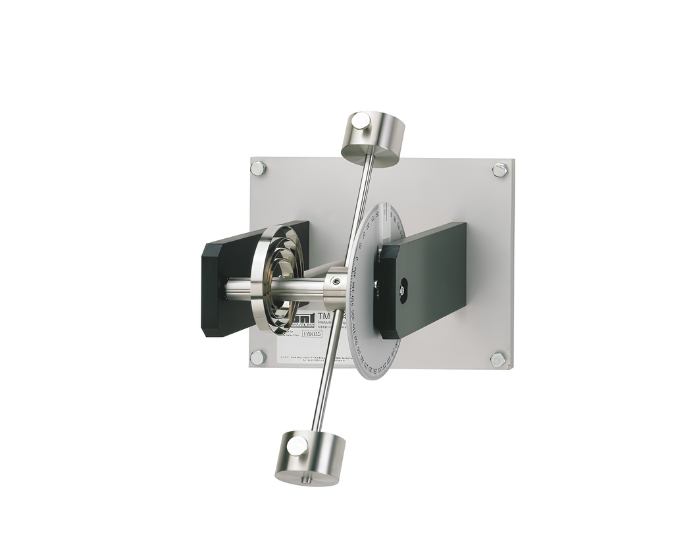
The Rod and Gravity Pendulum Apparatus is an educational laboratory system designed for studying the oscillation period of gravity and rod pendulums, determining the centre of gravity of a rod pendulum, and investigating the reduced pendulum length and centre of inertia. It provides practical understanding of pendulum dynamics, oscillatory motion, mass distribution, and rotational behaviour.
Product Specification
The Rod and Gravity Pendulum Apparatus is an educational engineering and physics laboratory system developed for practical investigation of oscillatory motion and the dynamic behaviour of pendulum systems.
The apparatus enables students to study both gravity pendulum behaviour and the oscillation characteristics of a rigid rod acting as a physical pendulum.
One of the primary experiments is the determination of the oscillation period of the gravity pendulum and rod pendulum. By measuring the time required for a known number of oscillations, students can determine and compare the time period under different pendulum configurations.
The rod pendulum provides an effective demonstration of a physical or compound pendulum, in which the mass is distributed throughout a rigid body rather than concentrated at a single point.
The apparatus can be used to determine the centre of gravity of the rod pendulum. This helps students understand how the mass distribution of the rod influences its oscillatory behaviour.
Another important experiment is the determination of the reduced pendulum length. The reduced length represents the equivalent length of a simple pendulum having the same period of oscillation as the physical pendulum.
The system also enables students to investigate the centre of inertia of the rod pendulum and its relationship with the axis of suspension and the centre of gravity.
Through practical measurements, students can study the influence of mass distribution, suspension point, gravitational acceleration, radius of gyration, and moment of inertia on pendulum motion.
The apparatus provides a practical connection between theoretical equations of oscillation and actual mechanical movement, making it valuable for engineering mechanics, dynamics, mechanical engineering, and physics laboratories.
Micro Technologies supplies Rod and Gravity Pendulum Apparatus and other dynamics and engineering mechanics laboratory equipment for universities, engineering colleges, polytechnic institutes, ITIs, and technical training centres.
Features
- Educational rod and gravity pendulum apparatus
- Suitable for oscillation period studies
- Gravity pendulum experiment
- Rod pendulum experiment
- Centre of gravity determination
- Reduced pendulum length determination
- Centre of inertia investigation
- Demonstrates physical pendulum behaviour
- Suitable for moment of inertia studies
- Clear oscillatory motion demonstration
- Simple laboratory operation
- Suitable for repeated student experiments
- Robust educational construction
Benefits
- Provides practical understanding of pendulum dynamics
- Enables comparison of different pendulum systems
- Helps students determine oscillation period
- Enables centre of gravity determination
- Demonstrates reduced pendulum length
- Helps investigate centre of inertia
- Connects theoretical oscillation equations with experiments
- Useful for studying mass distribution and rotational motion
- Suitable for engineering mechanics and physics education
Product Specifications
| Specification | Details |
|---|---|
| Product Name | Rod and Gravity Pendulum Apparatus |
| Product Type | Dynamics / Engineering Mechanics Laboratory Apparatus |
| Pendulum Types | Gravity Pendulum & Rod Pendulum |
| Primary Study | Oscillatory Motion |
| Oscillation Period | Determination Supported |
| Centre of Gravity | Determination Supported |
| Reduced Pendulum Length | Determination Supported |
| Centre of Inertia | Investigation Supported |
| Moment of Inertia Study | Supported |
| Motion Type | Oscillatory |
| Application | Dynamics / Engineering Mechanics Laboratory |
| Suitable For | Engineering Colleges, Universities & Technical Institutes |
Experiments Performed
- Study of oscillation period of gravity pendulum
- Study of oscillation period of rod pendulum
- Comparison of gravity and rod pendulum behaviour
- Determination of centre of gravity of rod pendulum
- Determination of reduced pendulum length
- Investigation of centre of inertia
- Study of compound pendulum motion
- Study of physical pendulum behaviour
- Investigation of mass distribution effects
- Study of suspension point effects
- Study of moment of inertia influence on oscillation
- Comparison of experimental and theoretical pendulum behaviour
- Practical investigation of oscillatory dynamics
Applications
- Dynamics Laboratories
- Engineering Mechanics Laboratories
- Applied Mechanics Laboratories
- Mechanical Engineering Laboratories
- Physics Laboratories
- Theory of Machines Laboratories
- Kinematics & Dynamics Laboratories
- Engineering Colleges
- Universities
- Polytechnic Institutes
- ITIs
- Technical Training Centres
- Educational Laboratories
FAQs
What is the Rod and Gravity Pendulum Apparatus used for?
The apparatus is used to study pendulum oscillations, determine the period of motion, find the centre of gravity, determine reduced pendulum length, and investigate the centre of inertia.
Can the oscillation period be determined?
Yes. The time required for a selected number of oscillations can be measured and used to calculate the oscillation period.
What is a rod pendulum?
A rod pendulum is a physical or compound pendulum in which the mass is distributed throughout a rigid rod rather than concentrated at a single point.
Can the centre of gravity be determined?
Yes. The apparatus enables determination of the centre of gravity of the rod pendulum.
What is reduced pendulum length?
Reduced pendulum length is the length of an equivalent simple pendulum that has the same oscillation period as the physical pendulum.
Can the centre of inertia be studied?
Yes. The apparatus enables investigation of the centre of inertia and its relationship with the pendulum geometry and mass distribution.
Can moment of inertia concepts be studied?
Yes. The rod pendulum experiment helps students understand the influence of moment of inertia on oscillatory motion.
Is this apparatus suitable for engineering mechanics laboratories?
Yes. It is suitable for Engineering Mechanics, Dynamics, Applied Mechanics, Mechanical Engineering, and Physics laboratories.
Why Choose Our Products
- Gravity and rod pendulum studies
- Oscillation period determination
- Centre of gravity experiment
- Reduced pendulum length analysis
- Centre of inertia investigation
- Practical physical pendulum demonstration
- Student-friendly laboratory setup
- Suitable for engineering and physics education
- Durable institutional construction
- Customized configurations available
- Institutional and bulk supply support
Call to Action
Looking for a Rod and Gravity Pendulum Apparatus for your engineering laboratory? Micro Technologies supplies dynamics apparatus, engineering mechanics equipment, Theory of Machines systems, and mechanical engineering laboratory equipment for universities, engineering colleges, polytechnic institutes, ITIs, and technical training centres. Contact us for technical specifications, customized configurations, institutional orders, bulk supply, distributor inquiries, government tenders, or a competitive quotation.