
Centrifugal Force Apparatus
Product Specification Sheet
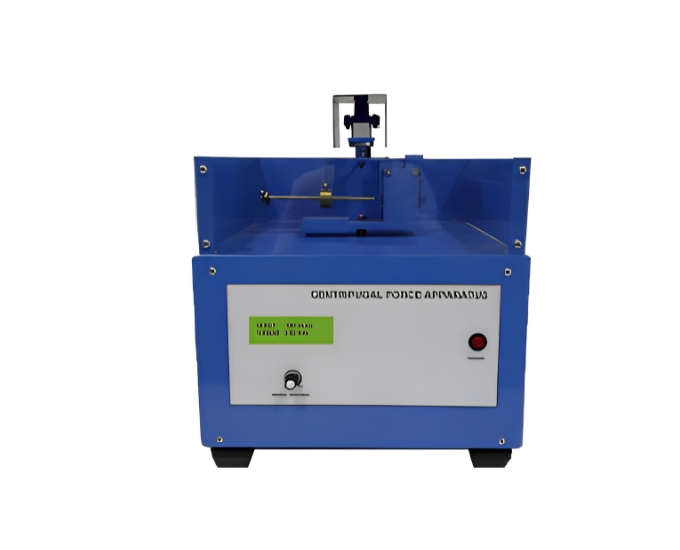
Centrifugal Force Apparatus
Model Number: MTDE-301
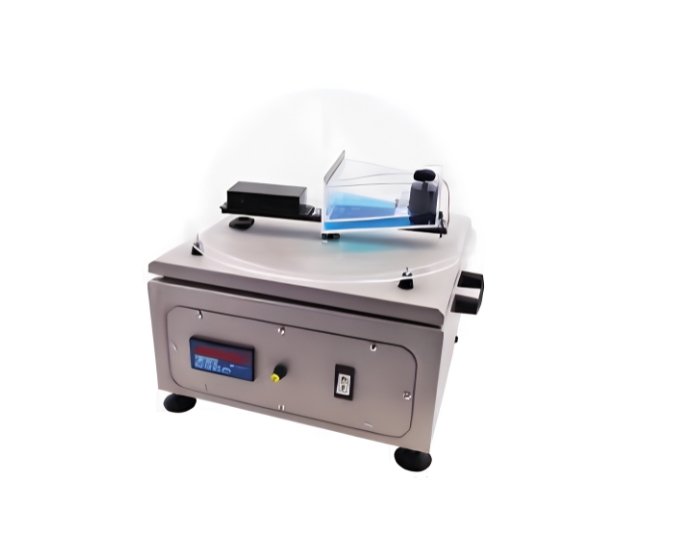
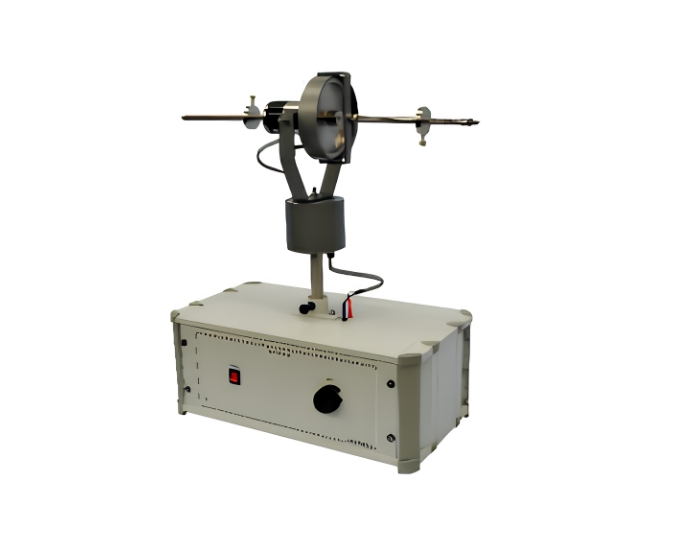
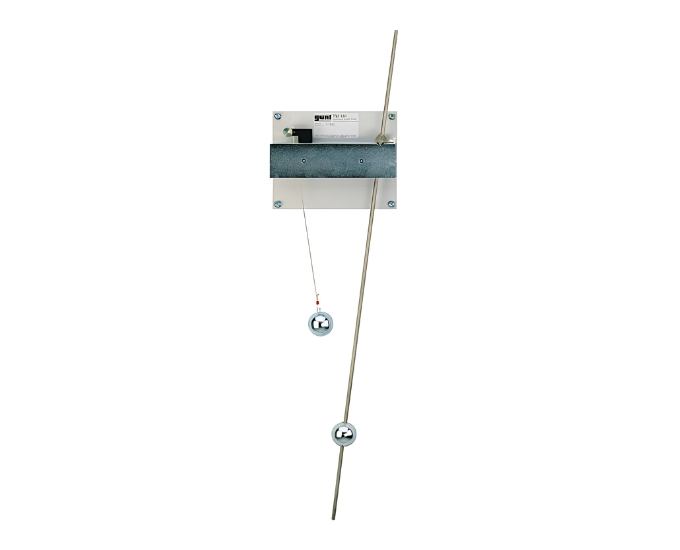
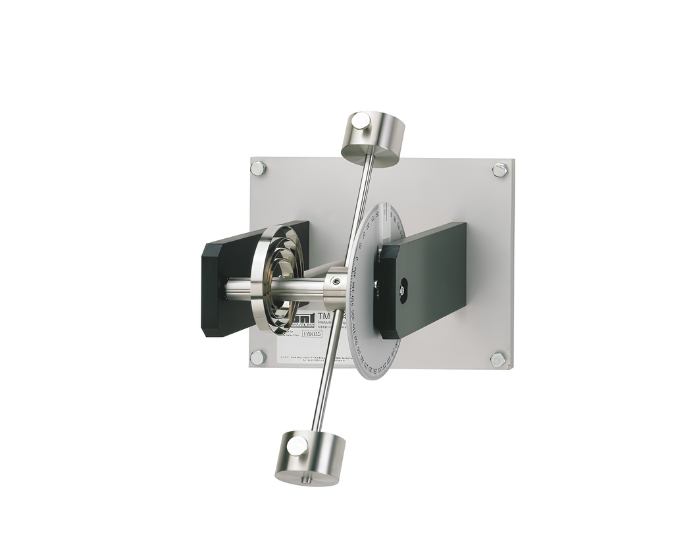
The Centrifugal Force Apparatus is an educational laboratory system designed for the practical investigation of centrifugal force in rotating systems. It enables students to study how centrifugal force varies with rotational speed, size or magnitude of the rotating mass, and radius of rotation, providing a clear experimental demonstration of fundamental rotational dynamics.
Product Specification
The Centrifugal Force Apparatus is a mechanical engineering laboratory system developed for experimental investigation of centrifugal force generated by a rotating mass.
Centrifugal force is an important concept in rotational dynamics and is associated with the apparent outward force experienced by a mass moving in a circular path when viewed from a rotating reference frame.
The apparatus provides a controlled experimental platform through which students can investigate the factors influencing the magnitude of centrifugal force.
One of the primary experiments is the investigation of centrifugal force as a function of rotational speed. Students can vary the operating speed and observe the corresponding change in force.
Since centrifugal force depends strongly on angular velocity, the experiment clearly demonstrates how an increase in rotational speed produces a significant increase in the measured force.
The apparatus also enables investigation of the influence of the rotating mass. Different mass conditions can be compared to determine the relationship between mass and centrifugal force.
Another important experimental parameter is the radius of rotation. The position of the rotating mass relative to the axis can be varied or studied to demonstrate how centrifugal force changes with rotational radius.
By performing experiments while changing one parameter at a time, students can independently analyze the effects of speed, mass, and radius.
The system helps demonstrate the fundamental relationship:
F = mω²r
where F represents centrifugal force, m is the rotating mass, ω is angular velocity, and r is the radius of rotation.
Experimental results can be compared with theoretical calculations to verify the mathematical relationship between these parameters.
The apparatus provides practical understanding of circular motion, rotational speed, angular velocity, rotating mass, radius of rotation, centrifugal effects, and rotational dynamics.
Its laboratory-oriented construction and measurement arrangement make it suitable for student experiments as well as classroom demonstrations.
Micro Technologies supplies Centrifugal Force Apparatus and other Dynamics of Machines and mechanical engineering laboratory equipment for engineering colleges, universities, polytechnic institutes, ITIs, and technical training centres.
Features
- Educational centrifugal force experimental apparatus
- Controlled rotating-mass arrangement
- Investigation of centrifugal force
- Variable rotational-speed studies
- Rotating-mass effect investigation
- Rotation-radius effect investigation
- Suitable for angular velocity studies
- Experimental verification of centrifugal force relationship
- Digital indication arrangement
- Clear experimental operation
- Suitable for theoretical and experimental comparison
- Compact laboratory configuration
- Robust construction for institutional use
- Suitable for repeated student experiments
Benefits
- Provides practical understanding of centrifugal force
- Demonstrates the effect of rotational speed
- Enables investigation of rotating mass
- Demonstrates the influence of rotation radius
- Helps students understand circular motion
- Enables verification of theoretical force relationships
- Provides hands-on study of rotational dynamics
- Helps relate angular velocity to centrifugal force
- Allows systematic variation of experimental parameters
- Suitable for mechanical engineering education
Product Specifications
| Specification | Details |
|---|---|
| Product Name | Centrifugal Force Apparatus |
| Product Type | Rotational Dynamics Laboratory Apparatus |
| Primary Study | Centrifugal Force |
| Motion Type | Rotary / Circular Motion |
| Rotational Speed Effect | Investigation Supported |
| Rotating Mass Effect | Investigation Supported |
| Rotation Radius Effect | Investigation Supported |
| Angular Velocity Study | Supported |
| Force Relationship | F = mω²r |
| Speed Variation | Experimental |
| Mass Variation | Experimental |
| Radius Variation | Experimental |
| Display | Digital Indication |
| Application | Dynamics / Engineering Mechanics Laboratory |
| Suitable For | Engineering Colleges, Universities & Technical Institutes |
Experiments Performed
- Investigation of centrifugal force
- Study of centrifugal force as a function of speed
- Investigation of rotational speed versus centrifugal force
- Study of the effect of rotating mass
- Investigation of centrifugal force versus mass
- Study of the effect of rotation radius
- Investigation of centrifugal force versus radius
- Study of angular velocity
- Investigation of circular motion
- Experimental verification of centrifugal force relationship
- Comparison of theoretical and experimental centrifugal force
- Study of rotating-mass dynamics
- Practical investigation of fundamental rotational motion
Applications
- Dynamics of Machines Laboratories
- Theory of Machines Laboratories
- Engineering Mechanics Laboratories
- Applied Mechanics Laboratories
- Mechanical Engineering Laboratories
- Rotational Dynamics Laboratories
- Physics Laboratories
- Automobile Engineering Laboratories
- Engineering Colleges
- Universities
- Polytechnic Institutes
- ITIs
- Technical Training Centres
- Educational & Research Laboratories
FAQs
What is the Centrifugal Force Apparatus used for?
The apparatus is used to experimentally investigate centrifugal force and study how it changes with rotational speed, rotating mass, and radius of rotation.
What factors affect centrifugal force?
The primary factors are the mass of the rotating body, its angular velocity, and the radius of its circular path.
Can the effect of rotational speed be studied?
Yes. Rotational speed can be varied to investigate its influence on the resulting centrifugal force.
How does speed affect centrifugal force?
Centrifugal force is proportional to the square of angular velocity. Therefore, changes in rotational speed have a significant effect on the generated force.
Can the effect of rotating mass be investigated?
Yes. Different mass conditions can be studied to observe the relationship between rotating mass and centrifugal force.
How does mass affect centrifugal force?
For constant angular velocity and radius, centrifugal force increases proportionally with the rotating mass.
Can the effect of rotation radius be studied?
Yes. The apparatus enables investigation of how the radius of rotation influences centrifugal force.
How does radius affect centrifugal force?
For constant mass and angular velocity, centrifugal force increases in direct proportion to the radius of rotation.
Can experimental and theoretical results be compared?
Yes. Experimental observations can be compared with values calculated from the centrifugal force relationship.
Is the apparatus suitable for mechanical engineering laboratories?
Yes. It is suitable for Dynamics of Machines, Engineering Mechanics, Applied Mechanics, Mechanical Engineering, and rotational dynamics laboratories.
Why Choose Our Products
- Practical centrifugal force investigation
- Rotational-speed effect studies
- Rotating-mass experiments
- Rotation-radius investigation
- Digital measurement arrangement
- Theoretical and experimental comparison
- Clear rotational dynamics demonstration
- Student-friendly laboratory configuration
- Robust institutional construction
- Suitable for engineering education
- Customized configurations available
- Institutional and bulk supply support
Call to Action
Looking for a Centrifugal Force Apparatus for your engineering laboratory? Micro Technologies supplies rotational dynamics equipment, Dynamics of Machines apparatus, Theory of Machines equipment, and mechanical engineering laboratory systems for universities, engineering colleges, polytechnic institutes, ITIs, and technical training centres. Contact us for technical specifications, customized configurations, institutional orders, bulk supply, distributor inquiries, government tenders, or a competitive quotation.