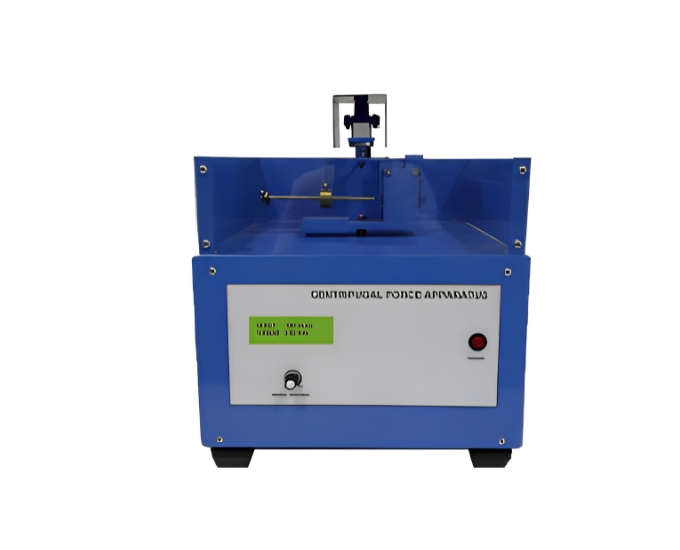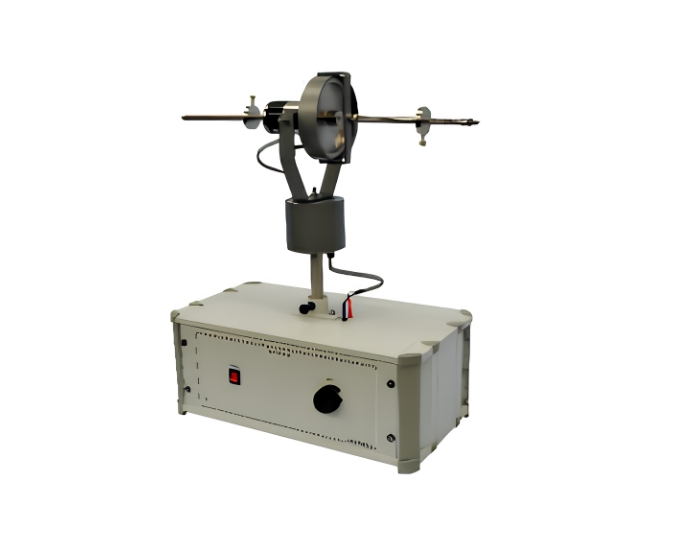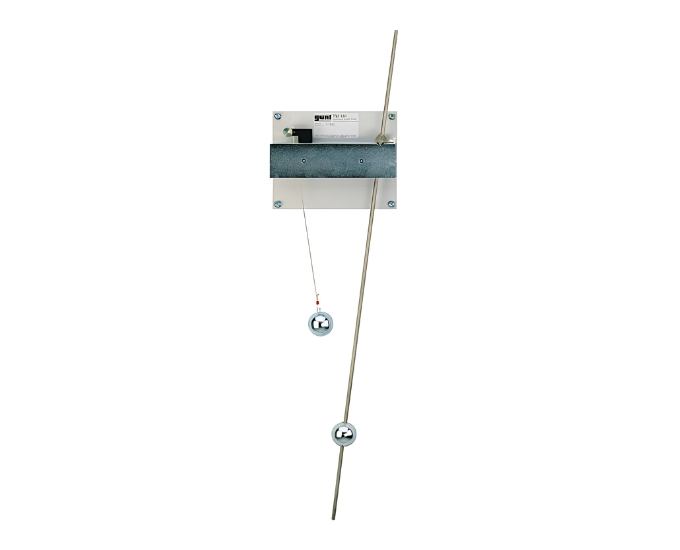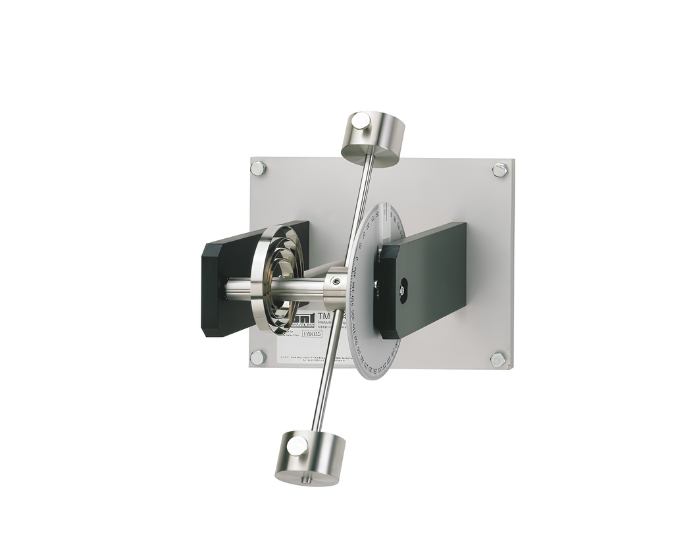

Gyroscope Apparatus
Product Specification Sheet
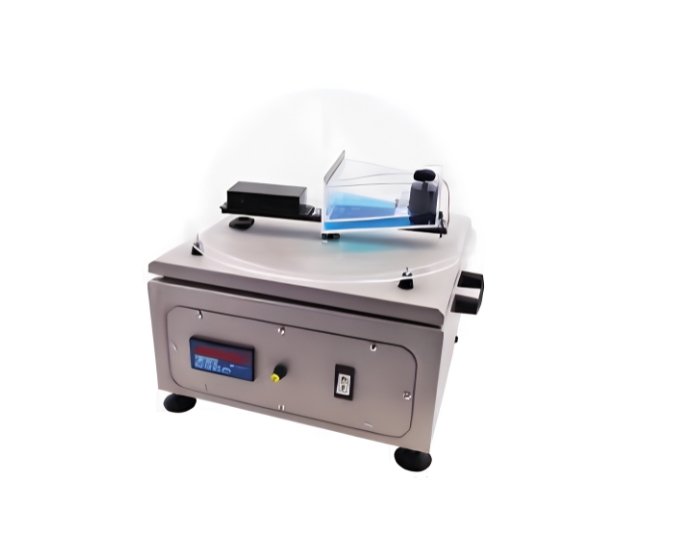
Gyroscope Apparatus
Model Number: MTDE-302
The Gyroscope Apparatus is an educational mechanical engineering system designed for the experimental verification of gyroscopic laws and practical investigation of gyroscopic motion. It enables students to become familiar with the three gyro axes, calculate gyroscopic moments, and study the effect of precession under controlled laboratory conditions.
Product Specification
The Gyroscope Apparatus is a laboratory teaching system developed for practical investigation of the principles and dynamic behaviour of a rotating gyroscope.
A gyroscope consists essentially of a rapidly rotating body whose angular momentum produces characteristic dynamic effects when the orientation of its rotational axis is changed.
The apparatus provides students with a practical platform for the experimental verification of fundamental gyroscopic laws and observation of gyroscopic behaviour.
One of the primary educational objectives is familiarization with the three gyro axes. These axes are associated with spin, precession, and the applied turning or gyroscopic action.
The rotating rotor provides the angular momentum required for gyroscopic experiments. When an external moment acts on the rotating system, the rotor assembly responds with characteristic precessional movement.
The apparatus enables students to observe and analyze gyroscopic precession, an important phenomenon in rotational dynamics.
Another major experiment is the calculation of gyroscopic moments. Experimental parameters such as rotor speed, precession rate, and rotor moment of inertia can be related to determine the gyroscopic moment.
The fundamental gyroscopic relationship can be represented as:
C = I × ω × Ω
where C is the gyroscopic couple or moment, I is the mass moment of inertia of the rotating body, ω is its angular velocity, and Ω is the angular velocity of precession.
The apparatus enables students to investigate the effect of precession and understand how changes in rotational conditions influence gyroscopic behaviour.
It also provides practical understanding of concepts including angular momentum, spin velocity, precessional velocity, gyroscopic couple, moment of inertia, rotational dynamics, and torque.
The visible mechanical arrangement makes it easier for students to relate theoretical gyroscopic equations to actual movement of a rotating system.
Gyroscopic principles have important engineering relevance in rotating machinery, vehicles, marine systems, aircraft, navigation systems, and stabilization applications.
Micro Technologies supplies Gyroscope Apparatus and other Dynamics of Machines and mechanical engineering laboratory equipment for engineering colleges, universities, polytechnic institutes, technical training centres, and research laboratories.
Features
- Educational gyroscope experimental apparatus
- Experimental verification of gyroscopic laws
- Demonstration of gyroscopic effects
- Familiarization with three gyro axes
- Rotating rotor arrangement
- Gyroscopic moment calculation
- Precession-effect investigation
- Suitable for angular momentum studies
- Demonstrates gyroscopic couple
- Suitable for rotational dynamics experiments
- Variable operating conditions for experimentation
- Clear visualization of gyroscopic movement
- Rigid laboratory construction
- Suitable for repeated student experiments
Benefits
- Provides practical understanding of gyroscopic principles
- Enables experimental verification of theoretical laws
- Helps students identify the three gyro axes
- Demonstrates precessional movement clearly
- Enables calculation of gyroscopic moments
- Helps explain angular momentum and torque relationships
- Provides hands-on understanding of rotational dynamics
- Connects theoretical equations with physical observations
- Useful for mechanical and automobile engineering education
- Suitable for classroom demonstrations and laboratory practicals
Product Specifications
| Specification | Details |
|---|---|
| Product Name | Gyroscope Apparatus |
| Product Type | Rotational Dynamics Laboratory Apparatus |
| Primary Study | Gyroscopic Motion |
| Gyroscopic Laws | Experimental Verification |
| Gyro Axes | Three-Axis Study |
| Gyroscopic Moment | Calculation Supported |
| Precession Study | Supported |
| Spin Motion | Supported |
| Angular Momentum Study | Supported |
| Gyroscopic Couple | Investigation Supported |
| Rotor Arrangement | Rotating |
| Motion Type | Rotary / Precessional |
| Application | Dynamics of Machines Laboratory |
| Suitable For | Engineering Colleges, Universities & Technical Institutes |
Experiments Performed
- Experimental verification of gyroscopic laws
- Familiarization with the three gyro axes
- Study of gyroscopic motion
- Calculation of gyroscopic moments
- Study of gyroscopic couple
- Investigation of the effect of precession
- Study of rotor spin motion
- Study of precessional motion
- Investigation of angular momentum
- Study of the relationship between spin and precession
- Investigation of gyroscopic torque
- Study of rotational dynamics
- Comparison of theoretical and experimental gyroscopic behaviour
- Practical demonstration of fundamental gyroscopic principles
Applications
- Dynamics of Machines Laboratories
- Theory of Machines Laboratories
- Engineering Mechanics Laboratories
- Mechanical Engineering Laboratories
- Automobile Engineering Laboratories
- Applied Mechanics Laboratories
- Rotational Dynamics Laboratories
- Aerospace Engineering Laboratories
- Marine Engineering Laboratories
- Engineering Colleges
- Universities
- Polytechnic Institutes
- Technical Training Centres
- Research & Educational Laboratories
FAQs
What is the Gyroscope Apparatus used for?
The apparatus is used for experimental verification of gyroscopic laws, identification of gyro axes, calculation of gyroscopic moments, and investigation of precession.
What are the main motions associated with a gyroscope?
The principal motions include rotor spin and precession, along with the associated response produced by an applied moment or torque.
Can gyroscopic laws be verified experimentally?
Yes. The apparatus is specifically designed to enable experimental investigation and verification of fundamental gyroscopic relationships.
Can the three gyro axes be studied?
Yes. Familiarization with and understanding of the three gyro axes is one of the main educational objectives of the apparatus.
Can gyroscopic moment be calculated?
Yes. Experimental parameters can be used to calculate and analyze the gyroscopic moment or couple.
What is gyroscopic precession?
Precession is the change in orientation of the rotational axis of a spinning body when it is subjected to an external torque.
Can the effect of precession be studied?
Yes. The apparatus enables practical observation and investigation of precessional behaviour.
What is a gyroscopic couple?
A gyroscopic couple is the moment associated with changing the direction of the angular momentum of a rotating body.
Where are gyroscopic principles applied?
Gyroscopic principles are relevant to rotating machinery, vehicles, aircraft, marine systems, navigation equipment, and stabilization systems.
Is this apparatus suitable for Dynamics of Machines laboratories?
Yes. It is particularly suitable for Dynamics of Machines, Theory of Machines, Engineering Mechanics, Mechanical Engineering, and related laboratory courses.
Why Choose Our Products
- Experimental verification of gyroscopic laws
- Three gyro-axis studies
- Gyroscopic moment calculation
- Precession-effect investigation
- Angular momentum demonstration
- Gyroscopic couple studies
- Clear visualization of rotational behaviour
- Student-friendly experimental arrangement
- Durable laboratory construction
- Suitable for engineering education
- Customized configurations available
- Institutional and bulk supply support
Call to Action
Looking for a Gyroscope Apparatus for your engineering laboratory? Micro Technologies supplies gyroscope apparatus, rotational dynamics equipment, Dynamics of Machines systems, Theory of Machines equipment, and mechanical engineering laboratory apparatus for universities, engineering colleges, polytechnic institutes, technical training centres, and research laboratories. Contact us for technical specifications, customized configurations, institutional orders, bulk supply, distributor inquiries, government tenders, or a competitive quotation.