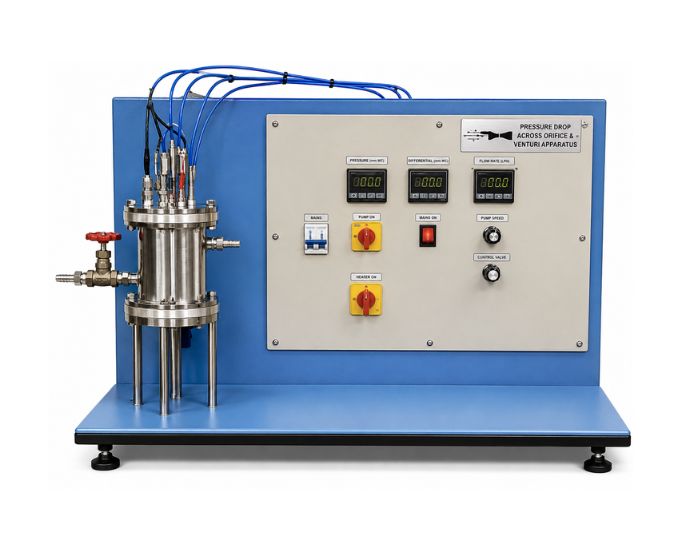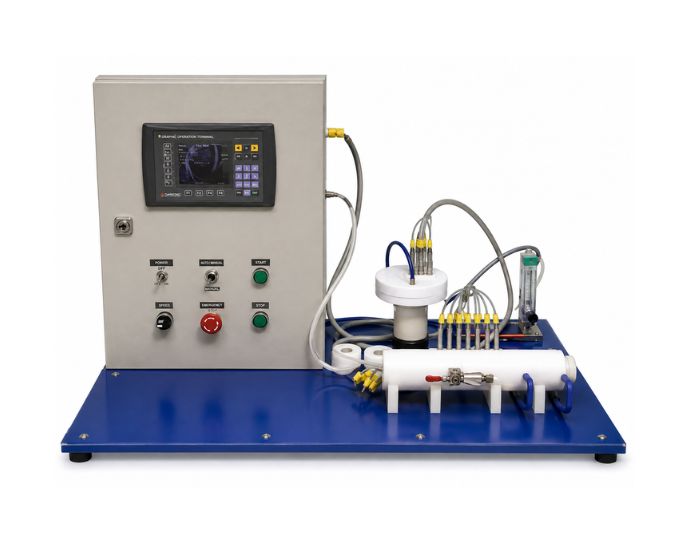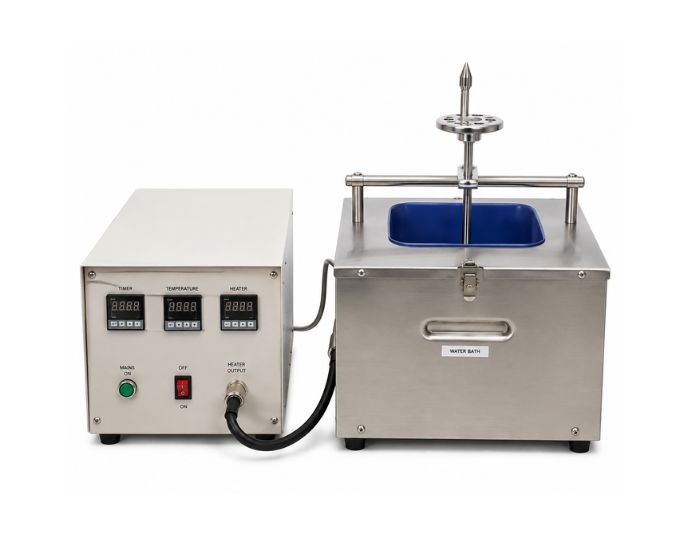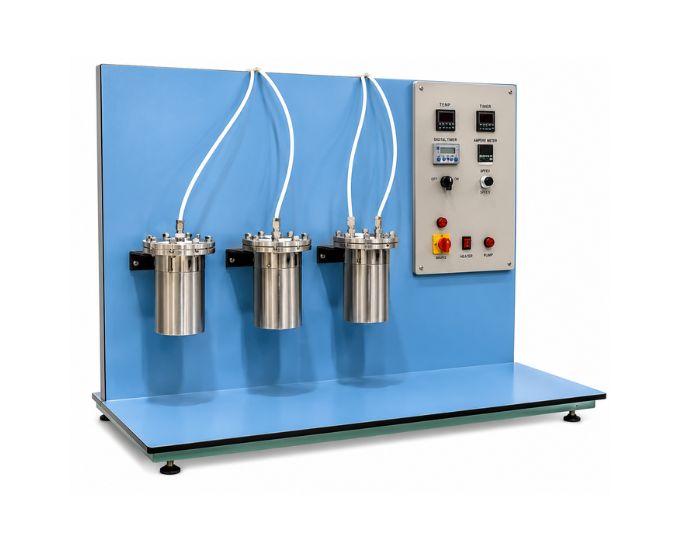

Steady State and Non-Steady State Heat Conduction Apparatus
Product Specification Sheet
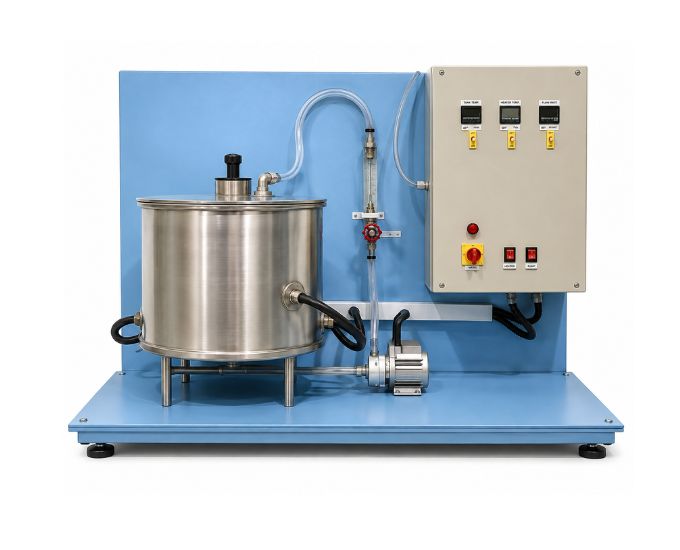
Steady State and Non-Steady State Heat Conduction Apparatus
Model Number: MTHC-109
The Steady State and Non-Steady State Heat Conduction Apparatus from Micro Technologies is a laboratory experimental system designed for studying steady-state and transient heat conduction, temperature-time profiles, and thermal conductivity of different metals. The apparatus enables students to observe how temperature distribution develops under constant and changing thermal conditions while providing practical understanding of conduction theory and material thermal properties.
Product Specification
The Steady State and Non-Steady State Heat Conduction Apparatus is designed for practical investigation of heat transfer through solid metallic specimens under both steady and transient operating conditions.
Manufactured by Micro Technologies, the apparatus provides students with an effective platform for understanding the difference between steady-state heat conduction, where temperatures remain essentially constant with time, and non-steady or transient heat conduction, where temperatures vary continuously as the system responds to changing thermal conditions.
The experimental arrangement incorporates a controlled heating system, test specimens, temperature measurement points, circulation arrangement, and a dedicated electrical control panel. These components allow students to collect experimental data and develop temperature profiles for detailed thermal analysis.
During a steady-state heat conduction experiment, heat is supplied to the test section until stable temperature conditions are achieved. Temperature measurements taken at different locations can then be used to determine the temperature distribution and evaluate the thermal conductivity of the test material.
For non-steady-state or transient heat conduction, students can monitor temperature variation with respect to time. This demonstrates how a material responds when subjected to heating or cooling and helps explain important concepts such as thermal response, heat storage, temperature gradients, and approach to thermal equilibrium.
The apparatus is also suitable for comparing the thermal conductivity (λ) of different metals. By performing experiments using suitable metallic specimens under controlled conditions, students can observe how differences in material properties influence the rate of heat conduction.
The integrated instrumentation and control arrangement simplifies operation and makes the equipment suitable for undergraduate practical work, engineering demonstrations, laboratory examinations, project work, and technical training.
Scope of Learning
The apparatus supports practical study of:
- Steady-state heat conduction
- Non-steady-state heat conduction
- Transient heat conduction
- Temperature-time profiles
- Temperature distribution in metals
- Thermal conductivity of different metals
- Effect of material properties on heat transfer
- Heating and cooling behaviour
- Thermal response of solid materials
- Temperature gradients
- Fourier's law of conduction
- Thermal resistance
- Approach to thermal equilibrium
Steady-State Heat Conduction
In steady-state conduction, the temperature at each measurement position remains essentially constant with time after stable operating conditions have been reached.
Students can use this section to study:
- Temperature distribution
- Temperature gradient
- Heat-transfer rate
- Thermal resistance
- Thermal conductivity
- Effect of different metallic materials
For one-dimensional conduction, Fourier's law can be represented as:
Q = -kA(dT/dx)
Where:
- Q = Heat-transfer rate
- k or λ = Thermal conductivity
- A = Cross-sectional heat-transfer area
- dT/dx = Temperature gradient
Non-Steady-State / Transient Heat Conduction
During transient heat conduction, the temperature within the material changes with time.
The apparatus allows students to monitor these changes and develop temperature-time curves showing the thermal response of the test material.
Transient conduction studies are useful for understanding:
- Initial heating behaviour
- Cooling behaviour
- Time-dependent temperature changes
- Heat storage within materials
- Approach to steady state
- Material response to changing thermal conditions
Temperature-Time Profiles
One of the key experiments is the determination of temperature-time profiles.
Temperature readings are recorded at selected time intervals during heating or cooling. The collected values can be plotted as temperature versus time to visualize the transient response of the material.
These profiles allow students to compare how different materials respond to similar thermal conditions.
Thermal Conductivity of Metals
The apparatus enables experimental calculation of thermal conductivity λ for different metallic specimens.
Thermal conductivity indicates how effectively a material transfers heat. Metals with higher thermal conductivity transfer thermal energy more readily than materials with lower conductivity.
Experimental comparison helps students understand the importance of material selection in heat exchangers, thermal equipment, heating systems, cooling systems, and other engineering applications.
Main Components
- Heat conduction test section
- Metallic test specimens
- Controlled heating arrangement
- Temperature sensors
- Multiple temperature measurement points
- Heating/cooling arrangement
- Circulation system
- Digital temperature instrumentation
- Electrical control panel
- Heater control
- Electrical switches and indicators
- Connecting hoses and fittings
- Rigid laboratory base frame
Key Features
- Combined steady and transient conduction studies
- Study of steady-state temperature distribution
- Study of non-steady-state heat conduction
- Temperature-time profile determination
- Thermal conductivity measurement
- Suitable for different metallic specimens
- Multiple temperature measurement points
- Controlled heat input
- Digital instrumentation
- Integrated control panel
- Practical heating and cooling studies
- Robust bench-mounted construction
- Easy-to-understand experimental arrangement
- Suitable for repeated laboratory experiments
- Designed for engineering education
- Custom configurations available
Technical Specifications
| Parameter | Details |
|---|---|
| Product Name | Steady State and Non-Steady State Heat Conduction Apparatus |
| Product Type | Heat Transfer Laboratory Apparatus |
| Heat Transfer Mode | Conduction |
| Steady-State Study | Yes |
| Non-Steady-State Study | Yes |
| Transient Heat Conduction | Yes |
| Temperature-Time Profile | Determination Possible |
| Thermal Conductivity | Determination of λ |
| Test Materials | Suitable Metallic Specimens |
| Heating | Controlled Electrical Heating |
| Temperature Measurement | Multiple Measurement Points |
| Temperature Indication | Digital |
| Control System | Integrated Control Panel |
| Installation | Bench Mounted |
| Application | Heat Transfer / Thermal Engineering Laboratory |
| Customization | Available |
Exact heater rating, test specimen dimensions, metal samples, temperature range, sensor quantity, electrical supply, and instrumentation can be configured according to laboratory requirements.
Experiments / Studies
- To study steady-state heat conduction
- To study non-steady-state heat conduction
- To investigate transient heat conduction
- To determine temperature-time profiles
- To determine temperature distribution
- To calculate thermal conductivity λ of different metals
- To compare thermal conductivity of metallic specimens
- To study heating response with time
- To study cooling response with time
- To understand temperature gradients
- To investigate thermal equilibrium
- To verify fundamental heat conduction relationships
Educational Benefits
- Clearly demonstrates steady and transient conduction
- Provides hands-on thermal engineering experiments
- Helps students understand time-dependent heat transfer
- Enables practical temperature profile plotting
- Allows comparison of different metals
- Supports experimental thermal conductivity calculations
- Connects Fourier's law with laboratory measurements
- Improves data collection and calculation skills
- Useful for individual and group practical sessions
- Suitable for engineering laboratory examinations
- Supports undergraduate heat-transfer curricula
- Useful for project and demonstration work
Applications
- Heat Transfer Laboratories
- Thermal Engineering Laboratories
- Mechanical Engineering Laboratories
- Energy Engineering Laboratories
- Chemical Engineering Laboratories
- Engineering Colleges
- Universities
- Polytechnic Institutes
- Technical Training Institutes
- Research Laboratories
- Engineering R&D Laboratories
- Skill Development Centers
Optional Accessories
- Additional Metal Specimens
- Additional Temperature Sensors
- Digital Temperature Indicator
- Digital Voltmeter
- Digital Ammeter
- Digital Wattmeter
- Additional Heating Elements
- Data Acquisition System
- Computer Interface
- Data Logging Software
- Calibration Accessories
- Experimental Manual
Customization Options
The apparatus can be customized according to laboratory requirements with:
- Different metallic specimens
- Additional temperature measurement points
- Different heater capacities
- Modified test sections
- Digital power measurement
- Enhanced temperature instrumentation
- Data acquisition system
- Computerized temperature logging
- Customized control panel
- Research-oriented configurations
SKU System
MT-FHT-109
FAQs
What is the Steady State and Non-Steady State Heat Conduction Apparatus used for?
The apparatus is used to experimentally study steady-state and transient heat conduction, develop temperature-time profiles, and determine the thermal conductivity of different metallic materials.
What is steady-state heat conduction?
Steady-state conduction occurs when the temperature at each point in the material no longer changes significantly with time, even though heat continues to flow through the material.
What is non-steady-state heat conduction?
Non-steady-state or transient heat conduction occurs when temperatures within the material change with time during heating or cooling.
Can temperature-time profiles be obtained?
Yes. Temperature measurements can be recorded at different time intervals and used to produce temperature versus time profiles.
Can thermal conductivity be calculated?
Yes. The apparatus allows experimental determination of the thermal conductivity λ of suitable metallic specimens using measured temperature and heat-transfer data.
Can different metals be compared?
Yes. Suitable metallic test specimens can be evaluated to compare their heat conduction characteristics and thermal conductivity.
What is the main difference between steady and transient experiments?
Steady-state experiments analyze heat transfer after stable temperature conditions are achieved, whereas transient experiments analyze how temperatures change with time.
Where is this apparatus commonly used?
It is suitable for mechanical engineering, thermal engineering, heat transfer, chemical engineering, and energy engineering laboratories in universities, engineering colleges, polytechnic institutes, and research centers.
Can the apparatus be customized?
Yes. Micro Technologies can customize test specimens, temperature sensors, heater configuration, instrumentation, control systems, and data acquisition according to laboratory requirements.
Why Choose Our Products
- Steady and transient conduction studies in one system
- Practical thermal conductivity measurement
- Temperature-time profile analysis
- Multiple temperature measurement points
- Digital measurement and control
- Robust laboratory construction
- Suitable for engineering curricula
- Application-specific customization
- Institutional and project supply
- OEM requirements supported
- Quality-controlled manufacturing
- Technical and after-sales support
Call to Action
Advance practical heat-transfer studies with the Steady State and Non-Steady State Heat Conduction Apparatus from Micro Technologies. Contact us for technical specifications, customized laboratory configurations, institutional procurement, engineering lab projects, government tenders, OEM requirements, distributor inquiries, and bulk orders.