
Plastic Deformation of Beams Apparatus
Product Specification Sheet
Plastic Deformation of Beams Apparatus
Model Number: MTSE-118
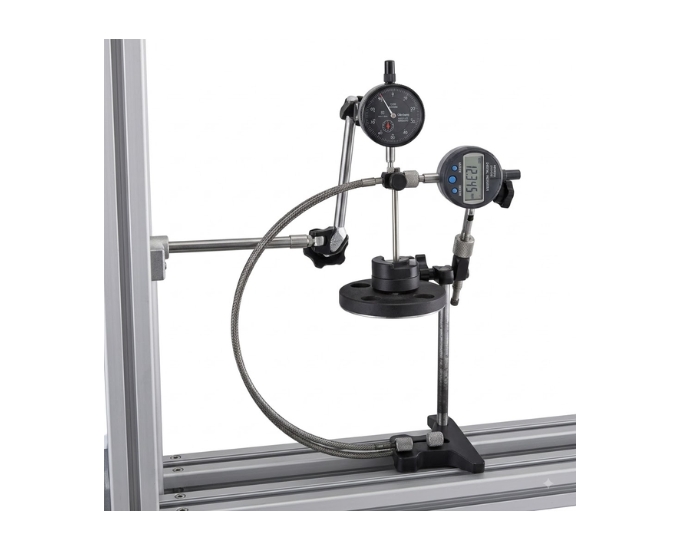
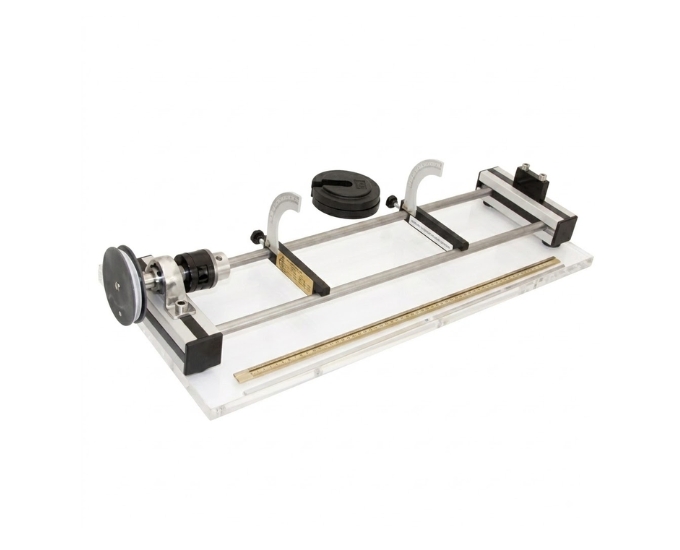
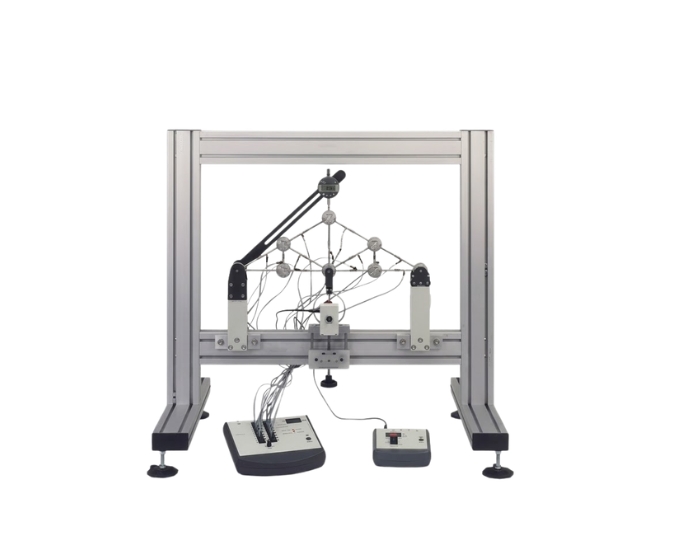
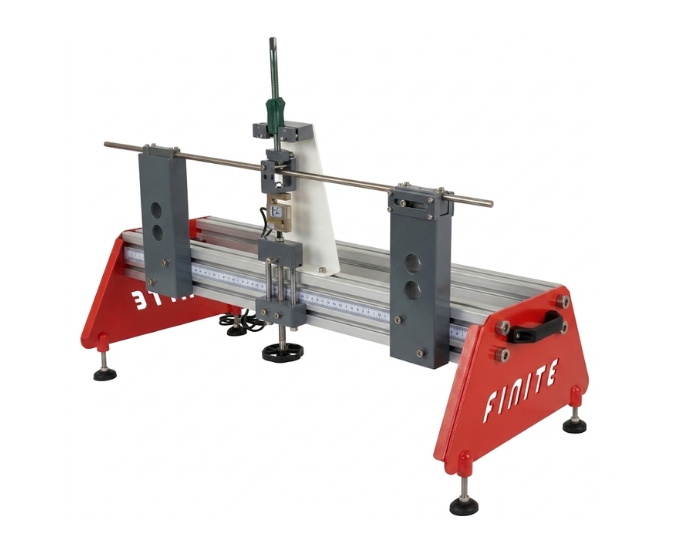
The Plastic Deformation of Beams Apparatus is an educational structural engineering system designed to investigate the transition from elastic bending to plastic deformation in beams. It enables students to study plastic-region development, yield stress, plastic hinge formation, collapse loads, different beam fixing conditions, and the influence of cross-sectional shape on structural capacity.
Product Specification
The Plastic Deformation of Beams Apparatus is a structural engineering laboratory system developed for practical investigation of beam behaviour beyond the elastic range and into the plastic deformation region.
In conventional elastic beam analysis, deformation is assumed to remain recoverable after removal of the applied load. When the stress in the beam reaches the material's yield level, however, permanent or plastic deformation begins to develop.
The apparatus enables students to observe the progression from elastic bending to plastic deformation, particularly using suitable metal beam specimens such as hot-rolled mild steel.
As the applied load is gradually increased, students can investigate how the plastic region develops through the specimen cross-section.
Initially, the highest bending stresses occur at the extreme fibres. As loading increases and yielding begins, the yielded region can progressively extend further into the section.
The system enables investigation of the relationship between specimen cross-section and increasing load, helping students understand how section geometry influences plastic bending resistance.
An important part of the experiment is the study of yield stress and its relationship with the onset of permanent deformation.
As loading progresses beyond initial yielding, plastic hinges can form at locations of high bending moment.
A plastic hinge allows significant rotation to develop while the section remains near its plastic moment capacity. Formation of additional plastic hinges can eventually produce a structural mechanism and lead to collapse.
The apparatus therefore enables students to investigate collapse load and plastic hinge formation experimentally.
Different beam support or fixing arrangements can be studied to understand how structural restraint affects deformation and collapse behaviour.
Experiments can include a simply supported beam, fixed or encastre beam, and propped cantilever arrangement.
Comparing these configurations demonstrates how structural redundancy and end restraint influence plastic hinge formation and ultimate load capacity.
The apparatus also introduces the concept of shape factor, which relates the fully plastic moment capacity of a section to its first-yield elastic moment capacity.
Students can investigate how different cross-sectional shapes influence the additional load capacity available after initial yielding.
The system provides practical understanding of elastic bending, plastic bending, yield stress, plastic moment, plastic hinges, collapse mechanisms, structural redundancy and shape factor.
Micro Technologies supplies Plastic Deformation of Beams Apparatus and other Structural Analysis and Strength of Materials laboratory systems for engineering colleges, universities, polytechnic institutes and technical training centres.
Features
- Elastic-to-plastic beam bending experiments
- Plastic deformation investigation
- Yield behaviour studies
- Plastic region development analysis
- Increasing load experiments
- Plastic hinge formation studies
- Collapse load determination
- Collapse mechanism demonstration
- Simply supported beam configuration
- Fixed or encastre beam configuration
- Propped cantilever configuration
- Different support-condition comparisons
- Cross-sectional shape studies
- Shape factor investigation
- Experimental and theoretical comparison
- Robust educational laboratory construction
Benefits
- Demonstrates the transition from elastic to plastic behaviour
- Provides practical understanding of yielding
- Shows development of plastic regions within beam sections
- Demonstrates plastic hinge formation
- Enables investigation of structural collapse mechanisms
- Allows collapse load determination
- Shows how fixing conditions affect beam behaviour
- Enables comparison of multiple support arrangements
- Demonstrates the importance of structural redundancy
- Helps students understand shape factor
- Connects plastic-analysis theory with practical experiments
- Suitable for advanced structural engineering education
Product Specifications
| Specification | Details |
|---|---|
| Product Name | Plastic Deformation of Beams Apparatus |
| Product Type | Structural Mechanics Laboratory Apparatus |
| Primary Study | Plastic Behaviour of Beams |
| Test Material | Suitable Metallic Beam Specimens |
| Elastic Bending | Study Supported |
| Plastic Deformation | Study Supported |
| Yield Stress | Investigation Supported |
| Plastic Region | Investigation Supported |
| Plastic Hinges | Study Supported |
| Collapse Load | Determination Supported |
| Simply Supported Beam | Supported |
| Fixed / Encastre Beam | Supported |
| Propped Cantilever | Supported |
| Shape Factor | Study Supported |
| Cross-Section Effect | Study Supported |
| Application | Structural Analysis / Strength of Materials |
Experiments Performed
- Study of elastic bending
- Investigation of transition from elastic to plastic deformation
- Study of plastic deformation in beam specimens
- Investigation of the plastic region through a specimen
- Study of specimen behaviour as load increases
- Investigation of yield stress
- Observation of permanent beam deformation
- Study of plastic hinge formation
- Determination of collapse load
- Investigation of structural collapse mechanisms
- Study of a simply supported beam
- Plastic analysis of a fixed or encastre beam
- Plastic analysis of a propped cantilever
- Investigation of the effect of beam fixing conditions
- Comparison of different support configurations
- Investigation of beam cross-sectional shape
- Determination and study of shape factor
- Study of additional load capacity beyond first yield
- Comparison of theoretical and experimental behaviour
Applications
- Structural Analysis Laboratories
- Structural Engineering Laboratories
- Strength of Materials Laboratories
- Mechanics of Materials Laboratories
- Civil Engineering Laboratories
- Mechanical Engineering Laboratories
- Structural Mechanics Laboratories
- Applied Mechanics Laboratories
- Mechanics of Structures Laboratories
- Engineering Colleges
- Universities
- Polytechnic Institutes
- Technical Training Centres
- Educational & Research Laboratories
FAQs
What is the Plastic Deformation of Beams Apparatus used for?
The apparatus is used to investigate beam behaviour from initial elastic bending through yielding, plastic hinge formation and eventual structural collapse.
What is plastic deformation in a beam?
Plastic deformation is permanent deformation that remains after the applied load is removed because the material has been stressed beyond its elastic range.
Can elastic and plastic behaviour be compared?
Yes. The apparatus allows students to observe the transition from elastic deformation to yielding and subsequent plastic behaviour.
What is a plastic hinge?
A plastic hinge is a localized region of a structural member where the cross-section has developed substantial plasticity and can undergo significant rotation near its plastic moment capacity.
Can collapse load be determined?
Yes. Loading can be progressively increased to investigate plastic hinge formation and determine the load associated with the formation of a collapse mechanism.
Can different beam support conditions be studied?
Yes. Suitable configurations include simply supported, fixed or encastre, and propped cantilever beams.
How do beam fixings affect plastic deformation?
Support conditions alter the bending-moment distribution, which changes where plastic hinges form and the load required to create a collapse mechanism.
What is shape factor in plastic analysis?
Shape factor is the ratio of the fully plastic moment capacity of a cross-section to its moment capacity at first yield.
Why is shape factor important?
It indicates the additional bending capacity a section can develop between first yield and the fully plastic condition.
Can different cross-sectional shapes be compared?
Yes. Suitable beam specimens can be compared to investigate how section geometry influences elastic and plastic bending capacity.
Is this apparatus suitable for Structural Analysis laboratories?
Yes. It is suitable for Structural Analysis, Structural Engineering, Strength of Materials, Mechanics of Structures and related engineering laboratories.
Why Choose Our Products
- Elastic and plastic beam experiments
- Yield behaviour investigation
- Plastic hinge demonstration
- Collapse load studies
- Multiple beam support configurations
- Fixed and propped beam experiments
- Shape factor analysis
- Cross-sectional behaviour studies
- Practical structural collapse demonstration
- Experimental and theoretical comparison
- Customized laboratory configurations available
- Institutional and bulk supply support
Call to Action
Advance your Structural Analysis and Strength of Materials Laboratory with the Plastic Deformation of Beams Apparatus from Micro Technologies. The system provides hands-on investigation of yielding, plastic hinges, collapse mechanisms and beam shape factors for practical engineering education. Contact us for technical specifications, customized configurations, institutional quotations, bulk requirements or tender supply.