
Petrol Engine Test Rig with Eddy Current Dynamometer
Product Specification Sheet
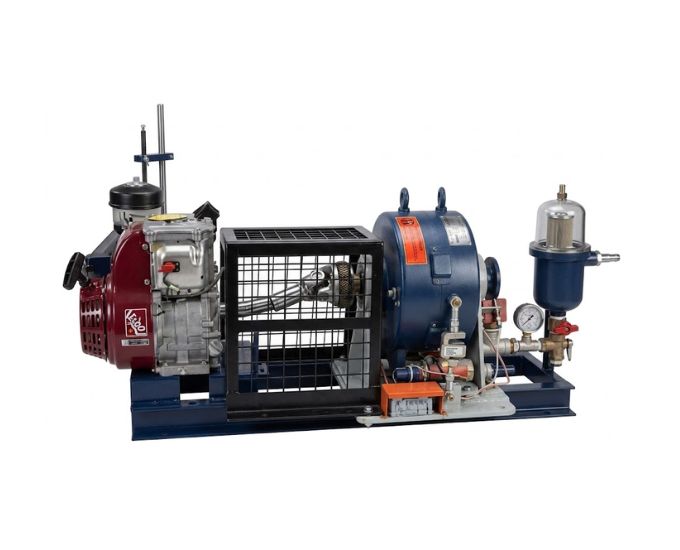
Petrol Engine Test Rig with Eddy Current Dynamometer
Model Number: MT-101A
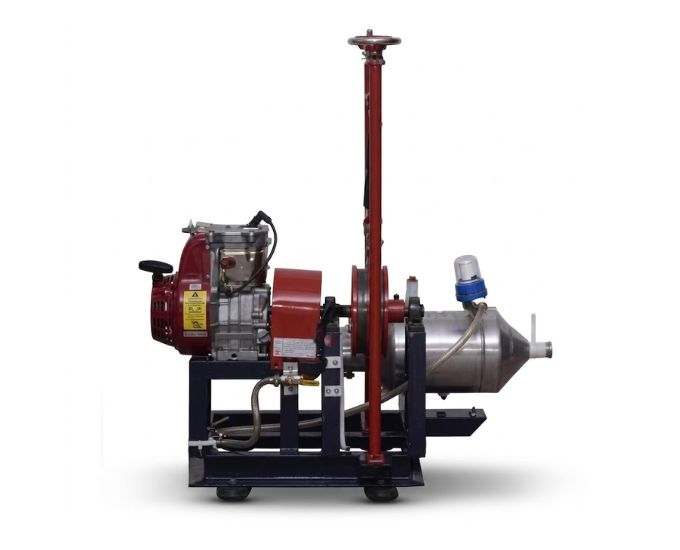
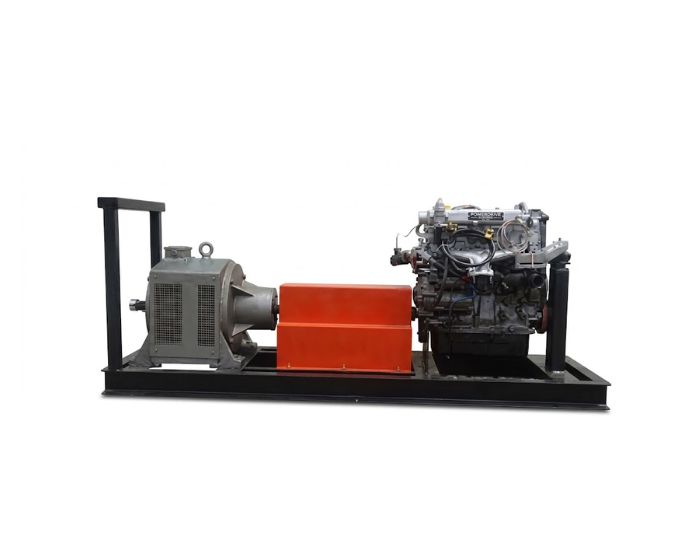
The Petrol Engine Test Rig with Eddy Current Dynamometer from Micro Technologies is designed for performance testing of a single-cylinder four-stroke petrol engine under controlled loading conditions. The eddy current dynamometer provides smooth and adjustable engine loading, enabling experiments for determining brake power, fuel consumption, specific fuel consumption and brake thermal efficiency.
Product Specification
The Petrol Engine Test Rig with Eddy Current Dynamometer is a complete experimental setup developed for studying the performance characteristics of a single-cylinder, four-stroke petrol engine.
The engine is mechanically coupled to an eddy current dynamometer, which provides controlled loading without relying on direct frictional contact for the primary braking action. This allows smooth variation of engine load during performance experiments.
The dynamometer operates using electromagnetic induction. When the rotor connected to the engine rotates within the magnetic field, eddy currents are induced. These currents produce an opposing torque, creating a controllable load on the engine.
By varying the dynamometer excitation, different engine loading conditions can be established. Measurements such as engine speed, load and fuel consumption can then be recorded at each operating point.
The experimental readings can be used to calculate brake power, brake specific fuel consumption and brake thermal efficiency.
Key Features
- Single-cylinder petrol engine
- Four-stroke operating cycle
- Eddy current dynamometer
- Smooth and controllable engine loading
- Non-friction electromagnetic braking principle
- Brake power determination
- Fuel consumption measurement
- Specific fuel consumption calculation
- Brake thermal efficiency calculation
- Engine speed measurement provision
- Dynamometer load measurement
- Rigid engine mounting
- Protective coupling/drive arrangement
- Suitable for multiple load conditions
- Complete engine performance test setup
Technical Specifications
| Specification | Details |
|---|---|
| Product Name | Petrol Engine Test Rig with Eddy Current Dynamometer |
| Engine Type | Petrol Engine |
| Engine Configuration | Single Cylinder |
| Operating Cycle | Four Stroke |
| Loading Device | Eddy Current Dynamometer |
| Dynamometer Principle | Electromagnetic / Eddy Current |
| Fuel Type | Petrol |
| Load Control | Adjustable |
| Fuel Measurement | Measuring Arrangement Provided |
| Engine Speed Measurement | Provision Provided |
| Mounting | Rigid Base Frame |
| Application | Engine Performance Testing |
Exact engine power, displacement, rated speed, bore, stroke, dynamometer capacity and measuring instrumentation depend on the selected configuration.
Experiments Performed
Determination of Brake Power
The eddy current dynamometer applies a measured load to the engine. Using engine torque and rotational speed, the useful brake power available at the engine shaft can be determined.
Determination of Fuel Consumption
The fuel-measuring arrangement allows the amount of petrol consumed during a measured period to be recorded.
Determination of Specific Fuel Consumption
The measured fuel-consumption rate is compared with the brake power output to calculate brake specific fuel consumption.
Determination of Brake Thermal Efficiency
The useful brake-power output and rate of fuel-energy input are used to determine the brake thermal efficiency of the engine.
Eddy Current Dynamometer
Working Principle
The eddy current dynamometer operates on the principle of electromagnetic induction.
When the dynamometer rotor rotates in a magnetic field, circulating electrical currents known as eddy currents are generated in the conductive components.
These currents interact with the magnetic field and produce a resisting torque opposite to the direction of rotation.
The resulting resistance creates a controllable mechanical load on the petrol engine.
Load Control
By controlling the electromagnetic excitation of the dynamometer, the braking effect can be varied. This enables engine performance to be studied at multiple load conditions.
Working Procedure
1. Initial Inspection
Check the fuel supply, engine mounting, dynamometer coupling, electrical connections and measuring instruments before starting.
2. Start the Petrol Engine
Start the engine and allow it to operate until stable conditions are achieved.
3. Set Initial Load
Begin testing at a low or specified dynamometer load.
4. Apply Dynamometer Load
Gradually increase the eddy current dynamometer excitation to increase the load on the engine.
5. Record Measurements
At each load condition, record relevant parameters such as:
- Engine speed
- Dynamometer load
- Fuel consumed
- Fuel consumption time
6. Calculate Performance
Use the recorded observations to determine brake power, fuel consumption, specific fuel consumption and brake thermal efficiency.
Performance Parameters
Brake Power
Brake power is the useful mechanical power delivered at the engine output shaft.
Engine Torque
Torque represents the turning force produced by the engine against the dynamometer load.
Fuel Consumption
Fuel consumption represents the quantity of petrol used during a specified operating period.
Brake Specific Fuel Consumption
BSFC represents the quantity of fuel consumed relative to the useful brake power produced.
Brake Thermal Efficiency
Brake thermal efficiency indicates the effectiveness with which fuel energy is converted into useful shaft power.
Typical Calculations
Brake Power
Brake Power = (2 × π × N × T) / 60
Where:
- N = Engine speed in RPM
- T = Brake torque in N·m
Brake Specific Fuel Consumption
BSFC = Fuel Consumption Rate / Brake Power
Brake Thermal Efficiency
Brake thermal efficiency is calculated by comparing the brake-power output with the rate of energy supplied by the fuel.
Main Components
| Component | Purpose |
|---|---|
| Four Stroke Petrol Engine | Provides mechanical output |
| Eddy Current Dynamometer | Applies controlled engine load |
| Coupling Arrangement | Connects engine and dynamometer |
| Protective Guard | Covers suitable rotating components |
| Fuel Tank | Stores fuel for operation |
| Fuel Measurement System | Measures fuel consumption |
| Load Measurement Arrangement | Measures dynamometer loading |
| Speed Measurement System | Measures engine RPM |
| Control Arrangement | Controls dynamometer loading |
| Base Frame | Supports the complete assembly |
Advantages of Eddy Current Loading
Smooth Load Variation
The dynamometer provides gradual and controllable loading, making it convenient to obtain readings at different engine operating points.
Reduced Mechanical Friction
The primary braking action is electromagnetic, reducing dependence on direct frictional braking surfaces.
Stable Performance Testing
Controlled loading helps maintain repeatable test conditions for engine performance experiments.
Wide Testing Capability
Multiple load conditions can be established without repeatedly modifying a mechanical brake arrangement.
Benefits
- Controlled engine performance testing
- Smooth dynamometer loading
- Multiple performance parameters from one setup
- Convenient brake-power measurement
- Fuel-consumption analysis
- Efficiency calculations
- Practical understanding of engine loading
- Robust test-bench construction
- Suitable for repeated experiments
- Useful for performance curves
- Suitable for research and training
- Custom instrumentation options available
Scope of Application
- Petrol Engine Performance Testing
- IC Engine Testing
- Brake Power Measurement
- Engine Torque Measurement
- Fuel Consumption Testing
- Specific Fuel Consumption Analysis
- Brake Thermal Efficiency Testing
- Engine Load Characteristics
- Four-Stroke Engine Experiments
- Dynamometer Studies
- Performance Curve Analysis
- Engine Research
Applications
- Mechanical Engineering Laboratories
- Automobile Engineering Laboratories
- IC Engine Laboratories
- Thermal Engineering Laboratories
- Engineering Colleges
- Technical Universities
- Polytechnic Institutes
- Industrial Training Facilities
- Research Laboratories
- Engine Testing Facilities
- Research & Development Centers
Safety Features & Precautions
Protective Guarding
Suitable rotating and coupling components should remain properly guarded during engine operation.
Controlled Loading
Dynamometer load should be increased gradually within the rated limits of the engine and dynamometer.
Fuel Safety
Petrol should be stored and handled away from flames, sparks and other ignition sources.
Exhaust Ventilation
The test area must have suitable exhaust extraction and ventilation to prevent accumulation of engine exhaust gases.
Emergency Shutdown
The operator should have convenient access to the engine and dynamometer shutdown controls during testing.
Frequently Asked Questions
What is a Petrol Engine Test Rig with Eddy Current Dynamometer?
It is an engine performance testing setup in which a petrol engine is coupled to an eddy current dynamometer for applying controlled load and evaluating engine performance.
Which engine is used in the setup?
The shown configuration uses a single-cylinder four-stroke petrol engine.
What is an eddy current dynamometer?
An eddy current dynamometer is an absorption dynamometer that uses electromagnetic effects to create a controllable resisting torque on a rotating engine.
What experiments can be performed?
The primary experiments include determination of brake power, fuel consumption, specific fuel consumption and brake thermal efficiency.
Can the engine load be varied?
Yes. Dynamometer excitation can be adjusted to provide different engine loading conditions.
What is the main advantage over a rope brake dynamometer?
An eddy current dynamometer provides smoother and more conveniently controlled loading with less reliance on frictional braking.
Can fuel consumption be measured?
Yes. The setup includes or can be supplied with a suitable fuel-consumption measuring arrangement.
Can performance curves be plotted?
Yes. Measurements taken at different load conditions can be used to plot suitable engine performance curves for parameters such as brake power, fuel consumption and efficiency.
Is it suitable for IC engine laboratories?
Yes. It is suitable for IC engine, mechanical, automobile and thermal engineering laboratory applications.
Can the specifications be customized?
Yes. Engine capacity, dynamometer rating, measuring instruments, controls and other features can be configured according to laboratory requirements.
Why Choose Micro Technologies?
- Single-cylinder four-stroke petrol engine
- Eddy current dynamometer loading
- Smooth load control
- Brake-power determination
- Fuel-consumption measurement
- Specific fuel-consumption analysis
- Brake thermal-efficiency study
- Robust test-bench construction
- Suitable protective arrangements
- Custom instrumentation options
- Institutional and bulk supply
- Technical support
Call to Action
Choose the Petrol Engine Test Rig with Eddy Current Dynamometer from Micro Technologies for controlled engine loading and detailed performance analysis. Contact us for engine specifications, dynamometer capacity, instrumentation options, customization, institutional procurement and quotation.