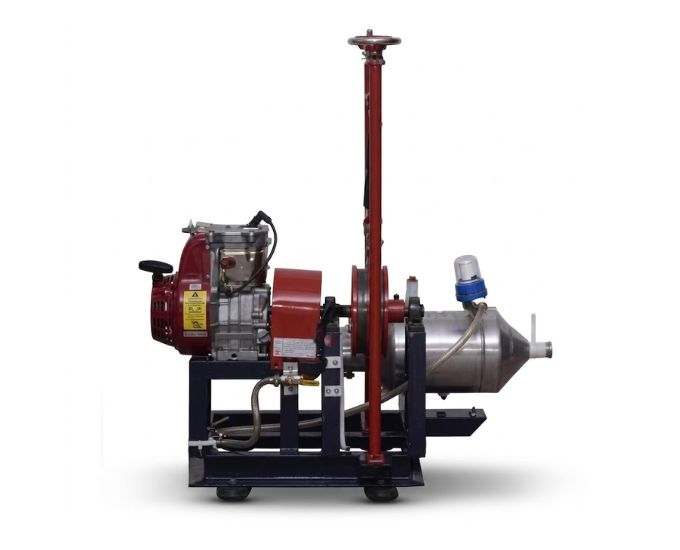

Multi-Cylinder Petrol Engine Performance Test Rig
Product Specification Sheet
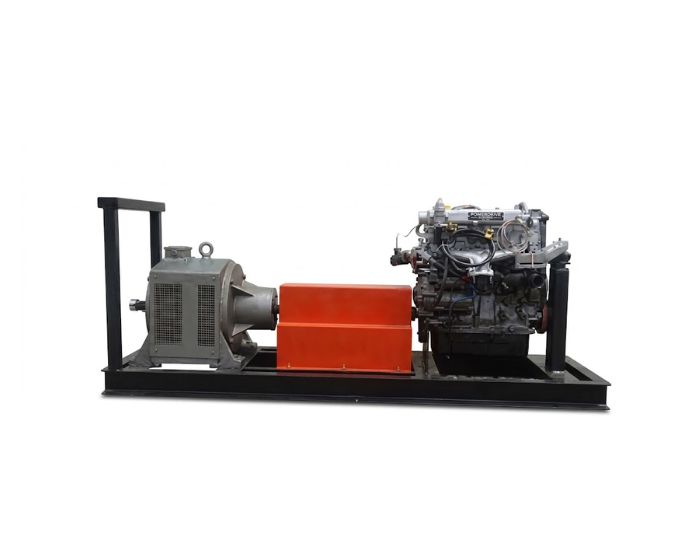
Multi-Cylinder Petrol Engine Performance Test Rig
Model Number: MT-102
The Multi-Cylinder Petrol Engine Performance Test Rig from Micro Technologies is designed for practical performance evaluation of three-cylinder or four-cylinder four-stroke petrol engines. The setup can be configured with rope brake, eddy current or hydraulic dynamometers and enables determination of brake power, fuel consumption, specific fuel consumption and brake thermal efficiency under different engine loading conditions.
Product Specification
The Multi-Cylinder Petrol Engine Performance Test Rig is a complete experimental setup developed for detailed study of the operating and performance characteristics of multi-cylinder four-stroke petrol engines.
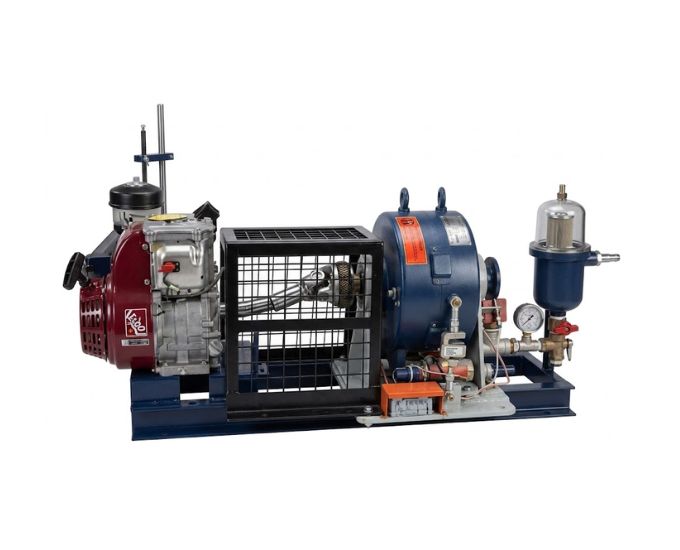
The system can be supplied with a three-cylinder or four-cylinder petrol engine, depending on laboratory requirements. The engine is securely mounted on a rigid base frame and mechanically coupled to a suitable dynamometer.
A major advantage of this test rig is the availability of different loading systems. Depending on the required experiment and configuration, the setup can be supplied with a rope brake dynamometer, eddy current dynamometer or hydraulic dynamometer.
The dynamometer applies a controlled load to the engine, allowing its performance to be evaluated over different operating conditions.
A suitable fuel-consumption measuring arrangement enables the amount of fuel consumed during a measured period to be determined. Combined with speed and load observations, this allows important performance parameters such as brake power, brake specific fuel consumption and brake thermal efficiency to be calculated.
The setup provides a practical platform for studying multi-cylinder petrol-engine performance and understanding the relationship between load, speed, fuel consumption, power output and efficiency.
Key Features
- Three-cylinder or four-cylinder engine configurations
- Four-stroke petrol engine
- Multiple dynamometer options
- Rope brake dynamometer option
- Eddy current dynamometer option
- Hydraulic dynamometer option
- Variable engine loading
- Brake power determination
- Fuel consumption measurement
- Specific fuel consumption calculation
- Brake thermal efficiency determination
- Engine speed measurement provision
- Robust base-frame construction
- Engine and dynamometer coupling arrangement
- Suitable for detailed performance testing
Available Engine Configurations
| Configuration | Details |
|---|---|
| Engine Type | Petrol Engine |
| Operating Cycle | Four Stroke |
| Cylinder Option 1 | Three Cylinder |
| Cylinder Option 2 | Four Cylinder |
| Loading System | Dynamometer |
| Operation | Performance Testing |
Available Dynamometer Options
Rope Brake Dynamometer
A rope brake dynamometer provides a simple mechanical loading arrangement for determining engine torque and brake power.
Eddy Current Dynamometer
An eddy current dynamometer uses electromagnetic resistance to provide smooth and controllable loading without relying primarily on frictional contact for braking.
Hydraulic Dynamometer
A hydraulic dynamometer absorbs engine power through fluid resistance and can be used for controlled engine loading and performance evaluation.
Technical Specifications
| Specification | Details |
|---|---|
| Product Name | Multi-Cylinder Petrol Engine Performance Test Rig |
| Engine Type | Petrol |
| Engine Configuration | Three / Four Cylinder |
| Operating Cycle | Four Stroke |
| Dynamometer Options | Rope Brake / Eddy Current / Hydraulic |
| Fuel Measurement | Measuring Arrangement Provided |
| Speed Measurement | Provision Provided |
| Load Measurement | According to Dynamometer Configuration |
| Mounting | Rigid Base Frame |
| Testing Type | Engine Performance Testing |
| Primary Application | Multi-Cylinder Petrol Engine Analysis |
Engine displacement, rated power, rated speed, bore, stroke, dynamometer capacity and instrumentation can be selected according to the required configuration.
Experiments Performed
Determination of Brake Power
The dynamometer applies a measurable load to the engine. Engine torque and rotational speed are used to determine the useful brake power available at the output shaft.
Determination of Fuel Consumption
The fuel-measuring system enables the amount of petrol consumed during a known period to be recorded.
Determination of Specific Fuel Consumption
The measured fuel-consumption rate is compared with the brake-power output to calculate brake specific fuel consumption.
Determination of Brake Thermal Efficiency
Brake thermal efficiency is calculated by comparing the useful brake-power output with the rate of energy supplied through the fuel.
Working Principle
Engine Operation
The multi-cylinder petrol engine operates on the four-stroke cycle consisting of:
- Intake
- Compression
- Power
- Exhaust
The cylinders operate in a coordinated firing sequence to provide smoother and more continuous shaft output than a single-cylinder arrangement.
Engine Loading
The dynamometer coupled to the engine absorbs mechanical output and applies a controlled resisting load.
Measurement
At each selected load condition, parameters such as engine speed, load and fuel consumption are measured.
Performance Analysis
The measured values are used to evaluate the engine's power output, fuel economy and thermal performance.
Main Components
| Component | Purpose |
|---|---|
| Multi-Cylinder Petrol Engine | Generates mechanical power |
| Dynamometer | Applies controlled engine load |
| Coupling Assembly | Connects engine and dynamometer |
| Protective Guard | Covers suitable rotating components |
| Fuel Tank | Supplies petrol to the engine |
| Fuel Measuring System | Measures fuel consumption |
| Speed Measuring Arrangement | Determines engine RPM |
| Load Measurement System | Determines applied dynamometer load |
| Control Arrangement | Supports engine and load control |
| Base Frame | Supports the complete test rig |
Performance Parameters
Brake Power
Brake power represents the useful mechanical output available at the engine shaft.
Engine Torque
Engine torque represents the turning force produced by the engine against the applied dynamometer load.
Fuel Consumption
Fuel consumption indicates the amount of petrol required to operate the engine over a specified period.
Brake Specific Fuel Consumption
Brake specific fuel consumption indicates the amount of fuel consumed per unit of useful brake-power output.
Brake Thermal Efficiency
Brake thermal efficiency indicates how efficiently the chemical energy supplied through the fuel is converted into useful mechanical power.
Typical Calculations
Brake Power
Brake Power = (2 × π × N × T) / 60
Where:
- N = Engine speed in RPM
- T = Engine torque in N·m
Brake Specific Fuel Consumption
BSFC = Fuel Consumption Rate / Brake Power
Brake Thermal Efficiency
Brake thermal efficiency is determined from the ratio of useful brake-power output to fuel-energy input rate.
Benefits
- Suitable for three and four-cylinder engines
- Multiple dynamometer configurations
- Complete engine performance testing
- Variable loading capability
- Accurate performance calculations
- Fuel-consumption analysis
- Brake-power measurement
- Efficiency evaluation
- Suitable for performance curve plotting
- Robust experimental platform
- Useful for repeated testing
- Flexible laboratory configuration
Scope of Application
- Multi-Cylinder Engine Testing
- Petrol Engine Performance Analysis
- Brake Power Measurement
- Engine Torque Analysis
- Fuel Consumption Testing
- Specific Fuel Consumption Study
- Brake Thermal Efficiency Testing
- Engine Load Testing
- Four-Stroke Engine Study
- Dynamometer Experiments
- Performance Curve Analysis
- IC Engine Performance Testing
Applications
- IC Engine Laboratories
- Automobile Engineering Laboratories
- Mechanical Engineering Laboratories
- Thermal Engineering Laboratories
- Engineering Colleges
- Technical Universities
- Polytechnic Institutes
- Automobile Training Centers
- Engine Research Laboratories
- Technical Training Institutes
- Research & Development Centers
- Engine Testing Facilities
Safety Features & Precautions
Protective Coupling Guard
Suitable rotating transmission components should remain properly guarded whenever the engine is running.
Secure Engine Mounting
The engine and dynamometer should be securely fixed to the rigid base to maintain alignment during operation.
Controlled Loading
Dynamometer loading should always be increased gradually and kept within the rated limits of the engine and dynamometer.
Fuel Safety
Petrol should be handled in a properly ventilated area away from flames, sparks and other ignition sources.
Exhaust Management
Engine exhaust must be safely discharged from the laboratory using an appropriate exhaust and ventilation arrangement.
Frequently Asked Questions
What is a Multi-Cylinder Petrol Engine Performance Test Rig?
It is an experimental setup designed to test a multi-cylinder petrol engine at different loads and evaluate its power, fuel-consumption and efficiency characteristics.
Which engine configurations are available?
The test rig can be configured with a three-cylinder or four-cylinder four-stroke petrol engine.
Which dynamometers can be supplied?
The setup can be supplied with a rope brake, eddy current or hydraulic dynamometer.
What experiments can be performed?
The primary experiments include determination of brake power, fuel consumption, specific fuel consumption and brake thermal efficiency.
Can engine load be varied?
Yes. The selected dynamometer allows the engine to be tested under different controlled loading conditions.
Can fuel consumption be measured?
Yes. A suitable fuel-measuring arrangement is incorporated for performance testing.
Can performance curves be generated?
Yes. Observations at different load conditions can be used to prepare performance curves for brake power, fuel consumption and efficiency.
Which dynamometer should be selected?
The appropriate dynamometer depends on the engine power, required load-control characteristics, laboratory infrastructure and intended experiments.
Can the specifications be customized?
Yes. Engine type, cylinder configuration, dynamometer, instrumentation and other technical features can be selected according to laboratory requirements.
Why Choose Micro Technologies?
- Three and four-cylinder configurations
- Four-stroke petrol engine testing
- Three dynamometer options
- Complete performance-analysis setup
- Brake-power determination
- Fuel-consumption measurement
- Specific fuel-consumption analysis
- Brake thermal-efficiency testing
- Robust test-bench construction
- Custom instrumentation
- Institutional and bulk supply
- Technical support
Call to Action
Choose the Multi-Cylinder Petrol Engine Performance Test Rig from Micro Technologies for comprehensive testing of three or four-cylinder petrol engines. Contact us for engine specifications, rope brake, eddy current or hydraulic dynamometer options, instrumentation, customization, institutional procurement and quotation.