
Gradational dissection of human upper limb
Product Specification Sheet
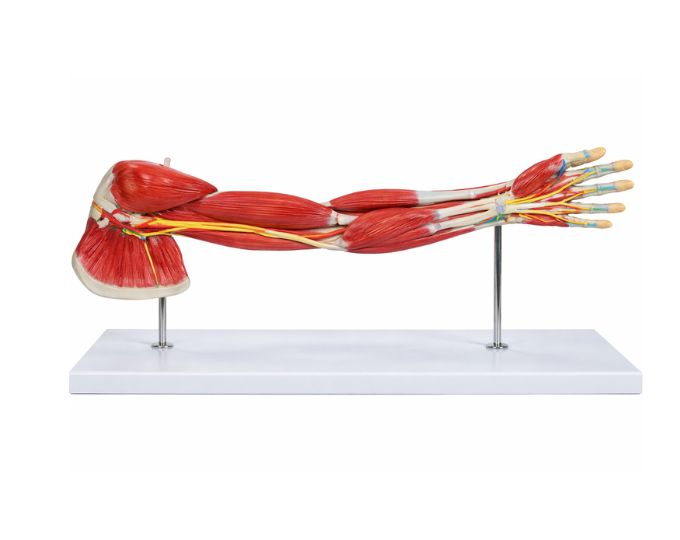
Gradational dissection of human upper limb
Model Number: MT-051A
The Gradational Dissection of Human Upper Limb Model (MT-051A) is a detailed anatomical teaching model designed to demonstrate the layered structure of the human upper limb. This model shows the progressive dissection of muscles, nerves, blood vessels, and skeletal structures, allowing students to understand the anatomy of the arm in a clear and systematic way. Manufactured in natural size (200 × 130 × 760 mm), the model provides an accurate representation of the human upper limb. It is widely used in medical colleges, nursing institutes, anatomy laboratories, and educational institutions for teaching human anatomy, physiology, and medical training.
Product Specification
The Gradational Human Upper Limb Dissection Model is an advanced anatomical teaching aid developed to provide a systematic understanding of the human arm's internal structure. Designed by Micro Technologies, this model showcases progressive dissection layers, clearly illustrating muscles, nerves, blood vessels, and skeletal components in a logical sequence.
The Gradational Human Upper Limb Dissection Model enables students to study each anatomical layer individually, making it easier to understand the complexity of upper limb anatomy. Its natural-size construction ensures realistic visualization, enhancing both classroom demonstrations and hands-on learning experiences.
Widely used in medical colleges, nursing institutes, and anatomy laboratories, the Gradational Human Upper Limb Dissection Model is built using high-quality materials to ensure long-term durability and accuracy. It is an essential tool for medical training and anatomical education. Contact Micro Technologies today to request a quote or discuss bulk purchasing options.
Features
- Gradational dissection design showing layered anatomy
- Displays muscles, nerves, blood vessels, and skeletal structures
- Natural-size model for realistic anatomical representation
- Clear and systematic arrangement for easy understanding
- High-quality, durable construction for long-term use
- Ideal for classroom demonstrations and lab training
- Designed for detailed anatomical study
Benefits
- Enhances understanding of layered anatomical structures
- Supports interactive and practical medical education
- Cost-effective solution for long-term institutional use
- Improves clarity in teaching complex anatomical relationships
- Easy to handle, display, and maintain
Product Specifications
| Specification | Details |
|---|---|
| Product Name | Gradational Dissection of Human Upper Limb |
| Model No. | MT-051A |
| Type | Anatomical Teaching Model |
| Material | High-quality PVC |
| Size / Model | 200 × 130 × 760 mm |
| Usage | Medical education, anatomy training, laboratory demonstrations |
FAQs
What does the gradational dissection feature represent in this model?
The gradational dissection design illustrates the human upper limb in progressive layers, allowing students to study muscles, nerves, blood vessels, and bones step by step. This structured approach helps learners understand how different anatomical components are arranged and connected.
Is this model suitable for advanced medical training?
Yes, this model is ideal for both intermediate and advanced medical education. It provides detailed anatomical representation and is widely used in medical colleges, nursing institutes, and anatomy laboratories for in-depth study and training.
Can institutions order this model in bulk?
Yes, bulk purchasing options are available for educational institutions, hospitals, and training centers. You can contact us to request a quote, discuss pricing, and arrange delivery based on your requirements.
How durable is the model for regular laboratory use?
The model is constructed using high-quality PVC material, ensuring durability and resistance to wear from frequent handling. It is designed for long-term use in demanding educational environments while maintaining accuracy and structural integrity.
Why Choose Our Products
- Quality: Manufactured to meet medical and educational standards
- Durability: Strong construction ensures long service life
- Accuracy: Precise anatomical detailing for reliable learning
- Support: User-friendly design with dependable customer assistance