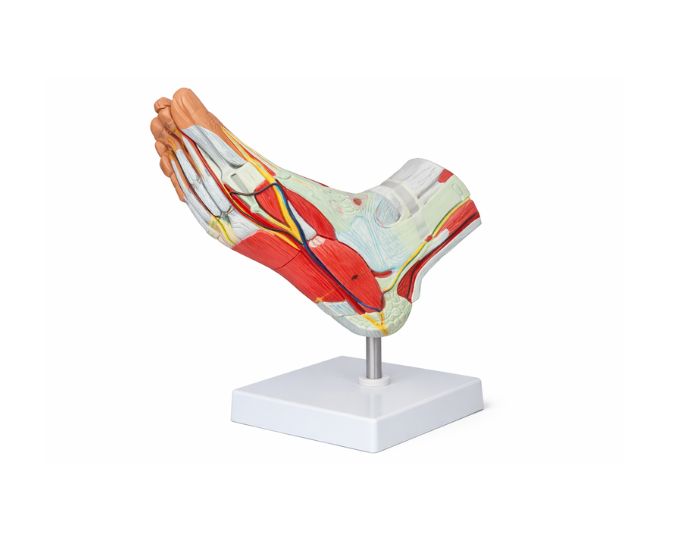

Muscle of hand with maine vessel and nerve
Product Specification Sheet
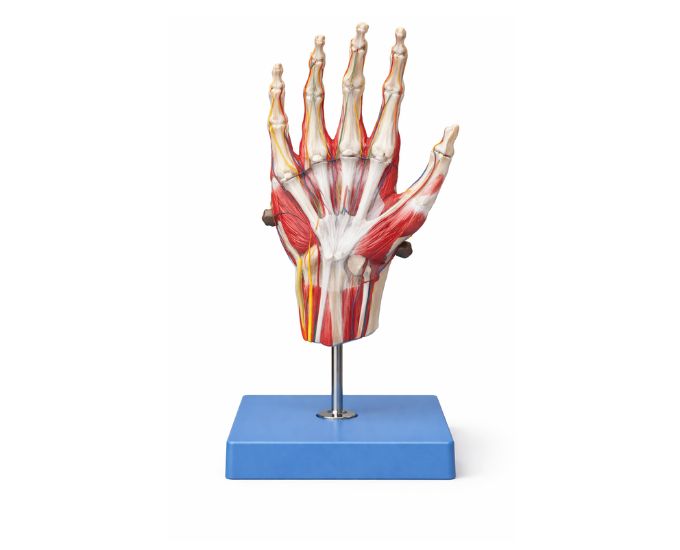
Muscle of hand with maine vessel and nerve
Model Number: MT-029
The Human Hand Muscle Anatomy Model with Vessels and Nerves is a detailed educational tool designed to illustrate the internal structure of the human hand. It clearly shows muscles, blood vessels, and nerve pathways, helping users understand their relationship and function. Ideal for medical colleges, biology laboratories, and training institutes, this model supports effective anatomy teaching and learning. Manufactured by Micro Technologies, it provides a practical visual aid for students and professionals to study hand structure, movement, and coordination with clarity and accuracy.
Product Specification
The Human Hand Muscle Anatomy Model with Vessels and Nerves is a highly detailed anatomical representation designed for comprehensive study of the human hand. It accurately displays the muscular structure along with the main blood vessels and nerve pathways, providing a clear understanding of how these systems interact to enable movement and functionality.
This model is an essential teaching aid for demonstrating the complexity of the hand, including muscle arrangement, vascular supply, and nerve distribution. Its realistic design helps students visualize anatomical relationships more effectively than traditional learning methods.
Constructed from high-quality materials, the model ensures durability and long-term use in educational environments. The precise detailing and clear structure make it easy to identify different components, enhancing both teaching and learning experiences.
Manufactured by Micro Technologies, this model is widely used in medical colleges, anatomy labs, and research institutes. It serves as a valuable resource for students, educators, and healthcare professionals seeking a deeper understanding of human hand anatomy.
Features
- Detailed representation of hand muscles, vessels, and nerves
- Clear visualization of anatomical relationships
- High-quality and durable construction
- Realistic design with accurate detailing
- Ideal for teaching and demonstration purposes
- Easy to handle and study
- Suitable for educational and clinical training
Applications
- Medical colleges
- Universities
- Laboratories
- Hospitals
- Research institutes
Product Specifications
| Specification | Details |
|---|---|
| Product Name | Human Hand Muscle Anatomy Model with Vessels and Nerves |
| Model No. | MT-029 |
| Type | Anatomical Model |
| Material | High-Quality PVC / Polymer |
| Size / Model | Standard Educational Model |
| Usage | Anatomy teaching and demonstration |
FAQs
Q1: What does this hand anatomy model show?
It displays the muscles, blood vessels, and nerves of the human hand in a detailed and easy-to-understand format.
Q2: Who can benefit from this model?
It is ideal for medical students, educators, researchers, and healthcare professionals studying hand anatomy.
Q3: How does this model help in learning?
It provides a clear visual representation of anatomical structures, improving understanding of muscle function and nerve pathways.
Q4: Is the model suitable for classroom teaching?
Yes, it is widely used in classrooms and laboratories for demonstration and practical learning.
Q5: Is the model durable for regular use?
Yes, it is made from high-quality materials designed for long-term educational use.
Q6: Where is this model commonly used?
It is commonly used in medical colleges, biology labs, training institutes, and research centers.
Why Choose Our Products
-
Manufactured by Micro Technologies with high anatomical accuracy
- Durable and long-lasting construction
- Designed for clear visualization and easy understanding
- Ideal for both educational and professional training purposes