
Experiments with Axial Fan Apparatus
Product Specification Sheet
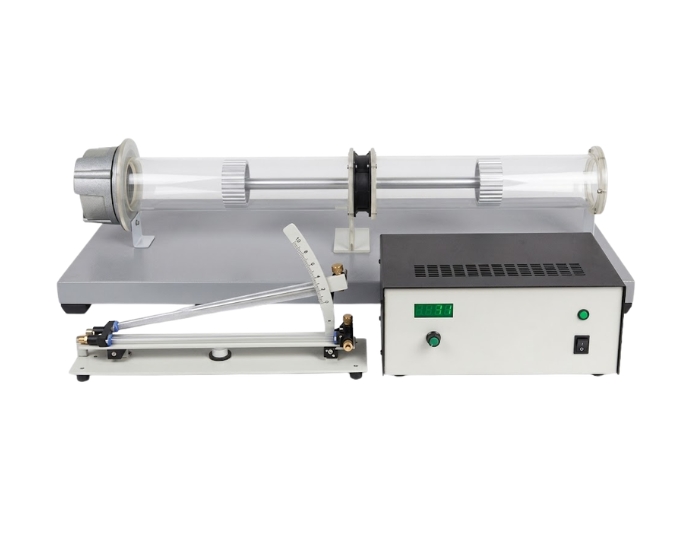
Experiments with Axial Fan Apparatus
Model Number: MTTM-178
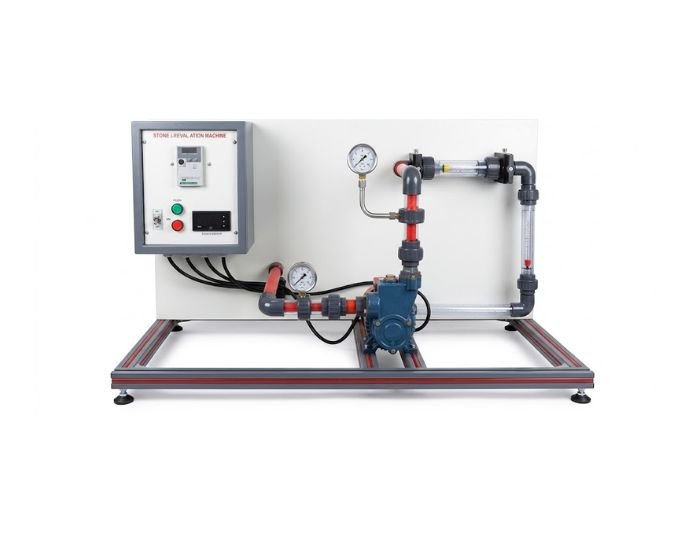
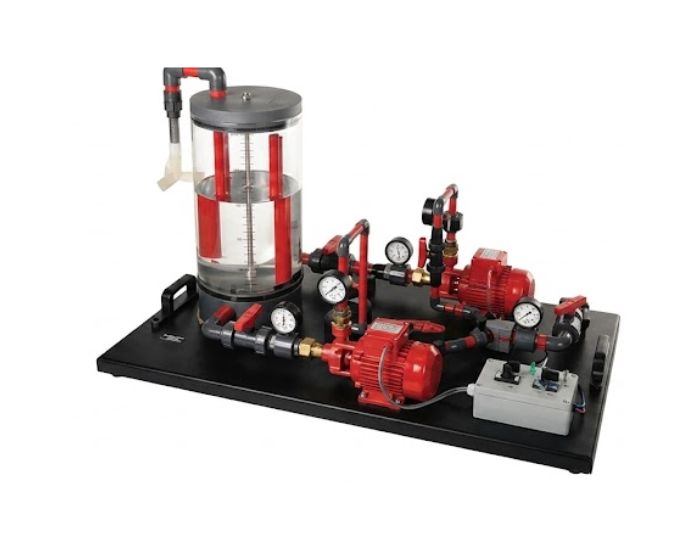
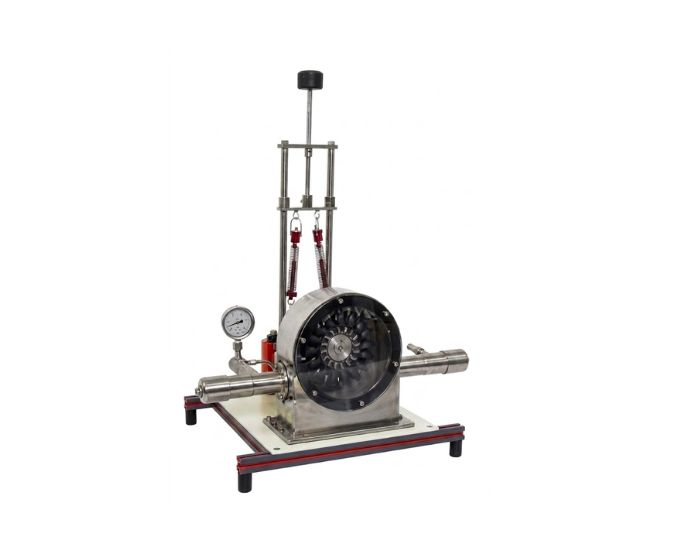
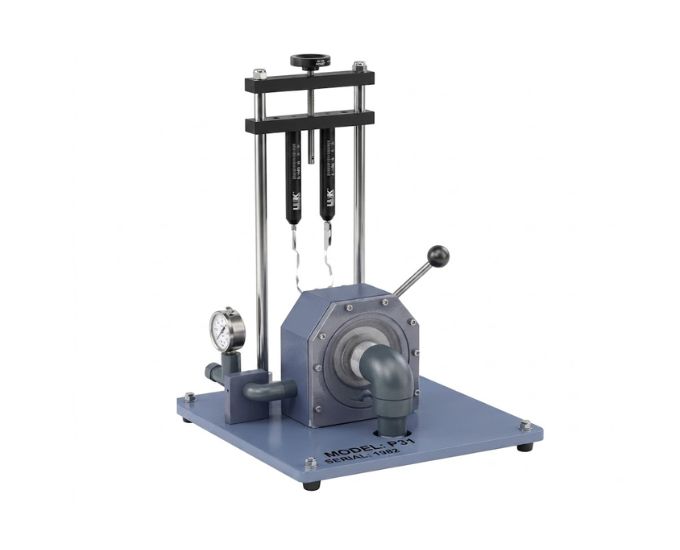
The Experiments with Axial Fan Apparatus is an engineering laboratory system designed to investigate the operating characteristics and performance of an axial fan. The apparatus enables students to study the relationship between flow rate and pressure, determine fan input, output, and overall efficiency, and investigate the effect of fan speed on performance. It provides practical understanding of axial-flow fan behaviour and is suitable for turbomachinery, fluid mechanics, mechanical engineering, thermal engineering, and air-flow laboratories.
Product Specification
The Experiments with Axial Fan Apparatus is an educational engineering laboratory system designed for practical investigation of the performance and operating characteristics of an axial-flow fan.
In an axial fan, air moves primarily in a direction parallel to the rotational axis of the fan. The apparatus allows students to investigate how airflow, pressure, power, efficiency, and rotational speed interact under different operating conditions.
One of the primary experiments performed using the apparatus is the study of flow rate versus pressure. By varying the airflow through the test section and measuring the corresponding pressure, students can obtain experimental data for plotting the characteristic pressure-flow curve of the axial fan.
The system also enables determination of fan input, output, and overall efficiency. Input power supplied to the fan can be compared with the useful aerodynamic output to evaluate the performance and overall efficiency of the fan under different operating conditions.
Another important experiment is the investigation of the effect of fan speed on performance. By changing rotational speed and recording the corresponding flow and pressure parameters, students can observe how fan characteristics vary with speed.
Experimental observations can be used to develop characteristic curves showing the relationship between airflow rate, pressure, fan speed, power, and efficiency. These curves provide an important practical understanding of axial fan performance and operating behaviour.
The apparatus incorporates an axial fan, air-flow test section, flow regulation arrangement, measuring instruments, speed control, and supporting structure required for systematic laboratory experimentation.
The equipment is particularly useful for understanding axial fans used in ventilation systems, HVAC installations, cooling systems, exhaust systems, industrial air handling, and other air-moving applications.
Micro Technologies supplies Experiments with Axial Fan Apparatus for engineering colleges, universities, polytechnic institutes, technical training centres, and research laboratories requiring practical turbomachinery and fluid mechanics laboratory equipment.
Features
- Designed for axial fan performance experiments
- Axial-flow fan test arrangement
- Enables study of flow rate versus pressure
- Suitable for plotting fan characteristic curves
- Enables determination of fan input
- Enables determination of fan output
- Suitable for calculating overall fan efficiency
- Variable fan speed operation
- Enables study of speed effects on performance
- Air-flow regulation arrangement
- Suitable pressure measurement arrangement
- Practical student-friendly experimental setup
- Robust construction for regular laboratory use
Benefits
- Provides practical understanding of axial fan operation
- Demonstrates pressure-flow characteristics
- Enables experimental determination of fan efficiency
- Helps students understand fan input and useful output
- Demonstrates the effect of rotational speed on performance
- Enables characteristic performance curves to be plotted
- Connects turbomachinery theory with practical experiments
- Suitable for repeated student laboratory sessions
- Useful for fluid mechanics, HVAC, and turbomachinery studies
Product Specifications
| Specification | Details |
|---|---|
| Product Name | Experiments with Axial Fan Apparatus |
| Product Type | Turbomachinery / Air Flow Laboratory Apparatus |
| Working Fluid | Air |
| Fan Type | Axial Fan |
| Primary Study | Axial Fan Performance |
| Flow Study | Flow Rate vs. Pressure |
| Power Study | Fan Input & Output |
| Efficiency Study | Overall Fan Efficiency |
| Speed Study | Effect of Speed on Fan Performance |
| Fan Speed | Variable / Adjustable |
| Flow Regulation | Adjustable |
| Pressure Measurement | Suitable Measuring Arrangement |
| Experimental Output | Fan Performance Characteristics |
| Application | Turbomachinery, Fluid Mechanics & Air Flow Laboratory |
| Suitable For | Engineering Colleges, Universities, Polytechnics & Technical Institutes |
Experiments Performed
- Study of axial fan operating characteristics
- Measurement of air-flow rate
- Measurement of pressure developed by the fan
- Study of flow rate versus pressure
- Plotting of pressure-flow characteristic curve
- Determination of fan input
- Determination of fan output
- Determination of overall fan efficiency
- Investigation of the effect of fan speed on performance
- Comparison of performance at different rotational speeds
- Plotting of axial fan performance characteristics
Applications
- Turbomachinery Laboratories
- Fluid Mechanics Laboratories
- Air Flow Laboratories
- Mechanical Engineering Laboratories
- Thermal Engineering Laboratories
- HVAC Laboratories
- Ventilation Training Laboratories
- Engineering Colleges
- Universities
- Polytechnic Institutes
- Technical Training Centres
- Research Laboratories
FAQs
What is the Experiments with Axial Fan Apparatus used for?
The apparatus is used to investigate axial fan characteristics, including flow rate versus pressure, fan input and output, overall efficiency, and the effect of rotational speed on performance.
What is an axial fan?
An axial fan is a type of fan in which air primarily moves parallel to the rotational axis of the fan.
Can flow rate versus pressure be studied?
Yes. Flow rate and corresponding pressure readings can be measured under different operating conditions to obtain the axial fan characteristic curve.
Can fan efficiency be determined?
Yes. Fan input and useful output can be evaluated to determine the overall efficiency of the axial fan.
Can fan input and output be measured?
Yes. The apparatus is designed to support the determination of input and output parameters required for fan performance analysis.
Can the effect of fan speed be investigated?
Yes. Fan speed can be varied to investigate how rotational speed affects pressure, flow rate, and overall fan performance.
Can performance curves be plotted?
Yes. Experimental readings can be used to plot pressure-flow and other relevant fan performance characteristics.
What is the difference between an axial fan and a radial fan?
An axial fan primarily moves air parallel to its rotational axis, while a radial or centrifugal fan typically discharges air in a radial direction relative to the impeller axis.
Is this apparatus suitable for engineering colleges?
Yes. It is suitable for mechanical engineering, turbomachinery, fluid mechanics, thermal engineering, HVAC, and air-flow laboratory courses.
Can the apparatus be customized?
Yes. Fan configuration, test section, speed-control arrangement, measuring instruments, and other experimental requirements can be customized according to institutional needs.
Why Choose Our Products
- Practical axial fan performance experiments
- Flow rate and pressure characteristic studies
- Input, output, and efficiency determination
- Variable-speed performance investigation
- Student-friendly laboratory configuration
- Durable construction for regular educational use
- Customized configurations available
- Institutional and bulk supply support
Call to Action
Looking for a reliable Experiments with Axial Fan Apparatus for your engineering laboratory? Micro Technologies supplies turbomachinery, fluid mechanics, and air-flow laboratory equipment for universities, engineering colleges, polytechnic institutes, technical training centres, and research facilities. Contact us for technical requirements, customized configurations, institutional orders, bulk supply, distributor inquiries, government tenders, or a competitive quotation.