
Cavitation in Pumps Apparatus
Product Specification Sheet
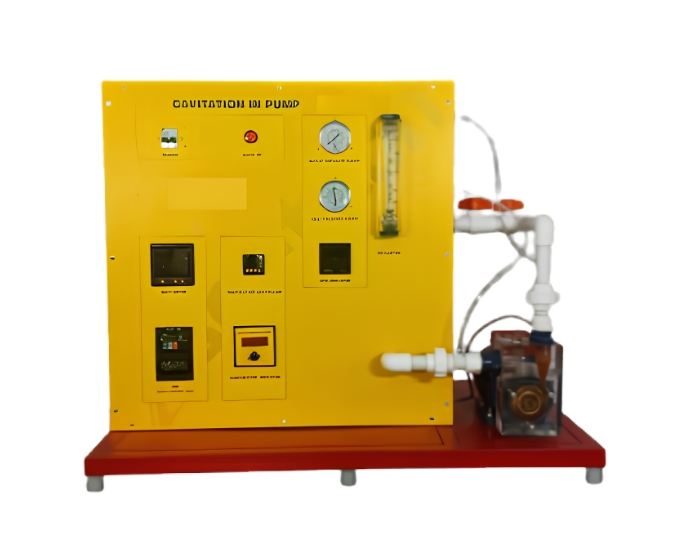
Cavitation in Pumps Apparatus
Model Number: MTTM-171
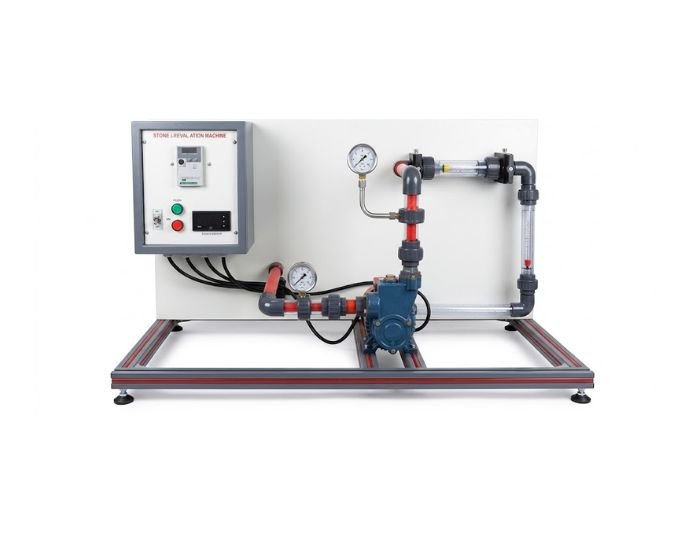
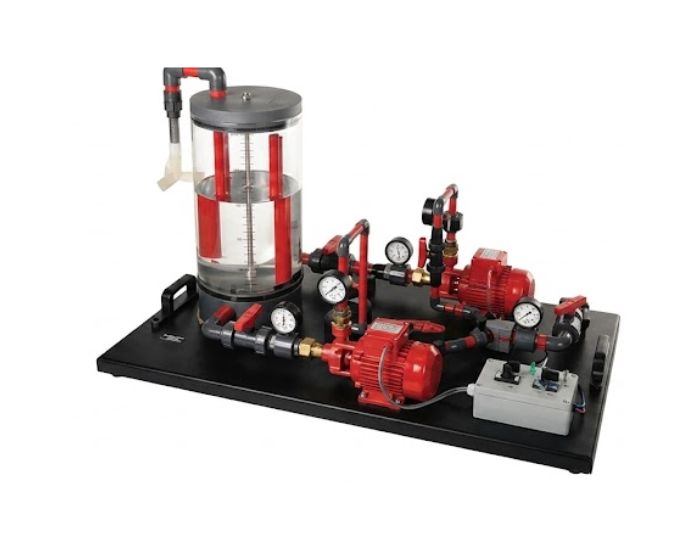
The Cavitation in Pumps Apparatus is an engineering laboratory system designed for practical investigation of cavitation formation and its effects on pump operation. The apparatus enables students to observe cavitation and investigate how pump speed, inlet pressure, flow rate, and temperature influence cavitation behaviour. The experimental setup provides practical understanding of vapour bubble formation, suction conditions, pressure reduction, and pump performance under cavitating conditions.
Product Specification
The Cavitation in Pumps Apparatus is an educational fluid mechanics and hydraulic machines laboratory system developed for experimental investigation of cavitation formation and its influence on pump operation.
Cavitation is an important phenomenon in hydraulic machinery that occurs when the local pressure of a liquid falls sufficiently low for vapour cavities or bubbles to form. When these cavities move into regions of higher pressure, they may collapse rapidly. Persistent cavitation can negatively affect pump performance and may contribute to vibration, noise, and damage to pump components.
The apparatus enables students to observe the cavitation effect in a pump under controlled laboratory conditions. By adjusting operating parameters, the onset and development of cavitation can be investigated experimentally.
One of the primary studies performed with the apparatus is determining the effect of pump speed on cavitation. Changing rotational speed changes pump operating conditions and allows students to observe how cavitation behaviour varies with speed.
The system also enables investigation of the effect of inlet pressure. By varying suction-side pressure, students can determine how reduced inlet pressure influences the formation and intensity of cavitation.
Another important parameter is flow rate. Different operating flow rates can be established to investigate their influence on suction conditions and cavitation behaviour.
The apparatus can also be used to investigate the effect of water temperature on cavitation. Since vapour pressure varies with temperature, changes in liquid temperature can influence the conditions at which vapour cavities begin to form.
Suitable measuring instruments provide the operating data required for experimental analysis. The setup may incorporate pressure measurement, flow measurement, speed indication, temperature measurement, and flow-control arrangements for systematic investigation of pump cavitation.
The Cavitation in Pumps Apparatus provides practical understanding of cavitation formation, vapour pressure, suction pressure, pump speed, flow rate, temperature effects, and hydraulic pump performance.
Micro Technologies supplies Cavitation in Pumps Apparatus for engineering colleges, universities, polytechnic institutes, technical training centres, and research laboratories requiring practical hydraulic machines and fluid mechanics equipment.
Features
- Designed for practical study of pump cavitation
- Demonstrates cavitation formation
- Enables direct observation of cavitation effects
- Suitable for studying the effect of pump speed
- Enables investigation of inlet pressure effects
- Suitable for studying flow-rate effects
- Enables investigation of temperature effects
- Pressure measuring arrangement
- Flow measurement arrangement
- Speed measurement and control arrangement
- Temperature monitoring provision
- Controlled experimental operating conditions
- Suitable for repeated student practical sessions
- Robust laboratory construction
Benefits
- Provides practical understanding of pump cavitation
- Demonstrates conditions responsible for cavitation formation
- Helps students understand the effect of suction pressure
- Enables comparison at different pump speeds
- Demonstrates the relationship between flow rate and cavitation
- Helps explain the influence of liquid temperature
- Connects theoretical pump concepts with experimental observations
- Helps students understand cavitation-related pump performance problems
- Suitable for hydraulic machines and fluid mechanics practicals
Product Specifications
| Specification | Details |
|---|---|
| Product Name | Cavitation in Pumps Apparatus |
| Product Type | Hydraulic Machines / Fluid Mechanics Laboratory Apparatus |
| Working Fluid | Water |
| Main Study | Cavitation in Pumps |
| Primary Experiment | Cavitation Formation & Observation |
| Pump Parameter | Speed |
| Pressure Parameter | Inlet / Suction Pressure |
| Flow Parameter | Flow Rate |
| Temperature Parameter | Water Temperature |
| Pressure Measurement | Provided |
| Flow Measurement | Provided |
| Temperature Measurement | Provided |
| Speed Measurement | Provided |
| Flow Regulation | Adjustable |
| Application | Fluid Mechanics & Hydraulic Machines Laboratory |
| Suitable For | Engineering Colleges, Universities, Polytechnics & Technical Institutes |
Experiments Performed
- Study of cavitation formation in pumps
- Observation of cavitation effect
- Investigation of the effect of pump speed on cavitation
- Study of the effect of inlet pressure on cavitation
- Investigation of flow-rate effects on cavitation
- Study of temperature effects on cavitation
- Observation of pump behaviour under cavitating conditions
- Study of suction-side pressure conditions
- Investigation of operating conditions leading to cavitation
- Comparison of cavitation behaviour under different operating conditions
Applications
- Fluid Mechanics Laboratories
- Hydraulic Machines Laboratories
- Pump Testing Laboratories
- Mechanical Engineering Laboratories
- Civil Engineering Laboratories
- Hydraulic Engineering Laboratories
- Engineering Colleges
- Universities
- Polytechnic Institutes
- Technical Training Centres
- Research and Educational Laboratories
FAQs
What is the Cavitation in Pumps Apparatus used for?
The apparatus is used to demonstrate cavitation formation in a pump and investigate how operating parameters such as speed, inlet pressure, flow rate, and temperature influence cavitation.
What is cavitation in a pump?
Cavitation occurs when local liquid pressure falls sufficiently low for vapour cavities to form. These cavities may subsequently collapse when they move into regions of higher pressure.
Can cavitation be observed using this apparatus?
Yes. The apparatus is specifically designed to demonstrate and allow experimental observation of cavitation effects in a pump system.
How does inlet pressure affect cavitation?
Lower suction or inlet pressure can bring the liquid closer to its vapour-pressure condition, increasing the likelihood of cavitation under suitable operating conditions.
Can the effect of pump speed be studied?
Yes. The apparatus enables students to investigate how changes in pump speed influence cavitation behaviour.
Can flow rate affect pump cavitation?
Yes. Changes in flow rate alter pump operating and suction conditions and can therefore influence cavitation behaviour.
Why does temperature affect cavitation?
The vapour pressure of water changes with temperature. As temperature changes, the pressure condition at which vapour cavities can form also changes.
What are the effects of cavitation on a pump?
Cavitation can result in noise, vibration, reduced hydraulic performance, unstable operation, and, over prolonged periods, erosion or damage to pump components.
Is this apparatus suitable for hydraulic machines laboratories?
Yes. It is suitable for hydraulic machines, fluid mechanics, mechanical engineering, civil engineering, and hydraulic engineering laboratory courses.
Can the apparatus be customized?
Yes. Pump configuration, measuring instruments, control arrangements, test sections, and other specifications can be configured according to institutional requirements.
Why Choose Our Products
- Practical demonstration of pump cavitation
- Multiple cavitation parameters can be investigated
- Suitable pressure, flow, speed, and temperature measurements
- Student-friendly experimental configuration
- Suitable for hydraulic machines laboratory practicals
- Durable construction for regular institutional use
- Customized configurations available
- Institutional and bulk supply support
Call to Action
Looking for a reliable Cavitation in Pumps Apparatus for your hydraulic machines laboratory? Micro Technologies supplies fluid mechanics and hydraulic engineering laboratory equipment for universities, engineering colleges, polytechnic institutes, technical training centres, and research facilities. Contact us for technical requirements, customized configurations, institutional orders, bulk supply, distributor inquiries, government tenders, or a competitive quotation.