Every lab needs heat, but not all heat is created equal. A Bunsen burner and a water bath can both "heat" a sample, yet one will torch a delicate protein and the other will barely warm a metal block. Picking the wrong tool isn't just clumsy—it can ruin an experiment or start a fire.
That's exactly why this category of equipment comes in so many different shapes. Each one exists to solve one specific heating problem, without wrecking the sample, the glassware, or the person standing nearby.
This guide breaks down the real types, uses, and applications behind every one of these tools, with facts and figures you can actually trust.
What Is Heating Laboratory Equipment?
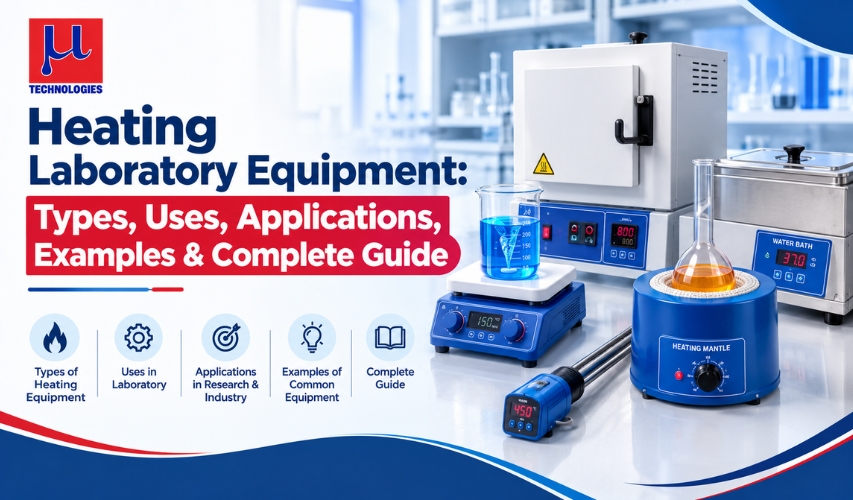
Heating laboratory equipment refers to any instrument used to apply, control, or maintain heat during scientific work—including hot plates, Bunsen burners, heating mantles, water baths, oil baths, dry block heaters, drying ovens, muffle furnaces, autoclaves, and incubators. Each type is built for a specific temperature range and sample type, from gentle, sub-100°C warming of biological samples to industrial-scale furnaces running past 1,000°C for material testing.
Why So Many Types of Lab Heating Tools Exist
It would be convenient if one machine could heat everything safely. It can't.
Flammable solvents need indirect, spark-free heat. Biological samples need gentle, stable warmth that won't denature proteins. Ceramic and metal samples need furnaces that shrug off four-digit temperatures without breaking a sweat. That range of needs is exactly why this category spans such a wide catalog of machines, each engineered around one job rather than trying to do everything at once.
Types of Heating Laboratory Equipment
1. Bunsen Burner
The oldest tool on this list, the Bunsen burner produces a single open gas flame capable of reaching well over 1,000°C almost instantly. It's fast and simple, but it offers poor temperature control and a real fire risk around flammable vapors—which is why it's mostly reserved for quick tasks like heating a test tube or sterilizing an inoculating loop rather than anything requiring precision.
2. Hot Plate
A hot plate replaces the open flame with a flat, electrically heated surface, making it a safer option for warming beakers, flasks, and other flat-bottomed containers. It won't reach the blistering temperatures a Bunsen burner can, but for everyday, controlled heating of liquids and solutions, it's the standard workhorse of modern chemistry labs.
3. Magnetic Stirrer Hot Plate
This combines a hot plate with a rotating magnetic field, letting a lab heat and stir a solution simultaneously using a small stir bar dropped inside the container—a genuinely efficient two-in-one upgrade over a plain hot plate for reactions that need constant mixing.
4. Heating Mantle
Built specifically to cradle round-bottom flasks, a heating mantle wraps heat evenly around the flask's curved surface instead of concentrating it on one flat spot. That even contact prevents the localized hot spots a flat hot plate would create on rounded glass, significantly reducing the risk of thermal stress cracking the flask—a detail that matters a lot more than it sounds like once you've cleaned up a cracked flask mid-reflux.
5. Water Bath
A water bath heats a sample gently and indirectly by surrounding its container with temperature-controlled water, keeping the sample below water's 100°C boiling point at all times. This thermal buffering gives water baths excellent stability—often within about ±0.1°C—which is exactly why they're the go-to choice for sensitive biological, enzymatic, and biochemical samples that can't tolerate direct or uneven heat.
6. Dry Bath (Heat Block)
A dry bath works like a water bath's low-maintenance cousin, using a solid, drilled aluminum block instead of liquid to hold and heat test tubes or small vials. Skipping the liquid medium means less cleanup, less contamination risk, and genuinely uniform heating across multiple small samples at once.
7. Drying Oven
A drying oven removes moisture from solids, powders, and glassware using controlled heat, typically operating anywhere from around 50°C up to over 200°C depending on the model. Unlike a furnace, it's built for precision drying rather than extreme heat—think preparing samples for weighing, not melting anything down.
8. Muffle Furnace
This is where heating laboratory equipment starts getting genuinely intense. A muffle furnace can reach temperatures as high as 1,800°C in specialized industrial models, though most standard lab units typically operate in the 1,000°C to 1,600°C range. It's used for high-temperature material testing, ashing samples for analysis, and sintering—jobs that would destroy nearly every other piece of equipment on this list.
9. Autoclave
An autoclave sterilizes lab equipment and media using pressurized steam, most commonly run at 121°C and 15 psi for 15 to 20 minutes. That specific pressure-temperature combination pushes steam hot enough to destroy even resistant bacterial spores—something plain boiling water simply can't manage.
10. Incubator and Shaking Incubator
Rather than blasting a sample with heat, an incubator holds a steady, moderate temperature to support biological growth—commonly used for culturing bacteria, yeast, and cells. A shaking incubator adds continuous motion on top of that steady warmth, improving aeration for cultures that need both stable heat and constant gentle movement to thrive.
11. Microwave Reactor
A more modern addition to this lineup, a microwave reactor uses microwave radiation to heat samples dramatically faster than conventional methods, particularly useful for speeding up chemical reactions or rapidly heating small liquid or solid volumes in research settings.
Applications by Field
Different fields lean on different combinations of these tools, based on what their samples can actually tolerate.
- Chemical laboratories rely heavily on heating mantles and hot plates for everyday reactions, along with microwave reactors for accelerated synthesis work.
- Biological and clinical laboratories depend on water baths and incubators, including CO2 incubators, to keep sensitive cells and cultures at stable, life-friendly temperatures.
- Materials science labs turn to muffle furnaces and tube furnaces for high-temperature testing, sintering, and material characterization.
- Analytical laboratories commonly use vacuum ovens and muffle furnaces for sample preparation and moisture or ash content analysis.
Safety Considerations Every Lab Should Know
Heating laboratory equipment isn't inherently dangerous, but careless use around it genuinely is. One industry estimate puts heating-related incidents at roughly a fifth of all experimental lab accidents, most tracing back to equipment failure or improper operating procedure rather than the equipment itself.
A few non-negotiables worth repeating:
- Flammable or volatile solvents should never sit near an open flame or exposed heating element; indirect heat sources like water baths or spark-proof mantles are the safer choice.
- High-temperature equipment such as muffle furnaces needs proper ventilation—typically a fume hood or dedicated room—to prevent the buildup of hazardous fumes.
- Oil baths and similar high-heat liquid systems should include automatic shutoff protection to prevent runaway overheating.
- Cooling rates matter too—a muffle furnace cooled too quickly can crack its internal quartz components, so gradual cooling protocols genuinely matter for equipment longevity.
How to Choose the Right Heating Equipment for Your Lab
Picking correctly from this wide catalog comes down to answering a few honest questions:
- What temperature does the task actually need?
- A water bath handles anything under 100°C; a furnace is for four-digit territory. Don't overspend on capability you'll never use.
- How sensitive is the sample?
- Biological and enzymatic samples want the gentlest, most stable option available—usually a water bath or dry bath.
- What shape is the container?
- Round-bottom flasks pair naturally with heating mantles; flat-bottomed beakers and flasks are perfectly happy on a hot plate.
- Is the substance flammable?
- If yes, skip open flames entirely and reach for indirect, spark-free heating instead.
Conclusion
Heating laboratory equipment isn't just a bench accessory—it's the difference between a controlled, repeatable experiment and a ruined sample or a genuine safety incident. From the humble Bunsen burner's open flame to a muffle furnace pushing past 1,000°C, each type exists because one machine simply can't safely serve every temperature, every sample, and every shape of glassware at once. Understanding what each tool is actually built for—and matching it to the task in front of you—is what separates a smoothly run lab from one constantly explaining what went wrong.
Frequently Asked Questions
What are the main types of heating laboratory equipment?
The main types include Bunsen burners, hot plates, heating mantles, water baths, oil baths, dry bath heat blocks, drying ovens, muffle furnaces, autoclaves, and incubators.
What is the difference between a water bath and an oil bath?
A water bath heats samples gently below 100°C using water, while an oil bath uses heated oil to safely reach higher temperatures beyond water's boiling point.
Why is a heating mantle used instead of a hot plate for round-bottom flasks?
A heating mantle wraps evenly around a flask's curved surface, preventing the localized hot spots a flat hot plate would create, which reduces the risk of thermal cracking.
How hot can a muffle furnace get?
Standard laboratory muffle furnaces typically operate between 1,000°C and 1,600°C, with some specialized industrial models capable of reaching up to 1,800°C.
What temperature does an autoclave use to sterilize equipment?
An autoclave typically sterilizes at 121°C and 15 psi of pressure for 15 to 20 minutes, using pressurized steam to destroy even resistant bacterial spores.