
Worm Gear Unit
Product Specification Sheet
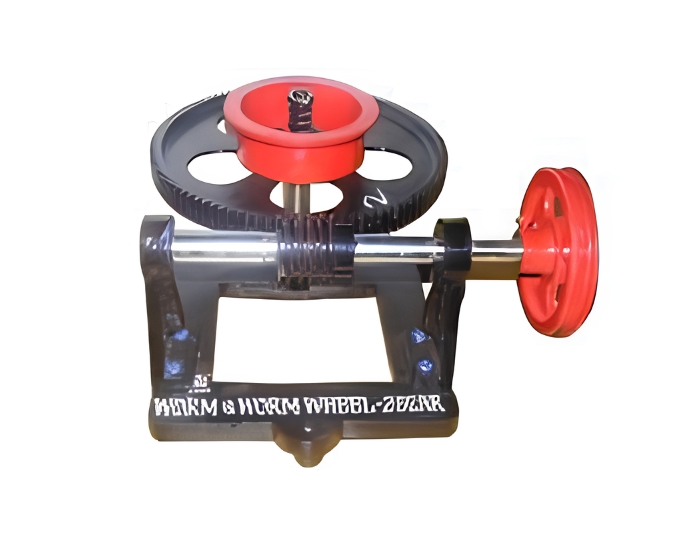
Worm Gear Unit
Model Number: MTDE-509
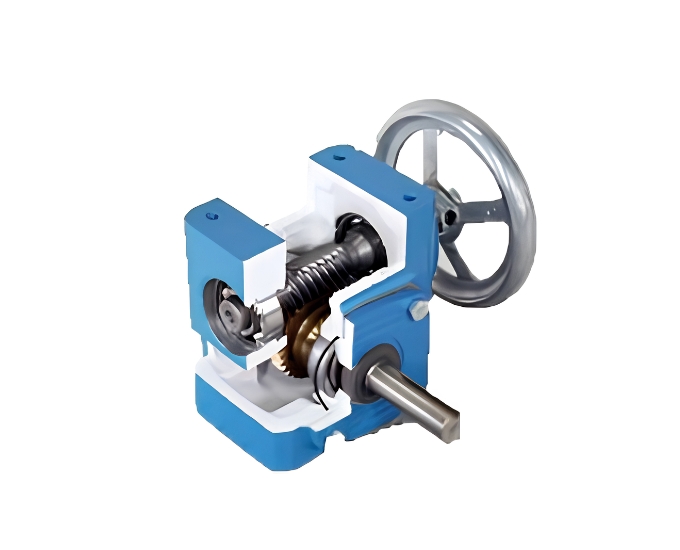
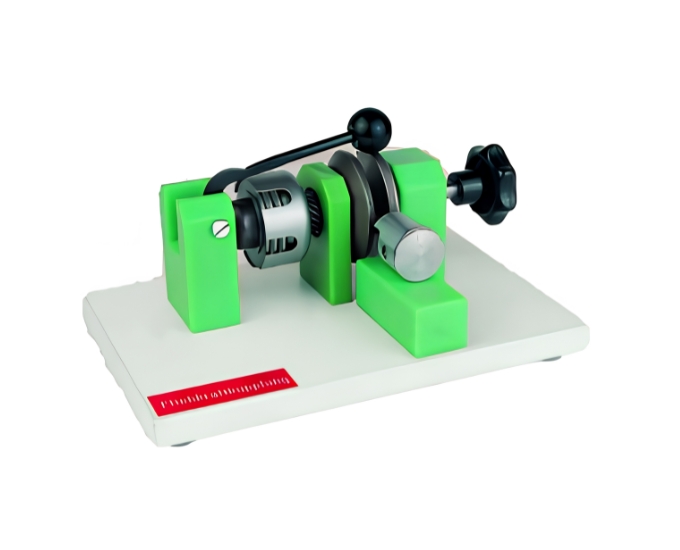
The Worm Gear Unit is an educational mechanical engineering apparatus designed for the practical study of the mode of operation and layout of a worm gear system. It enables students to observe worm and worm wheel engagement, understand rotary motion transmission, and study the basic construction and operating characteristics of a worm gear drive.
Product Specification
The Worm Gear Unit is a laboratory teaching apparatus developed to provide practical understanding of the construction, layout, and operation of worm gear mechanisms.
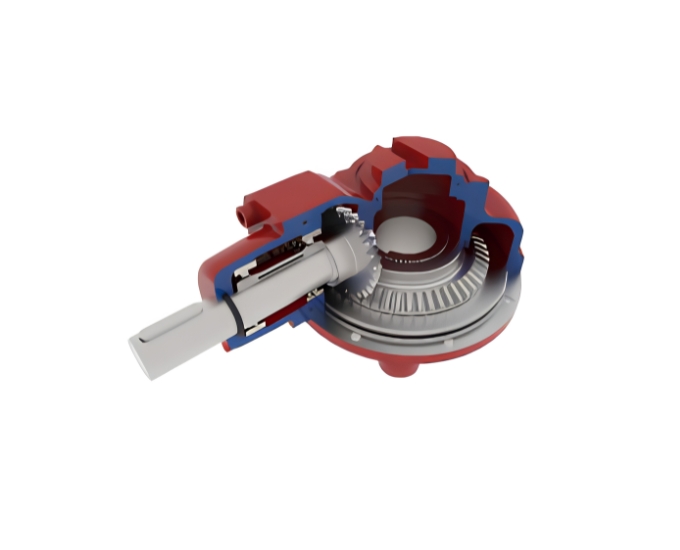
A worm gear drive generally consists of a worm and worm wheel arranged to transmit rotary motion between non-parallel and non-intersecting shafts, commonly positioned approximately at right angles.
The apparatus provides a clear demonstration of the mode of operation of a worm gear.
When the worm rotates, its helical threads engage with the teeth of the worm wheel and produce rotation of the output shaft.
This arrangement enables students to observe how rotary motion is transferred through sliding and rolling contact between the mating gear surfaces.
The unit also enables students to study the layout of a worm gear system, including the relative positions of the worm, worm wheel, shafts, bearings, and supporting components.
Worm gearing is particularly useful where a relatively high transmission ratio is required within a compact mechanical arrangement.
Students can study the relationship between input rotation, output rotation, number of worm starts, number of worm-wheel teeth, and transmission ratio.
The basic transmission ratio can be expressed as:
i = Z₂ / Z₁
where Z₂ represents the number of teeth on the worm wheel and Z₁ represents the number of starts on the worm.
The apparatus also helps explain important concepts such as gear engagement, shaft arrangement, speed reduction, torque transmission, sliding friction, efficiency, and mechanical power transmission.
Compared with conventional spur gearing, worm gears involve greater sliding action between mating surfaces. This makes friction, lubrication, and efficiency particularly important considerations in worm gear systems.
The unit provides an effective practical complement to theoretical studies of gears and mechanical transmission systems.
Micro Technologies supplies Worm Gear Units and other Theory of Machines and mechanical engineering laboratory equipment for engineering colleges, universities, polytechnic institutes, ITIs, and technical training centres.
Features
- Educational worm gear experimental unit
- Worm and worm wheel arrangement
- Clear demonstration of worm gear operation
- Suitable for worm gear layout studies
- Rotary motion transmission demonstration
- Gear engagement visualization
- Suitable for transmission-ratio studies
- Speed reduction demonstration
- Shaft arrangement study
- Friction and efficiency concepts
- Mechanical power transmission study
- Clear component identification
- Student-friendly experimental configuration
- Robust laboratory construction
- Suitable for repeated demonstrations
Benefits
- Provides practical understanding of worm gear operation
- Demonstrates worm and worm wheel engagement
- Helps students understand worm gear layout
- Provides clear visualization of rotary transmission
- Helps explain high transmission ratios
- Demonstrates speed reduction concepts
- Supports understanding of friction and efficiency
- Helps students identify major worm gear components
- Connects theoretical gear concepts with practical operation
- Suitable for mechanical engineering education
Product Specifications
| Specification | Details |
|---|---|
| Product Name | Worm Gear Unit |
| Product Type | Mechanical Transmission Laboratory Apparatus |
| Gear Type | Worm Gear |
| Main Elements | Worm & Worm Wheel |
| Primary Study | Operation & Layout |
| Input Motion | Rotary |
| Output Motion | Rotary |
| Gear Engagement Study | Supported |
| Transmission Ratio Study | Supported |
| Speed Reduction Study | Supported |
| Shaft Layout Study | Supported |
| Friction Study | Demonstration Supported |
| Efficiency Concepts | Supported |
| Power Transmission Study | Supported |
| Application | Theory of Machines / Mechanical Engineering Lab |
Experiments Performed
- Study of worm gear operation
- Study of worm gear layout
- Identification of worm and worm wheel
- Investigation of worm and worm wheel engagement
- Study of input and output rotation
- Demonstration of rotary motion transmission
- Study of worm gear transmission ratio
- Investigation of speed reduction
- Study of shaft arrangement
- Investigation of gear engagement
- Study of sliding action between gear surfaces
- Investigation of friction in worm gearing
- Study of worm gear efficiency concepts
- Demonstration of torque transmission
- Practical study of mechanical power transmission
Applications
- Theory of Machines Laboratories
- Machine Design Laboratories
- Machine Elements Laboratories
- Mechanical Engineering Laboratories
- Mechanical Transmission Laboratories
- Automobile Engineering Laboratories
- Workshop Technology Laboratories
- Mechatronics Laboratories
- Engineering Colleges
- Universities
- Polytechnic Institutes
- ITIs
- Vocational Training Institutes
- Technical Training Centres
FAQs
What is the Worm Gear Unit used for?
The unit is used to study the mode of operation and layout of a worm gear system, including worm-wheel engagement and rotary motion transmission.
What are the main components of a worm gear system?
The main transmission components are the worm and worm wheel, supported by shafts, bearings, and associated structural elements.
How does a worm gear operate?
Rotation of the worm causes its helical threads to engage the teeth of the worm wheel, producing rotation of the output shaft.
Can worm gear layout be studied?
Yes. The apparatus helps students understand the relative arrangement of the worm, worm wheel, shafts, and supporting components.
Can transmission ratio be studied?
Yes. The relationship between worm starts, worm-wheel teeth, input speed, and output speed can be investigated.
Can speed reduction be demonstrated?
Yes. Worm gear drives can provide substantial speed reduction, which can be demonstrated using the unit.
Can friction effects be explained?
Yes. The significant sliding contact between the worm and worm wheel makes the unit useful for explaining friction and its effect on transmission performance.
Can worm gear efficiency be studied?
The unit can be used to explain efficiency concepts and how frictional losses influence worm gear performance.
Where are worm gears commonly used?
Worm gears are commonly used in lifting equipment, conveyors, positioning systems, machine tools, industrial drives, and other mechanisms requiring compact transmission arrangements.
Is this unit suitable for Theory of Machines laboratories?
Yes. It is suitable for Theory of Machines, Machine Design, Machine Elements, Mechanical Engineering, and mechanical transmission laboratories.
Why Choose Our Products
- Practical worm gear demonstration
- Clear worm and worm wheel arrangement
- Operation and layout studies
- Transmission-ratio demonstration
- Speed reduction study
- Gear engagement visualization
- Friction and efficiency concepts
- Student-friendly laboratory design
- Durable institutional construction
- Customized configurations available
- Institutional and bulk supply support
Call to Action
Looking for a Worm Gear Unit for your engineering laboratory? Micro Technologies supplies worm gear apparatus, mechanical transmission equipment, Theory of Machines systems, Machine Design laboratory equipment, and mechanical engineering training systems for universities, engineering colleges, polytechnic institutes, ITIs, and technical training centres. Contact us for technical specifications, customized configurations, institutional orders, bulk supply, distributor inquiries, government tenders, or a competitive quotation.