
Cutaway Model – Mitre Gear
Product Specification Sheet
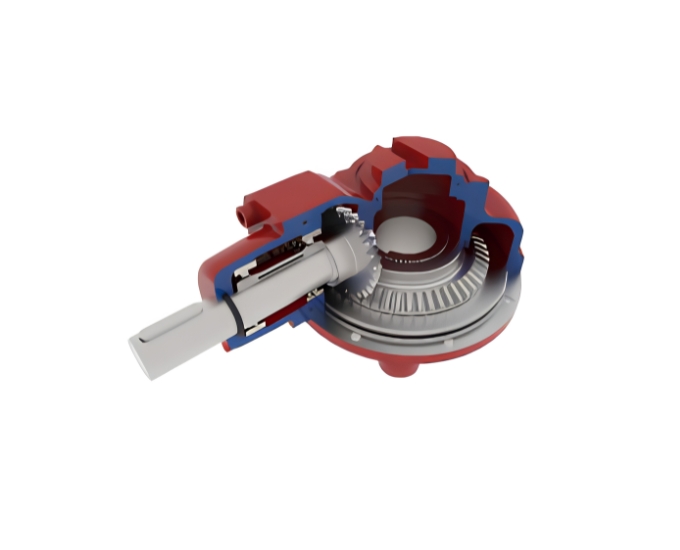
Cutaway Model – Mitre Gear
Model Number: MTDE-500.2
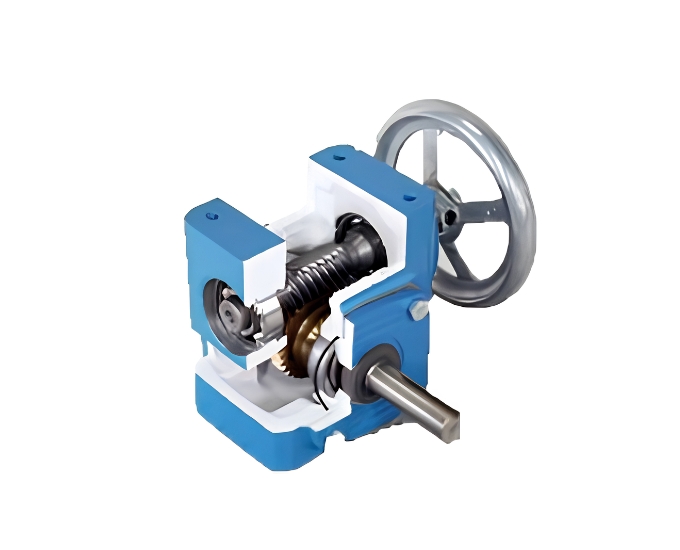
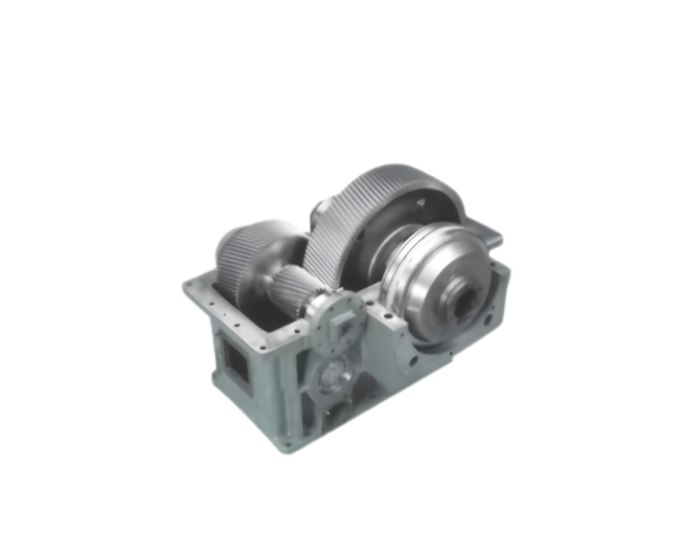
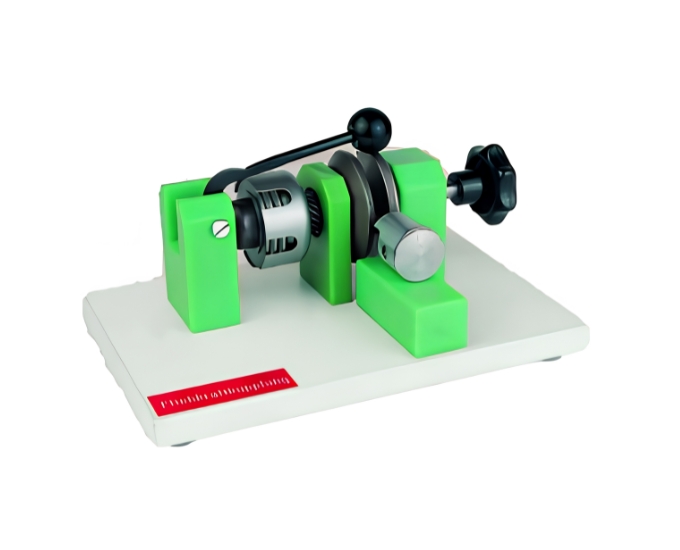
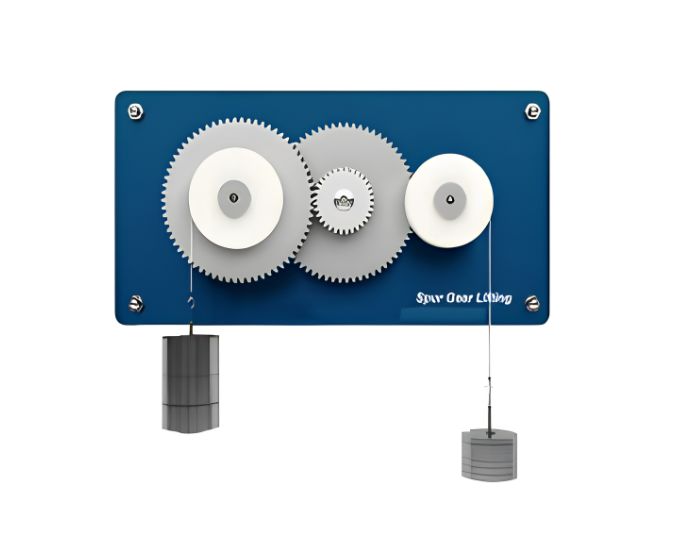
The Cutaway Model – Mitre Gear is an educational mechanical engineering model designed to demonstrate the construction and operation of a mitre gear mechanism. Its cutaway construction provides clear visibility of the internal gears and enables students to study right-angle rotary motion transmission, gear engagement, shaft arrangement, and the operating characteristics of a mitre gear drive.
Product Specification
The Cutaway Model – Mitre Gear is an educational demonstration model developed for practical understanding of the construction and operation of mitre gears used in mechanical transmission systems.
Mitre gears are a special type of bevel gear arrangement commonly used to transmit rotary motion between intersecting shafts, typically positioned at right angles.
A standard mitre gear pair generally consists of two gears with the same number of teeth. This arrangement provides a 1:1 transmission ratio, meaning the output speed is approximately equal to the input speed while the direction of the rotational axis is changed.
The cutaway construction exposes the internal gear arrangement, allowing students to observe how the mating gear teeth engage and transmit motion.
The model provides a clear demonstration of right-angle power transmission. Rotary motion applied to one shaft is transmitted through the meshing gears to the intersecting output shaft.
Students can observe the relationship between the input and output shafts and understand how bevelled gear teeth enable smooth transmission between intersecting axes.
The exposed construction helps identify important components such as mitre gears, shafts, bearings, gear housing, and supporting elements.
Manual operation enables students to rotate the mechanism slowly and observe tooth engagement throughout the rotation.
The model is useful for explaining gear meshing, shaft orientation, transmission ratio, rotational direction, torque transmission, and mechanical power transfer.
Unlike worm gearing, a standard mitre gear arrangement is primarily used to change the direction of rotary transmission rather than provide significant speed reduction.
The model therefore provides an effective practical demonstration of how mechanical power can be redirected through approximately 90° while maintaining the desired rotational relationship.
Mitre gear systems are used in machine mechanisms, mechanical drives, industrial equipment, hand-operated mechanisms, and various right-angle transmission applications.
Micro Technologies supplies Mitre Gear Cutaway Models and other mechanical engineering educational models for engineering colleges, universities, polytechnic institutes, ITIs, and technical training centres.
Features
- Educational mitre gear cutaway model
- Exposed internal gear mechanism
- Clearly visible gear engagement
- Right-angle motion transmission
- Intersecting shaft arrangement
- Suitable for 1:1 gear-ratio demonstration
- Rotary motion transmission study
- Manual operation
- Clear visualization of gear teeth
- Input and output shaft demonstration
- Suitable for rotational-direction studies
- Internal component identification
- Compact educational construction
- Rigid supporting arrangement
- Suitable for repeated demonstrations
Benefits
- Provides clear visualization of mitre gear construction
- Demonstrates right-angle power transmission
- Helps students understand bevel gear engagement
- Demonstrates intersecting shaft arrangements
- Enables practical understanding of transmission ratio
- Clearly shows input and output shaft relationships
- Helps explain rotary motion redirection
- Provides easy identification of internal components
- Connects gear theory with actual mechanical construction
- Suitable for classroom and laboratory demonstrations
Product Specifications
| Specification | Details |
|---|---|
| Product Name | Cutaway Model – Mitre Gear |
| Product Type | Educational Cutaway Model |
| Gear Type | Mitre / Bevel Gear |
| Gear Arrangement | Mating Gear Pair |
| Shaft Arrangement | Intersecting |
| Typical Shaft Angle | 90° |
| Typical Transmission Ratio | 1:1 |
| Input Motion | Rotary |
| Output Motion | Rotary |
| Gear Engagement | Clearly Visible |
| Motion Direction Change | Demonstration Supported |
| Internal Components | Exposed Through Cutaway |
| Operation | Manual |
| Primary Study | Right-Angle Mechanical Transmission |
| Application | Mechanical Engineering Education |
Experiments & Demonstrations
- Study of mitre gear construction
- Identification of mitre gear components
- Demonstration of mitre gear operation
- Study of bevelled gear tooth engagement
- Demonstration of right-angle motion transmission
- Study of intersecting shaft arrangements
- Observation of input and output shaft rotation
- Study of transmission ratio
- Demonstration of 1:1 motion transmission
- Study of rotational direction
- Demonstration of torque transmission
- Identification of internal gearbox components
- Study of mechanical power transmission
- Comparison with other gear-drive arrangements
- Practical demonstration of mitre gear mechanisms
Applications
- Theory of Machines Laboratories
- Machine Design Laboratories
- Mechanical Engineering Laboratories
- Automobile Engineering Laboratories
- Mechanical Transmission Laboratories
- Workshop Technology Laboratories
- Machine Elements Laboratories
- Engineering Colleges
- Universities
- Polytechnic Institutes
- ITIs
- Vocational Training Institutes
- Skill Development Centres
- Technical Training Centres
FAQs
What is the Mitre Gear Cutaway Model used for?
The model is used to demonstrate mitre gear construction, gear engagement, intersecting shaft arrangements, and right-angle rotary motion transmission.
What is a mitre gear?
A mitre gear is a type of bevel gear typically used in matched pairs to transmit rotary motion between intersecting shafts while maintaining an equal transmission ratio.
What is the typical shaft angle in a mitre gear arrangement?
Mitre gears are commonly arranged between shafts intersecting at approximately 90°.
What is the typical gear ratio of mitre gears?
A standard matched mitre gear pair generally has a 1:1 gear ratio because both gears have the same number of teeth.
Does a mitre gear reduce speed?
A standard 1:1 mitre gear arrangement primarily changes the direction of rotary transmission rather than providing speed reduction.
Can gear engagement be observed in this model?
Yes. The cutaway construction exposes the mating gears so their tooth engagement can be observed clearly.
Can input and output shaft rotation be demonstrated?
Yes. Manual operation allows students to observe how rotation of the input shaft produces corresponding rotation of the output shaft.
What is the difference between mitre gears and general bevel gears?
Mitre gears are a specific type of bevel gear pair with equal numbers of teeth and therefore normally provide a 1:1 transmission ratio. General bevel gear pairs can have unequal tooth counts and different ratios.
Where are mitre gears used?
They are used in mechanical systems where rotary motion needs to be redirected between intersecting shafts, including machinery, industrial drives, positioning mechanisms, and hand-operated systems.
Is this model suitable for Theory of Machines laboratories?
Yes. It is suitable for Theory of Machines, Machine Design, Machine Elements, Mechanical Engineering, and mechanical transmission laboratories.
Why Choose Our Products
- Clear cutaway construction
- Visible mitre gear engagement
- Right-angle transmission demonstration
- Intersecting shaft study
- 1:1 transmission-ratio demonstration
- Manual and student-friendly operation
- Internal component visualization
- Suitable for machine-element education
- Durable institutional construction
- Customized configurations available
- Institutional and bulk supply support
Call to Action
Looking for a Mitre Gear Cutaway Model for your engineering laboratory? Micro Technologies supplies gear cutaway models, mechanical transmission models, Theory of Machines equipment, Machine Design educational models, and mechanical engineering laboratory equipment for universities, engineering colleges, polytechnic institutes, ITIs, and technical training centres. Contact us for technical specifications, customized configurations, institutional orders, bulk supply, distributor inquiries, government tenders, or a competitive quotation.