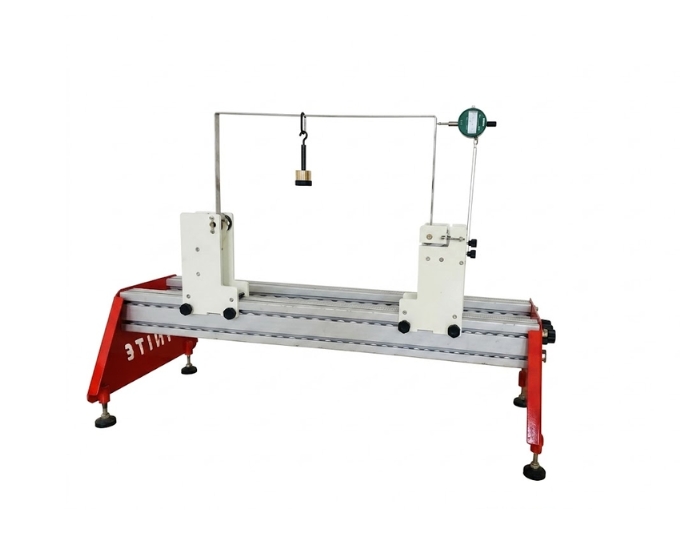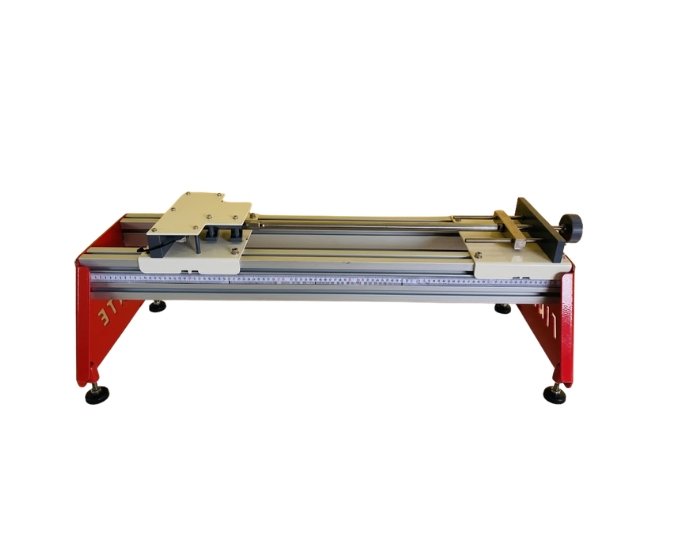

Plastic Deformation of Portals Apparatus
Product Specification Sheet
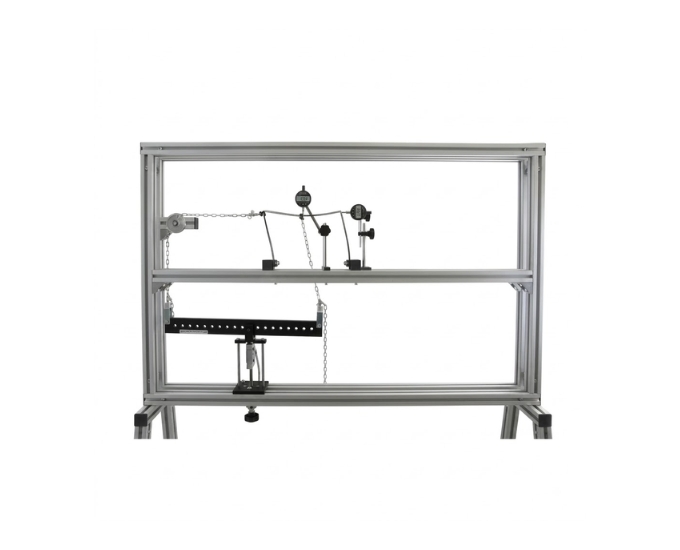
Plastic Deformation of Portals Apparatus
Model Number: MTFE-119
The Plastic Deformation of Portals Apparatus is an educational structural engineering system designed for practical investigation of the transition from elastic bending to plastic deformation in portal frames. It enables students to study yield stress, plastic hinge formation, collapse load, single and combined loading, interaction diagrams, limit state design and the influence of portal-frame shape on structural capacity.
Product Specification
The Plastic Deformation of Portals Apparatus is a structural engineering laboratory system developed for experimental investigation of portal frames as their behaviour progresses from the elastic range into plastic deformation and eventual collapse.
Portal frames are widely used structural systems consisting primarily of columns connected to a horizontal or inclined beam. Their behaviour under increasing loads is an important topic in structural analysis and plastic design.
At relatively low loading levels, the portal frame behaves predominantly within the elastic range. Deformation is approximately recoverable when the load is removed, provided the material remains below its elastic limit.
As the applied load increases and stresses reach the yield stress, permanent deformation begins to develop within critical sections of the frame.
The apparatus enables students to observe the transition from elastic bending to plastic deformation experimentally.
With further loading, highly stressed sections can develop into plastic hinges. These localized regions allow substantial rotation while the section operates near its plastic moment capacity.
The formation of successive plastic hinges can eventually convert the portal frame into a mechanism, resulting in structural collapse.
Students can therefore investigate the relationship between load, yield stress, plastic hinge formation and collapse load.
The apparatus also enables measurement of portal frame deformation under single and combined loads.
This allows students to examine how different loading combinations influence frame deformation, moment distribution and ultimate structural capacity.
Experimental results can be used to develop or interpret an interaction diagram, helping demonstrate the relationship between different loading effects and structural resistance.
The apparatus also allows students to investigate the shape of a collapsed portal frame after plastic hinges have formed. This provides a clear visual demonstration of a structural collapse mechanism.
The experiments introduce important concepts associated with Limit State Design, where structural safety is evaluated by considering conditions beyond which a structure no longer satisfies the required performance criteria.
Another important study involves the shape or form factor of the portal frame and the additional factor of safety associated with its ability to redistribute moments after initial yielding.
This demonstrates an important advantage of plastic structural analysis: a redundant structure does not necessarily collapse when yielding first occurs at one section. Additional load may be carried as moments redistribute and further plastic hinges develop.
The apparatus therefore provides practical understanding of elastic behaviour, yielding, plastic deformation, plastic hinges, moment redistribution, collapse mechanisms, interaction diagrams and limit state concepts.
Micro Technologies supplies Plastic Deformation of Portals Apparatus and other Structural Analysis laboratory systems for engineering colleges, universities, polytechnic institutes and technical training centres.
Features
- Portal frame plastic deformation experiments
- Elastic-to-plastic bending investigation
- Yield stress studies
- Plastic hinge formation demonstration
- Collapse load determination
- Portal collapse mechanism investigation
- Single-load experiments
- Combined-load experiments
- Portal frame deformation measurement
- Interaction diagram studies
- Limit State Design introduction
- Collapsed frame shape investigation
- Shape or form factor studies
- Structural reserve-strength demonstration
- Experimental and theoretical comparison
- Robust educational construction
Benefits
- Demonstrates elastic and plastic portal-frame behaviour
- Provides practical understanding of material yielding
- Clearly demonstrates plastic hinge formation
- Enables collapse load investigation
- Shows how a portal frame develops a collapse mechanism
- Enables single and combined loading experiments
- Helps students understand interaction diagrams
- Introduces practical Limit State Design concepts
- Demonstrates moment redistribution after yielding
- Helps explain structural reserve strength
- Supports shape and form factor studies
- Connects plastic-analysis theory with laboratory experiments
Product Specifications
| Specification | Details |
|---|---|
| Product Name | Plastic Deformation of Portals Apparatus |
| Product Type | Structural Analysis Laboratory Apparatus |
| Test Structure | Portal Frame |
| Primary Study | Plastic Deformation & Collapse |
| Elastic Bending | Study Supported |
| Plastic Deformation | Study Supported |
| Yield Stress | Investigation Supported |
| Plastic Hinges | Study Supported |
| Collapse Load | Determination Supported |
| Collapse Mechanism | Investigation Supported |
| Single Loading | Supported |
| Combined Loading | Supported |
| Frame Deformation | Measurement Supported |
| Interaction Diagram | Study Supported |
| Limit State Design | Demonstration Supported |
| Shape / Form Factor | Study Supported |
| Application | Structural Analysis / Structural Engineering |
Experiments Performed
- Study of elastic bending in portal frames
- Investigation of transition from elastic to plastic deformation
- Study of portal-frame yielding
- Investigation of yield stress
- Observation of plastic hinge formation
- Determination of portal-frame collapse load
- Investigation of collapse mechanisms
- Measurement of deformation due to a single load
- Measurement of deformation due to combined loads
- Investigation of load combinations
- Generation and interpretation of interaction diagrams
- Observation of collapsed portal-frame geometry
- Study of portal shape after hinge formation
- Introduction to Limit State Design
- Investigation of moment redistribution
- Study of shape or form factor
- Investigation of additional structural reserve after first yield
- Comparison of theoretical and experimental collapse behaviour
Applications
- Structural Analysis Laboratories
- Structural Engineering Laboratories
- Plastic Analysis Laboratories
- Civil Engineering Laboratories
- Structural Mechanics Laboratories
- Mechanics of Structures Laboratories
- Strength of Materials Laboratories
- Applied Mechanics Laboratories
- Engineering Mechanics Laboratories
- Engineering Colleges
- Universities
- Polytechnic Institutes
- Technical Training Centres
- Educational & Research Laboratories
FAQs
What is the Plastic Deformation of Portals Apparatus used for?
The apparatus is used to study portal-frame behaviour from elastic bending through yielding and plastic hinge formation to the development of a structural collapse mechanism.
What is plastic deformation in a portal frame?
Plastic deformation is permanent structural deformation that develops when stresses in critical regions exceed the material's elastic range.
What is a plastic hinge?
A plastic hinge is a localized region where a structural section develops substantial plasticity and can undergo significant rotation while remaining near its plastic moment capacity.
Can collapse load be determined?
Yes. Loading can be increased progressively to investigate the formation of plastic hinges and determine the load associated with structural collapse.
Can single and combined loads be studied?
Yes. The apparatus supports deformation studies under both individual and combined loading conditions.
What is a portal-frame collapse mechanism?
A collapse mechanism occurs when sufficient plastic hinges form at critical locations to allow the frame to undergo large displacement without requiring a corresponding increase in load.
Can an interaction diagram be studied?
Yes. Experimental loading conditions can be used to investigate interaction relationships between different structural actions and portal-frame capacity.
Can the shape of the collapsed frame be investigated?
Yes. The deformed shape produced after plastic hinge formation can be studied to understand the resulting collapse mechanism.
What is moment redistribution?
Moment redistribution is the transfer of internal moment from sections that have yielded toward other sections that still possess available resistance.
How is Limit State Design related to this experiment?
The apparatus demonstrates concepts relevant to ultimate structural capacity, yielding and collapse, helping students understand the basis of limit-state approaches to structural design.
What is the significance of shape or form factor?
Shape or form factor helps describe the additional capacity available beyond first yield and provides insight into the reserve strength available before full plastic collapse.
Is this apparatus suitable for Civil Engineering laboratories?
Yes. It is suitable for Civil Engineering, Structural Analysis, Structural Engineering, Plastic Analysis and Mechanics of Structures laboratories.
Why Choose Our Products
- Elastic-to-plastic portal experiments
- Yield stress investigation
- Plastic hinge demonstration
- Collapse load determination
- Single and combined load studies
- Interaction diagram analysis
- Limit state concepts
- Moment redistribution demonstration
- Collapse mechanism visualization
- Structural reserve-strength studies
- Customized configurations available
- Institutional and bulk supply support
Call to Action
Upgrade your Structural Analysis Laboratory with the Plastic Deformation of Portals Apparatus from Micro Technologies. Designed for practical study of yielding, plastic hinges, moment redistribution and structural collapse, the system provides an effective platform for advanced civil and structural engineering education. Contact us for technical specifications, customized configurations, institutional quotations, bulk laboratory requirements or tender supply.