
Laboratory Hammer Mill
Product Specification Sheet
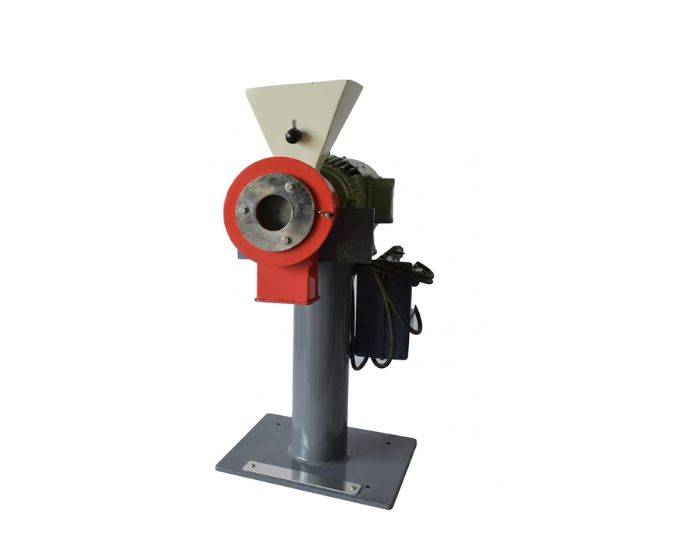
Laboratory Hammer Mill
Model Number: MTMO-105
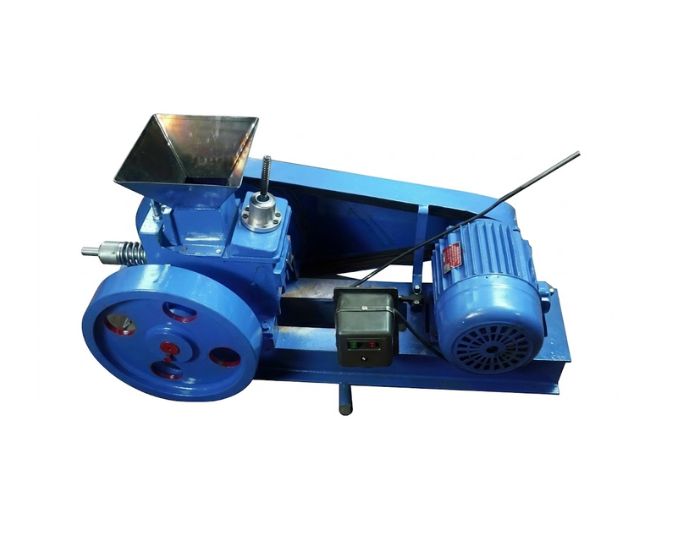
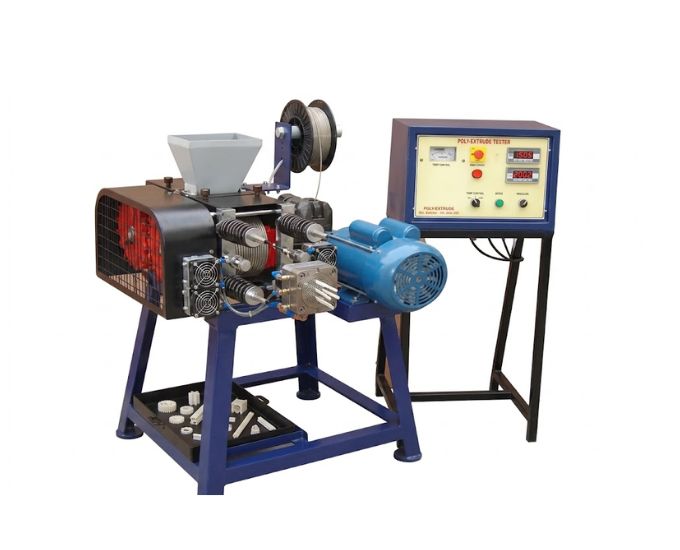
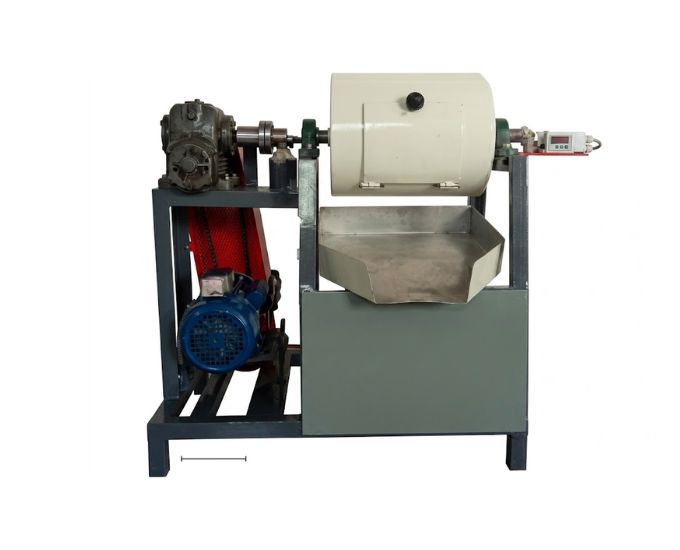
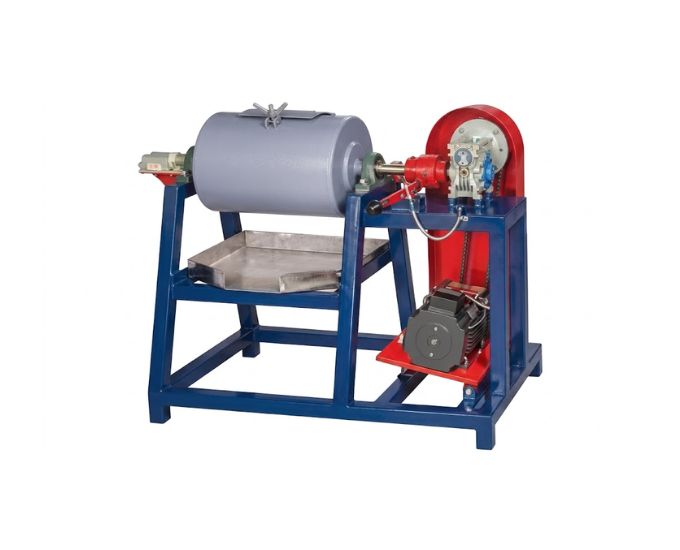
The Laboratory Hammer Mill is a compact educational size-reduction machine designed to demonstrate the operation and performance of a hammer mill. It provides practical understanding of impact-based crushing and grinding, particle-size reduction, material feeding and comminution processes used in Mechanical Operations and related engineering laboratories.
Product Specification
The Laboratory Hammer Mill is an educational and laboratory-scale size-reduction system developed to demonstrate the operation of a hammer mill and the fundamental principles involved in impact-based particle reduction.
Hammer mills are widely used for reducing the size of solid materials in chemical processing, pharmaceutical production, agriculture, food processing, mineral preparation and other industrial applications.
The equipment provides students with practical exposure to an important mechanical size-reduction process.
Material to be processed is introduced into the machine through the feed hopper.
Inside the milling chamber, rapidly moving hammers interact with the feed material and subject it primarily to impact forces.
Repeated impacts break larger particles into smaller fragments. Depending on the equipment arrangement, additional particle-to-particle and particle-to-surface interactions can contribute to further size reduction.
The reduced material leaves the grinding chamber after reaching a suitable particle size according to the machine configuration.
The apparatus provides a clear demonstration of the major elements of a hammer-milling system, including the feeding arrangement, rotating mechanism, grinding chamber and discharge process.
Students can observe how mechanical rotational energy is transferred to the material and converted into impact energy for particle breakage.
The system is useful for introducing important concepts including impact crushing, grinding, comminution, particle breakage and size reduction.
Where suitable experimental facilities and measurements are provided, feed and product samples can also be analyzed to compare particle sizes before and after milling.
This helps students understand the effectiveness of impact-based milling and its role in industrial material processing.
The equipment is particularly suitable for practical demonstrations in Mechanical Operations laboratories, where students study different methods of crushing, grinding and particle-size reduction.
It can also be used alongside jaw crushers, roll crushers, ball mills and rod mills to compare different mechanisms of size reduction.
Micro Technologies supplies Laboratory Hammer Mills and other Mechanical Operations Equipment for engineering colleges, universities, research laboratories, polytechnic institutes and technical training centres.
Features
- Laboratory-scale hammer mill
- Impact-based size reduction
- High-speed rotating hammer mechanism
- Convenient feed hopper
- Enclosed milling chamber
- Crushing and grinding demonstration
- Particle-size reduction studies
- Comminution demonstration
- Motor-driven operation
- Compact vertical configuration
- Suitable for educational demonstrations
- Simple laboratory operation
- Robust supporting structure
- Suitable for repeated experiments
- Designed for engineering laboratories
Benefits
- Clearly demonstrates hammer mill operation
- Provides hands-on understanding of impact crushing
- Demonstrates particle-size reduction
- Introduces practical comminution concepts
- Helps students understand material breakage mechanisms
- Provides experience with laboratory grinding equipment
- Enables comparison with other size-reduction machines
- Connects Mechanical Operations theory with practical demonstration
- Compact for educational laboratories
- Suitable for institutional teaching and training
Product Specifications
| Specification | Details |
|---|---|
| Product Name | Laboratory Hammer Mill |
| Equipment Type | Laboratory Size Reduction Equipment |
| Mill Type | Hammer Mill |
| Primary Operation | Crushing / Grinding |
| Size Reduction Mechanism | Impact |
| Feed Arrangement | Hopper |
| Milling Chamber | Enclosed |
| Rotating Element | Hammer Assembly |
| Particle Size Reduction | Supported |
| Comminution Study | Supported |
| Feed/Product Comparison | Applicable |
| Drive System | Electric Motor Driven |
| Installation | Laboratory Setup |
| Application | Mechanical Operations / Size Reduction |
Experiments Performed
- Demonstration of Hammer Mill operation
- Study of the construction of a Hammer Mill
- Study of impact-based size reduction
- Crushing of suitable solid materials
- Grinding of suitable materials
- Investigation of particle breakage
- Study of mechanical comminution
- Observation of feed-material movement
- Study of rotating hammer action
- Investigation of impact forces in size reduction
- Comparison of feed and ground material
- Study of particle-size reduction
- Comparison with other crushing and grinding equipment
Applications
- Mechanical Operations Laboratories
- Chemical Engineering Laboratories
- Pharmaceutical Engineering Laboratories
- Particle Technology Laboratories
- Size Reduction Laboratories
- Food Engineering Laboratories
- Agricultural Engineering Laboratories
- Material Processing Laboratories
- Engineering Colleges
- Universities
- Polytechnic Institutes
- Technical Training Centres
- Research & Educational Laboratories
FAQs
What is a Laboratory Hammer Mill used for?
A Laboratory Hammer Mill is used to demonstrate impact-based crushing and grinding and to study the size reduction of suitable solid materials.
What is the main size-reduction mechanism in a Hammer Mill?
The primary mechanism is impact. High-speed rotating hammers strike the feed material and break it into smaller particles.
Can the working of a Hammer Mill be demonstrated with this equipment?
Yes. The primary educational purpose of the apparatus is to demonstrate the construction and operation of a hammer mill.
How is material fed into the Hammer Mill?
Material is introduced through a feed hopper and directed into the milling chamber for size reduction.
Can particle-size reduction be studied?
Yes. Feed and processed material can be examined to understand the particle-size reduction achieved by impact milling.
What materials can be processed?
The exact material suitability depends on the machine design, feed characteristics and manufacturer specifications. It is generally intended for suitable solid materials used in laboratory size-reduction demonstrations.
What is the difference between a Hammer Mill and a Ball Mill?
A Hammer Mill primarily uses high-speed impact from rotating hammers, whereas a Ball Mill uses moving grinding media to reduce material mainly through impact and attrition.
What is the difference between a Hammer Mill and a Jaw Crusher?
A Hammer Mill primarily uses dynamic impact, while a Jaw Crusher mainly uses compression between moving and stationary jaws.
Is this equipment suitable for Mechanical Operations laboratories?
Yes. It fits directly under Mechanical Operations Equipment → Size Reduction for studying crushing, grinding and comminution.
Is it suitable for Chemical Engineering laboratories?
Yes. Hammer milling is relevant to Mechanical Operations and particle technology topics commonly taught in Chemical Engineering courses.
Why Choose Our Products
- Practical Hammer Mill demonstration
- Impact-based size reduction
- Crushing and grinding studies
- Particle breakage demonstration
- Mechanical Operations teaching
- Compact laboratory configuration
- Robust construction
- Easy educational demonstration
- Suitable for institutional laboratories
- Comparative size-reduction studies
- Customized configurations available
- Bulk and tender supply support
Call to Action
Enhance your Mechanical Operations Laboratory with the Laboratory Hammer Mill from Micro Technologies. Designed for practical demonstration of impact crushing, grinding and particle-size reduction, it provides an effective teaching platform for engineering students. Contact us for technical specifications, customized configurations, institutional quotations, bulk requirements or tender supply.