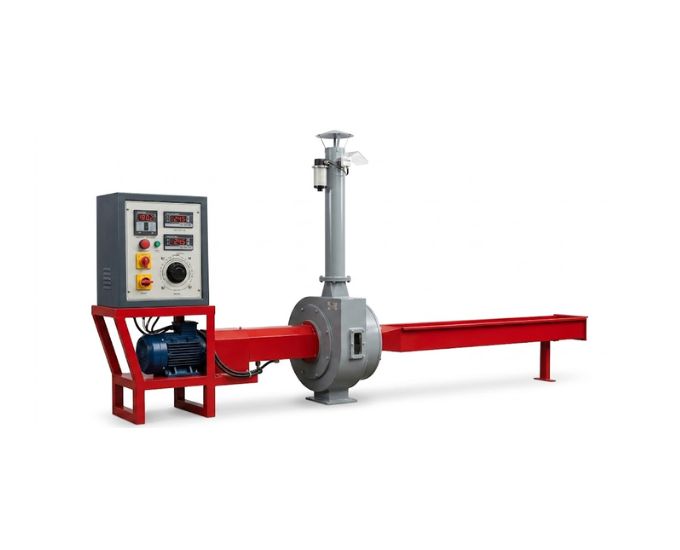

Heat Transfer by Radiation Apparatus
Product Specification Sheet
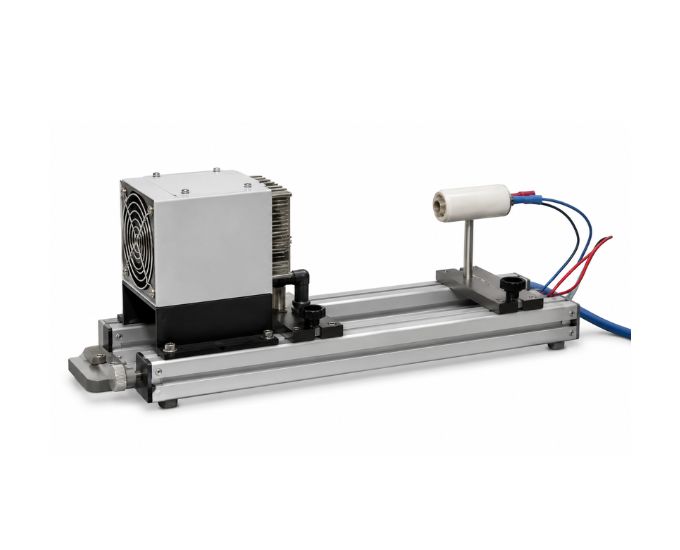
Heat Transfer by Radiation Apparatus
Model Number: MTHT-01
The Heat Transfer by Radiation Apparatus from Micro Technologies is an engineering laboratory experimental setup designed for studying the fundamental principles of thermal radiation. The apparatus enables students to verify Lambert’s inverse-square law, Stefan-Boltzmann law, and Kirchhoff’s law, investigate transient radiation behaviour, create radiation power balances, and generate logarithmic plots for evaluation. Its structured experimental arrangement makes it suitable for heat transfer, mechanical engineering, thermal engineering, and energy engineering laboratories.
Product Specification
The Heat Transfer by Radiation Apparatus is a specialized laboratory system developed for the practical investigation of thermal radiation and the experimental verification of important radiation heat-transfer laws.
Manufactured by Micro Technologies, the apparatus enables students to understand how thermal energy is transferred through electromagnetic radiation without requiring direct physical contact between the source and receiving surface.
Unlike conduction and convection, radiation heat transfer can occur through space without a material medium. Understanding this mechanism is essential in thermal engineering because radiation plays an important role in furnaces, boilers, solar energy systems, thermal insulation, heat exchangers, high-temperature equipment, and many industrial processes.
The experimental system incorporates a radiation source and suitable radiation measurement arrangement mounted on a common linear platform. The relative position and distance between the source and detector can be varied for conducting different radiation experiments.
One of the primary experiments is the verification of Lambert’s inverse-square law, which demonstrates how radiation intensity changes as the distance from the radiation source increases.
The apparatus also enables experimental investigation of the Stefan-Boltzmann law, which describes the relationship between the total thermal radiation emitted by a body and its absolute temperature.
Students can additionally investigate Kirchhoff’s law of thermal radiation, which relates the emissive and absorptive properties of a surface under thermal equilibrium conditions.
Beyond verification of fundamental laws, the apparatus can be used to study transient radiation behaviour, prepare radiation power balances, and produce logarithmic diagrams for further evaluation of experimental results.
The equipment provides an effective combination of theoretical verification and hands-on measurement, making it highly suitable for undergraduate engineering experiments, laboratory demonstrations, thermal engineering projects, and technical training.
Scope of Learning
The apparatus supports:
- Study of thermal radiation
- Verification of Lambert’s inverse-square law
- Verification of Stefan-Boltzmann law
- Verification of Kirchhoff’s law
- Study of radiation intensity
- Study of distance versus radiation intensity
- Study of surface radiation characteristics
- Investigation of transient behaviour
- Creation of radiation power balances
- Preparation of logarithmic diagrams
- Experimental evaluation of radiation laws
- Understanding emissive properties of surfaces
- Understanding absorptive properties
- Analysis of radiation heat transfer
Working Principle
Thermal radiation is electromagnetic energy emitted by matter because of its temperature. The amount of energy emitted depends on parameters such as surface temperature, surface properties, geometry, and distance from the receiving surface.
The apparatus provides a controlled radiation source and measurement system so that these relationships can be experimentally investigated.
By varying the position of the radiation detector relative to the source and recording the corresponding measurements, students can establish relationships between radiation intensity, distance, temperature, and surface characteristics.
Lambert’s Inverse-Square Law
The apparatus can be used to investigate how radiation intensity varies with distance from the source.
For an ideal point source, radiation intensity follows an inverse-square relationship:
I ∝ 1 / r²
Where:
- I = Radiation intensity
- r = Distance from radiation source
As the distance from the source increases, the radiation intensity decreases according to the inverse-square relationship.
Stefan-Boltzmann Law
The experimental setup enables investigation of the relationship between thermal radiation and absolute temperature.
For an ideal black body:
E = σT⁴
Where:
- E = Total emissive power
- σ = Stefan-Boltzmann constant
- T = Absolute temperature in Kelvin
For a real surface, emissivity is included:
E = εσT⁴
Where ε represents the emissivity of the surface.
This experiment helps students understand why radiation heat transfer becomes increasingly significant at elevated temperatures.
Kirchhoff’s Law
The apparatus also supports the study of Kirchhoff’s law of thermal radiation, which establishes a relationship between the emissivity and absorptivity of a surface under thermal equilibrium.
This experiment helps demonstrate why surface properties have an important influence on radiation heat-transfer behaviour.
Transient Behaviour Study
The equipment enables students to investigate the response of the radiation system during changing operating conditions rather than only under steady-state conditions.
This provides practical understanding of:
- Time-dependent thermal response
- Heating and cooling behaviour
- Changing radiation intensity
- Approach toward thermal equilibrium
- Dynamic thermal characteristics
Main Components
- Thermal radiation source
- Radiation receiving / measuring unit
- Linear experimental rail
- Adjustable mounting arrangement
- Distance measurement arrangement
- Temperature measurement system
- Electrical heating arrangement
- Suitable measuring instrumentation
- Power control arrangement
- Electrical connections
- Supporting structure
Key Features
- Designed for thermal radiation experiments
- Verification of Lambert’s inverse-square law
- Verification of Stefan-Boltzmann law
- Verification of Kirchhoff’s law
- Study of transient radiation behaviour
- Radiation power balance experiments
- Logarithmic plot evaluation
- Adjustable source-to-detector distance
- Linear experimental arrangement
- Controlled radiation source
- Suitable radiation measurement system
- Compact laboratory construction
- Easy experimental setup
- Suitable for quantitative analysis
- Designed for repeated laboratory use
- Ideal for engineering education
Technical Specifications
| Parameter | Details |
|---|---|
| Product Name | Heat Transfer by Radiation Apparatus |
| Product Type | Heat Transfer Laboratory Apparatus |
| Heat Transfer Mode | Thermal Radiation |
| Radiation Source | Provided |
| Radiation Measurement | Integrated Experimental Arrangement |
| Distance Adjustment | Adjustable |
| Experimental Mounting | Linear Rail / Bench Arrangement |
| Inverse-Square Law Study | Yes |
| Stefan-Boltzmann Law Study | Yes |
| Kirchhoff’s Law Study | Yes |
| Transient Behaviour Study | Yes |
| Power Balance Study | Yes |
| Logarithmic Evaluation | Possible |
| Application | Heat Transfer / Thermal Engineering Laboratory |
| Customization | Available |
Detailed heater capacity, sensor ranges, radiation detector specifications, temperature range, and electrical requirements can be configured according to laboratory requirements.
Experiments / Studies
- To verify Lambert’s inverse-square law
- To verify Stefan-Boltzmann law
- To verify Kirchhoff’s law
- To study thermal radiation
- To investigate radiation intensity
- To study the influence of distance on radiation intensity
- To investigate transient behaviour
- To create radiation power balances
- To produce logarithmic diagrams for evaluation
- To analyze surface radiation characteristics
- To study temperature-dependent radiation
- To investigate emissivity and absorptivity concepts
Educational Benefits
- Provides practical understanding of thermal radiation
- Experimentally demonstrates fundamental radiation laws
- Connects theoretical equations with actual measurements
- Improves understanding of Stefan-Boltzmann relationship
- Demonstrates inverse-square behaviour
- Helps explain surface emissivity and absorptivity
- Supports graphical and logarithmic data analysis
- Develops experimental heat-transfer calculation skills
- Suitable for individual and group practicals
- Useful for engineering laboratory examinations
- Supports undergraduate heat-transfer curricula
- Suitable for thermal engineering demonstrations
Applications
- Heat Transfer Laboratories
- Thermal Engineering Laboratories
- Mechanical Engineering Laboratories
- Energy Engineering Laboratories
- Chemical Engineering Laboratories
- Engineering Colleges
- Universities
- Polytechnic Institutes
- Technical Training Institutes
- Research Laboratories
- Engineering R&D Centers
- Educational & Training Laboratories
Optional Accessories
- Digital Temperature Indicator
- Additional Temperature Sensors
- Radiation Detector
- Digital Voltmeter
- Digital Ammeter
- Digital Wattmeter
- Additional Radiation Test Surfaces
- Data Acquisition System
- Computer Interface
- Digital Control System
- Experimental Manual
- Additional Measuring Instruments
Customization Options
The Heat Transfer by Radiation Apparatus can be customized with:
- Different radiation source configurations
- Additional radiation sensors
- Additional temperature measurement points
- Digital temperature indication
- Digital power measurement
- Different experimental surfaces
- Data acquisition system
- Computerized data logging
- Enhanced instrumentation
- Customized experimental rail
- Application-specific control panel
SKU System
MT-FHT-106
FAQs
What is the Heat Transfer by Radiation Apparatus used for?
It is used to experimentally study thermal radiation and verify fundamental radiation heat-transfer laws such as Lambert’s inverse-square law, Stefan-Boltzmann law, and Kirchhoff’s law.
Can Stefan-Boltzmann law be verified using this apparatus?
Yes. The apparatus is specifically designed to support experimental verification of the relationship between thermal radiation and absolute temperature described by the Stefan-Boltzmann law.
What is the purpose of the inverse-square law experiment?
It demonstrates how radiation intensity decreases as the distance between the radiation source and measuring point increases.
Can Kirchhoff’s law be studied?
Yes. The apparatus supports the study of Kirchhoff’s law and the relationship between surface emission and absorption characteristics.
Can transient behaviour be investigated?
Yes. The setup allows students to investigate time-dependent radiation behaviour under changing thermal conditions.
Can radiation power balances be created?
Yes. Experimental measurements can be used to prepare and analyze radiation power balances.
Where can this apparatus be used?
It is suitable for mechanical engineering, thermal engineering, heat transfer, chemical engineering, and energy engineering laboratories in colleges, universities, polytechnics, and research institutes.
Can the equipment be customized?
Yes. Micro Technologies can customize the radiation source, instrumentation, sensors, test surfaces, data acquisition, and control arrangement according to laboratory requirements.
Why Choose Our Products
- Comprehensive thermal radiation experiments
- Verification of multiple fundamental radiation laws
- Suitable for quantitative engineering analysis
- Compact and accessible experimental design
- Designed for engineering laboratory curricula
- Robust construction
- Custom configurations available
- Institutional and project supply
- OEM requirements supported
- Quality-controlled manufacturing
- Technical assistance available
- Reliable after-sales support
Call to Action
Advance practical heat-transfer education with the Heat Transfer by Radiation Apparatus from Micro Technologies. Contact us for technical specifications, customized experimental configurations, engineering laboratory projects, institutional quotations, government tenders, OEM requirements, distributor inquiries, and bulk supply.