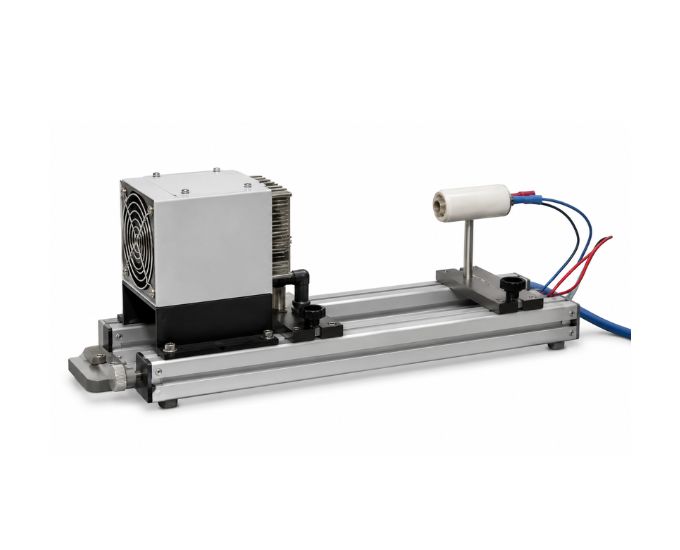

Convective Heat Transfer in Air Flow Apparatus
Product Specification Sheet
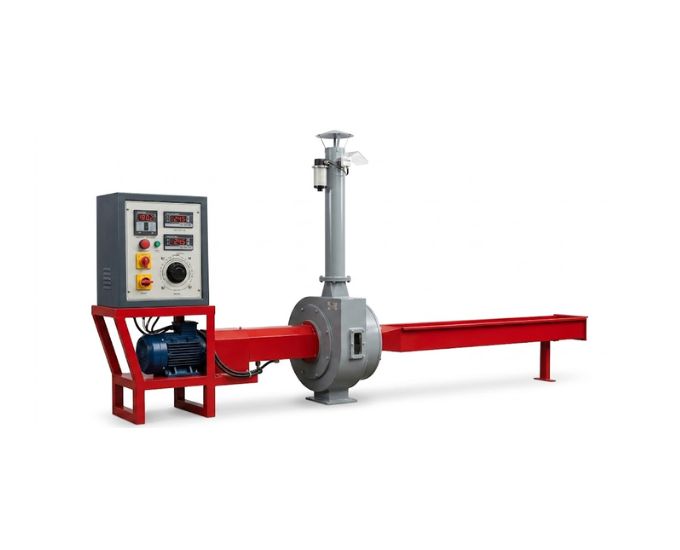
Convective Heat Transfer in Air Flow Apparatus
Model Number: MTHE-301
The Convective Heat Transfer in Air Flow Apparatus from Micro Technologies is a laboratory heat-transfer system designed for studying temperature distribution along the length of an air-flow test section and investigating convective heat-transfer behaviour under controlled forced-air conditions. The apparatus provides practical understanding of air heating, temperature variation, heat-transfer coefficients, airflow effects, and the fundamental principles of forced convection.
Product Specification
The Convective Heat Transfer in Air Flow Apparatus is a laboratory experimental system developed to demonstrate the principles of forced convective heat transfer between a heated surface and flowing air.
The apparatus consists of a specially designed air-flow duct or test section connected to a forced-air supply arrangement. A controlled heating system introduces thermal energy into the test section while air flows through the duct.
Temperature measurement points positioned along the length of the experimental section enable students to observe how temperature changes as air passes through the system.
The primary experiment is the determination and analysis of temperature distribution along the length of the test section. Measurements taken at different axial locations can be plotted against distance to develop a temperature profile.
The system also enables investigation of the effect of airflow rate and heat input on convective heat-transfer behaviour. By varying operating conditions, students can understand how forced fluid motion influences the rate at which heat is transferred.
The apparatus provides a practical link between theoretical convection equations and actual experimental measurements, making it suitable for undergraduate heat transfer and thermal engineering laboratories.
Scope of Learning
The apparatus enables students to study:
- Forced convection heat transfer
- Convective heat transfer in air
- Temperature distribution along a duct
- Air temperature variation
- Surface temperature distribution
- Heat-transfer coefficient
- Effect of airflow velocity
- Effect of heat input
- Temperature gradients
- Heat balance
- Forced-air circulation
- Convective thermal resistance
- Heat-transfer rate
- Basic dimensionless heat-transfer relationships
Working Principle
The apparatus works on the principle of forced convection.
Air is moved through the test duct by a fan or blower. As the flowing air passes through the heated experimental section, thermal energy is transferred from the heated surface to the air.
The convective heat-transfer rate can be represented as:
Q = hA(Ts − Ta)
Where:
- Q = Convective heat-transfer rate
- h = Convective heat-transfer coefficient
- A = Effective heat-transfer area
- Ts = Surface temperature
- Ta = Air temperature
Temperature readings are taken at different positions along the test section to analyze the thermal behaviour of the flowing air.
Temperature Distribution Along the Length
A principal objective of the apparatus is to study temperature distribution along the length of the test section.
Temperature sensors installed at selected positions allow students to measure local temperatures.
The readings can be plotted as:
Temperature vs. Distance Along Test Section
This provides a clear graphical representation of how thermal conditions change as air flows through the apparatus.
Students can analyze:
- Axial temperature variation
- Temperature gradient
- Air heating characteristics
- Surface-to-air temperature difference
- Development of thermal conditions along the duct
Forced Convection Heat Transfer
Unlike natural convection, where fluid movement is produced by density differences, forced convection uses an external device such as a blower or fan to create airflow.
Increasing air velocity generally changes the convective heat-transfer coefficient and therefore affects the rate of heat transfer.
The apparatus provides practical understanding of the relationship between:
- Airflow rate
- Air velocity
- Heater input
- Surface temperature
- Air temperature
- Convective heat-transfer coefficient
Heat Transfer Coefficient
The experimental convective heat-transfer coefficient may be determined from:
h = Q / [A(Ts − Ta)]
Where the effective temperatures are selected according to the experimental configuration.
This enables students to compare theoretical heat-transfer concepts with experimental results.
Air-Side Heat Balance
Heat gained by the flowing air may be evaluated approximately using:
Q = ṁ Cp (Tout − Tin)
Where:
- ṁ = Mass flow rate of air
- Cp = Specific heat capacity of air
- Tin = Air inlet temperature
- Tout = Air outlet temperature
This calculation helps students perform an energy balance across the experimental section.
Effect of Air Flow Rate
The apparatus can be used to investigate how changing airflow affects heat transfer.
Students can observe the influence of air velocity on:
- Heat-transfer coefficient
- Outlet air temperature
- Temperature distribution
- Surface temperature
- Rate of convective cooling
- Overall thermal performance
Main Components
- Air-flow test duct
- Experimental heat-transfer section
- Electrical heating arrangement
- Air blower / fan
- Air inlet section
- Air outlet section
- Multiple temperature sensors
- Temperature indicators
- Airflow measurement arrangement
- Heater power controller
- Electrical measurement instruments
- Control switches
- Integrated control panel
- Supporting structure
- Laboratory test-section frame
Key Features
- Designed for forced convection experiments
- Temperature distribution study along test length
- Controlled air-flow system
- Electrical heating arrangement
- Multiple temperature measurement points
- Convective heat-transfer coefficient analysis
- Air-side energy balance
- Variable operating conditions
- Effect of airflow study
- Heat-input measurement
- Integrated instrumentation
- Convenient control panel
- Long experimental test section
- Robust laboratory construction
- Clear demonstration of convection principles
- Suitable for repeated engineering experiments
Technical Specifications
| Parameter | Details |
|---|---|
| Product Name | Convective Heat Transfer in Air Flow Apparatus |
| Product Type | Heat Transfer Laboratory Apparatus |
| Heat Transfer Mode | Convection |
| Convection Type | Forced Convection |
| Working Fluid | Air |
| Test Section | Air-Flow Duct |
| Primary Study | Temperature Distribution Along Length |
| Air Supply | Blower / Fan |
| Heating | Electrical |
| Temperature Measurement | Multiple Points |
| Airflow Measurement | Provided / Configurable |
| Heater Control | Variable |
| Heat Transfer Coefficient | Determination Possible |
| Heat Balance Study | Possible |
| Instrumentation | Integrated |
| Installation | Floor / Bench Mounted According to Configuration |
| Customization | Available |
Exact duct dimensions, heater capacity, blower rating, airflow range, sensor quantity, temperature range, and electrical requirements can be configured according to laboratory requirements.
Experiments / Studies
- To study temperature distribution along the length of the test section
- To study forced convection heat transfer in air
- To determine air temperature variation
- To determine surface temperature distribution
- To calculate convective heat-transfer coefficient
- To perform an air-side heat balance
- To investigate the effect of airflow rate
- To investigate the effect of heater input
- To study temperature gradients
- To calculate heat-transfer rate
- To understand forced-air cooling and heating
- To compare experimental and theoretical convection behaviour
Educational Benefits
- Demonstrates forced convection practically
- Provides clear temperature-profile experiments
- Develops understanding of air-side heat transfer
- Enables heat-transfer coefficient calculations
- Demonstrates the influence of airflow on heat transfer
- Provides practical energy-balance calculations
- Connects convection equations with measured data
- Develops temperature measurement skills
- Introduces airflow and thermal analysis
- Suitable for individual and group practicals
- Useful for engineering laboratory examinations
- Supports undergraduate heat-transfer curricula
Applications
- Heat Transfer Laboratories
- Thermal Engineering Laboratories
- Mechanical Engineering Laboratories
- Energy Engineering Laboratories
- Chemical Engineering Laboratories
- HVAC Laboratories
- Engineering Colleges
- Universities
- Polytechnic Institutes
- Technical Training Institutes
- Research Laboratories
- Engineering R&D Centers
Industrial Relevance
Forced convection principles demonstrated by this apparatus are applicable to many thermal engineering systems, including:
- Air-cooled heat exchangers
- HVAC systems
- Electronic equipment cooling
- Industrial air heaters
- Drying systems
- Ventilation systems
- Process air heating
- Cooling ducts
- Thermal management systems
Optional Accessories
- Digital Air Velocity Meter
- Digital Temperature Indicator
- Additional Temperature Sensors
- Digital Voltmeter
- Digital Ammeter
- Digital Wattmeter
- Variable Blower Control
- Airflow Measurement System
- Data Acquisition System
- Computer Interface
- Data Logging Software
- Experimental Manual
Customization Options
The Convective Heat Transfer in Air Flow Apparatus can be customized with:
- Different duct dimensions
- Different heater capacities
- Variable-speed blower
- Additional temperature measurement points
- Digital airflow measurement
- Digital power measurement
- Different test-section materials
- Data acquisition system
- Computerized temperature logging
- Customized control panel
- Research-oriented configurations
SKU System
MT-FHT-301
FAQs
What is the Convective Heat Transfer in Air Flow Apparatus used for?
It is used to study forced convection heat transfer in flowing air and determine temperature distribution along the length of an experimental test section.
What is the main experiment performed with this apparatus?
The primary experiment is to measure and analyze temperature distribution along the length of the air-flow test section.
What type of convection is studied?
The apparatus primarily demonstrates forced convection, where airflow is produced using a blower or fan.
What is the working fluid?
The working fluid is air.
Can the convective heat-transfer coefficient be determined?
Yes. Temperature, heat-input, surface-area, and airflow measurements can be used to experimentally evaluate the convective heat-transfer coefficient.
Can temperature profiles be plotted?
Yes. Measurements from different positions along the test section can be plotted against distance to obtain a temperature distribution profile.
Can the effect of airflow be investigated?
Yes. With an appropriate variable airflow arrangement, students can investigate how airflow rate or velocity affects heat-transfer performance.
Can a heat balance be performed?
Yes. Inlet and outlet air temperatures together with airflow data can be used to perform an air-side thermal energy balance.
Where can this apparatus be used?
It is suitable for heat transfer, thermal engineering, mechanical engineering, energy engineering, HVAC, and related engineering laboratories.
Can the equipment be customized?
Yes. Micro Technologies can customize duct dimensions, heater rating, blower capacity, airflow measurement, temperature sensors, instrumentation, and data acquisition according to laboratory requirements.
Why Choose Our Products
- Dedicated forced-air convection experiment
- Temperature distribution along the test section
- Multiple temperature measurement points
- Controlled electrical heating
- Forced airflow arrangement
- Heat-transfer coefficient analysis
- Practical thermal energy balance
- Robust laboratory construction
- Suitable for engineering curricula
- Customized configurations available
- Institutional and OEM supply
- Technical and after-sales support
Call to Action
Upgrade your heat-transfer laboratory with the Convective Heat Transfer in Air Flow Apparatus from Micro Technologies. Contact us for customized technical specifications, institutional laboratory requirements, engineering projects, quotations, OEM supply, government tenders, distributor inquiries, and bulk orders.