
Convection and Radiation Heat Transfer Apparatus
Product Specification Sheet
Convection and Radiation Heat Transfer Apparatus
Model Number: MTHC-110
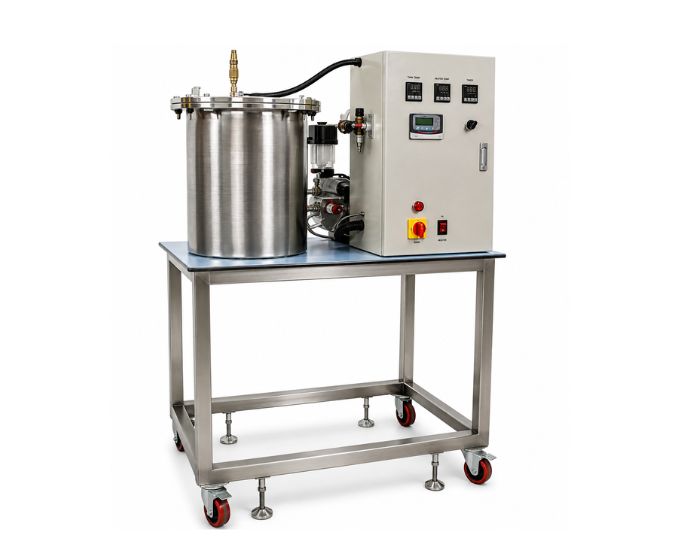
The Convection and Radiation Heat Transfer Apparatus from Micro Technologies is a laboratory experimental system designed to investigate heat transfer by convection and radiation over a range of pressure and vacuum conditions. The apparatus enables students to study the influence of surrounding pressure on heat transfer, determine the emissivity of a heater element, and measure relevant pressure and temperature parameters. Its enclosed test chamber, vacuum arrangement, instrumentation, and control system make it suitable for heat transfer, thermal engineering, mechanical engineering, and energy engineering laboratories.
Product Specification
The Convection and Radiation Heat Transfer Apparatus is an advanced laboratory experimental setup developed for studying two important modes of thermal energy transfer—convection and radiation—under controlled environmental conditions.
Manufactured by Micro Technologies, the apparatus allows students to investigate how heat loss from a heated element changes as the pressure surrounding the element is varied from atmospheric conditions toward vacuum conditions.
Under normal atmospheric conditions, heat can be transferred from a heated surface through both convection and thermal radiation. As pressure inside the test chamber is reduced, the amount of gas available to participate in convective heat transfer decreases. This allows students to investigate the changing contribution of convection while observing the continuing role of radiation.
The system incorporates an enclosed experimental chamber containing a suitable heater element, together with temperature measurement, pressure monitoring, vacuum-generation arrangements, and electrical instrumentation.
By controlling chamber pressure and measuring heater temperature and electrical power input, students can analyze heat-transfer behaviour over different operating conditions.
One of the primary experimental objectives is the determination of the emissivity of the heater element. Emissivity is an important surface property describing how effectively a real surface emits thermal radiation compared with an ideal black body.
The equipment also allows simultaneous measurement and analysis of pressure and temperature, helping students understand the relationship between environmental conditions and thermal energy transfer.
Its integrated control panel provides convenient operation of the heater, measurement instruments, and associated equipment. The system is mounted on a rigid mobile laboratory frame for convenient installation and accessibility.
Scope of Learning
The apparatus can be used to study:
- Convection heat transfer
- Radiation heat transfer
- Combined convection and radiation
- Heat transfer at atmospheric pressure
- Heat transfer at reduced pressure
- Heat transfer under vacuum
- Influence of pressure on convection
- Emissivity of a heater element
- Surface radiation characteristics
- Heater temperature variation
- Pressure and temperature measurement
- Energy balance around a heated element
- Thermal behaviour under changing environmental conditions
Working Principle
When an electrically heated element is placed inside a surrounding gas, heat is transferred from the element through different mechanisms, primarily convection and radiation.
At atmospheric pressure, natural convection can contribute significantly to the total heat loss. When the pressure inside the chamber is progressively reduced, gas density decreases and convective heat transfer is affected.
Under sufficiently reduced-pressure conditions, convection becomes less significant and thermal radiation forms a greater proportion of the total heat transfer.
By measuring:
- Electrical heat input
- Heater surface temperature
- Surrounding temperature
- Chamber pressure
students can investigate how heat transfer changes with pressure and evaluate the radiative characteristics of the heated surface.
Convection Heat Transfer Study
The apparatus demonstrates how thermal energy is transferred from a heated surface to the surrounding gas.
Students can investigate the relationship between:
- Surface temperature
- Ambient temperature
- Chamber pressure
- Gas conditions
- Convective heat loss
Changing chamber pressure provides a practical demonstration of the dependence of convection on the presence and condition of the surrounding fluid.
Radiation Heat Transfer Study
Thermal radiation does not require a material medium for heat transfer. The apparatus therefore enables students to investigate radiation as chamber pressure is reduced.
Radiative heat transfer from a real surface can be represented approximately by:
Q = εσA(Tₛ⁴ − T∞⁴)
Where:
- Q = Net radiation heat-transfer rate
- ε = Surface emissivity
- σ = Stefan-Boltzmann constant
- A = Effective radiating area
- Tₛ = Absolute surface temperature
- T∞ = Absolute surrounding temperature
This relationship can be used during experimental analysis to understand radiation heat transfer and estimate emissivity.
Emissivity Determination
One of the principal experiments performed with the apparatus is the determination of the emissivity value of the heater element.
Emissivity is a dimensionless property generally ranging from 0 to 1 and represents the effectiveness of a real surface in emitting thermal radiation relative to an ideal black body.
The experiment provides practical understanding of:
- Thermal radiation
- Surface properties
- Black-body concepts
- Real surface behaviour
- Radiative heat loss
- Temperature-dependent radiation
Pressure and Vacuum Study
The enclosed test chamber allows experiments to be performed over different pressure conditions.
By reducing chamber pressure, students can investigate how the reduction in surrounding gas affects heat-transfer behaviour.
This provides a useful practical demonstration of why vacuum insulation is used in applications where reduction of convective heat transfer is important.
Main Components
- Enclosed experimental chamber
- Electrical heater element
- Heater mounting arrangement
- Temperature sensors
- Pressure measuring arrangement
- Vacuum system connection
- Vacuum control arrangement
- Electrical power measurement
- Digital instrumentation
- Heater control
- Integrated control panel
- Interconnecting piping
- Valves and fittings
- Stainless steel support structure
- Mobile laboratory frame with castors
Key Features
- Combined convection and radiation studies
- Heat-transfer experiments over varying pressure
- Vacuum heat-transfer investigation
- Determination of heater emissivity
- Pressure measurement
- Temperature measurement
- Controlled electrical heating
- Enclosed experimental chamber
- Integrated instrumentation
- Convenient control panel
- Vacuum connection and control arrangement
- Practical energy-balance studies
- Robust laboratory construction
- Mobile floor-standing design
- Suitable for repeated experiments
- Designed for engineering laboratory education
Technical Specifications
| Parameter | Details |
|---|---|
| Product Name | Convection and Radiation Heat Transfer Apparatus |
| Product Type | Heat Transfer Laboratory Apparatus |
| Heat Transfer Modes | Convection & Radiation |
| Operating Environment | Atmospheric to Reduced Pressure / Vacuum |
| Test Section | Enclosed Chamber |
| Heater | Electrical Heater Element |
| Emissivity Study | Yes |
| Pressure Measurement | Provided |
| Temperature Measurement | Provided |
| Heating Control | Integrated |
| Instrumentation | Digital |
| Vacuum Arrangement | Provided / Connectable |
| Control Panel | Integrated |
| Mounting | Floor Standing |
| Frame | Rigid Mobile Laboratory Frame |
| Application | Heat Transfer / Thermal Engineering Laboratory |
| Customization | Available |
Exact pressure range, vacuum level, heater capacity, temperature range, sensor configuration, and electrical requirements can be customized according to laboratory specifications.
Experiments / Studies
- To study convection heat transfer
- To study radiation heat transfer
- To study combined convection and radiation
- To investigate heat transfer over a range of pressures
- To investigate heat transfer under vacuum
- To determine emissivity of the heater element
- To measure pressure during heat-transfer experiments
- To measure heater and surrounding temperatures
- To study the effect of pressure on convective heat transfer
- To study radiative heat loss
- To perform thermal energy balance calculations
- To compare atmospheric and reduced-pressure conditions
Educational Benefits
- Demonstrates convection and radiation in one system
- Provides practical understanding of vacuum heat transfer
- Shows the influence of pressure on convection
- Enables experimental emissivity determination
- Connects radiation equations with laboratory measurements
- Develops understanding of thermal energy balances
- Provides practical pressure and temperature measurement experience
- Supports heat-transfer theory with experimental data
- Suitable for individual and group practical sessions
- Useful for engineering laboratory examinations
- Supports undergraduate thermal engineering curricula
- Suitable for project and research demonstrations
Applications
- Heat Transfer Laboratories
- Thermal Engineering Laboratories
- Mechanical Engineering Laboratories
- Energy Engineering Laboratories
- Chemical Engineering Laboratories
- Engineering Colleges
- Universities
- Polytechnic Institutes
- Technical Training Institutes
- Research Laboratories
- Engineering R&D Centers
- Thermal Research Facilities
Optional Accessories
- Vacuum Pump
- Digital Vacuum Gauge
- Additional Pressure Sensors
- Additional Temperature Sensors
- Digital Temperature Indicator
- Digital Wattmeter
- Digital Voltmeter
- Digital Ammeter
- Data Acquisition System
- Computer Interface
- Data Logging System
- Experimental Manual
Customization Options
The Convection and Radiation Heat Transfer Apparatus can be customized with:
- Different heater capacities
- Different vacuum ranges
- Digital vacuum measurement
- Additional pressure measurement points
- Additional temperature sensors
- Digital power measurement
- Different heater surface materials
- Data acquisition system
- Computerized data logging
- Customized control panel
- Research-oriented configurations
SKU System
MT-FHT-110
FAQs
What is the Convection and Radiation Heat Transfer Apparatus used for?
It is used to experimentally investigate convection and radiation heat transfer under different pressure and vacuum conditions and to determine the emissivity of a heated surface.
Can both convection and radiation be studied using the same apparatus?
Yes. The system is specifically designed to investigate the contribution of both convection and thermal radiation under controlled operating conditions.
Can experiments be performed under vacuum?
Yes. The apparatus is designed to investigate heat-transfer behaviour at reduced pressures and under vacuum conditions with a suitable vacuum arrangement.
Why is pressure varied during the experiment?
Changing pressure affects the amount and behaviour of gas surrounding the heater. This allows students to investigate how convective heat transfer changes as pressure is reduced.
Can emissivity be determined using this apparatus?
Yes. Determination of the emissivity value of the heater element is one of the primary experimental objectives.
What parameters can be measured?
The apparatus allows measurement of relevant temperatures and pressure, along with electrical parameters required for heat-transfer analysis.
Why does radiation remain important under vacuum?
Radiation transfers thermal energy through electromagnetic waves and does not require a material medium. Therefore, it can occur even when the surrounding gas pressure is significantly reduced.
Where can this equipment be used?
It is suitable for heat transfer, mechanical engineering, thermal engineering, energy engineering, and related engineering laboratories.
Can the system be customized?
Yes. Micro Technologies can customize vacuum range, heater arrangement, sensors, instrumentation, control system, and data acquisition according to laboratory requirements.
Why Choose Our Products
- Convection and radiation studies in one apparatus
- Practical reduced-pressure and vacuum experiments
- Emissivity determination capability
- Integrated pressure and temperature measurement
- Controlled electrical heating
- Robust mobile laboratory construction
- Suitable for engineering curricula
- Customized configurations available
- Institutional and project supply
- OEM requirements supported
- Quality-controlled manufacturing
- Technical assistance and after-sales support
Call to Action
Explore convection, radiation, and vacuum heat-transfer principles with the Convection and Radiation Heat Transfer Apparatus from Micro Technologies. Contact us for customized specifications, engineering laboratory installations, institutional procurement, technical quotations, government tenders, OEM requirements, distributor inquiries, and bulk orders.