
Biconcave Acrylic Lens
Product Specification Sheet
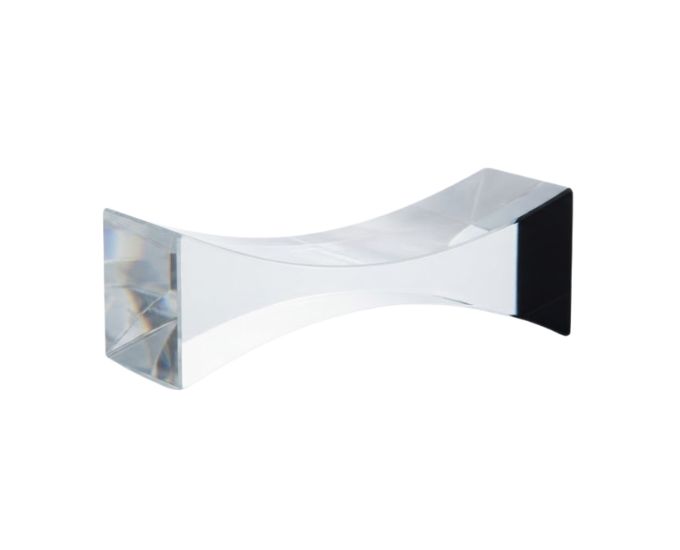
Biconcave Acrylic Lens
Model Number: MTO-11
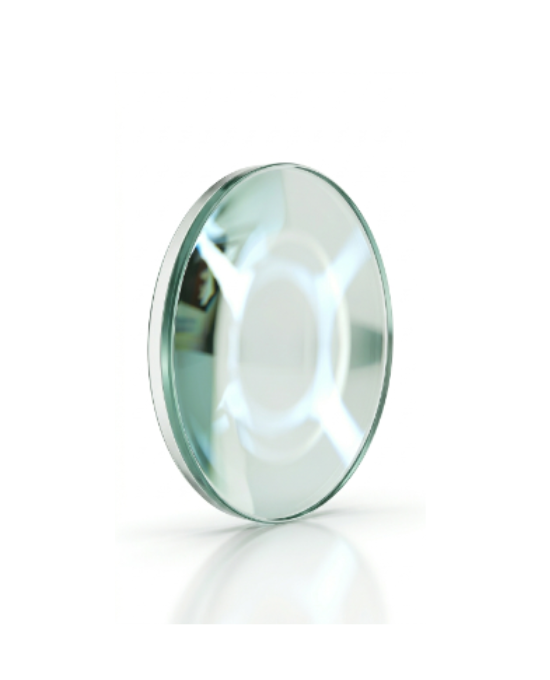
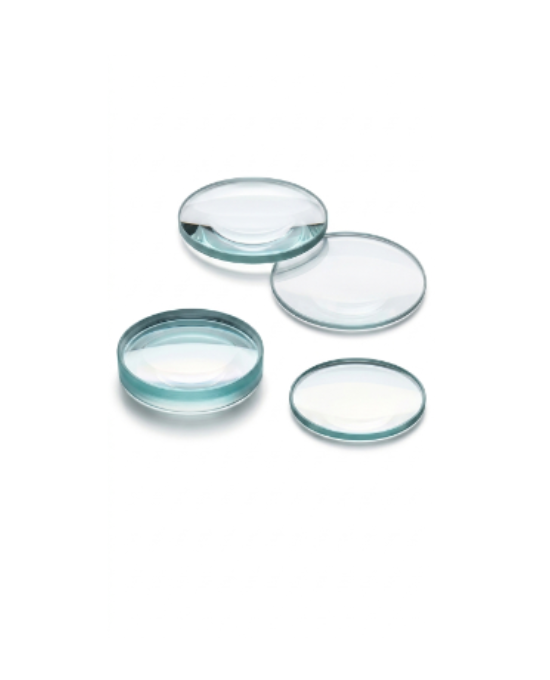
The Biconcave Acrylic Lens is a transparent diverging optical component used for experiments involving refraction, light divergence, virtual focal points, and geometrical optics. Micro Technologies supplies the lens with an approximate length of 75 mm, surface radii of 115 mm, and a thickness of 25 mm. Its inward-curved surfaces cause suitable incident light rays to spread away from the principal axis, providing a clear demonstration of negative lens behaviour. The transparent acrylic construction allows ray paths to be observed conveniently when used with suitable light sources and optical equipment. This reusable lens can be incorporated with ray boxes, optical boards, screens, and related accessories in physics laboratories, optics laboratories, universities, colleges, research facilities, and institutional laboratory setups.
Product Specification
The Biconcave Acrylic Lens is a transparent diverging lens featuring inward-curved surfaces on both sides. This double-concave geometry causes suitable parallel incident rays to diverge after passing through the lens, making it useful for practical investigations of negative lenses, refraction, virtual focal points, and geometrical optics.
The standard lens measures approximately 75 mm in length and 25 mm in thickness, with a specified radius of approximately 115 mm. Its clear acrylic body makes the change in ray direction easier to observe when the lens is positioned in a compatible ray-tracing setup.
Micro Technologies supplies the Biconcave Acrylic Lens for use with ray boxes, optical boards, suitable light sources, screens, and other optics accessories. During an experiment, parallel rays entering the lens are refracted at its two curved surfaces and spread outward. When these emerging rays are traced backward, they appear to originate from a virtual focal point on the incident side of the lens.
The lens can be used to examine the principal axis, divergence of light, virtual focus, negative focal length, ray paths, and the influence of concave surface curvature on optical behaviour. It can also be compared with a biconvex lens to investigate the fundamental differences between converging and diverging optical elements.
Acrylic construction offers a useful combination of transparency, relatively low weight, and convenient handling. This makes the Biconcave Acrylic Lens practical for laboratory setups where optical components need to be positioned and rearranged regularly. Its surfaces should be protected from scratches and cleaned only with suitable non-abrasive materials.
With a clear optical body, defined double-concave profile, practical dimensions, and no moving components, the lens provides a straightforward and reusable solution for routine ray-optics investigations and bulk laboratory procurement.
Features
- Double concave optical profile
- Manufactured from clear acrylic
- Approximate overall length of 75 mm
- Approximate radius of 115 mm
- Approximate thickness of 25 mm
- Provides diverging optical behaviour
- Suitable for refraction and ray-tracing experiments
- Useful for virtual focal-point investigations
- Compatible with ray boxes and optical boards
- Reusable construction with no moving components
Benefits
- Clearly demonstrates divergence of light rays
- Supports practical investigation of negative lenses
- Transparent construction improves visibility of ray paths
- Lightweight acrylic body simplifies handling and positioning
- Compatible with common laboratory optics arrangements
- Minimal maintenance supports economical long-term use
- Suitable for bulk procurement and complete optics kits
Product Specifications
| Specification | Details |
|---|---|
| Product Name | Biconcave Acrylic Lens |
| Internal Model No. | MT-30268 |
| Product Type | Double Concave / Diverging Lens |
| Material | Clear acrylic |
| Lens Profile | Biconcave |
| Length | Approx. 75 mm |
| Radius | Approx. 115 mm |
| Thickness | Approx. 25 mm |
| Optical Behaviour | Diverging |
| Focal Behaviour | Virtual focus |
| Transparency | Clear |
| Accuracy / Tolerance | Laboratory-grade dimensional consistency |
| Calibration Standard | Not normally required |
| Stopper Type | Not applicable |
| Color | Clear / transparent |
| Usage / Application | Divergence, refraction and ray-optics experiments |
| Compliance Standard | Laboratory-grade optical and manufacturing quality |
Available Variants
- MT-30268 – 75 mm length, 115 mm radius, 25 mm thickness
- Biconcave Acrylic Lens with optics accessory set
- Custom dimensional configuration for bulk requirements
SKU System
- MT-BCL-75-115 – 75 mm Biconcave Lens, 115 mm Radius
- MT-BCL-25T – 25 mm Thickness Configuration
- MT-BCL-SET – Biconcave Acrylic Lens Set
- MT-BCL-CUS – Customized Acrylic Lens
FAQs
What is a Biconcave Acrylic Lens used for?
A biconcave acrylic lens is used for optics experiments involving light divergence, refraction, virtual focal points, negative focal length, and ray tracing. It provides a practical example of a diverging lens.
What are the dimensions of this lens?
The standard lens is approximately 75 mm long and 25 mm thick, with a specified surface radius of approximately 115 mm.
Is a biconcave lens converging or diverging?
A biconcave lens acts as a diverging lens in air under normal optical conditions. Parallel incident rays spread apart after passing through its inward-curved surfaces.
What type of focal point does a biconcave lens produce?
A biconcave lens produces a virtual focal point. The diverging rays do not physically meet, but when extended backward, they appear to originate from a point on the incident side.
Can this lens be used with a ray box?
Yes. It can be combined with a suitable ray box to observe the paths of incident and refracted rays and investigate how a double-concave lens causes light to diverge.
Can it be compared with a biconvex lens?
Yes. Comparing biconcave and biconvex lenses provides a practical way to examine the differences between diverging and converging optical elements.
Does the Biconcave Acrylic Lens require calibration?
Routine calibration is generally unnecessary because the lens contains no measuring mechanism. Quantitative experiments should use correctly aligned and verified measuring equipment.
How durable is the acrylic lens?
Acrylic provides a lightweight and practical optical construction for routine handling. The surfaces should still be protected against scratches, excessive pressure, and unsuitable cleaning chemicals.
How should the lens be cleaned?
Use a soft, non-abrasive cloth and a cleaner compatible with acrylic. Avoid harsh solvents, abrasive materials, and rough wiping that could damage the optical surfaces.
Can Biconcave Acrylic Lenses be ordered in bulk?
Yes. Bulk quantities can be supplied for physics laboratories, optics laboratories, universities, colleges, research facilities, laboratory kits, and distributors.
Can custom dimensions be manufactured?
Custom dimensions or optical configurations may be considered depending on required specifications, order quantity, and manufacturing feasibility.
How is the lens packed for transportation?
The curved optical surfaces and edges are protected against scratching and impact. Suitable additional packaging can be arranged for institutional, bulk, and export shipments.
Why Choose Our Products
- Clear acrylic double-concave construction
- Defined 75 mm length and 115 mm radius configuration
- Quality-checked optical surfaces and dimensions
- Reusable construction for dependable long-term laboratory use
- Bulk supply capability for laboratories, institutions, and distributors
Call to Action
Looking for Biconcave Acrylic Lenses for divergence, refraction, or ray-optics experiments? Contact Micro Technologies for competitive quotations, institutional orders, distributor inquiries, bulk supply, and customized optical requirements. Share your required quantity and specifications to receive suitable pricing and delivery details.