
Tuning Fork Wave Recorder
Product Specification Sheet
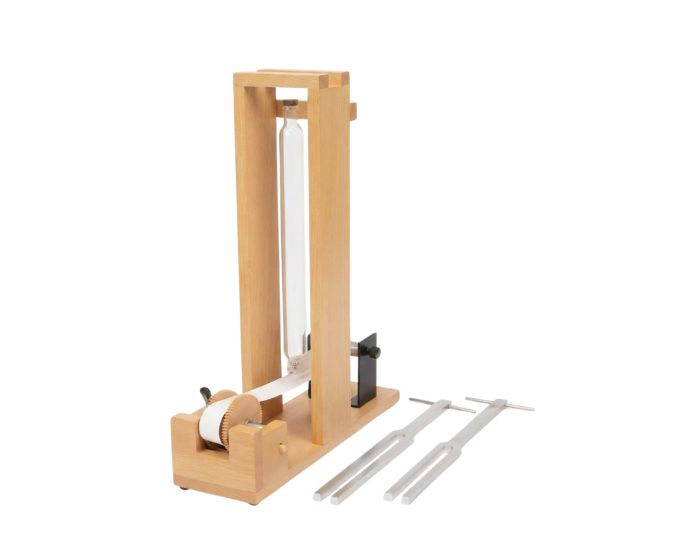
Tuning Fork Wave Recorder
Model Number: MTW-10
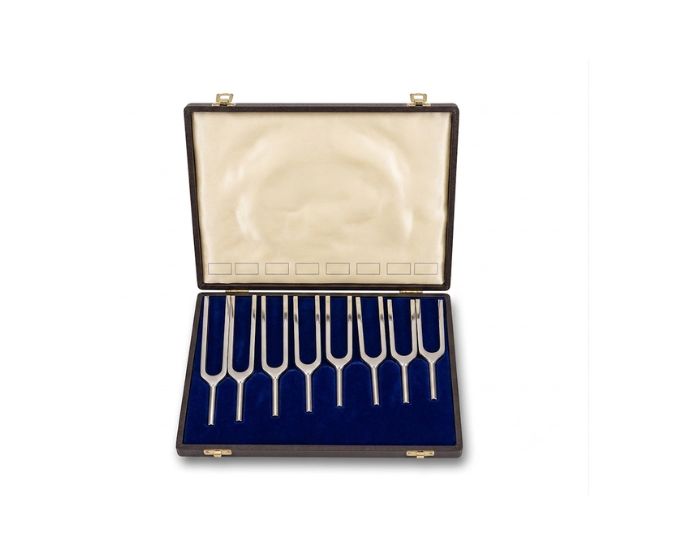
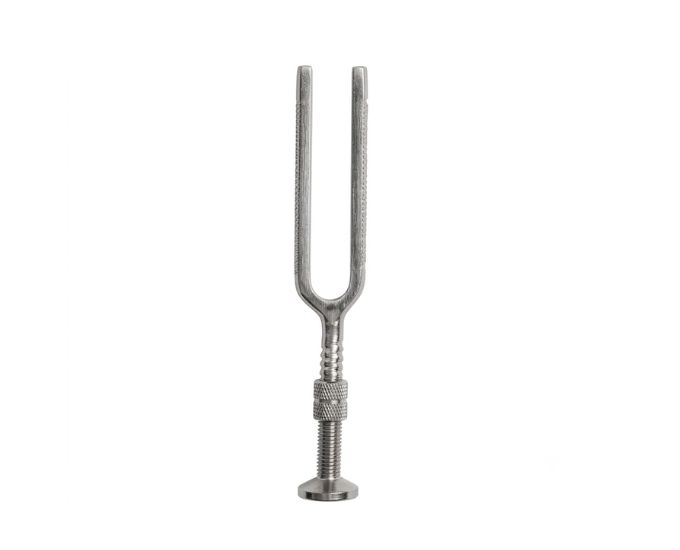
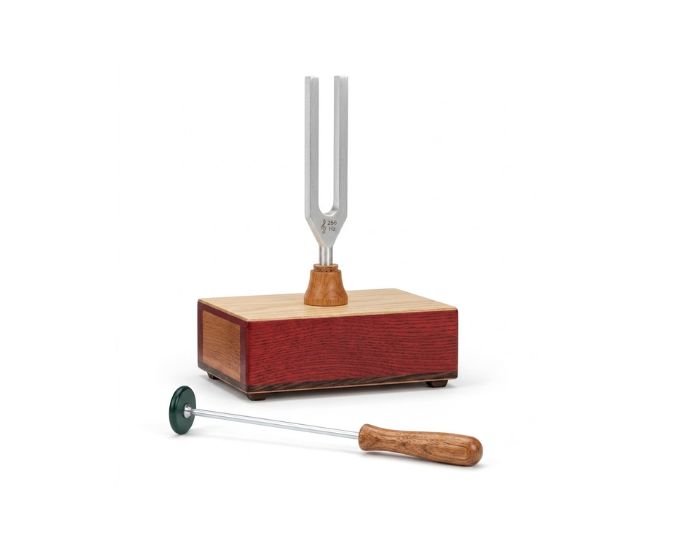
The Tuning Fork Wave Recorder is a practical acoustics apparatus designed for observing and recording the vibrations produced by tuning forks. Micro Technologies supplies the apparatus with three different types of tuning forks, a marker, paper roll, and a stable wooden mounting stand. As a vibrating tuning fork interacts with the recording arrangement, its oscillatory motion produces a visible wave trace on the paper, allowing the characteristics of sound and vibration to be examined directly. Different tuning fork frequencies produce different wave patterns, making it possible to compare frequency and waveform characteristics visually. The apparatus provides a simple mechanical method for connecting audible sound with a physical graphical representation of vibration.
Product Specification
The Tuning Fork Wave Recorder is an acoustics and vibration apparatus developed to provide a visible representation of tuning-fork oscillations. It allows the periodic motion responsible for sound production to be recorded as a wave pattern, making comparisons between different tuning fork frequencies straightforward.
The apparatus is supplied with three different types of tuning forks. Each fork produces vibrations according to its characteristic frequency. When incorporated into the recording arrangement, these vibrations can be transferred to the marker and represented graphically on the supplied paper roll.
Micro Technologies supplies the Tuning Fork Wave Recorder with a marker arrangement that traces the mechanical vibration onto paper. The resulting waveform provides a visual indication of the periodic nature of tuning-fork motion and allows different wave patterns to be compared.
Using tuning forks of different frequencies demonstrates an important relationship between frequency and waveform spacing. A higher-frequency fork produces more vibration cycles during a given interval, while a lower-frequency fork produces fewer cycles over the same interval under comparable recording conditions.
The apparatus therefore helps connect three related observations: the physical vibration of the tuning fork, the sound that is heard, and the graphical wave pattern recorded on paper. This makes it useful for investigations involving frequency, periodic motion, vibration, and basic acoustics.
All major components are arranged on a wooden stand, providing a stable platform for repeated experiments. A paper roll is supplied as the recording medium, allowing multiple wave traces to be produced and retained for comparison.
With three tuning forks, a mechanical recording system, marker, paper roll, and wooden support, the Tuning Fork Wave Recorder provides a complete and reusable apparatus for practical sound and vibration investigations.
Features
- Mechanical tuning fork wave recording apparatus
- Demonstrates tuning fork vibrations visually
- Three different tuning forks included
- Produces visible wave traces
- Marker arrangement for waveform recording
- Paper roll supplied
- Stable wooden mounting stand
- Allows comparison of different frequencies
- Demonstrates periodic wave characteristics
- Simple mechanical experimental arrangement
- Suitable for repeated acoustics investigations
- Supplied with operating instructions
Benefits
- Converts tuning fork vibration into a visible wave pattern
- Allows direct comparison of different tuning fork frequencies
- Helps investigate the relationship between vibration and sound
- Recorded traces can be retained for further analysis
- Three tuning forks provide multiple experimental observations
- Wooden stand provides stable operation
- Simple mechanical construction minimizes maintenance
- Complete configuration reduces the need for separate accessories
Product Specifications
| Specification | Details |
|---|---|
| Product Name | Tuning Fork Wave Recorder |
| Internal Model No. | MT-36168 |
| Product Type | Sound & Vibration Recording Apparatus |
| Number of Tuning Forks | 3 |
| Recording Method | Mechanical waveform tracing |
| Recording Medium | Paper roll |
| Marker | Included |
| Mounting | Wooden stand |
| Wave Source | Vibrating tuning fork |
| Primary Parameter | Frequency / vibration |
| Output | Visible wave trace |
| Power Requirement | None for basic mechanical operation |
| Instructions | Included |
| Usage / Application | Sound waves, frequency, vibration and waveform experiments |
| Compliance Standard | Laboratory-grade mechanical construction |
Available Variants
- MT-36168 – Standard Tuning Fork Wave Recorder
- Tuning Fork Wave Recorder with three tuning forks
- Mechanical Sound Wave Recording Apparatus
- Tuning Fork Vibration Recorder
- Customized configuration for bulk laboratory requirements
SKU System
- MT-TFWR-STD – Standard Tuning Fork Wave Recorder
- MT-TFWR-3F – Three Tuning Fork Configuration
- MT-TFWR-PR – Paper Roll Configuration
- MT-TFWR-WS – Wooden Stand Configuration
- MT-TFWR-CUS – Customized Configuration
FAQs
What is a Tuning Fork Wave Recorder used for?
It is used to record and visually demonstrate the vibration patterns produced by tuning forks, allowing sound frequency and waveform characteristics to be investigated.
How does the apparatus record tuning fork vibrations?
The vibration of the tuning fork is transferred to a marker arrangement, which produces a corresponding wave trace on the moving paper.
How many tuning forks are supplied?
The standard apparatus is supplied with three different types of tuning forks for comparative sound and vibration experiments.
Is a paper roll included?
Yes. A paper roll is included as the recording medium for producing visible tuning-fork wave traces.
What is the purpose of the marker?
The marker transfers the mechanical vibration of the tuning fork into a graphical trace on the paper, making the wave pattern visible.
Can different frequencies be compared?
Yes. Using different tuning forks allows the spacing and number of recorded oscillations to be compared, helping demonstrate the effect of frequency on the waveform.
What happens to the wave pattern when frequency increases?
Under comparable recording conditions, a higher-frequency tuning fork produces more vibration cycles over a given interval, resulting in more closely spaced oscillations on the recorded trace.
Can the apparatus demonstrate the characteristics of sound waves?
Yes. It provides a physical representation of periodic vibration and helps relate tuning-fork frequency to the wave patterns associated with sound production.
Does the apparatus require electrical power?
The basic recording principle is mechanical and does not normally require electrical power.
What is the apparatus mounted on?
The main experimental arrangement is mounted on a wooden stand to provide a stable working platform.
Are operating instructions supplied?
Yes. Instructions are supplied with the standard apparatus to assist with setup and operation.
Can Tuning Fork Wave Recorders be ordered in bulk?
Yes. Micro Technologies can supply bulk quantities for acoustics laboratories, physics laboratories, universities, colleges, research facilities, distributors, and institutional laboratory projects.
Why Choose Our Products
- Three tuning forks included
- Visible mechanical waveform recording
- Marker and paper roll supplied
- Stable wooden mounting arrangement
- Useful for frequency and vibration comparison
- Quality-checked laboratory construction
- Bulk supply capability for institutions and distributors
Call to Action
Looking for a Tuning Fork Wave Recorder for sound, frequency, vibration, and acoustics experiments? Contact Micro Technologies for competitive quotations, bulk procurement, institutional orders, distributor supply, and customized laboratory equipment requirements.