
Stability of Floating Bodies Apparatus
Product Specification Sheet
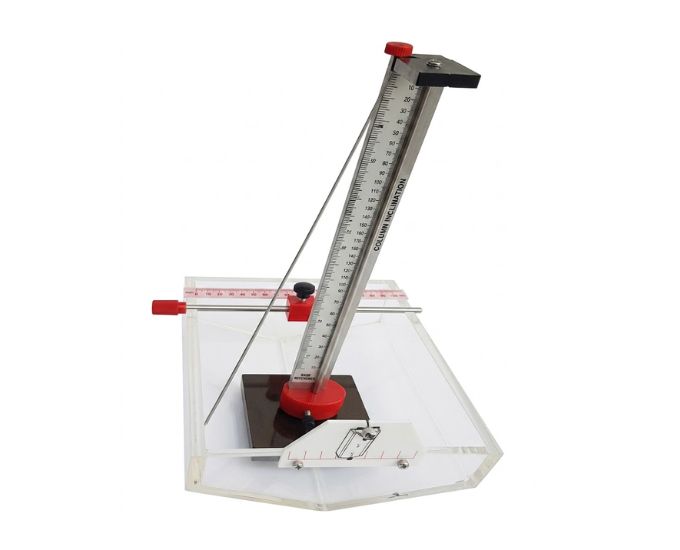
Stability of Floating Bodies Apparatus
Model Number: MTHB-150.6
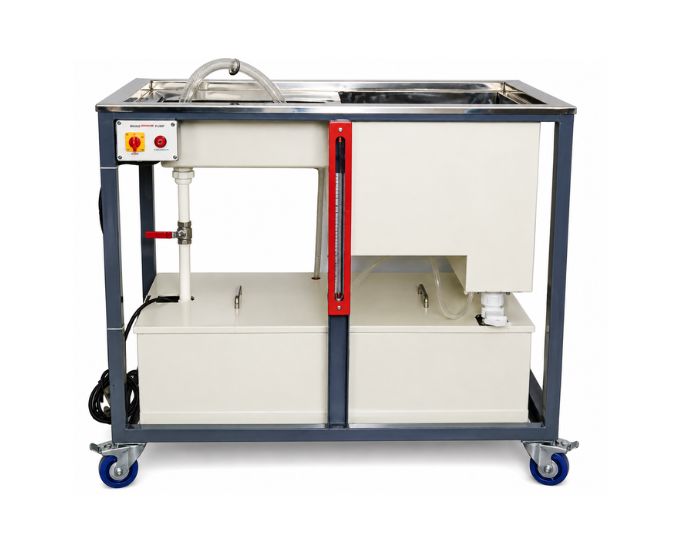
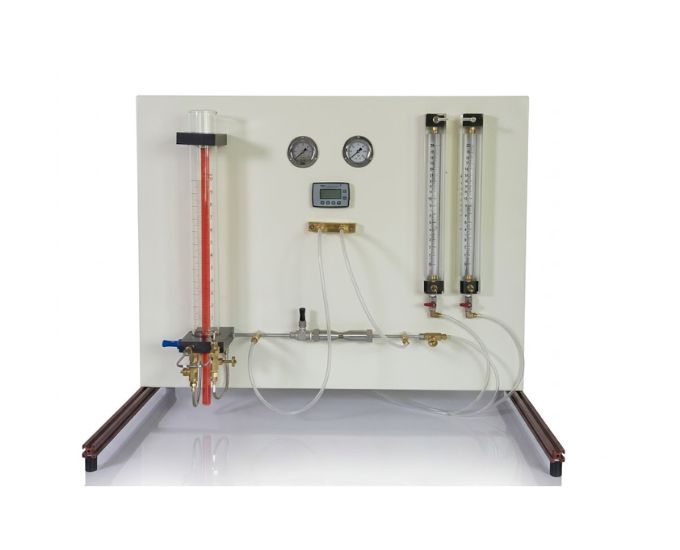
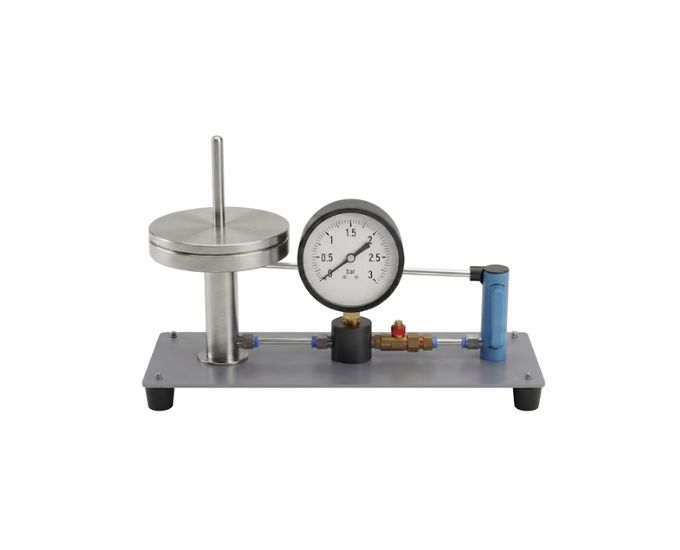
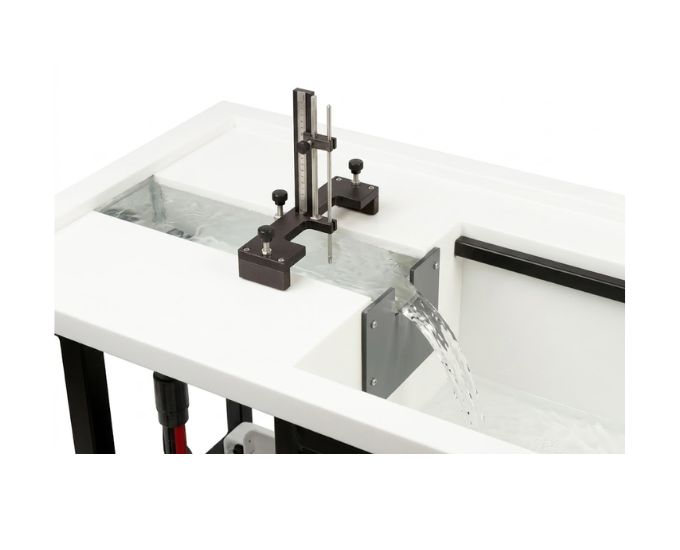
The Stability of Floating Bodies Apparatus is an educational fluid mechanics setup designed for the experimental determination of metacenter and buoyancy using a rectangular hull section. The apparatus helps students investigate the stability of a floating body, determine metacentric height, observe the effect of weight distribution and understand fundamental concepts of buoyancy and floating-body equilibrium.
Product Specification
The Stability of Floating Bodies Apparatus is a practical fluid mechanics laboratory system designed to investigate the stability and equilibrium of a floating body. Manufactured by Micro Technologies, the apparatus provides students with a clear experimental demonstration of metacenter, metacentric height, buoyancy and stability using a rectangular hull section.
When a body floats in a liquid, its stability depends on the relative positions of its centre of gravity, centre of buoyancy and metacenter. The apparatus allows these important fluid statics concepts to be investigated experimentally by observing the behaviour of the floating hull when known weights are moved from one position to another.
The rectangular hull section floats freely in a suitable water tank. An adjustable weight arrangement is provided so that the centre of gravity can be changed in a controlled manner. When the transverse weight is displaced from its central position, the floating body tilts through a measurable angle.
A graduated scale and inclination measuring arrangement enable the angle of heel to be observed. Using the known displacement of the weight, mass distribution and measured angle, students can calculate the metacentric height and evaluate the stability of the floating body.
The apparatus also demonstrates the principle of buoyancy, where an immersed or floating body experiences an upward force equal to the weight of the displaced liquid. Students can relate this principle to the equilibrium and stability of the rectangular hull.
By changing the position of the movable weights, users can observe how the location of the centre of gravity affects stability. This provides a practical understanding of why weight distribution is important in ships, boats, floating platforms and other marine structures.
The compact and visually accessible experimental arrangement makes the apparatus suitable for regular student practicals, classroom demonstrations and engineering laboratory examinations.
Features
- Rectangular floating hull section
- Designed for floating-body stability experiments
- Determination of metacenter
- Determination of metacentric height
- Demonstration of buoyancy
- Adjustable weight arrangement
- Transverse movable weight
- Adjustable centre of gravity
- Inclination or heel-angle measurement
- Graduated measuring scale
- Clear observation of floating-body behaviour
- Suitable for stability and equilibrium studies
- Compact laboratory configuration
- Simple experimental operation
- Durable educational construction
- Suitable for repeated student practicals
Benefits
- Provides practical understanding of floating-body stability
- Demonstrates metacenter and metacentric height
- Helps students understand the principle of buoyancy
- Shows the effect of centre-of-gravity position on stability
- Demonstrates the effect of weight displacement
- Enables experimental stability calculations
- Connects fluid statics theory with practical observations
- Provides basic understanding relevant to marine engineering
- Suitable for practical examinations and demonstrations
- Compact and easy to operate
Product Specifications
| Specification | Details |
|---|---|
| Product Name | Stability of Floating Bodies Apparatus |
| Product Type | Fluid Statics Experimental Apparatus |
| Hull Type | Rectangular Hull Section |
| Primary Study | Stability of Floating Bodies |
| Experimental Parameters | Metacenter, Metacentric Height & Buoyancy |
| Weight Arrangement | Adjustable / Movable Weight |
| Weight Movement | Transverse Adjustment |
| Centre of Gravity | Adjustable |
| Inclination Measurement | Graduated Scale Arrangement |
| Working Medium | Water |
| Experimental Principle | Buoyancy & Floating-Body Equilibrium |
| Installation | Laboratory Water Tank / Suitable Experimental Tank |
| Operation | Educational / Experimental |
| Application | Fluid Mechanics & Hydrostatics Laboratories |
Experiments Performed
- Determine the metacenter of a floating body
- Determine the metacentric height
- Study buoyancy using a rectangular hull section
- Investigate the stability of a floating body
- Study the effect of transverse weight movement
- Determine the angle of heel
- Investigate the influence of centre-of-gravity position
- Study equilibrium conditions of a floating body
- Observe stable and less-stable floating conditions
- Verify fundamental principles of fluid statics
- Study the relationship between weight distribution and stability
Educational Objectives
The apparatus helps students understand:
- Archimedes' principle
- Buoyancy
- Centre of buoyancy
- Centre of gravity
- Metacenter
- Metacentric height
- Floating-body equilibrium
- Stable equilibrium
- Effect of weight distribution
- Heel angle
- Stability of floating structures
- Fundamental hydrostatics
Engineering Applications
The principles demonstrated by this apparatus are relevant to:
- Ships and boats
- Floating platforms
- Barges
- Pontoons
- Marine vessels
- Floating docks
- Offshore structures
- Naval architecture
- Marine engineering systems
- Floating storage structures
Applications
- Fluid Mechanics Laboratories
- Fluid Statics Laboratories
- Hydraulic Engineering Laboratories
- Mechanical Engineering Laboratories
- Civil Engineering Laboratories
- Marine Engineering Laboratories
- Naval Architecture Laboratories
- Engineering Colleges
- Universities
- Polytechnic Institutes
- Technical Training Centres
- Educational Research Laboratories
FAQs
What is a Stability of Floating Bodies Apparatus?
It is a fluid mechanics laboratory apparatus used to investigate the stability of a floating body and experimentally study metacenter, metacentric height and buoyancy.
What is the main objective of this apparatus?
The main objective is the determination of metacenter and buoyancy using a rectangular hull section, along with the practical study of floating-body stability.
What is a metacenter?
The metacenter is an important reference point used in evaluating the stability of a floating body when it undergoes a small angular displacement.
What is metacentric height?
Metacentric height is the vertical distance between the centre of gravity and the metacenter of a floating body. It is commonly used as an indicator of initial stability.
Can metacentric height be determined experimentally?
Yes. By moving a known weight transversely and measuring the resulting angle of heel, experimental data can be used to calculate the metacentric height.
What is the purpose of the movable weight?
The movable weight changes the position of the centre of gravity and produces a measurable inclination of the floating hull, allowing stability calculations to be performed.
What is buoyancy?
Buoyancy is the upward force exerted by a fluid on an immersed or floating body. According to Archimedes' principle, this force is equal to the weight of the displaced fluid.
Why is metacentric height important?
Metacentric height provides an indication of the initial stability of floating bodies and is particularly important in ship design, marine engineering and naval architecture.
What type of hull is used in this apparatus?
The apparatus uses a rectangular hull section for experimental investigation of buoyancy and floating-body stability.
Is this apparatus suitable for engineering colleges?
Yes. It is suitable for fluid mechanics, hydrostatics, hydraulic engineering, mechanical engineering, civil engineering, marine engineering and naval architecture laboratories.
Why Choose Our Products
- Practical floating-body stability demonstration
- Metacenter and metacentric height experiments
- Clear demonstration of buoyancy
- Adjustable weight arrangement
- Easy inclination measurement
- Compact educational design
- Suitable for repeated student practicals
- Durable laboratory construction
- Institutional and bulk laboratory supply
- Customized configurations available
- Technical and project support
Call to Action
Looking for a reliable Stability of Floating Bodies Apparatus for your fluid mechanics laboratory? Micro Technologies manufactures and supplies fluid mechanics, hydrostatics and hydraulic engineering laboratory equipment for universities, engineering colleges, polytechnics, research institutes and technical training centres. Contact us for complete laboratory setups, customized configurations, institutional projects, bulk requirements, distributor inquiries or a competitive quotation.