
Method of Flow Measurement Apparatus
Product Specification Sheet
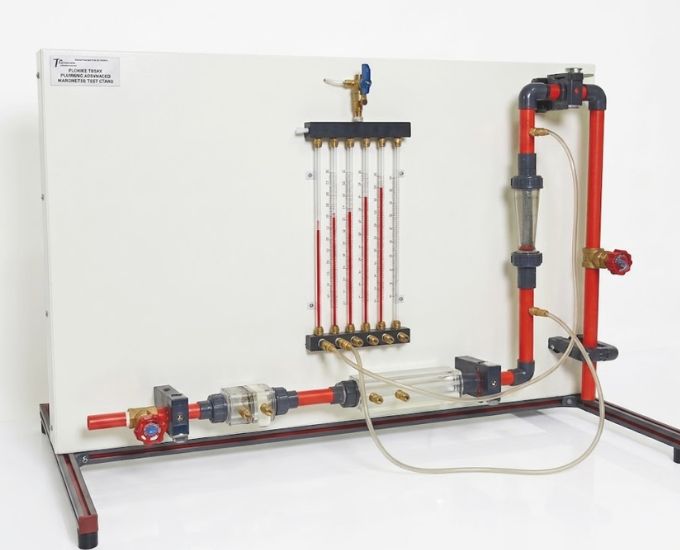
Method of Flow Measurement Apparatus
Model Number: MTHB-150.12
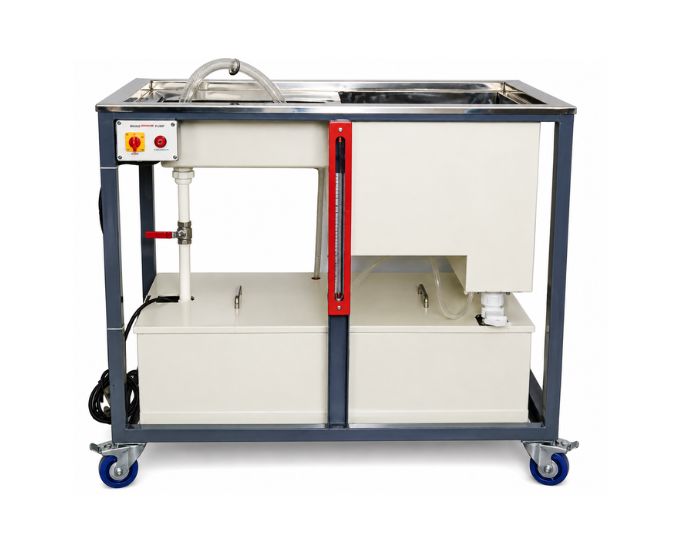
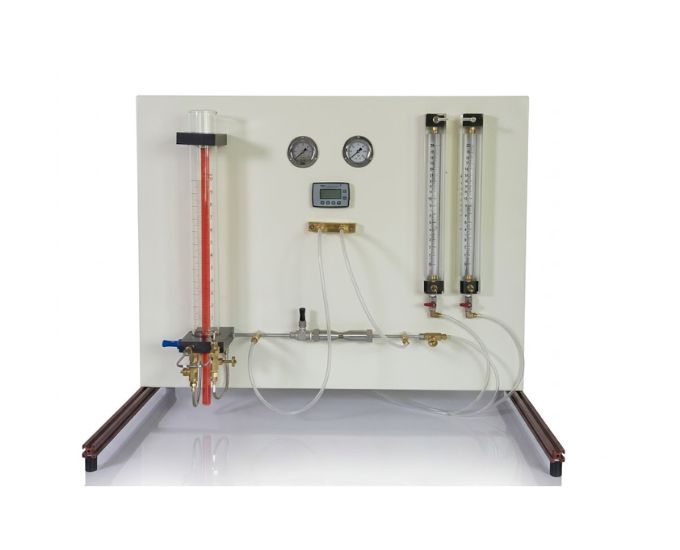
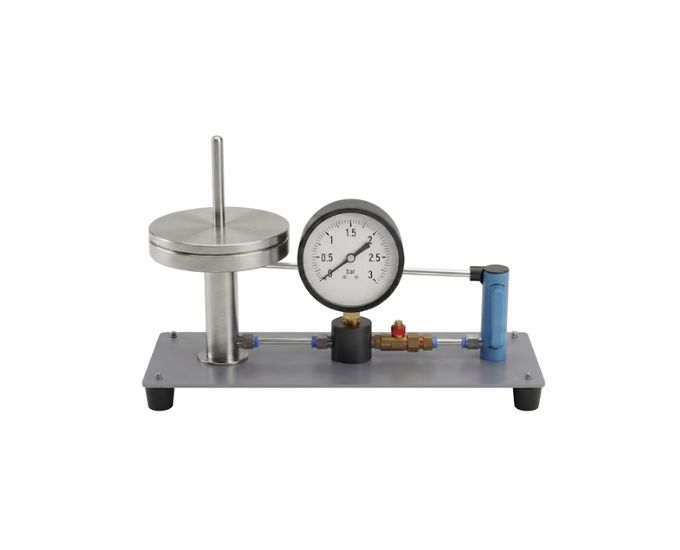
The Method of Flow Measurement Apparatus is an educational fluid mechanics laboratory system designed for the comparison of different flow measuring methods and investigation of pressure losses in flowing liquids. The apparatus also enables students to determine the contraction coefficient for different outlet contours, providing practical understanding of flow measurement, pressure variation, and discharge characteristics.
Product Specification
The Method of Flow Measurement Apparatus is a comprehensive educational laboratory system developed for studying and comparing different techniques used to measure fluid flow. Manufactured by Micro Technologies, the apparatus provides students with practical experience in flow-rate measurement, pressure measurement, pressure-loss analysis, and outlet-flow characteristics.
Flow measurement is an essential part of fluid mechanics and hydraulic engineering. Different measuring devices operate using different physical principles and may produce different pressure losses and measurement characteristics. This apparatus allows these differences to be investigated experimentally under controlled laboratory conditions.
The system incorporates multiple flow measuring sections connected within a common hydraulic circuit. Water is circulated through the selected flow-measuring arrangement while pressure conditions are monitored using a multi-tube pressure measuring system.
Pressure tapping points positioned at appropriate locations allow students to observe the variation in pressure as water passes through different flow measurement sections. The resulting pressure differences can be related to the corresponding flow rate and used for experimental calculations.
One of the principal objectives of the apparatus is the comparison of different flow measuring methods. Students can obtain measurements using the available devices and compare their performance, pressure characteristics, and calculated discharge values.
The apparatus also allows the determination of pressure losses associated with different sections of the flow system. This demonstrates that practical flow-measuring devices may introduce hydraulic resistance and energy losses into a pipeline.
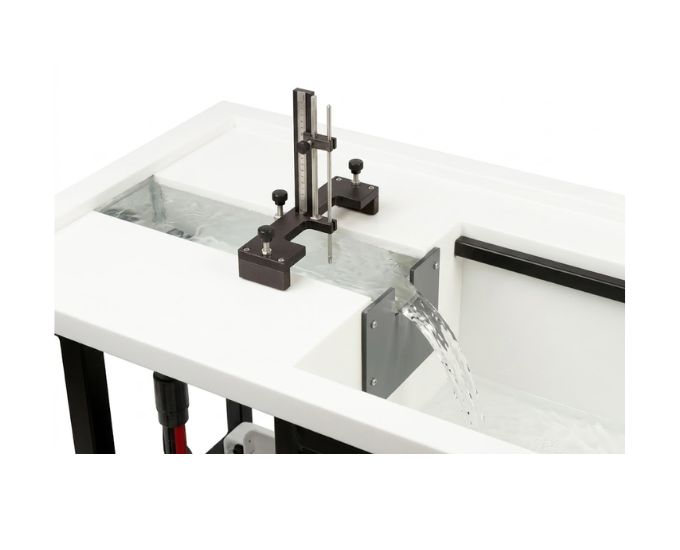
Another important experiment is the determination of the contraction coefficient for different outlet contours. Different outlet geometries influence the contraction of a fluid jet after it leaves an opening. Experimental measurements can be used to investigate this behaviour and determine the corresponding coefficient.
The clearly arranged piping, control valves, pressure measurement tubes, and experimental sections make the system convenient for demonstrations, practical classes, and engineering laboratory examinations.
Features
- Multiple flow measurement methods in one experimental system
- Comparison of different flow measuring techniques
- Pressure-loss measurement
- Multi-tube pressure measuring arrangement
- Multiple pressure tapping points
- Adjustable water-flow control
- Suitable for discharge measurement
- Contraction coefficient determination
- Different outlet contour studies
- Clearly arranged hydraulic circuit
- Pressure distribution observation
- Flow-rate comparison experiments
- Suitable for theoretical and experimental analysis
- Compact laboratory configuration
- Robust educational construction
- Suitable for repeated student experiments
Benefits
- Allows direct comparison of different flow measuring methods
- Provides practical experience in flow-rate measurement
- Demonstrates pressure losses in flow measuring devices
- Helps students understand differential pressure measurement
- Enables contraction coefficient determination
- Demonstrates the effect of outlet geometry on fluid flow
- Supports theoretical and experimental comparison
- Provides hands-on hydraulic measurement experience
- Helps students understand practical flow instrumentation
- Suitable for demonstrations and laboratory examinations
Product Specifications
| Specification | Details |
|---|---|
| Product Name | Method of Flow Measurement Apparatus |
| Product Type | Fluid Mechanics Flow Measurement Apparatus |
| Working Medium | Water |
| Primary Study | Flow Measurement |
| Experimental Comparison | Different Flow Measuring Methods |
| Pressure Measurement | Multi-Tube Measuring Arrangement |
| Pressure Tappings | Multiple |
| Flow Control | Adjustable |
| Pressure Loss Study | Provided |
| Outlet Study | Different Outlet Contours |
| Coefficient Determination | Contraction Coefficient |
| Flow Measurement | Comparative Experimental Measurement |
| Piping Arrangement | Integrated Hydraulic Circuit |
| Operation | Educational / Experimental |
| Application | Fluid Mechanics & Hydraulic Engineering Laboratories |
Experiments Performed
- Compare different flow measuring methods
- Determine water flow rate using different measurement techniques
- Measure pressure differences across flow measuring sections
- Determine pressure losses in the experimental system
- Compare pressure losses produced by different flow measuring methods
- Study pressure distribution in flowing water
- Determine the contraction coefficient
- Investigate contraction coefficients for different outlet contours
- Study the effect of outlet geometry on fluid contraction
- Compare experimentally determined flow rates
- Analyze the relationship between differential pressure and flow rate
- Compare theoretical and experimental results
- Study practical hydraulic flow measurement techniques
Parameters Studied
The apparatus can be used to investigate:
- Water flow rate
- Discharge
- Differential pressure
- Pressure loss
- Head loss
- Flow velocity
- Contraction coefficient
- Outlet contour
- Pressure distribution
- Flow measurement characteristics
- Hydraulic resistance
- Experimental measurement accuracy
Educational Objectives
The apparatus helps students understand:
- Methods of flow measurement
- Fluid discharge measurement
- Differential pressure measurement
- Pressure losses
- Head losses
- Flow velocity
- Contraction of fluid jets
- Coefficient of contraction
- Effect of outlet geometry
- Hydraulic measurement principles
- Comparison of flow measuring devices
- Practical fluid instrumentation
Flow Measurement Study
The apparatus allows students to compare different flow measurement principles under similar operating conditions. Measurements obtained from different methods can be analyzed to understand:
- Variation in measured discharge
- Pressure difference across measuring sections
- Hydraulic losses
- Measurement characteristics
- Relationship between flow and differential pressure
- Practical differences between flow measurement techniques
This comparative approach provides a broader understanding of flow measurement than studying a single measuring device independently.
Contraction Coefficient Study
When fluid passes through an outlet, the emerging jet may contract after leaving the opening. The degree of contraction depends partly on the geometry and contour of the outlet.
The apparatus enables students to investigate different outlet contours and determine the coefficient of contraction, providing practical insight into jet formation and discharge behaviour.
Engineering Applications
The principles demonstrated using this apparatus are relevant to:
- Water distribution systems
- Industrial piping
- Process plants
- Hydraulic installations
- Pumping systems
- Water treatment facilities
- Irrigation systems
- Chemical processing systems
- Flow monitoring systems
- Industrial instrumentation
- Pipeline engineering
Applications
- Fluid Mechanics Laboratories
- Hydraulic Engineering Laboratories
- Mechanical Engineering Laboratories
- Civil Engineering Laboratories
- Chemical Engineering Laboratories
- Process Engineering Laboratories
- Water Resources Engineering Laboratories
- Engineering Colleges
- Universities
- Polytechnic Institutes
- Technical Training Centres
- Research Laboratories
FAQs
What is a Method of Flow Measurement Apparatus?
It is an educational fluid mechanics system designed to investigate and compare different methods used for measuring liquid flow under controlled laboratory conditions.
What is the main objective of this apparatus?
The main objectives are comparison of different flow measuring methods, determination of pressure losses, and determination of contraction coefficients for different outlet contours.
Can different flow measurement methods be compared?
Yes. The apparatus is specifically designed to allow students to compare different available flow measuring techniques under controlled operating conditions.
Can pressure losses be measured?
Yes. Pressure tapping and measuring arrangements allow students to determine pressure differences and investigate losses across different experimental sections.
What is a contraction coefficient?
The coefficient of contraction describes the relationship between the contracted area of a fluid jet and the area of the opening through which it is discharged.
Can different outlet contours be investigated?
Yes. Different compatible outlet contours can be studied to determine how outlet geometry affects fluid contraction and discharge behaviour.
Why are multiple pressure tubes provided?
The multi-tube arrangement allows pressure conditions at several points in the hydraulic circuit to be observed and compared conveniently.
Can theoretical and experimental flow rates be compared?
Yes. Experimental measurements can be compared with theoretical calculations to evaluate the behaviour and characteristics of different flow measurement methods.
What can students learn from this apparatus?
Students can study flow-rate measurement, differential pressure, pressure losses, contraction coefficients, outlet-flow behaviour, and comparative hydraulic measurement techniques.
Is this apparatus suitable for engineering colleges?
Yes. It is suitable for mechanical, civil, hydraulic, chemical, process, water resources, and fluid mechanics engineering laboratories.
Why Choose Our Products
- Multiple flow measurement studies
- Comparative experimental arrangement
- Pressure-loss investigation
- Contraction coefficient determination
- Different outlet contour studies
- Multi-point pressure measurement
- Clearly arranged hydraulic system
- Practical engineering-focused design
- Durable laboratory construction
- Suitable for repeated student practicals
- Institutional and bulk supply capability
- Customized configurations available
Call to Action
Looking for a reliable Method of Flow Measurement Apparatus for your fluid mechanics laboratory? Micro Technologies manufactures and supplies fluid mechanics and hydraulic engineering laboratory equipment for universities, engineering colleges, polytechnics, research institutes, and technical training centres. Contact us for complete laboratory setups, customized configurations, institutional projects, bulk requirements, distributor inquiries, or a competitive quotation.