
Enema and Assisted Defecation Training Simulator for Patient Care
Product Specification Sheet
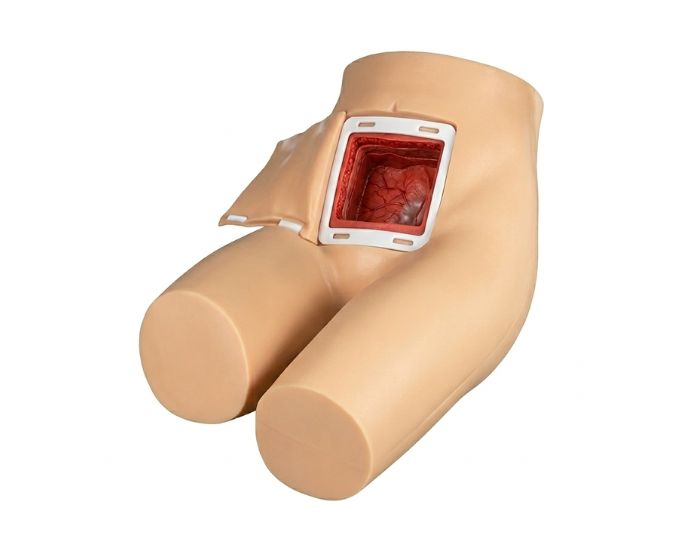
Enema and Assisted Defecation Training Simulator for Patient Care
Model Number: MT-H35
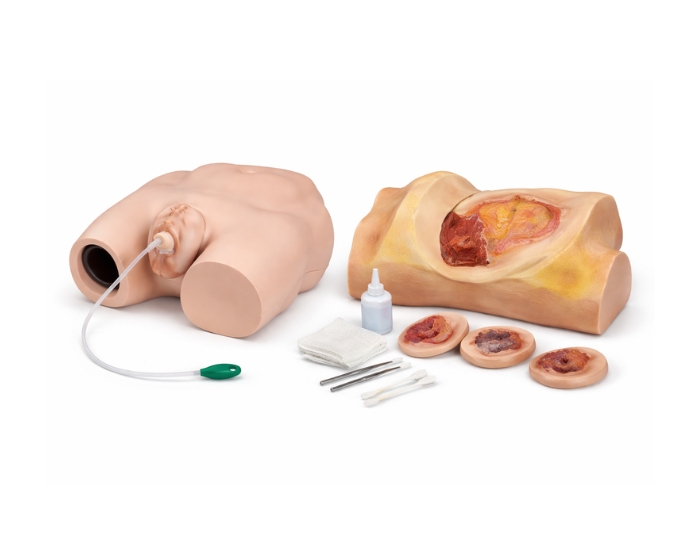
The Enema and Assisted Defecation Training Simulator is designed to help healthcare professionals practice essential patient care procedures. It simulates bedridden and elderly patients who require assistance with bowel movements. The model features an openable abdominal wall for direct observation of procedures, enhancing learning effectiveness. Ideal for nursing schools, hospitals, and training institutes, this simulator from Micro Technologies supports hands-on training and improves patient care skills in a safe environment.
Product Specification
The Enema and Assisted Defecation Training Simulator for Patient Care is a specialized medical training model developed to simulate real-life patient care scenarios. It is particularly useful for training in enema administration and assisted defecation procedures for bedridden or elderly patients who cannot perform these functions independently.
This simulator features an openable abdominal wall, allowing users to directly observe internal processes during the procedure. This visual feedback enhances understanding and ensures correct technique. The realistic design helps learners practice safely while improving their confidence and efficiency in patient care.
The model is easy to assemble and clean, making it highly convenient for repeated use in training environments. Micro Technologies provides this enema and defecation simulator as a reliable solution for nursing and medical institutions focused on improving caregiving skills and clinical competence.
Features
- Simulates bedridden and elderly patient conditions
- Supports enema and assisted defecation training
- Openable abdominal wall for direct observation
- Realistic patient care simulation
- Easy assembly and cleaning
- Durable and reusable design
- Suitable for nursing and clinical education
Benefits
- Enhances practical patient care skills
- Improves accuracy in enema and defecation procedures
- Provides visual understanding of internal processes
- Builds confidence in handling sensitive patient scenarios
- Ideal for repeated use in nursing and healthcare training
Product Specifications
| Specification | Details |
|---|---|
| Product Name | Enema & Assisted Defecation Training Simulator |
| Model No. | MT-H35 |
| Type | Medical Training Simulation Model |
| Material | High-Quality Synthetic Material |
| Size / Model | Patient Care Training Simulator |
| Usage | Medical, Nursing, Clinical & Training Institutes |
FAQs
What procedures can be practiced using this simulator?
This simulator allows users to practice enema administration and assisted defecation procedures, particularly for bedridden or elderly patients. It provides a realistic training environment that helps learners understand proper techniques and improve patient care skills.
How does the openable abdominal wall help in training?
The openable abdominal wall allows users to observe internal processes during the procedure, providing visual feedback. This feature enhances understanding of correct techniques and helps learners identify mistakes, making the training more effective and interactive.
Is the simulator easy to maintain and clean?
Yes, the model is designed for easy assembly and cleaning, ensuring convenience during repeated training sessions. Its user-friendly design makes it suitable for regular use in educational and clinical environments without requiring complex maintenance.
Who can use this enema training simulator?
This product is ideal for nursing students, healthcare professionals, and caregivers. It is widely used in nursing schools, hospitals, and training institutes to develop practical skills in patient care and improve overall clinical competence.
Why Choose Our Products
- Manufactured with premium-grade materials for high performance
- Designed for durability and long-term repeated use
- Provides realistic training for accurate skill development
- Trusted by medical institutions, hospitals, and training centers