
Density Identification Set – 15 Materials
Product Specification Sheet
Density Identification Set – 15 Materials
Model Number: MTM-35
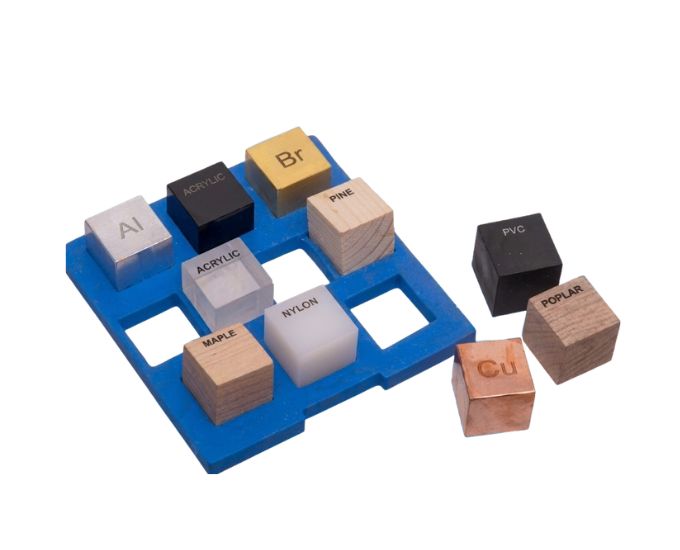
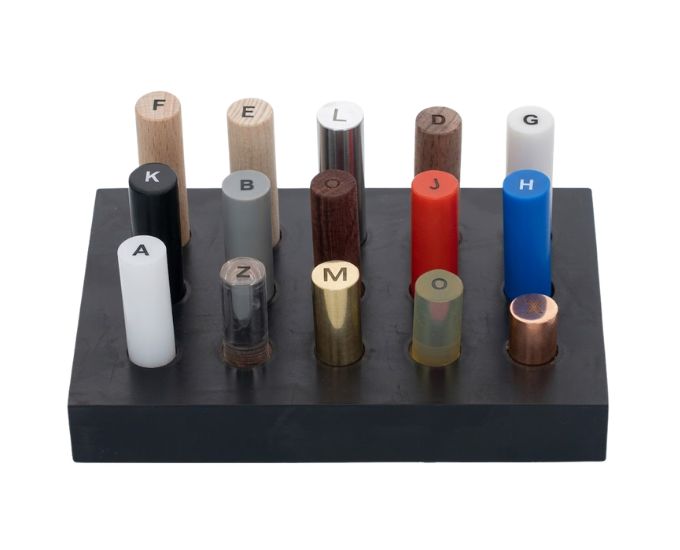
The Density Identification Set – 15 Materials from Micro Technologies is a comprehensive laboratory specimen collection designed for practical investigations of density, mass, length, volume and material identification. The set contains 15 different material specimens, including woods, polymers and metals, supplied with a sturdy storage base. Samples are letter-coded for convenient identification, and instructions are included.
Product Specification
The Density Identification Set – 15 Materials from Micro Technologies is designed for physics and material science laboratories where students need to experimentally determine and compare the densities of different solid materials. With fifteen different specimens in one collection, the set provides a broad selection of materials for hands-on measurement and identification activities.
The set contains specimens representing 15 different material types. Students can measure the mass, dimensions and volume of each sample and use the collected data to determine its density.
The included materials cover multiple material categories, including natural woods, polymers and metals. This broad selection allows students to compare density differences not only between individual specimens but also between major classes of materials.
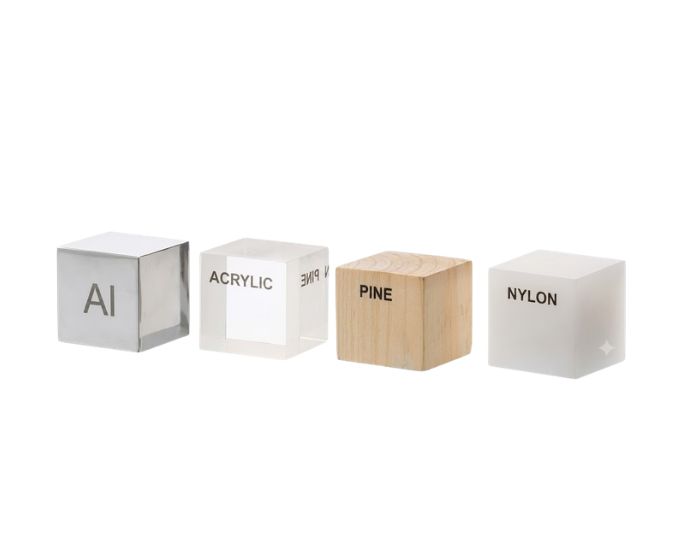
Wood specimens include walnut, pine and maple, providing useful examples for investigating variations in the physical properties of natural materials.
The polymer and synthetic material selection includes polypropylene, polyethylene, polyamide, acrylic, polyurethane, phenolic, PVC and Delrin, providing a diverse range of engineering and educational material samples.
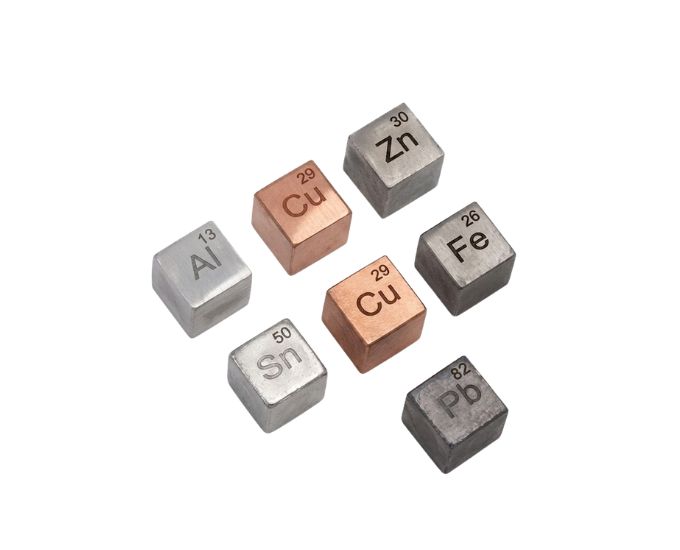
Metallic specimens include aluminium, brass and copper, enabling students to compare relatively dense metallic materials with lighter polymers and woods.
During an experiment, the mass of each specimen can be determined using a suitable laboratory balance. Its dimensions can then be measured with an appropriate ruler, Vernier Caliper or other measuring instrument.
Using the measured dimensions, students can determine specimen volume and calculate density according to:
Density = Mass ÷ Volume
The calculated values can then be compared between samples to investigate how different materials possess different densities despite similarities in shape or external dimensions.
The set is particularly useful for material identification experiments. Specimens can be treated as unknown samples, allowing students to determine their densities experimentally and compare the results with suitable reference data.
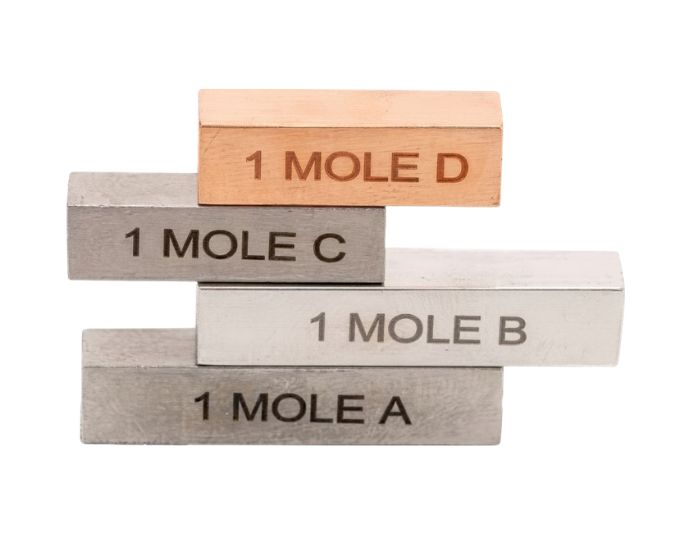
Each sample is marked with a letter code, providing a convenient method of identification while allowing instructors to conduct unknown-specimen exercises without immediately revealing the material name.
This coded arrangement can make practical sessions more engaging by requiring students to use experimental evidence rather than visual appearance alone to identify a material.
The set also helps reinforce important concepts involving mass, volume, density, measurement accuracy and physical properties of matter.
Comparisons between materials can demonstrate why equal-sized objects may have different masses and why equal-mass objects can occupy different volumes.
The broad range of materials makes the set useful beyond introductory density experiments. It can also support discussions of material selection, engineering materials, natural versus synthetic materials and comparative physical properties.
A sturdy storage base is supplied to organize the specimens and keep the complete collection conveniently arranged between laboratory sessions.
Instructions are also included, making the set suitable for structured educational demonstrations and student practical activities.
Manufactured and supplied by Micro Technologies, the Density Identification Set – 15 Materials is suitable for physics laboratories, material science laboratories and educational institutions requiring a comprehensive density and material identification apparatus.
Features
- Complete set of 15 material specimens
- Multiple material categories
- Wood specimens included
- Polymer specimens included
- Metal specimens included
- Walnut sample
- Pine sample
- Maple sample
- Polypropylene sample
- Polyethylene sample
- Polyamide sample
- Acrylic sample
- Polyurethane sample
- Phenolic sample
- PVC sample
- Delrin sample
- Aluminium sample
- Brass sample
- Copper sample
- Letter-coded specimens
- Sturdy storage base
- Instructions included
- Suitable for density determination
- Useful for material identification
Benefits
- Provides 15 materials in one laboratory set
- Enables broad comparative density studies
- Suitable for mass, dimension and volume measurements
- Helps students determine density experimentally
- Letter coding supports unknown-material exercises
- Includes natural, polymeric and metallic materials
- Helps demonstrate differences between material classes
- Supports quantitative measurement skills
- Useful for material identification practicals
- Storage base keeps specimens organized
- Suitable for individual and group laboratory activities
- Instructions support structured experimental use
Product Specifications
| Specification | Details |
|---|---|
| Product Name | Density Identification Set |
| Product Type | Density & Material Identification Set |
| Total Specimens | 15 |
| Material Categories | Wood, Polymer & Metal |
| Identification | Letter-Coded Samples |
| Wood Specimens | Walnut, Pine, Maple |
| Polymer / Synthetic Specimens | Polypropylene, Polyethylene, Polyamide, Acrylic, Polyurethane, Phenolic, PVC, Delrin |
| Metal Specimens | Aluminium, Brass, Copper |
| Storage | Sturdy Storage Base |
| Instructions | Included |
| Primary Application | Density Determination |
| Additional Application | Material Identification |
| Use | Physics / Material Science Laboratory |
Set Composition
| Material | Category |
|---|---|
| Walnut | Wood |
| Pine | Wood |
| Maple | Wood |
| Polypropylene | Polymer |
| Polyethylene | Polymer |
| Polyamide | Polymer |
| Acrylic | Polymer |
| Polyurethane | Polymer |
| Phenolic | Synthetic Material |
| PVC | Polymer |
| Delrin | Engineering Polymer |
| Aluminium | Metal |
| Brass | Metal |
| Copper | Metal |
Note: The supplied source lists the product as a set of 15, but the visible material list names 14 materials. The 15th specimen is therefore not specified in the provided data and should be confirmed before publishing a definitive 15-item composition table.
Applications
- Density determination experiments
- Material identification experiments
- Unknown specimen identification
- Mass measurement activities
- Volume determination
- Material comparison studies
- Properties of matter experiments
- Wood density comparison
- Polymer density comparison
- Metal density comparison
- Measurement and calculation practicals
- Engineering material demonstrations
- Physics laboratory experiments
- Material science laboratory practicals
Available Variants
Density Identification Set of 15, 15 Material Density Set, Material Identification Specimen Set, Laboratory Density Identification Kit, Physics Lab Density Set, Material Density Comparison Set, Solid Material Specimen Set
SKU System
MT-DIS-15
FAQs
What is the Density Identification Set used for?
The set is used for practical experiments involving density determination, mass and volume measurement, material comparison and identification of unknown specimens.
How many specimens are included in the set?
The product is specified as a set of 15 different material specimens.
What types of materials are included?
The set contains specimens representing woods, polymers, synthetic materials and metals, allowing broad comparative density studies.
Which wooden materials are included?
The listed wooden specimens include walnut, pine and maple.
Which metals are included?
The listed metallic specimens include aluminium, brass and copper.
Which polymer materials are included?
The listed polymer and synthetic specimens include polypropylene, polyethylene, polyamide, acrylic, polyurethane, phenolic, PVC and Delrin.
How do students determine the density of each specimen?
Students measure the mass and volume of the specimen and calculate density using the relationship Density = Mass ÷ Volume.
Are the specimens identified individually?
Yes. The specimens are stamped or marked with letter codes for convenient identification and experimental organization.
Is a storage arrangement included?
Yes. The specimens are supplied with a sturdy storage base to keep the collection organized.
Are instructions supplied with the Density Identification Set?
Yes. Instructions are included for laboratory and educational use.
Why Choose Our Products
- Manufactured and supplied by Micro Technologies
- Comprehensive multi-material specimen collection
- Woods, polymers and metals represented
- Letter-coded specimens
- Suitable for density and identification experiments
- Sturdy storage arrangement
- Instructions included
- Suitable for physics and material science laboratories
- Institutional and bulk supply available
- OEM requirements supported
Call to Action
Build a more comprehensive material-properties laboratory with the Density Identification Set – 15 Materials from Micro Technologies. Designed for hands-on density measurement and unknown-material identification, the set provides a versatile solution for physics and material science education. Contact us for institutional pricing, bulk procurement, laboratory supply and customized quotations.