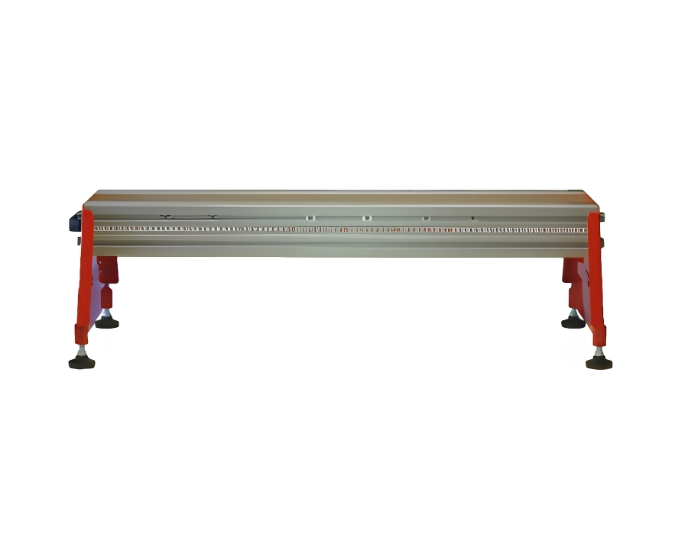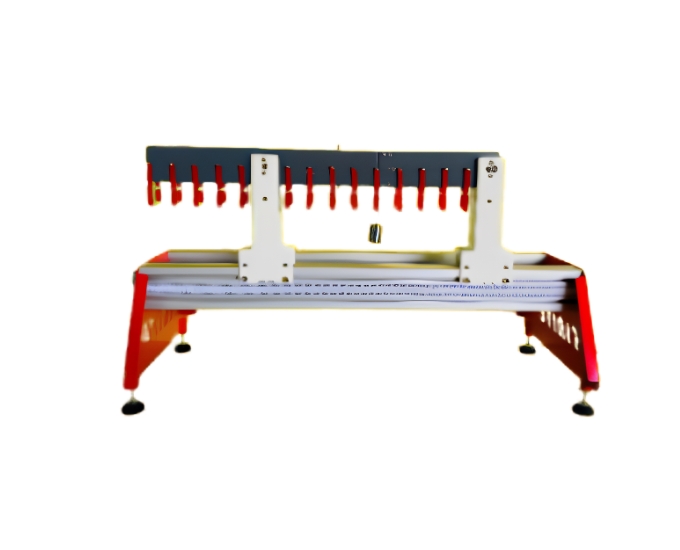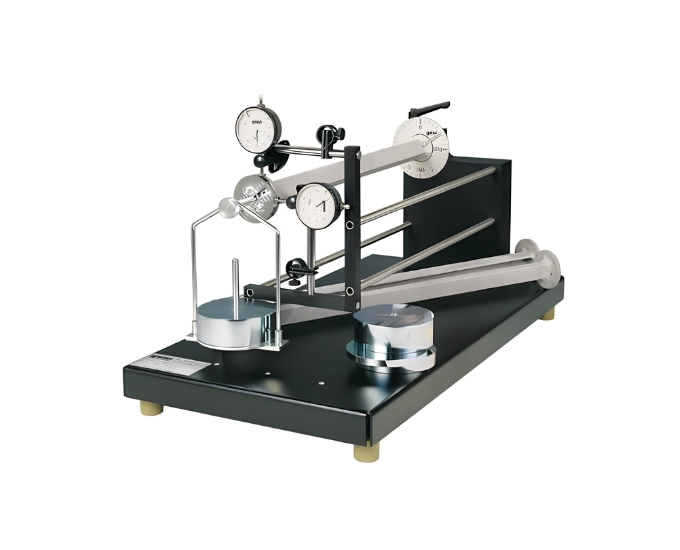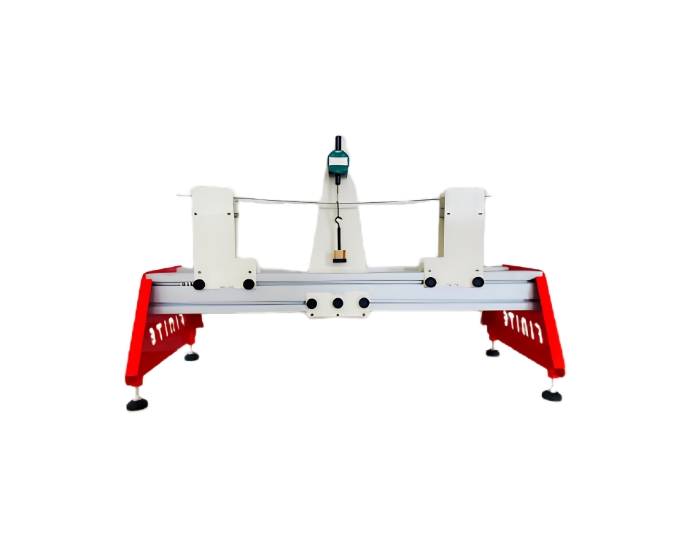

Continuous and Intermediate Beam Apparatus
Product Specification Sheet
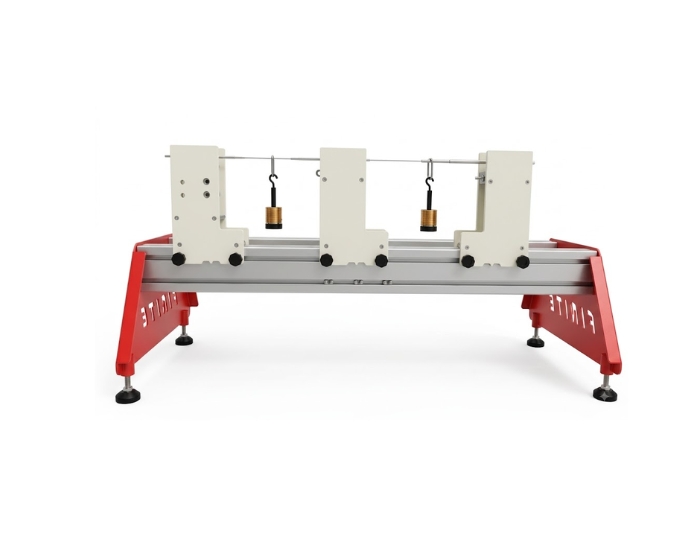
Continuous and Intermediate Beam Apparatus
Model Number: MTBE-106
The Continuous and Intermediate Beam Apparatus is a versatile structural engineering laboratory system designed for practical investigation of beam reactions, bending moments, deflections, influence lines and support conditions. It supports experiments involving point loads, uniformly distributed loads, simply supported beams, continuous beams, propped cantilevers, fixed beams and sinking supports.
Product Specification
The Continuous and Intermediate Beam Apparatus is an educational laboratory system developed for comprehensive experimental study of beam behaviour under different loading and support conditions.
Beams are fundamental structural members used to carry transverse loads in buildings, bridges, machines and engineering structures. Their reactions, moments and deflections depend significantly on both the applied loading and the way in which the beam is supported.
The apparatus enables students to begin with fundamental experiments involving a simply supported beam.
The principle of moments can be experimentally investigated by applying known loads at selected positions and comparing measured support reactions with theoretical calculations.
Students can study the reactions produced by a single point load positioned at different locations along a simply supported beam. Moving the load demonstrates how the reactions at each support vary according to load position.
The system also enables investigation of reactions produced by a uniformly distributed load (UDL). This allows students to compare concentrated and distributed loading conditions.
Moving-load experiments can be used to investigate influence lines. Students can record structural responses at different load positions and develop influence-line relationships for reactions or other relevant quantities.
The apparatus also supports experimental investigation of the principle of superposition. Under linear-elastic conditions, responses caused by individual loads can be compared with those generated by their combined action.
Beam deflection can be investigated to understand how a structural member deforms under applied loading.
Beyond simply supported beam experiments, the apparatus enables more advanced investigation of continuous and intermediate support arrangements.
Students can determine reactions in a continuous beam, providing practical understanding of statically indeterminate structures.
A propped cantilever beam configuration can also be investigated. Students can determine the reactions and moments generated by the combination of a fixed support and an additional prop.
The apparatus also supports the study of fixed beam reactions and moments, helping students understand how end restraint influences structural response.
Another important experiment is the investigation of the effect of a sinking support. Controlled movement of a support allows students to observe how support settlement affects reactions and internal actions within a continuous structure.
The system therefore provides a broad platform for studying static equilibrium, support reactions, bending moments, beam deflection, superposition, influence lines, support settlement and statically indeterminate structures.
Micro Technologies supplies Continuous and Intermediate Beam Apparatus and other structural engineering laboratory systems for universities, engineering colleges, polytechnic institutes and technical training centres.
Features
- Multi-purpose beam experiment system
- Simply supported beam experiments
- Continuous beam investigations
- Intermediate support studies
- Point load experiments
- Uniformly distributed load experiments
- Principle of moments verification
- Support reaction measurement
- Influence line investigation
- Principle of superposition study
- Beam deflection experiments
- Propped cantilever configuration
- Fixed beam experiments
- Reactions and moments investigation
- Sinking support demonstration
- Adjustable support arrangements
- Experimental and theoretical comparison
- Robust laboratory construction
Benefits
- Combines multiple beam experiments in one laboratory system
- Demonstrates fundamental and advanced structural concepts
- Enables point-load and UDL experiments
- Provides practical understanding of support reactions
- Helps students investigate beam deflection
- Enables influence-line studies
- Demonstrates the principle of superposition
- Introduces statically indeterminate beam behaviour
- Enables continuous beam reaction studies
- Supports propped cantilever experiments
- Demonstrates fixed-end moments and reactions
- Shows the structural effect of support settlement
- Connects analytical structural theory with experimental results
Product Specifications
| Specification | Details |
|---|---|
| Product Name | Continuous and Intermediate Beam Apparatus |
| Product Type | Structural Mechanics Laboratory Apparatus |
| Test Member | Beam |
| Simply Supported Configuration | Supported |
| Continuous Beam Configuration | Supported |
| Intermediate Support | Supported |
| Point Load | Supported |
| Uniformly Distributed Load | Supported |
| Principle of Moments | Study Supported |
| Support Reactions | Determination Supported |
| Beam Deflection | Study Supported |
| Influence Lines | Study Supported |
| Superposition | Study Supported |
| Propped Cantilever | Supported |
| Fixed Beam | Supported |
| Sinking Support | Study Supported |
| Reactions & Moments | Investigation Supported |
| Application | Structural Mechanics / Structural Analysis |
Experiments Performed
- Verification of the principle of moments
- Determination of reactions for a point load on a simply supported beam
- Investigation of a moving point load
- Determination of reactions for a uniformly distributed load
- Study of simply supported beam behaviour
- Investigation of influence lines
- Verification of the principle of superposition
- Measurement of simply supported beam deflection
- Determination of reactions in a continuous beam
- Study of intermediate support effects
- Determination of reactions in a propped cantilever
- Determination of moments in a propped cantilever
- Determination of reactions in a fixed beam
- Determination of moments in a fixed beam
- Investigation of the effect of a sinking support
- Comparison of different beam support conditions
- Comparison of theoretical and experimental results
Applications
- Structural Engineering Laboratories
- Structural Mechanics Laboratories
- Structural Analysis Laboratories
- Civil Engineering Laboratories
- Strength of Materials Laboratories
- Engineering Mechanics Laboratories
- Applied Mechanics Laboratories
- Mechanics of Structures Laboratories
- Engineering Colleges
- Universities
- Polytechnic Institutes
- Technical Training Centres
- Educational & Research Laboratories
FAQs
What is the Continuous and Intermediate Beam Apparatus used for?
The apparatus is used to investigate beam reactions, bending moments, deflections and structural behaviour under different loading and support configurations.
Can a simply supported beam be studied?
Yes. The system supports experiments involving point loads, uniformly distributed loads, support reactions and deflection of simply supported beams.
Can continuous beam reactions be determined?
Yes. Students can investigate the reactions generated in continuous beam configurations with intermediate supports.
Can uniformly distributed loads be studied?
Yes. The apparatus supports UDL experiments for studying beam reactions and structural response.
Can influence lines be investigated?
Yes. Moving-load experiments can be performed to investigate influence lines and the variation of structural response with load position.
Can the principle of superposition be verified?
Yes. Responses produced by individual loading cases can be compared with combined loading under suitable linear-elastic conditions.
Can a propped cantilever be studied?
Yes. The apparatus enables investigation of reactions and moments in a propped cantilever configuration.
Can fixed beam reactions and moments be investigated?
Yes. Fixed beam configurations can be studied to understand the influence of end restraint on reactions and moments.
What is a sinking support experiment?
A sinking support experiment investigates how settlement or displacement of one support affects reactions and internal actions in a beam system.
Why are continuous beams considered statically indeterminate?
Continuous beams generally have more support reactions than can be determined using static equilibrium equations alone, requiring compatibility and deformation relationships for complete analysis.
Can experimental results be compared with theory?
Yes. Experimental reactions, moments and deflections can be compared with theoretical structural-analysis calculations.
Is this apparatus suitable for Civil Engineering laboratories?
Yes. It is suitable for Civil Engineering, Structural Engineering, Structural Analysis, Strength of Materials and Engineering Mechanics laboratories.
Why Choose Our Products
- Multiple beam experiments in one system
- Simply supported and continuous beam studies
- Point load and UDL experiments
- Influence line investigation
- Superposition verification
- Beam deflection studies
- Propped cantilever experiments
- Fixed beam analysis
- Sinking support investigation
- Experimental and theoretical comparison
- Flexible educational configuration
- Institutional and bulk supply support
Call to Action
Upgrade your Structural Engineering Laboratory with a versatile beam experimentation system from Micro Technologies. Our Continuous and Intermediate Beam Apparatus supports practical study of simply supported, continuous, fixed and propped cantilever beams along with influence lines, deflection and support settlement. Contact us for technical specifications, institutional quotations, customized laboratory configurations, bulk requirements or tender supply.