
Comparison of Various Heat Exchangers
Product Specification Sheet
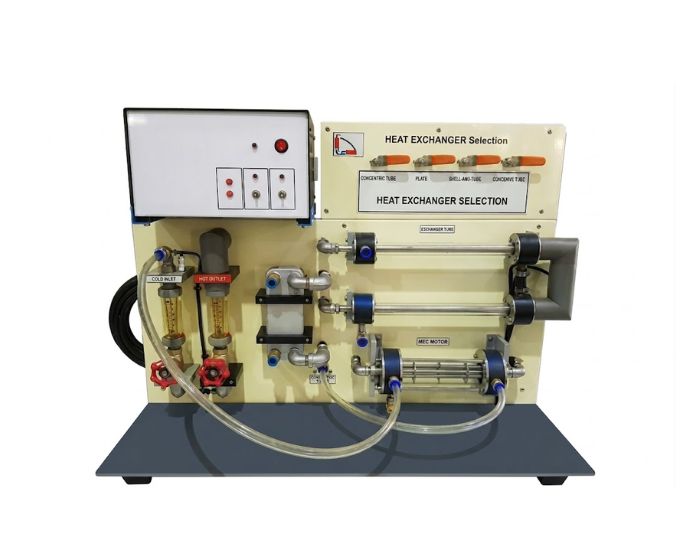
Comparison of Various Heat Exchangers
Model Number: MTHE-311
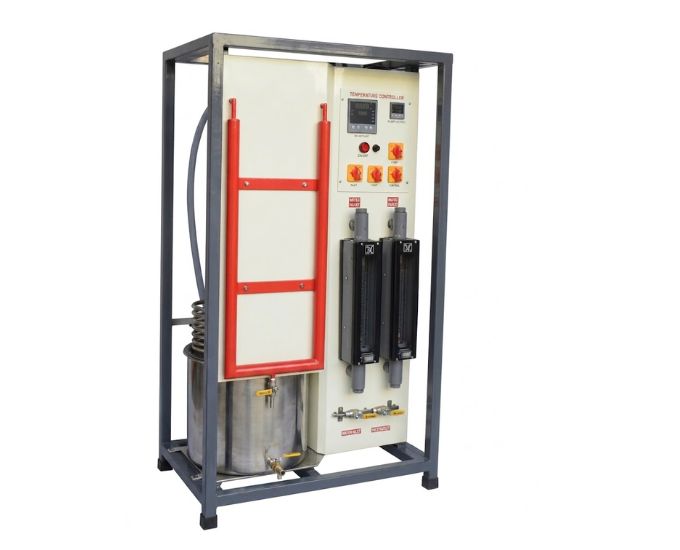
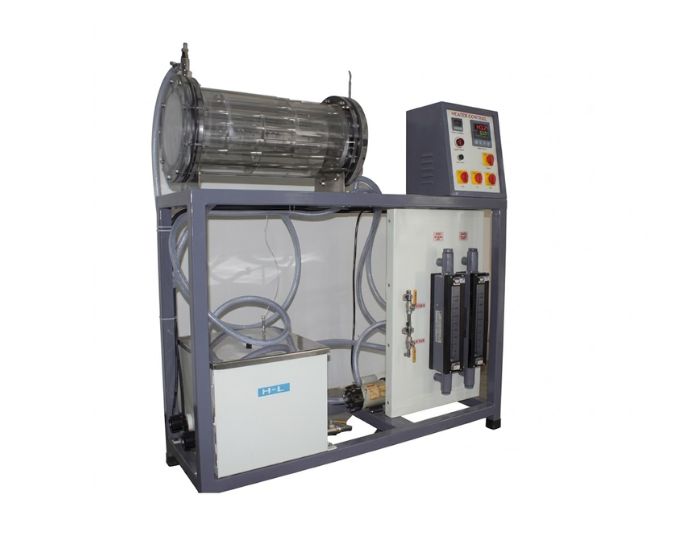
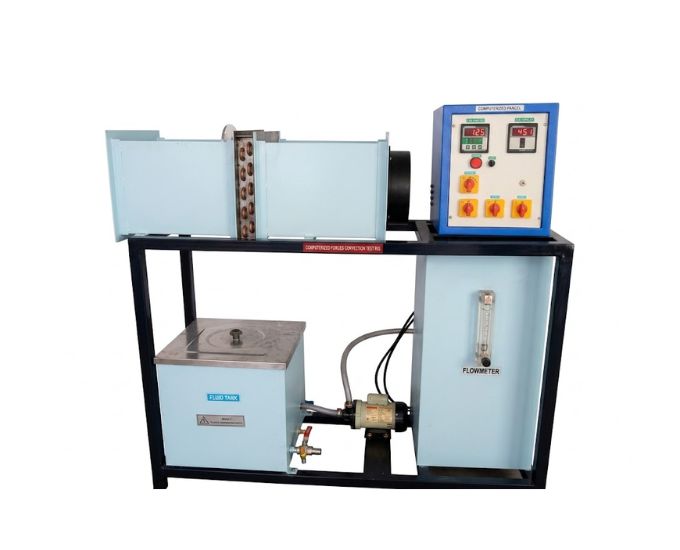
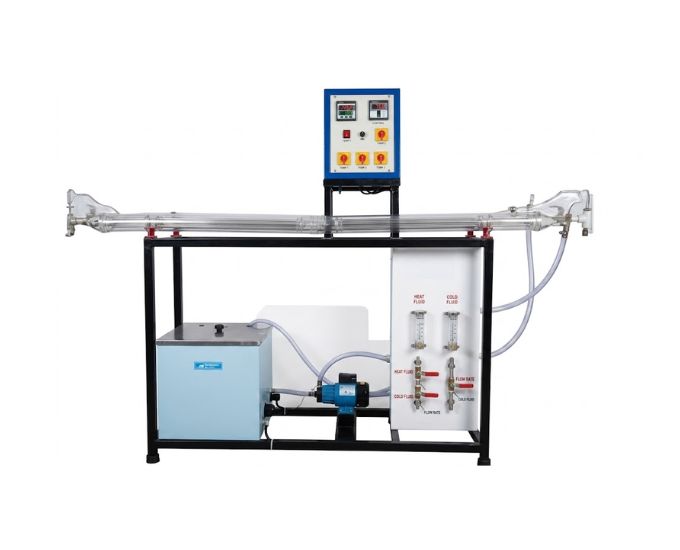
The Comparison of Various Heat Exchangers is a comprehensive educational laboratory system designed for comparative investigation of different heat exchanger configurations. It enables students to compare heat transfer coefficients for concentric tube, shell-and-tube, and plate heat exchangers, investigate parallel and counter-flow operation, demonstrate batch-type heat transfer in a jacketed vessel, and study the effects of flow rate and temperature difference on thermal performance.
Product Specification
The Comparison of Various Heat Exchangers is an advanced educational heat transfer apparatus developed to provide students with a practical understanding of the operating characteristics and thermal performance of several common heat exchanger designs within one laboratory system.
Manufactured by Micro Technologies, the apparatus enables comparative experiments involving concentric tube, shell-and-tube, and plate heat exchangers. By operating different exchanger sections under controlled conditions, students can collect temperature and flow measurements and use the experimental data to determine and compare heat transfer coefficients.
The system also allows practical demonstration of heat transfer under parallel-flow and counter-flow conditions. These experiments help students understand how the relative direction of hot and cold fluid streams influences temperature profiles, thermal driving force, and overall heat exchanger performance.
A jacketed vessel arrangement is provided for demonstrating batch-type heat transfer. This enables students to investigate transient heating or cooling behaviour and understand how heat is transferred between the vessel contents and the circulating fluid in the surrounding jacket.
The apparatus provides the necessary instrumentation for monitoring temperatures and fluid flow conditions. By varying operating parameters, students can experimentally investigate the effects of flow rate and temperature difference on heat transfer.
The integrated design provides several heat transfer experiments on a single training platform, making the equipment particularly useful for universities and engineering institutes where laboratory space and flexibility are important considerations.
The system provides valuable practical exposure to heat exchanger technologies widely encountered in chemical processing, HVAC, refrigeration, power generation, food processing, pharmaceutical production, energy systems, and general process industries.
Features
- Multiple heat exchanger configurations on one experimental platform
- Concentric tube heat exchanger section
- Shell-and-tube heat exchanger section
- Plate heat exchanger section
- Jacketed vessel for batch heat transfer studies
- Parallel-flow operation
- Counter-flow operation
- Heat transfer coefficient determination
- Variable fluid-flow conditions
- Temperature measurement arrangement
- Flow measurement and control system
- Integrated heat exchanger selection arrangement
- Clearly organized instrumentation panel
- Comparative thermal performance analysis
- Compact educational laboratory configuration
- Suitable for repeated engineering experiments
Benefits
- Allows comparison of multiple heat exchangers using one apparatus
- Reduces the need for separate experimental systems
- Demonstrates both continuous and batch heat transfer
- Provides hands-on understanding of heat exchanger selection
- Allows comparison of heat transfer coefficients
- Demonstrates parallel and counter-flow behaviour
- Helps students analyze the influence of flow rate
- Demonstrates the effect of temperature difference
- Connects theoretical calculations with experimental results
- Suitable for advanced heat transfer laboratory training
Heat Exchangers Studied
| Heat Exchanger | Experimental Study |
|---|---|
| Concentric Tube Heat Exchanger | Heat transfer coefficient and flow behaviour |
| Shell & Tube Heat Exchanger | Heat transfer coefficient and thermal performance |
| Plate Heat Exchanger | Heat transfer coefficient and temperature behaviour |
| Jacketed Vessel | Batch-type heat transfer |
Product Specifications
| Specification | Details |
|---|---|
| Product Name | Comparison of Various Heat Exchangers |
| Product Type | Multi-Heat Exchanger Training System |
| Heat Exchanger Types | Concentric Tube, Shell & Tube, Plate Type |
| Additional Experimental Section | Jacketed Vessel |
| Flow Arrangements | Parallel Flow & Counter Flow |
| Experimental Mode | Continuous & Batch Heat Transfer |
| Temperature Measurement | Multi-Point Temperature Measurement |
| Flow Measurement | Integrated Flow Measuring Arrangement |
| Flow Control | Individual Control Valves |
| Heat Exchanger Selection | Integrated Selection Arrangement |
| Main Parameter | Heat Transfer Coefficient |
| Variable Parameters | Flow Rate & Temperature Difference |
| Instrumentation | Integrated Measurement & Control Panel |
| Construction | Laboratory-Grade Training System |
| Operation | Educational / Experimental |
| Application | Heat Transfer & Thermal Engineering Laboratories |
| Power Supply | 220–230V AC, 50Hz |
Experiments Performed
- Compare heat transfer coefficients for a concentric tube heat exchanger
- Determine the heat transfer coefficient of a shell-and-tube heat exchanger
- Determine the heat transfer coefficient of a plate heat exchanger
- Compare the thermal performance of different heat exchanger designs
- Demonstrate heat transfer under parallel-flow conditions
- Demonstrate heat transfer under counter-flow conditions
- Compare parallel and counter-flow performance
- Demonstrate batch-type heat transfer using a jacketed vessel
- Determine heat transfer coefficient experimentally
- Investigate the effect of fluid flow rate on heat transfer
- Investigate the effect of temperature difference on heat transfer
- Record and compare temperatures at different operating conditions
- Analyze the relationship between operating conditions and thermal performance
Educational Objectives
The apparatus helps students understand:
- Different heat exchanger constructions
- Concentric tube heat exchanger operation
- Shell-and-tube heat exchanger operation
- Plate heat exchanger operation
- Jacketed vessel heat transfer
- Parallel-flow heat transfer
- Counter-flow heat transfer
- Batch and continuous heat transfer
- Heat transfer coefficient
- Fluid flow and heat transfer relationships
- Effect of temperature difference
- Comparative thermal performance
Applications
- Heat Transfer Laboratories
- Thermal Engineering Laboratories
- Mechanical Engineering Laboratories
- Chemical Engineering Laboratories
- Process Engineering Laboratories
- Energy Engineering Laboratories
- HVAC & Refrigeration Training Laboratories
- Universities
- Engineering Colleges
- Polytechnic Institutes
- Research Laboratories
- Technical Training Centres
FAQs
What is the Comparison of Various Heat Exchangers apparatus?
It is a laboratory training system designed to study and compare the thermal behaviour and heat transfer coefficients of different heat exchanger configurations within one experimental setup.
Which heat exchangers can be studied using this apparatus?
The system is designed for comparative studies involving concentric tube, shell-and-tube, and plate heat exchangers, along with a jacketed vessel for batch heat transfer experiments.
Can heat transfer coefficients be compared?
Yes. One of the main objectives is the comparison of heat transfer coefficients for concentric tube, shell-and-tube, and plate heat exchangers.
Can parallel and counter-flow experiments be performed?
Yes. The system demonstrates heat transfer under both parallel-flow and counter-flow arrangements, allowing students to compare their thermal characteristics.
What is the purpose of the jacketed vessel?
The jacketed vessel is used to demonstrate batch-type heat transfer, helping students understand transient heating or cooling processes.
Can the effect of flow rate be studied?
Yes. Fluid flow conditions can be varied to investigate how flow rate influences heat transfer performance.
Can the effect of temperature difference be investigated?
Yes. Students can analyze how changes in the temperature difference between fluids influence the rate and effectiveness of heat transfer.
What parameters can be determined experimentally?
The apparatus primarily supports the determination and comparison of heat transfer coefficients, along with temperature and flow-related thermal performance analysis.
Why is comparing different heat exchangers useful?
Different heat exchanger designs have different thermal and operational characteristics. Comparative testing helps students understand why particular heat exchanger configurations are selected for specific engineering applications.
Is this apparatus suitable for engineering colleges?
Yes. It is suitable for mechanical, thermal, chemical, process, and energy engineering laboratories in universities, engineering colleges, polytechnics, and technical institutes.
Why Choose Our Products
- Multiple heat exchanger experiments in one system
- Comparative thermal performance analysis
- Parallel and counter-flow experimentation
- Batch heat transfer demonstration
- Integrated measurement and control arrangement
- Engineering-focused educational design
- Heavy-duty laboratory construction
- Suitable for repeated student experiments
- Institutional and bulk laboratory supply
- Customized configurations available
- Technical and project support
Call to Action
Looking for a comprehensive Heat Exchanger Comparison Apparatus for your engineering laboratory? Micro Technologies manufactures and supplies heat transfer laboratory equipment for universities, engineering colleges, polytechnics, research institutes, and technical training centres. Contact us for complete heat transfer laboratory projects, customized configurations, institutional requirements, bulk orders, distributor inquiries, or a competitive quotation.