
Cavitation Apparatus
Product Specification Sheet
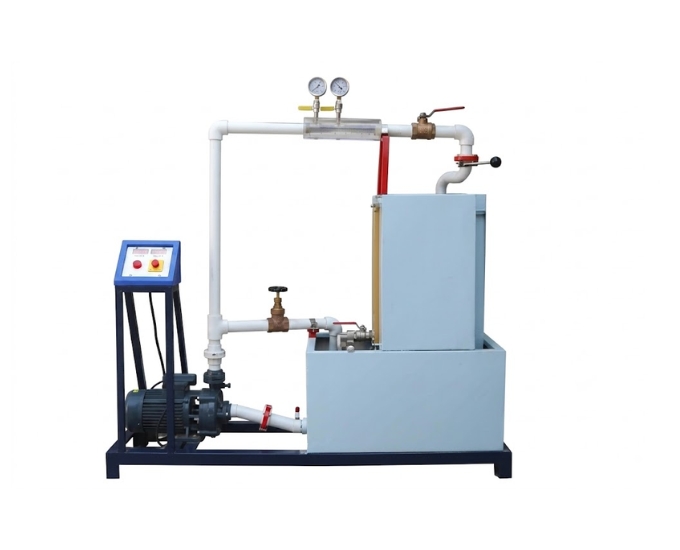
Cavitation Apparatus
Model Number: MTFM-115
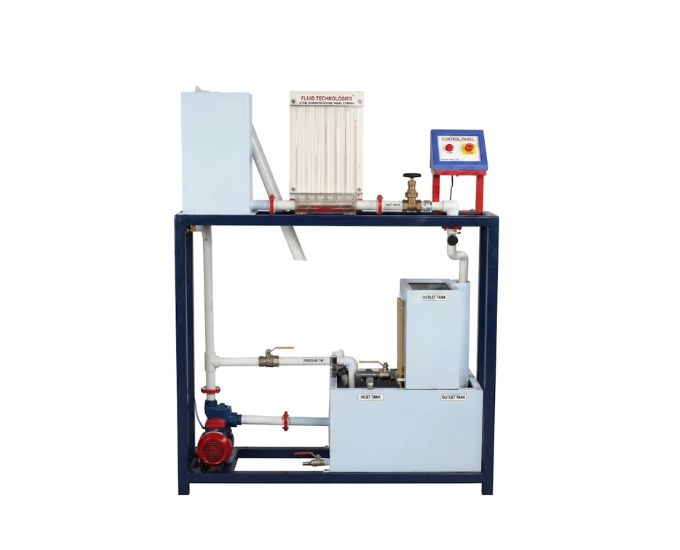
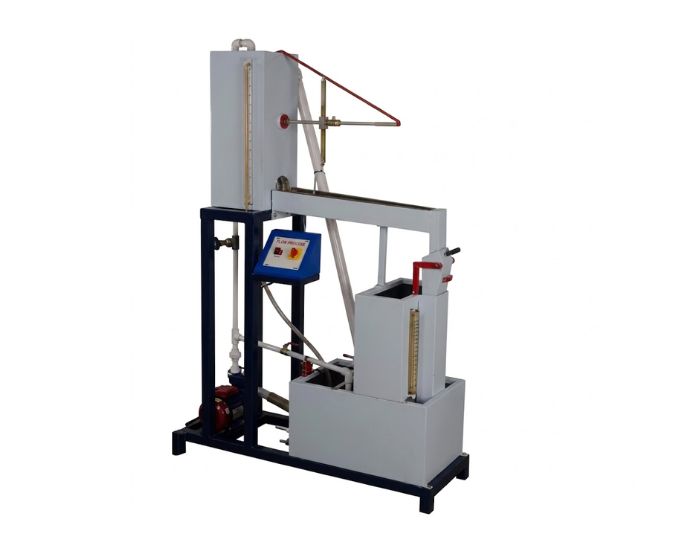
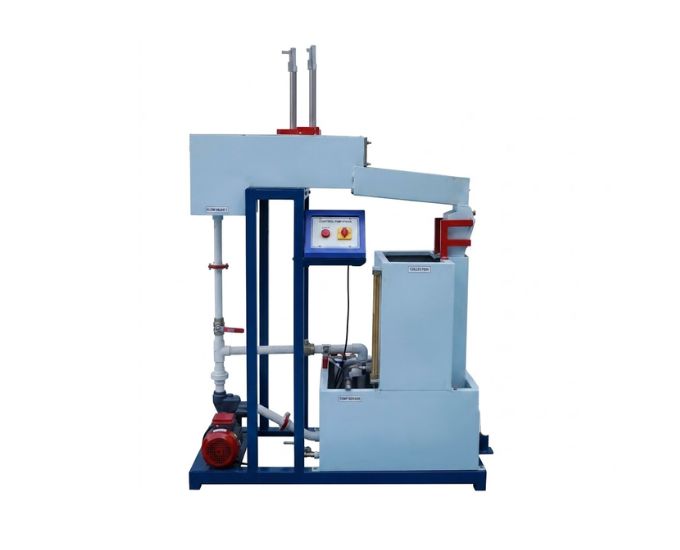
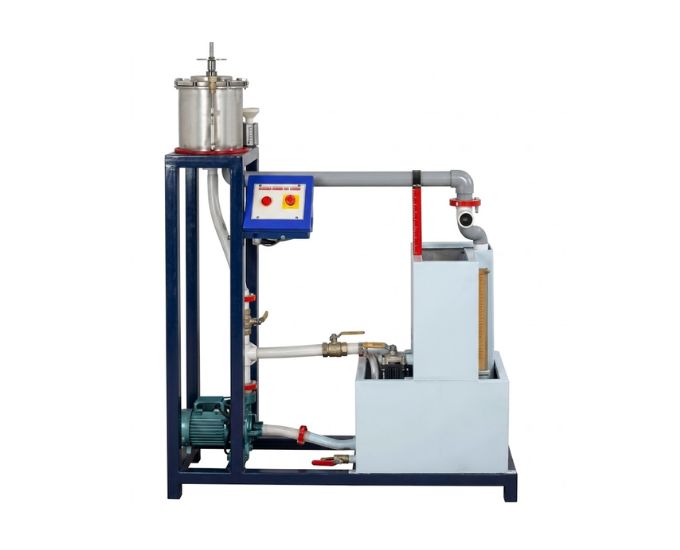
The Cavitation Apparatus is a fluid mechanics laboratory setup designed to demonstrate the phenomenon of cavitation and study pressure conditions associated with its formation. The apparatus allows students to observe cavitation under controlled water-flow conditions and compare theoretical pressure with experimentally measured pressure at the cavitation condition. It provides practical understanding of pressure reduction, vapour formation, fluid velocity, and the effects of cavitation in hydraulic systems. The equipment is suitable for mechanical engineering, civil engineering, hydraulics, and fluid mechanics laboratories.
Product Specification
The Cavitation Apparatus is an educational fluid mechanics laboratory system developed for the practical observation and study of cavitation in flowing water. It enables students to investigate the conditions under which cavitation occurs and compare theoretical and actual pressures at the cavitation condition.
Cavitation occurs when the local static pressure of a flowing liquid decreases sufficiently for vapour bubbles to form. When these bubbles subsequently enter a region of higher pressure, they may collapse rapidly. This phenomenon is important in fluid mechanics because persistent cavitation can affect the performance and service life of hydraulic machinery and flow systems.
The apparatus provides a controlled flow arrangement in which water passes through a test section designed to produce the pressure conditions required for demonstrating cavitation. By adjusting the water flow, students can observe the onset and behaviour of cavitation while monitoring the corresponding pressure conditions.
Suitable pressure measuring arrangements enable experimental pressure readings to be obtained at important locations within the test section. These observations can be compared with theoretical values to provide a practical understanding of pressure changes associated with cavitation.
The experiment also helps students understand the relationship between fluid velocity and static pressure. As velocity increases through a restricted flow section, the static pressure can decrease. When this pressure approaches the liquid's vapour pressure under the experimental conditions, vapour cavities may form.
The apparatus is useful for demonstrating why cavitation is an important consideration in the design and operation of pumps, turbines, valves, propellers, pipelines, and other hydraulic equipment.
A water circulation arrangement, flow regulation system, pressure measuring devices, and experimental test section are incorporated to provide convenient operation during student laboratory sessions.
Micro Technologies supplies Cavitation Apparatus for engineering colleges, universities, polytechnic institutes, technical training centres, and research laboratories requiring practical fluid mechanics and hydraulic engineering equipment.
Features
- Designed for practical observation of cavitation
- Demonstrates formation of vapour cavities in flowing water
- Enables comparison of theoretical and actual pressures
- Suitable for studying cavitation conditions
- Pressure measurement arrangement
- Adjustable water flow rate
- Controlled experimental test section
- Demonstrates relationship between velocity and pressure
- Water circulation arrangement
- Suitable for repeated student experiments
- Robust laboratory construction
- Simple and convenient operation
Benefits
- Provides visual understanding of cavitation
- Helps students understand pressure reduction in fluid flow
- Enables comparison between theoretical and experimental pressure
- Demonstrates conditions responsible for cavitation
- Connects theoretical fluid mechanics with practical observations
- Helps explain cavitation in hydraulic machinery
- Suitable for regular engineering laboratory practicals
- Durable construction for long-term institutional use
Product Specifications
| Specification | Details |
|---|---|
| Product Name | Cavitation Apparatus |
| Product Type | Fluid Mechanics Laboratory Apparatus |
| Experimental Purpose | Observation and Study of Cavitation |
| Working Fluid | Water |
| Primary Study | Cavitation Phenomenon |
| Pressure Study | Theoretical & Actual Pressure Comparison |
| Flow Regulation | Adjustable |
| Pressure Measurement | Pressure Measuring Arrangement |
| Water Circulation | Recirculating Type |
| Test Section | Cavitation Demonstration Section |
| Parameters Studied | Flow, Velocity, Pressure & Cavitation |
| Application | Fluid Mechanics & Hydraulics Laboratory |
| Suitable For | Engineering Colleges, Universities, Polytechnics & Technical Institutes |
Experiments Performed
- Observation of cavitation phenomenon
- Study of conditions responsible for cavitation
- Comparison of theoretical and actual pressure at cavitation condition
- Study of pressure variation with water flow
- Observation of vapour cavity formation
- Study of relationship between velocity and pressure
- Investigation of cavitation behaviour at different flow conditions
Applications
- Fluid Mechanics Laboratories
- Hydraulics Laboratories
- Mechanical Engineering Laboratories
- Civil Engineering Laboratories
- Hydraulic Engineering Laboratories
- Engineering Colleges
- Universities
- Polytechnic Institutes
- Technical Training Centres
- Research and Educational Laboratories
FAQs
What is Cavitation Apparatus used for?
The Cavitation Apparatus is used to demonstrate the phenomenon of cavitation and compare theoretical and actual pressures under cavitation conditions.
What is cavitation in fluid mechanics?
Cavitation is the formation of vapour cavities in a liquid when local static pressure falls sufficiently low. These cavities may collapse when they enter a region of higher pressure.
What can students observe using this apparatus?
Students can observe cavitation behaviour, study pressure changes, investigate the conditions at which cavitation occurs, and compare theoretical pressure with experimentally measured pressure.
Why is cavitation important in hydraulic engineering?
Cavitation can cause vibration, noise, performance reduction, and surface damage in hydraulic equipment. Understanding it is therefore important when studying pumps, turbines, valves, propellers, and piping systems.
Can the water flow be adjusted?
Yes. The experimental setup provides flow regulation so different operating conditions can be studied.
Can theoretical and actual pressure be compared?
Yes. One of the primary experiments performed with the apparatus is the comparison of theoretical and actual pressure at cavitation conditions.
Is the apparatus suitable for engineering colleges?
Yes. It is suitable for mechanical engineering, civil engineering, hydraulic engineering, and fluid mechanics laboratories in colleges, universities, and polytechnic institutes.
Can the apparatus be customized?
Yes. The test section, pressure measuring arrangement, water circulation system, and other components can be configured according to institutional laboratory requirements.
Is bulk supply available?
Yes. Micro Technologies supplies Cavitation Apparatus for engineering colleges, universities, polytechnic institutes, government projects, distributors, and bulk educational laboratory requirements.
Why Choose Our Products
- Effective demonstration of cavitation phenomenon
- Reliable pressure measurement arrangement
- Practical engineering laboratory configuration
- Durable construction for regular student use
- Quality-controlled manufacturing
- Customized configurations available
- Institutional and bulk supply support
Call to Action
Looking for a reliable Cavitation Apparatus for your fluid mechanics laboratory? Micro Technologies supplies engineering laboratory equipment for universities, engineering colleges, polytechnic institutes, technical training centres, and research facilities. Contact us for technical requirements, customized configurations, institutional orders, bulk supply, distributor inquiries, government tenders, or a competitive quotation.