
Adjustable Tuning Fork
Product Specification Sheet
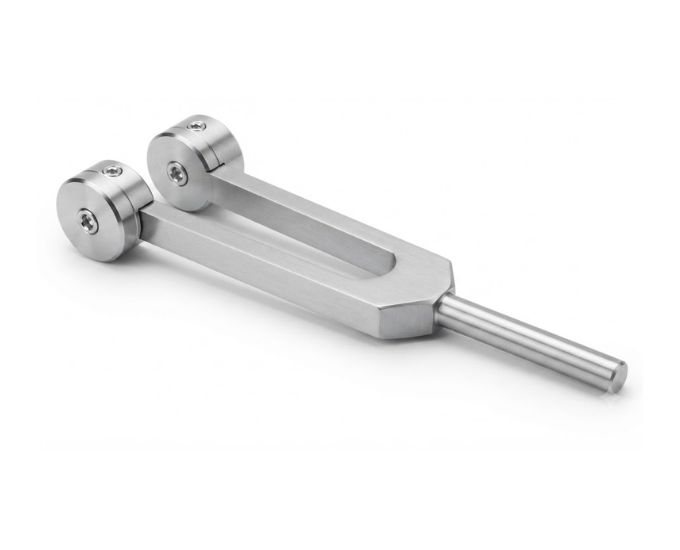
Adjustable Tuning Fork
Model Number: MTW-05
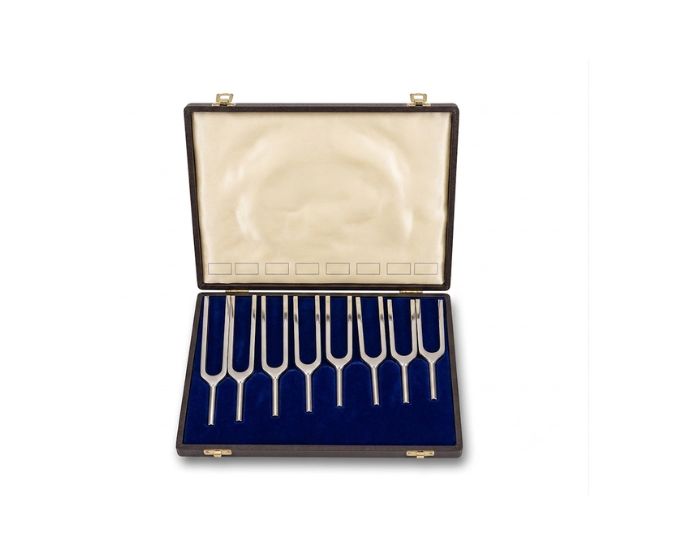
The Adjustable Tuning Fork is a precision acoustic instrument designed for experiments where controlled variation of tuning-fork frequency is required. Micro Technologies supplies the fork with sliding weights fitted to each prong, allowing its effective natural frequency to be adjusted by repositioning the weights. The series is available in nominal frequency options of 128, 144, 160, 170.7, 192, 213.3, and 240 Hz. By moving the weights along the prongs, users can investigate how changes in the vibrating system affect frequency, pitch, resonance, and related acoustic behaviour. Its adjustable configuration makes it particularly useful for comparative sound and vibration experiments where a fixed-frequency tuning fork would provide limited flexibility.
Product Specification
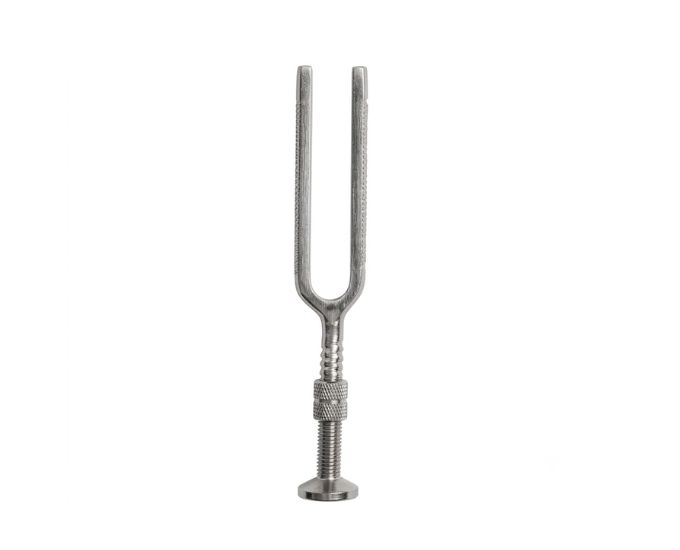
The Adjustable Tuning Fork is a variable-frequency acoustic apparatus equipped with movable weights on its vibrating prongs. Unlike a conventional fixed-frequency tuning fork, this design allows the vibrational characteristics of the fork to be modified by changing the position of the sliding masses.
Each prong carries an adjustable sliding weight. Moving these weights changes the effective mass distribution along the vibrating sections of the fork, which in turn changes its natural frequency. This provides a convenient mechanical method for investigating the relationship between mass distribution, vibration, frequency, and perceived pitch.
Micro Technologies supplies Adjustable Tuning Forks in several nominal frequency configurations. Available frequencies include 128 Hz, 144 Hz, 160 Hz, 170.7 Hz, 192 Hz, 213.3 Hz, and 240 Hz, providing multiple options for different acoustics and resonance investigations.
The adjustable weights are particularly useful in resonance experiments. The frequency of the fork can be varied within its practical adjustment range to approach the natural frequency of another compatible vibrating system. This allows resonance conditions and frequency matching to be investigated more conveniently than with a completely fixed-frequency source.
The apparatus can also be used for comparative experiments involving pitch changes. By altering the position of the weights and observing the resulting sound, users can directly relate mechanical adjustment to changes in acoustic frequency.
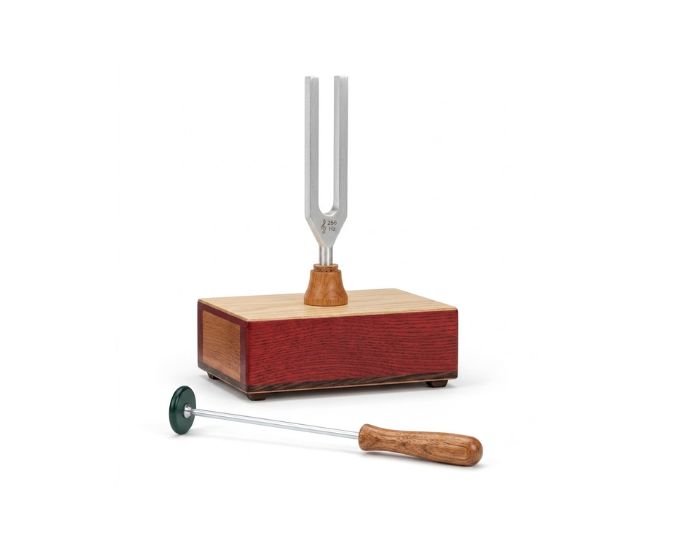
Its simple mechanical construction requires no electrical power and can be incorporated with suitable resonance boxes, air columns, vibration setups, and other acoustics apparatus. With multiple nominal frequencies and adjustable sliding masses, the Adjustable Tuning Fork provides a versatile solution for frequency and resonance investigations.
Features
- Adjustable-frequency tuning fork design
- Sliding weight fitted to each prong
- Mechanical frequency adjustment
- Multiple nominal frequency options
- Suitable for resonance investigations
- Useful for frequency and pitch comparison
- Simple mechanical operation
- No electrical power required
- Compatible with suitable acoustics apparatus
- Durable construction for repeated laboratory use
Benefits
- Allows frequency adjustment without changing the complete fork
- Sliding masses provide convenient mechanical tuning
- Useful for demonstrating the effect of mass on vibration frequency
- Supports resonance and frequency-matching experiments
- Multiple nominal frequencies broaden experimental applications
- Simple construction minimizes maintenance
- Suitable for individual and bulk laboratory procurement
Product Specifications
| Specification | Details |
|---|---|
| Product Name | Adjustable Tuning Fork |
| Product Type | Variable-Frequency Acoustic Tuning Fork |
| Frequency Adjustment | Sliding weights |
| Number of Adjustable Weights | One on each prong |
| Available Nominal Frequencies | 128, 144, 160, 170.7, 192, 213.3 & 240 Hz |
| Adjustment Method | Repositioning weights along prongs |
| Operation | Mechanical vibration |
| Power Requirement | None |
| Primary Application | Frequency, resonance and vibration experiments |
| Usage / Application | Sound, acoustics, pitch and resonance investigations |
| Compliance Standard | Laboratory-grade acoustic construction |
Available Variants
| Variant | Frequency |
|---|---|
| D | 128 Hz |
| D-144 | 144 Hz |
| E-160 | 160 Hz |
| F-170.7 | 170.7 Hz |
| G-192 | 192 Hz |
| A-213.3 | 213.3 Hz |
| B-240 | 240 Hz |
SKU System
- MT-ATF-128 – 128 Hz Adjustable Tuning Fork
- MT-ATF-144 – 144 Hz Adjustable Tuning Fork
- MT-ATF-160 – 160 Hz Adjustable Tuning Fork
- MT-ATF-1707 – 170.7 Hz Adjustable Tuning Fork
- MT-ATF-192 – 192 Hz Adjustable Tuning Fork
- MT-ATF-2133 – 213.3 Hz Adjustable Tuning Fork
- MT-ATF-240 – 240 Hz Adjustable Tuning Fork
FAQs
What is an Adjustable Tuning Fork used for?
It is used for experiments involving sound frequency, vibration, resonance, pitch, and frequency matching. Its sliding weights allow the vibrational frequency to be changed mechanically.
How is the tuning fork frequency adjusted?
Sliding weights are fitted to both prongs. Repositioning these weights changes the effective vibrating characteristics of the fork and therefore alters its natural frequency.
Which frequency options are available?
The series is available in nominal frequencies of 128, 144, 160, 170.7, 192, 213.3, and 240 Hz.
Why are sliding weights fitted to both prongs?
Using weights on both prongs allows the mass distribution to be adjusted while maintaining a balanced tuning-fork arrangement.
Can it be used for resonance experiments?
Yes. The adjustable frequency makes the fork particularly useful for resonance and frequency-matching investigations with compatible acoustic apparatus.
Can the pitch be changed using the weights?
Yes. Moving the weights changes the fork's natural frequency, which produces a corresponding change in the perceived pitch.
Does the Adjustable Tuning Fork require electrical power?
No. It is a mechanically operated acoustic instrument and does not require an external electrical supply.
Can it be used with a resonance box?
Yes. The tuning fork can be combined with a compatible resonance box or other acoustic apparatus where the mounting arrangement is suitable.
How should the sliding weights be adjusted?
The weights should be moved carefully and positioned symmetrically where required. Excessive force should be avoided to prevent damage to the fork or adjustment mechanism.
How should the tuning fork be maintained?
Keep the fork clean and dry, protect the prongs from bending or impact, and ensure the sliding weights remain secure before use.
Can individual frequencies be ordered separately?
Yes. Buyers can specify the required nominal frequency when placing an order or requesting a quotation.
Can Adjustable Tuning Forks be supplied in bulk?
Yes. Micro Technologies can supply individual units, multiple frequency configurations, and bulk quantities for acoustics laboratories, physics laboratories, universities, colleges, research facilities, distributors, and institutional projects.
Why Choose Our Products
- Adjustable sliding weights on both prongs
- Seven nominal frequency options
- Suitable for resonance and frequency comparison
- Simple, durable mechanical configuration
- No electrical power required
- Bulk supply capability for laboratories and distributors
Call to Action
Need Adjustable Tuning Forks for frequency, vibration, resonance, or acoustics experiments? Contact Micro Technologies with your required frequency and quantity for competitive quotations, bulk procurement, distributor supply, and customized laboratory requirements.